Table of contents
Japanese vs. German Kitchen Knives: A Practical Buying Guide
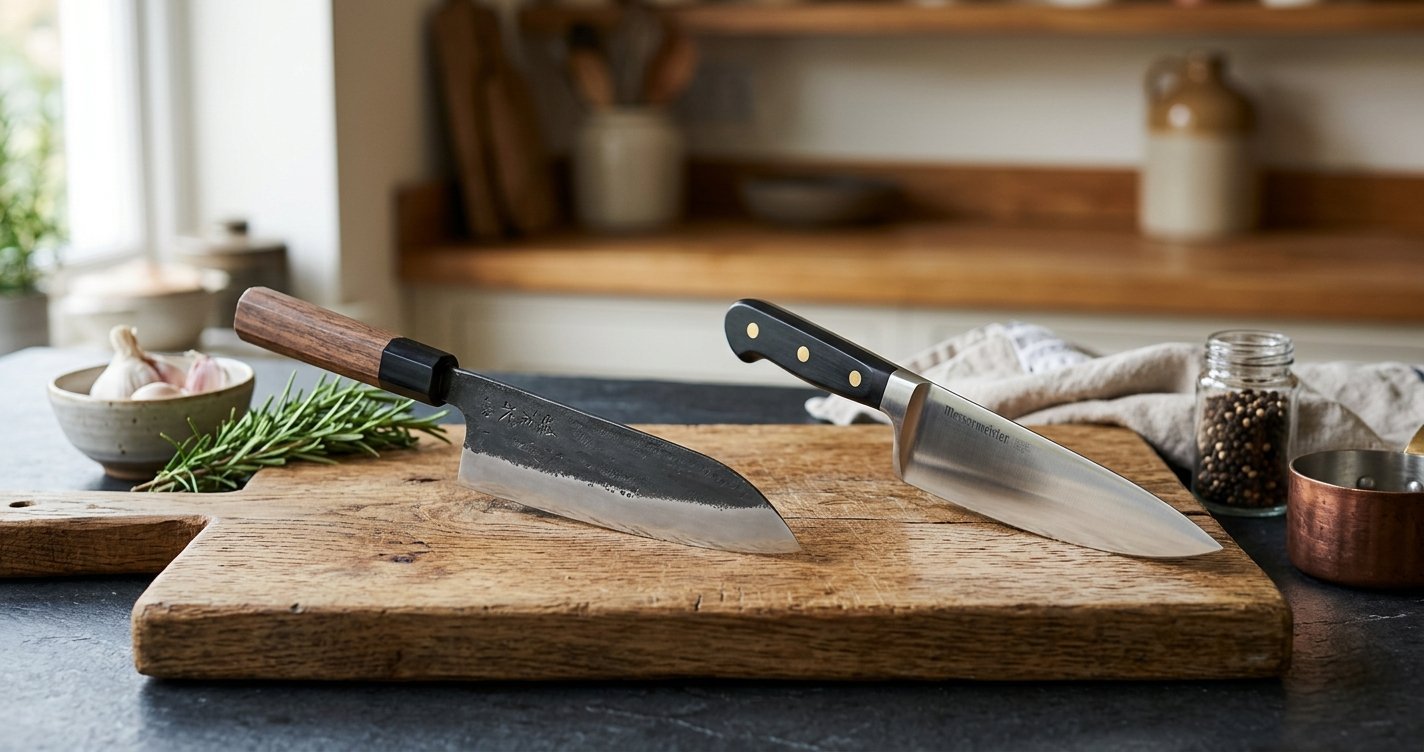
Choosing between Japanese and German kitchen knives often comes down to more than where the knife was made. The two traditions have developed different approaches to blade geometry, steel, balance, and cutting performance.
Japanese knives are often associated with thinner blades, harder steels, and precise cutting. German knives traditionally emphasize durability, versatility, and a robust blade profile.
So, which should you buy?
The answer depends on how you cook, what you cut, how you maintain your knives, and what kind of cutting experience you prefer.
Read More: Is Chicago Cutlery Good? An Honest Look at Quality, Performance, and Value
Japanese vs. German Kitchen Knives at a Glance
| Feature | Japanese Knives | German Knives |
| Blade profile | Generally thinner | Generally thicker |
| Typical steel hardness | Higher | Moderate |
| Sharpness | Very sharp, precise edge | Sharp with a more robust edge |
| Edge retention | Often excellent | Generally good |
| Durability | Can be more sensitive to impacts | Typically very durable |
| Weight | Usually lighter | Usually heavier |
| Cutting style | Precise slicing, push cuts | Rocking, chopping, versatile prep |
| Maintenance | Often requires more care | Usually easier to maintain |
| Best for | Precision-focused cooks | Everyday all-purpose cooking |
These are general tendencies, not rules. Modern knife makers offer plenty of exceptions.
What Is a Japanese Kitchen Knife?
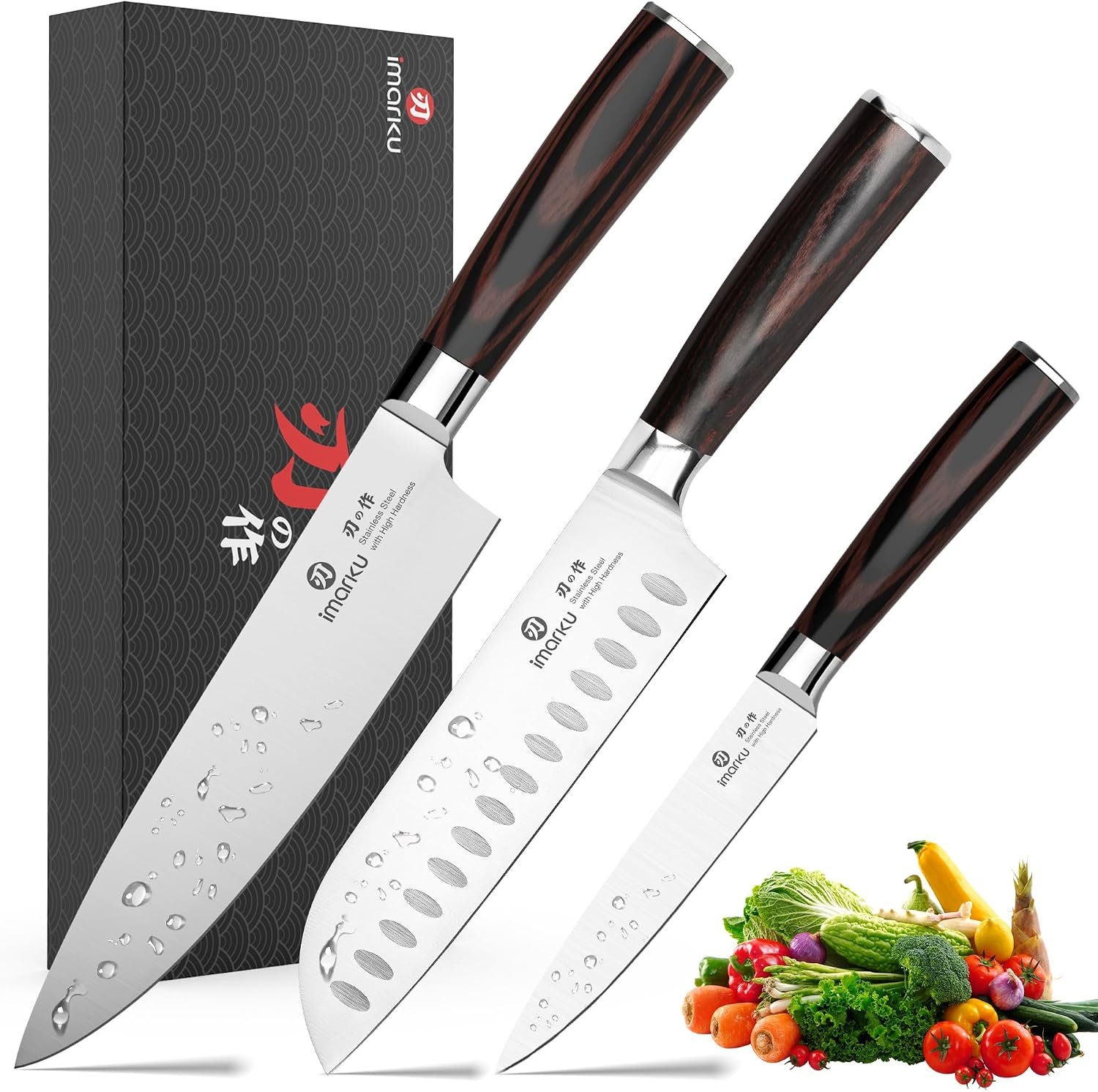
Japanese kitchen knives have evolved from traditional Japanese blades and modern culinary knife-making. Many models use relatively hard steel and a thin blade designed to move through food with minimal resistance.
Common Japanese knife styles include:
- Gyuto: A Japanese all-purpose chef’s knife, comparable to a Western chef’s knife.
- Santoku: A shorter, versatile knife commonly used for vegetables, meat, and fish.
- Petty: A small utility knife for detailed prep.
- Nakiri: A vegetable knife with a straight cutting edge.
- Sujihiki: A long slicing knife designed for clean cuts.
Japanese knives can be especially appealing if you value precision, thin slices, and a highly refined edge.
What Is a German Kitchen Knife?
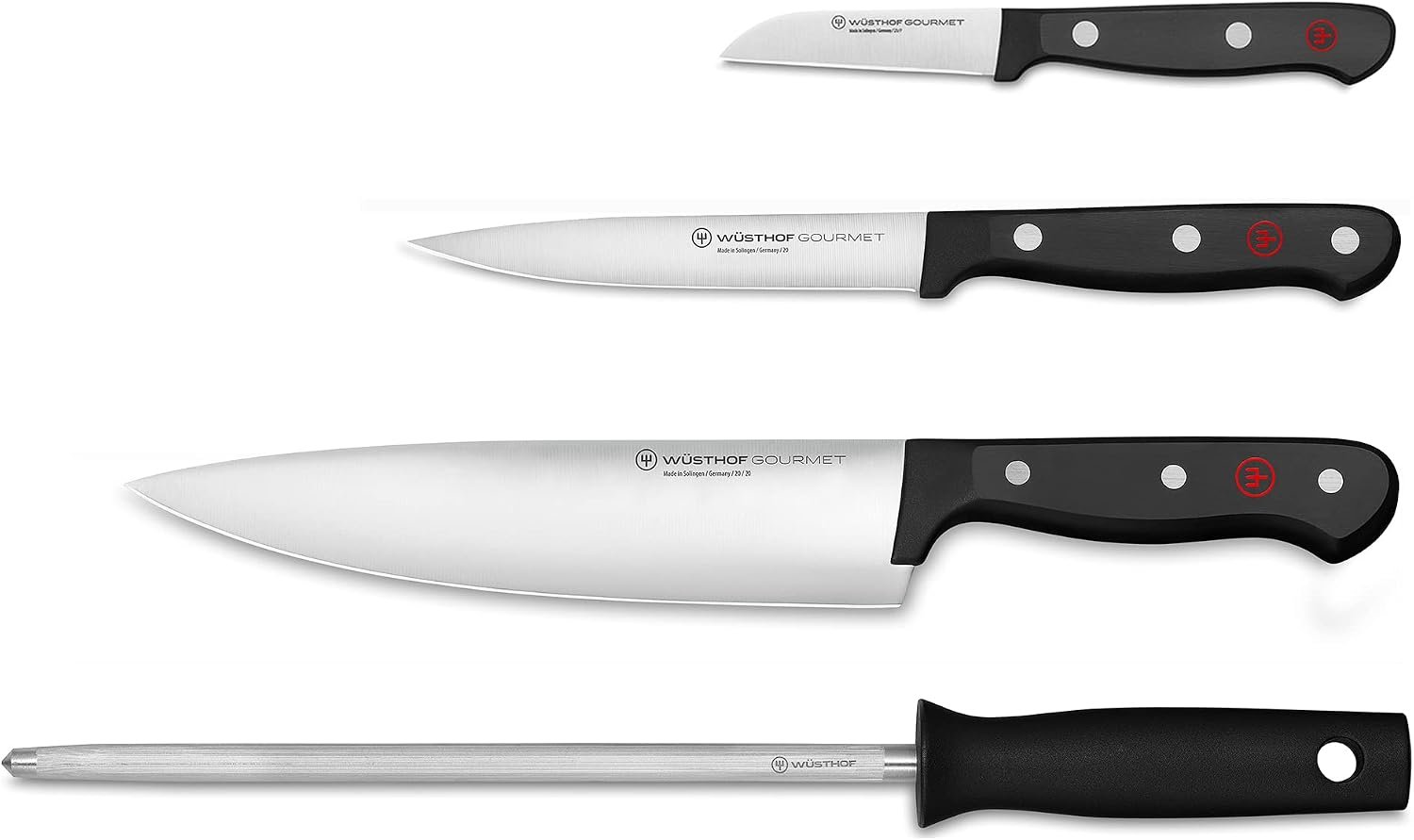
German kitchen knives are strongly associated with traditional European chef’s knives. They typically feature a thicker blade, substantial construction, and a rounded cutting profile.
Popular German-style knives include:
- Chef’s knife: The classic multipurpose kitchen knife.
- Paring knife: A small knife for peeling and detail work.
- Utility knife: A medium-sized option for everyday preparation.
- Bread knife: A serrated knife designed for bread and baked goods.
German-style chef’s knives are generally designed to handle a broad range of kitchen tasks and tolerate demanding everyday use.
Blade Sharpness and Cutting Performance
One of the biggest differences you’ll notice is blade geometry. Many Japanese knives have thinner blades and thinner edges. This can make them feel exceptionally precise when slicing vegetables, boneless meat, herbs, and other ingredients.
German knives generally have more material behind the edge. This can provide additional strength and make them comfortable for heavier everyday prep.
However, sharpness isn’t determined solely by nationality. Steel quality, heat treatment, blade geometry, sharpening technique, and edge angle all affect performance.
Japanese vs. German Knife Steel
Steel is another important consideration. Japanese knives frequently use harder carbon or stainless steels. Harder steel can support a fine edge and may provide strong edge retention, although some steels can be more demanding to sharpen or more susceptible to chipping if abused.
German knives commonly use tough stainless steels designed for durability and everyday use.
When shopping, don’t choose a knife simply because it says “Japanese steel” or “German steel.” Look for the specific steel, hardness, blade geometry, and manufacturer’s heat treatment.
Which Holds an Edge Longer?
Japanese knives often have an advantage in edge retention when they use harder, high-quality steel and are properly sharpened.
But edge retention depends on several factors:
- Type of steel
- Heat treatment
- Edge angle
- Cutting board material
- Foods being cut
- Cutting technique
- Sharpening method
A well-made German knife can retain a useful edge for a long time, while an inexpensive Japanese knife isn’t automatically superior.
Which Knife Is More Durable?
If by durability you mean resistance to rough handling, a traditional German-style chef’s knife has some advantages.
Its thicker blade and tougher construction can make it better suited to demanding kitchen environments.
Japanese knives can also be extremely durable when used correctly. However, some high-hardness Japanese blades have thinner edges that can chip if used on bones, frozen foods, hard pits, or other unsuitable materials.
Never use a fine kitchen knife as a cleaver unless the manufacturer specifically designed it for that purpose.
Which Is Easier to Sharpen?
German knives are often relatively straightforward to sharpen because their steels and edge geometry are designed for practical everyday use.
Japanese knives vary considerably. Some are easy to sharpen, while very hard steels may require more specialized sharpening stones and technique.
For either type, regular maintenance is preferable to waiting until the knife becomes extremely dull.
Japanese vs. German Knife Weight and Balance
A German chef’s knife often feels substantial in the hand. Its heavier construction can feel reassuring during repetitive chopping and general food preparation.
Japanese knives tend to emphasize lighter construction and precise handling, although this varies significantly by design.
Neither approach is inherently better. The right balance is the one that feels comfortable and controlled in your hand.
Japanese vs. German Knives: Which Is Better for Vegetables?
If you frequently prepare vegetables, a thin Japanese knife can be particularly appealing. The thinner blade can pass through ingredients with relatively little resistance, making it useful for:
- Slicing onions
- Cutting carrots
- Preparing cabbage
- Chopping herbs
- Slicing potatoes
- Fine vegetable preparation
A German chef’s knife is also highly capable and may be preferable if you use a combination of chopping, rocking, and general-purpose techniques.
Which Is Better for Meat?
For boneless meat, either style can work extremely well. A Japanese gyuto or sujihiki can provide excellent precision for slicing and portioning. A German chef’s knife offers versatility and robustness for general meat preparation.
For cutting through bones or joints, however, you should use an appropriate meat cleaver, boning knife, or other purpose-built tool rather than a delicate chef’s knife.
Which Is Better for Beginners?
A German-style chef’s knife can be a straightforward starting point because it is versatile, durable, and generally forgiving of normal kitchen use.
That doesn’t mean beginners should avoid Japanese knives. A well-made Japanese gyuto or santoku can be an excellent first knife if you’re comfortable with careful handling and maintenance.
The most important factor is choosing a knife that fits your hand and cooking habits.
Japanese vs. German Kitchen Knives: Price
You can find inexpensive and premium knives from both traditions. Japanese knives often command higher prices when they use specialized steels, traditional manufacturing methods, hand-finishing, or highly refined blade geometry.
German knives also range from affordable everyday models to premium forged knives.
Instead of buying based solely on country of origin, compare:
- Steel type
- Blade thickness
- Edge geometry
- Handle construction
- Manufacturing quality
- Warranty
- Sharpening requirements
- Your intended use
How to Choose the Right Kitchen Knife
Consider your cooking habits before choosing a knife.
Choose a Japanese-style knife if you:
- Prefer a lightweight knife.
- Want highly precise cutting.
- Frequently slice vegetables and boneless proteins.
- Enjoy maintaining a very sharp edge.
- Are comfortable using careful cutting techniques.
- Want to explore specialized knife shapes and steels.
Choose a German-style knife if you:
- Want a robust everyday knife.
- Prefer a heavier feel.
- Use rocking or chopping motions.
- Want a forgiving all-purpose blade.
- Don’t want to spend as much time on knife maintenance.
- Prefer traditional Western chef’s-knife ergonomics.
Should You Buy a Japanese or German Chef’s Knife?
For many home cooks, the decision comes down to precision versus robustness. A Japanese knife can offer a thin, highly refined cutting experience, while a German knife can provide a sturdy, versatile tool for everyday preparation.
If you’re buying your first high-quality chef’s knife, pay particular attention to comfort, blade geometry, steel, maintenance requirements, and intended use rather than choosing solely by country.
Final Thoughts
Japanese and German kitchen knives represent two different approaches to knife design.
Japanese knives tend to emphasize thin blades, precision, hard steels, and refined cutting performance. German knives traditionally prioritize toughness, versatility, and a substantial feel.
Neither category is universally right for every cook.
FAQs
Are Japanese knives sharper than German knives?
Not necessarily. Japanese knives often have thinner edges and blade geometry designed for precise cutting, which can make them feel exceptionally sharp. A high-quality German knife can also be extremely sharp.
Are Japanese knives harder to maintain?
Some are. Japanese knives made from very hard steels or with extremely thin edges can require more careful handling and sharpening. However, many Japanese stainless-steel knives are relatively easy to maintain.
Are German knives more durable than Japanese knives?
Traditional German-style knives are generally built with durability and toughness in mind. Some Japanese knives use harder, thinner blades that can be more vulnerable to chipping when misused.
Can you use a Japanese knife for everyday cooking?
Yes. A Japanese gyuto or santoku can be an excellent everyday kitchen knife. Just follow the manufacturer’s recommendations for cutting technique, sharpening, and care.
Can German knives be as sharp as Japanese knives?
Yes. Sharpness depends on the steel, geometry, sharpening, and edge condition—not simply the knife’s country of origin.
Which is better for vegetables: Japanese or German knives?
Both work well, but a thin Japanese knife can offer particularly low-resistance cutting and precise vegetable preparation. A German chef’s knife provides more versatility for cooks who prefer a heavier blade and rocking motion.
Which knife should I buy first?
For a versatile first knife, consider a chef’s knife or Japanese gyuto in a comfortable size. Your preferred weight, grip, cutting technique, and maintenance habits should guide the final choice.
Do Japanese knives chip easily?
Some high-hardness Japanese knives with thin edges can chip if they encounter bones, frozen foods, hard pits, or twisting forces. Proper technique significantly reduces this risk.
Are expensive Japanese knives worth it?
Price alone doesn’t guarantee better performance. Premium Japanese knives can offer specialized steels, excellent geometry, craftsmanship, and finishing, but a well-made mid-range knife may provide better value for many home cooks.