Yes, for most home cooks. Cuisinart knives offer solid value-for-price performance, making them a reasonable choice for everyday kitchen tasks. They’re not built to the same standard as premium Japanese or German brands, but for casual cooking, meal prep, and beginners, they hold up well and won’t strain your budget.
If you’re a professional chef or cook daily with heavy precision work, you’ll likely want to look elsewhere. If you need reliable, affordable knives for regular home use, Cuisinart is a solid pick.
Read More: Can You Put a Ninja Air Fryer in the Dishwasher?
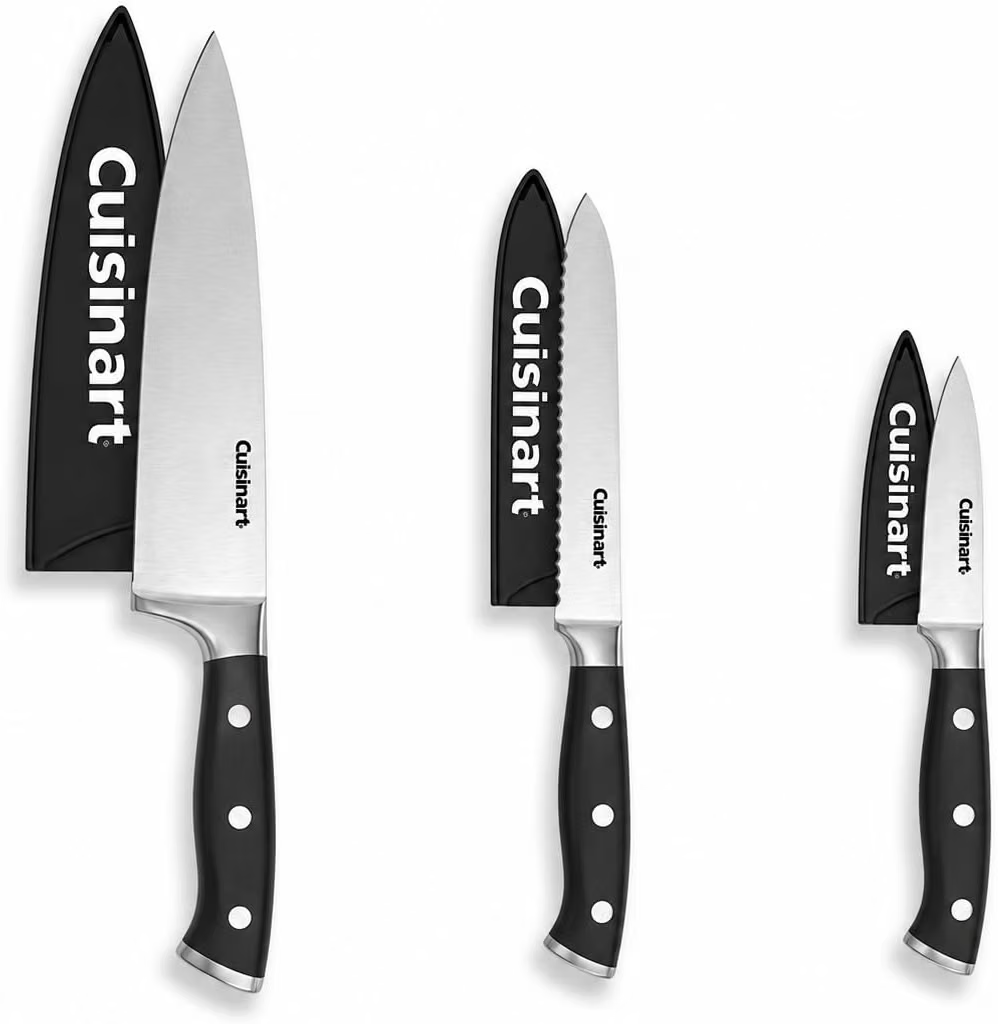
Table of contents
Cuisinart Knives: Pros and Cons
| Pros | Cons |
| Budget-friendly pricing | Edge retention is weaker than premium brands |
| Wide product range (sets, blocks, single knives) | Some lines use lower-grade stainless steel |
| Easy to find in stores and online | Handles can feel less balanced on longer knives |
| Good for beginners and light daily use | Not ideal for heavy-duty or professional use |
| Dishwasher-safe options available | Requires more frequent sharpening |
What Materials Do Cuisinart Knives Use?
Most Cuisinart knives are made from stainless steel, with construction quality varying across product lines:
- Classic/entry-level lines: Standard stainless steel, often stamped rather than forged
- Mid-range lines: Higher carbon content for better edge retention
- Premium lines (like Cuisinart Advantage or Triple Rivet): Forged construction with improved balance and durability
Forged knives are generally sturdier and hold an edge longer than stamped knives, so it’s worth checking which construction type a specific set uses before buying.
How Do Cuisinart Knives Compare to Other Brands?
Cuisinart vs. Victorinox: Victorinox is widely regarded in professional kitchens for its edge retention and ergonomic handles at a similarly accessible price point. Cuisinart is more budget-oriented and better suited to casual use.
Cuisinart vs. Wüsthof/Henckels: German brands like Wüsthof and Henckels use higher-grade steel and precision forging, resulting in better long-term performance — but at 3–5x the price. Cuisinart is a reasonable entry point if you’re not ready for that investment.
Cuisinart vs. Japanese brands (Shun, Global): Japanese knives typically offer thinner, sharper blades ideal for precision cutting, but they require more careful maintenance. Cuisinart knives are more forgiving and easier to maintain for everyday users.
Are Cuisinart Knives Good for Beginners?
Yes. Cuisinart knives are a common recommendation for beginner cooks because they’re:
- Affordable enough to replace without major financial regret
- Low-maintenance compared to high-carbon premium blades
- Widely available, making replacements and set expansions easy
- Simple to use, without the steep learning curve some professional-grade knives require
If you’re just building your first kitchen knife set, Cuisinart is a practical starting point.
Do Cuisinart Knives Stay Sharp?
Not as long as premium brands. Cuisinart knives typically need resharpening every few weeks to a couple of months, depending on usage frequency, compared to premium forged knives that can hold an edge for months.
To extend sharpness between sharpenings:
- Use a wooden or plastic cutting board (never glass or stone)
- Hand-wash and dry immediately after use
- Store in a knife block or on a magnetic strip, not loose in a drawer
- Hone regularly with a honing steel to maintain edge alignment
Are Cuisinart Knives Dishwasher Safe?
Some are, but hand-washing is recommended even for dishwasher-safe models. Dishwasher heat and detergent can dull blades faster and may damage handle materials over time. Check the specific product listing, since this varies by knife line.
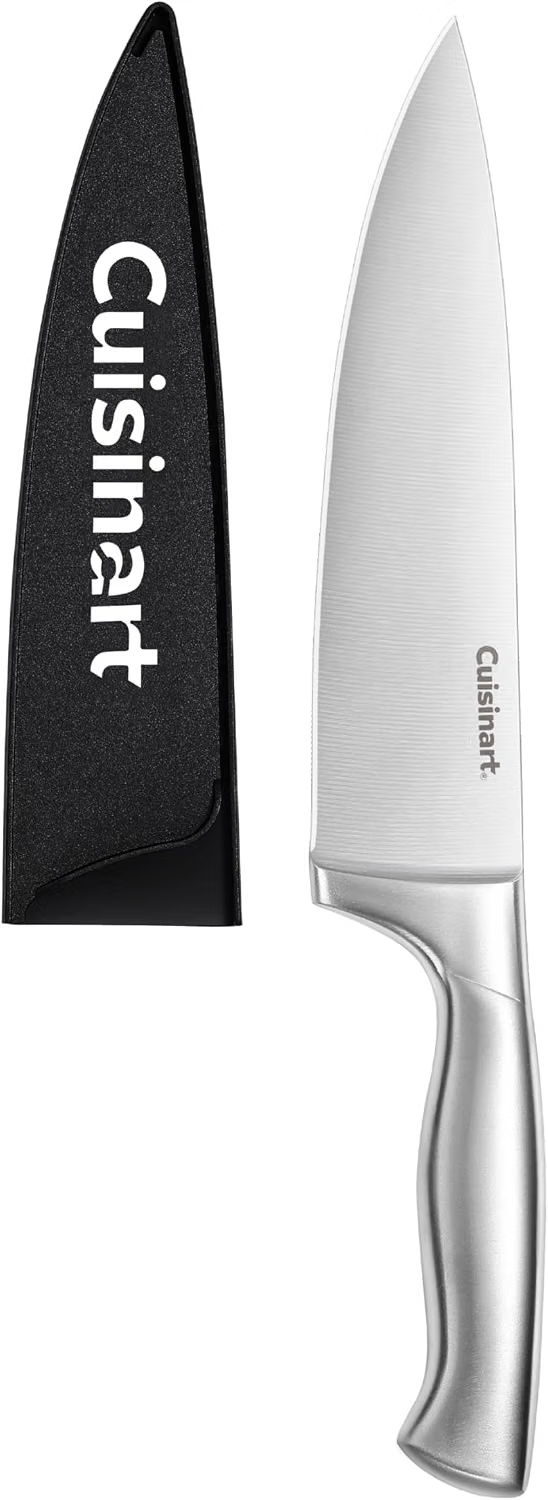
Which Cuisinart Knife Set Should You Buy?
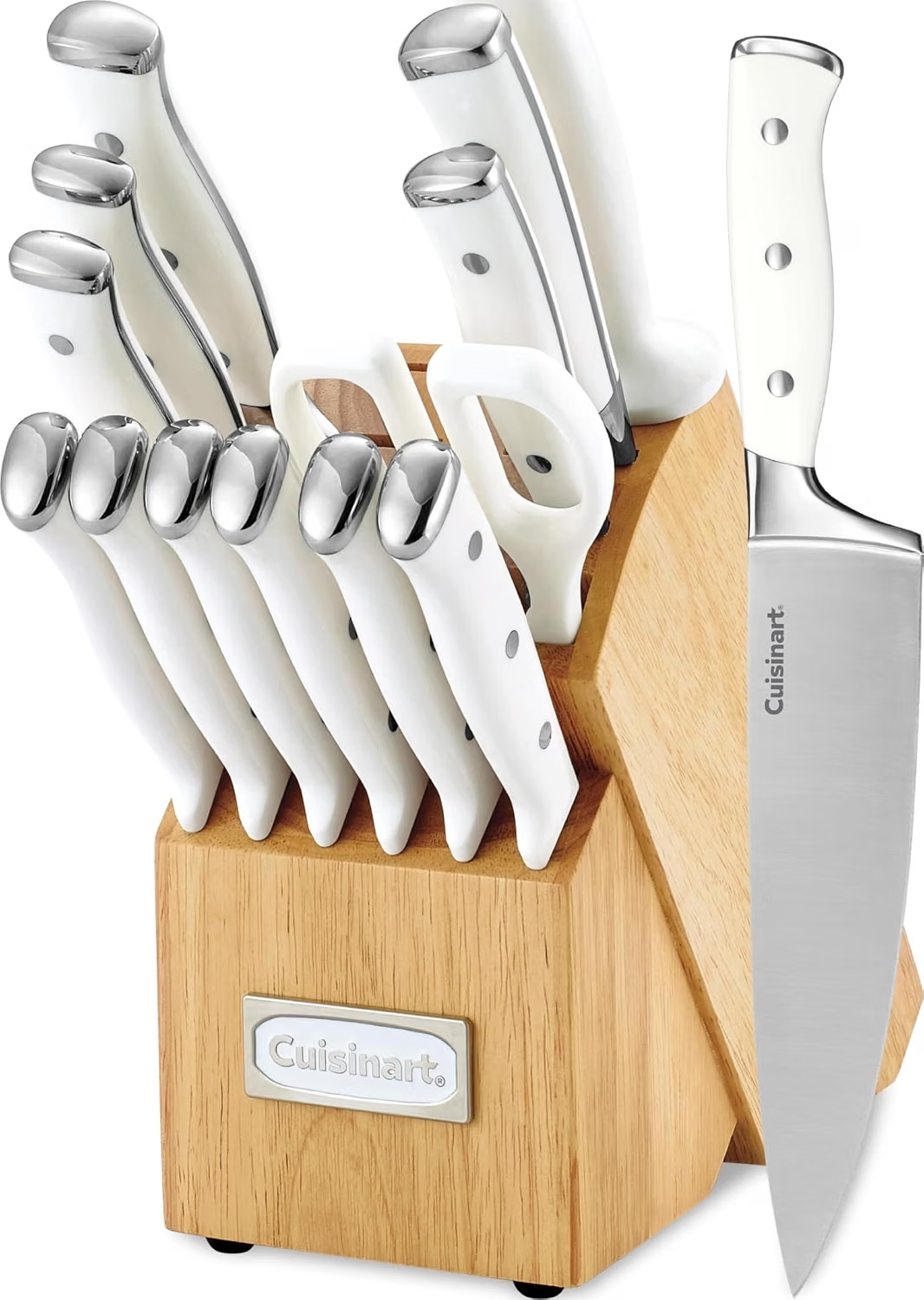
For everyday home cooking: A basic block set with a chef’s knife, paring knife, and utility knife covers most daily tasks without overspending.
For better durability: Look for a forged line (rather than stamped) if you cook frequently and want better edge retention.
For beginners on a tight budget: A single chef’s knife is often more practical than a full block set — you’ll get more use out of one quality blade than several rarely-used specialty knives.
Cuisinart Knives: Quick FAQ
Are Cuisinart knives good quality?
They offer decent quality for the price, especially for home cooks who don’t need professional-grade performance.
Are Cuisinart knives better than Farberware?
Cuisinart generally performs slightly better than Farberware in terms of edge retention and construction, though both are budget-tier brands.
How long do Cuisinart knives last?
With proper care, Cuisinart knives can last several years, though they’ll need more frequent sharpening than premium brands.
Where are Cuisinart knives made?
Manufacturing varies by product line and has changed over time, so check the specific product packaging or listing for current sourcing information.
Can Cuisinart knives be professionally sharpened?
Yes, Cuisinart knives can be sharpened with standard knife-sharpening services or tools, just like most stainless steel kitchen knives.
Final Takeaway
Cuisinart knives are a solid, budget-friendly choice for everyday home cooking — reliable enough for daily meal prep, but not built for professional-level precision or longevity. If you cook casually and want dependable knives without a big investment, they’re worth buying. If you cook daily and want a blade that holds its edge for months, it’s worth saving up for a forged premium brand instead.