Ceramic vs Nonstick Cookware: Which Is Better?
Ceramic cookware is best for health-conscious cooks who prefer PFAS-free coatings and moderate-heat cooking. Nonstick cookware offers superior food release, easier cooking, and better performance for delicate foods but may have a shorter lifespan depending on quality.
Read More: Caraway vs GreenPan: Which Cookware Is Better?
Table of contents
Ceramic vs Nonstick Cookware: Quick Comparison Table
| Feature | Ceramic Cookware | Nonstick Cookware |
| Nonstick Performance | Very Good | Excellent |
| Food Release | Good | Excellent |
| Cooking Eggs | Good | Excellent |
| Durability | Moderate | Moderate to High |
| Scratch Resistance | Moderate | Better with premium coatings |
| High Heat Cooking | Medium Heat Only | Medium Heat Only |
| Chemical-Free Coating | Usually Yes | Modern versions are generally PFOA-free; some contain PTFE |
| Easy to Clean | Yes | Excellent |
| Lifespan | 1–3 Years | 2–5 Years |
| Best For | Healthy cooking | Everyday convenience |
| Price | Mid-range | Budget to Premium |
What Is Ceramic Cookware?
Ceramic cookware uses a mineral-based coating that creates a naturally slick cooking surface without traditional PTFE coatings.
Advantages
- PFAS-free options available
- Eco-friendly manufacturing in many brands
- Attractive appearance
- Easy cleanup
- Ideal for low-oil cooking
Disadvantages
- The coating wears faster
- Loses nonstick ability over time
- Sensitive to overheating
- Not ideal for high-temperature searing
What Is Nonstick Cookware?
Traditional nonstick cookware uses a PTFE-based coating designed to prevent food from sticking and simplify cooking.
Advantages
- Superior food release
- Perfect for eggs, pancakes, and fish
- Requires less cooking oil
- Easy cleaning
- Widely available
Disadvantages
- Can scratch if used improperly
- The coating eventually wears out
- Overheating may shorten the lifespan
- Requires gentle utensils
Ceramic vs Nonstick Cookware: Which Is Healthier?
High-quality ceramic cookware is often chosen by people seeking PFAS-free cooking surfaces. Modern PTFE nonstick cookware is considered safe when used according to the manufacturer’s instructions and not overheated.
| Health Factor | Ceramic | Nonstick |
| PFAS-Free Options | Yes | Some |
| PTFE-Free | Yes | No |
| Low Oil Cooking | Yes | Yes |
| Safe at Recommended Temperatures | Yes | Yes |
Which Lasts Longer?
Premium nonstick cookware generally lasts longer than ceramic-coated cookware when both are properly maintained.
| Cookware Type | Average Lifespan |
| Ceramic | 1–3 Years |
| Nonstick | 2–5 Years |
Tips to increase lifespan:
- Hand wash when possible
- Avoid metal utensils
- Do not overheat empty pans
- Store carefully
- Use medium heat
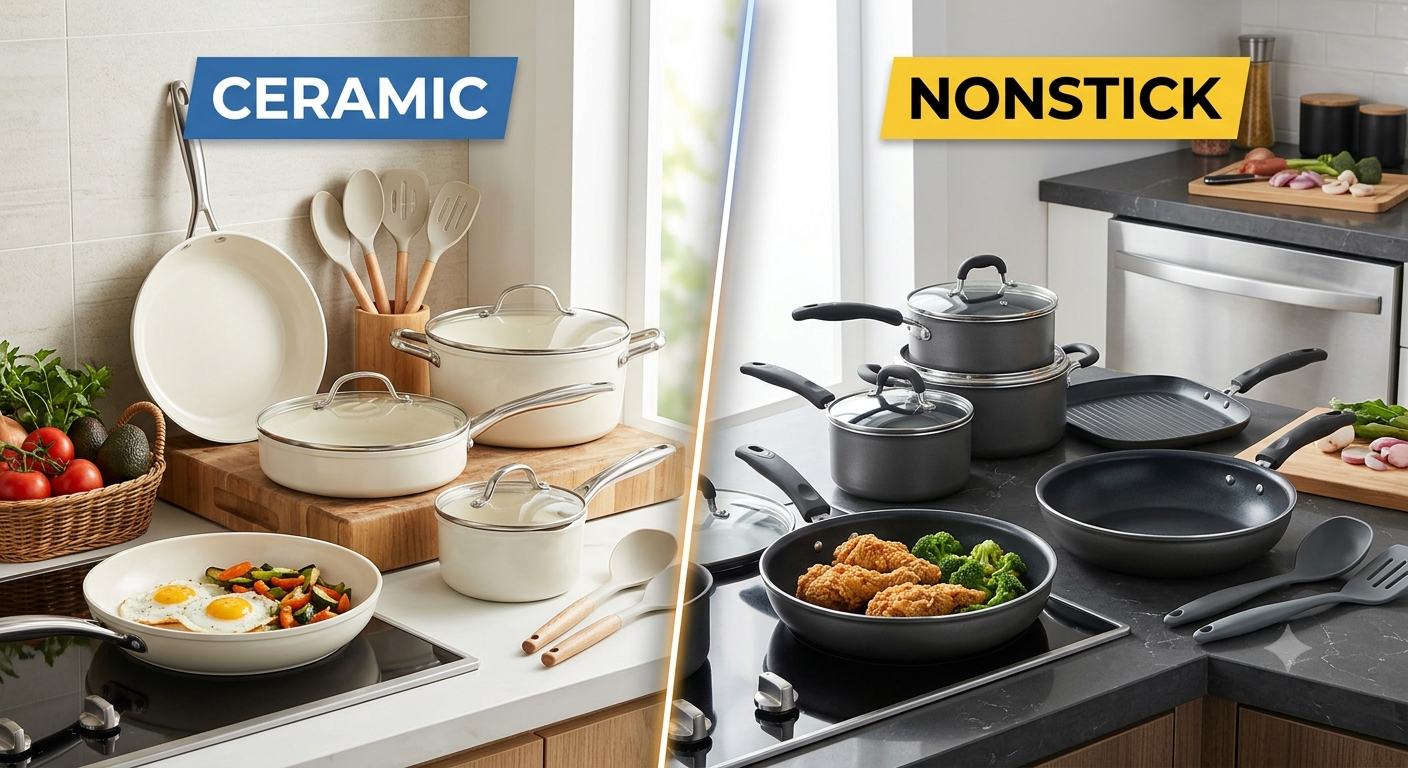
Ceramic vs Nonstick Cookware: Which Is Better for Cooking?
| Cooking Task | Winner |
| Eggs | Nonstick |
| Pancakes | Nonstick |
| Fish | Nonstick |
| Vegetables | Ceramic |
| Low-Oil Cooking | Tie |
| Daily Meals | Nonstick |
| Healthy Cooking | Ceramic |
Heat Performance Comparison
| Feature | Ceramic | Nonstick |
| High Heat | Fair | Fair |
| Medium Heat | Excellent | Excellent |
| Heat Distribution | Depends on Base | Depends on Base |
| Browning | Moderate | Moderate |
| Searing | Limited | Limited |
Cleaning Comparison
Both cookware types are easy to clean, but nonstick usually requires less effort because food releases more easily.
Cleaning tips:
- Allow cookware to cool before washing.
- Use soft sponges.
- Avoid abrasive cleaners.
- Dry completely before storing.
Ceramic vs Nonstick Cookware: Pros and Cons
| Ceramic Pros | Ceramic Cons |
| PFAS-free options | Shorter lifespan |
| Attractive finish | Can lose nonstick coating faster |
| Easy cleaning | Sensitive to overheating |
| Less oil needed | More fragile coating |
| Nonstick Pros | Nonstick Cons |
| Excellent food release | The coating wears over time |
| Great for beginners | Avoid high heat |
| Very easy cleanup | Metal utensils can damage the coating |
| Affordable options | Needs proper care |
Which Is Better for Eggs?
Nonstick cookware remains the best choice for cooking eggs because it provides the smoothest food release with minimal oil.
Which Is Better for Everyday Cooking?
Nonstick cookware is generally better for everyday cooking thanks to its convenience, easy cleanup, and reliable performance.
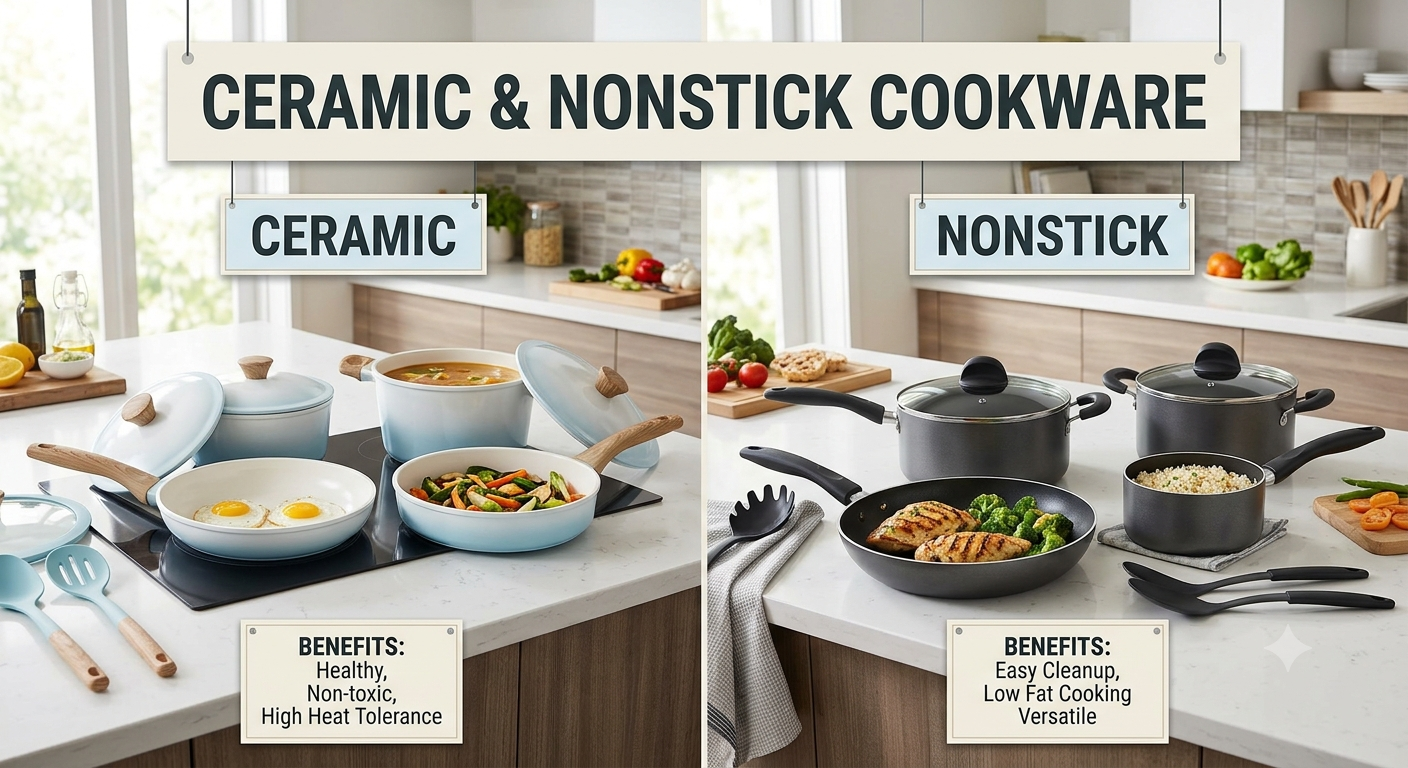
Choose ceramic if you prioritize PFAS-free coatings and typically cook at medium temperatures.
Which Is Better for High Heat?
Neither ceramic nor nonstick cookware is designed for prolonged high-heat cooking. For searing or very high temperatures, stainless steel or cast iron is a better choice.
Ceramic vs Nonstick Cookware: Which Is Better for Beginners?
Nonstick cookware is often the easiest option for beginners because it reduces sticking and simplifies cleanup.
Price Comparison
| Budget | Ceramic | Nonstick |
| Budget | $$ | $ |
| Mid-Range | $$$ | $$ |
| Premium | $$$$ | $$$$ |
Maintenance Tips
- Cook on low to medium heat.
- Avoid aerosol cooking sprays unless the manufacturer approves them.
- Use silicone, nylon, or wooden utensils.
- Wash gently.
- Avoid thermal shock by not placing a hot pan in cold water.
- Store with pan protectors.
Who Should Buy Ceramic?
Choose ceramic cookware if you:
- Prefer PFAS-free cookware options.
- Cook vegetables frequently.
- Like eco-conscious products.
- Want an attractive cookware set.
- Usually, cook on medium heat.
Who Should Buy Nonstick?
Choose nonstick cookware if you:
- Cook eggs daily.
- Want the easiest cleanup.
- Need reliable food release.
- Cook breakfast often.
- Want the most beginner-friendly cookware.
Frequently Asked Questions
Is ceramic cookware safer than nonstick?
Ceramic cookware is PTFE-free and often PFAS-free. Modern PTFE nonstick cookware is generally considered safe when used as directed and not overheated.
Does ceramic cookware lose its nonstick coating?
Yes. Most ceramic coatings gradually lose their nonstick performance with regular use.
Can nonstick cookware be used on high heat?
No. Medium heat is recommended to preserve the coating and extend cookware life.
Which cookware lasts longer?
Premium PTFE nonstick cookware generally lasts longer than ceramic-coated cookware.
Can metal utensils be used?
No. Silicone, nylon, or wooden utensils are recommended for both cookware types to protect the cooking surface.
Which is easier to clean?
Both are easy to clean, but nonstick cookware typically releases food more easily, making cleanup slightly faster.
Is ceramic cookware worth buying?
Yes, if you value PFAS-free coatings, easy cleaning, and healthy everyday cooking over maximum coating longevity.
Final Tip
The best cookware depends on how you cook. Choose ceramic cookware if your priority is a PFAS-free cooking surface and moderate-heat, health-focused meals. Choose nonstick cookware if you want the easiest food release, excellent everyday performance, and effortless cleanup. For the most versatile kitchen, many home cooks benefit from owning both: a ceramic pan for lighter cooking and a quality nonstick pan for eggs, pancakes, and delicate foods.