Table of contents
Which Pan Is Better?
Cast iron and carbon steel are both durable, high-performance cookware materials, but the better choice depends on how you cook. Cast iron holds heat longer and is ideal for slow cooking, searing, and baking. Carbon steel heats faster, responds better to temperature changes, and is preferred for everyday cooking, frying, and professional kitchens.
Read More: Ceramic vs Nonstick Cookware: Comparison Guide
| Feature | Cast Iron | Carbon Steel |
| Heat retention | Excellent | Very good |
| Heat responsiveness | Slower | Faster |
| Weight | Heavier | Lighter |
| Cooking style | Slow cooking, baking, and searing | Stir-frying, sautéing, and everyday cooking |
| Surface | Rougher naturally | Smoother after seasoning |
| Seasoning required | Yes | Yes |
| Durability | Extremely durable | Extremely durable |
| Beginner friendly | Easier for low-and-slow cooking | Requires learning heat control |
What Is the Difference?
Cast iron and carbon steel are both made primarily from iron and carbon, but their manufacturing process creates different cooking characteristics.
| Difference | Cast Iron | Carbon Steel |
| Carbon content | Higher carbon content | Lower carbon content |
| Manufacturing | Molten iron poured into molds | Steel sheets shaped into cookware |
| Thickness | Usually thicker | Usually thinner |
| Cooking feel | Stable, heavy, powerful heat | Fast, flexible heat control |
Cast iron is a heat-retaining powerhouse, while carbon steel is a lighter and more responsive alternative.
Which One Heats Better?
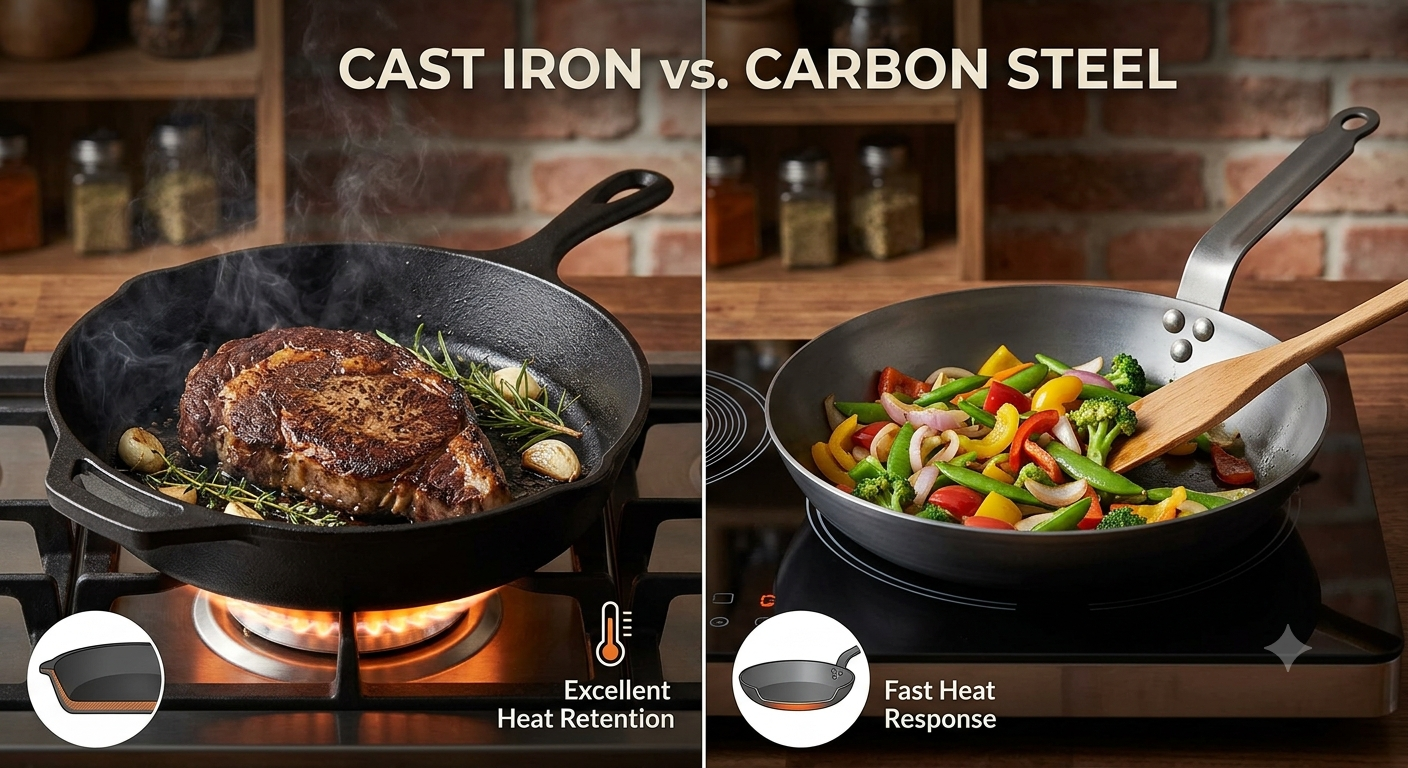
Cast iron retains heat better, but carbon steel heats and cools faster.
| Cooking Performance | Winner |
| Maintaining high heat | Cast iron |
| Quick temperature changes | Carbon steel |
| High-temperature searing | Both |
| Delicate temperature control | Carbon steel |
If you are cooking steak, cast iron provides excellent heat retention. If you frequently adjust temperatures while cooking, carbon steel offers more control.
Which Is Better for Steak?
Both are excellent for steak, but cast iron is often preferred because it maintains intense heat during searing.
| Steak Factor | Best Choice |
| Thick steak | Cast iron |
| Frequent cooking | Carbon steel |
| Restaurant-style sear | Both |
| Easier handling | Carbon steel |
Choose cast iron for maximum searing power and carbon steel for a lighter everyday steak pan.
Which Is Better for Everyday Cooking?
Carbon steel is usually better for everyday cooking because it is lighter, heats quickly, and handles more cooking techniques.
Carbon steel works well for:
- Eggs after proper seasoning
- Vegetables
- Chicken
- Fish
- Stir-fry
- Sautéing
Cast iron works especially well for:
- Cornbread
- Roasts
- Fried chicken
- Steaks
- Braised dishes
Which Pan Is Easier to Maintain?
Both pans require seasoning, but carbon steel often needs less effort during daily use.
| Maintenance | Cast Iron | Carbon Steel |
| Seasoning needed | Yes | Yes |
| Rust prevention | Required | Required |
| Cleaning | Simple | Simple |
| Daily upkeep | Moderate | Slightly easier |
Carbon steel is easier for cooks who use their pans frequently, while cast iron is more forgiving.
Which Is More Durable?
Both cast iron and carbon steel can last generations when properly maintained.
| Durability Factor | Winner |
| Resistance to damage | Tie |
| Long-term lifespan | Tie |
| Heavy-duty cooking | Cast iron |
| Easier handling | Carbon steel |
Cast iron can crack if dropped because it is brittle. Carbon steel can dent, but is generally more impact-resistant.
Which Is Better for Beginners?
Cast iron is often easier for beginners because it is simple to use and forgiving with heat.
| Beginner Need | Best Option |
| Low maintenance expectations | Cast iron |
| Learning seasoning | Both |
| Lightweight handling | Carbon steel |
| Everyday versatility | Carbon steel |
Can You Cook Eggs in Both?
Yes, you can cook eggs in both pans after building a good seasoning layer.
Carbon steel often becomes naturally nonstick faster because of its smoother surface.
Tips:
- Preheat the pan properly
- Use enough cooking fat
- Avoid excessive high heat
- Maintain seasoning regularly
Cast Iron vs Carbon Steel: Pros and Cons
Cast Iron Pros and Cons
| Pros | Cons |
| Excellent heat retention | Heavy |
| Extremely durable | Slow temperature adjustment |
| Great for searing | Requires seasoning |
| Affordable | Can rust |
Carbon Steel Pros and Cons
| Pros | Cons |
| Lightweight | Requires seasoning |
| Fast heating | Learning curve |
| Smooth cooking surface | Can rust |
| Professional kitchen favorite | Usually costs more |
Cast Iron vs Carbon Steel: Which One Should You Buy?
Choose cast iron if you:
- Cook steaks regularly
- Like slow cooking
- Want maximum heat retention
- Enjoy traditional cookware
Choose carbon steel if you:
- Want a lighter pan
- Cook different foods daily
- Need faster temperature control
- Want a restaurant-style versatile skillet
Cast Iron vs Carbon Steel: Frequently Asked Questions
Is carbon steel better than cast iron?
Carbon steel is better for cooks who want a lighter, faster, and more responsive pan. Cast iron is better for maximum heat retention.
Does carbon steel become nonstick?
Yes. Proper seasoning creates a naturally nonstick cooking surface over time.
Can carbon steel replace cast iron?
For most everyday cooking, yes. However, cast iron still has an advantage for heat retention and baking.
Which lasts longer, cast iron or carbon steel?
Both can last for decades or generations with proper care.
Is cast iron healthier than carbon steel?
Both are considered safe cookware options when properly maintained and used correctly.
Can you use metal utensils on cast iron and carbon steel?
Yes. Both materials are durable enough for metal utensils, although gentle use helps preserve seasoning.
Final Verdict: Cast Iron vs Carbon Steel
| If You Want… | Choose |
| Best heat retention | Cast Iron |
| Best everyday skillet | Carbon Steel |
| Best steak searing | Cast Iron |
| Best lightweight option | Carbon Steel |
| Best beginner choice | Cast Iron |
| Best professional-style cooking | Carbon Steel |