Nonstick pans peel when the bond between the coating and the metal base breaks down — usually from overheating (above 500°F/260°C), metal utensils, abrasive cleaning, or normal age (5–7 years). A peeling pan isn’t an emergency, but it should be replaced rather than kept in rotation.
Read More: Best Induction Cookware Set 2026: Top Picks Ranked
Table of contents
What Causes a Nonstick Coating to Peel?
| Cause | What’s Happening |
| Overheating | PTFE coatings start breaking down above 500°F (260°C), weakening the bond to the metal |
| Metal utensils | Forks, whisks, and metal spatulas scratch and lift the coating |
| Abrasive cleaning | Steel wool and scouring pads strip the surface layer by layer |
| Thermal shock | Running a hot pan under cold water makes the metal contract faster than the coating |
| Aerosol cooking sprays | Leave a sticky residue that builds up and weakens adhesion over time |
| Age | Coatings naturally degrade after 5–7 years of regular use, even with good care |
Is It Still Safe to Cook With a Peeling Pan?
Not recommended, but not an emergency either.
Ingested PTFE flakes pass through the digestive system without being absorbed, according to the FDA — so accidentally swallowing a small flake isn’t acutely dangerous. The bigger concerns are:
- Uneven heating — exposed metal patches heat faster than coated areas, creating hot spots
- Fume risk — damaged coatings are more likely to overheat locally, increasing the chance of releasing fumes
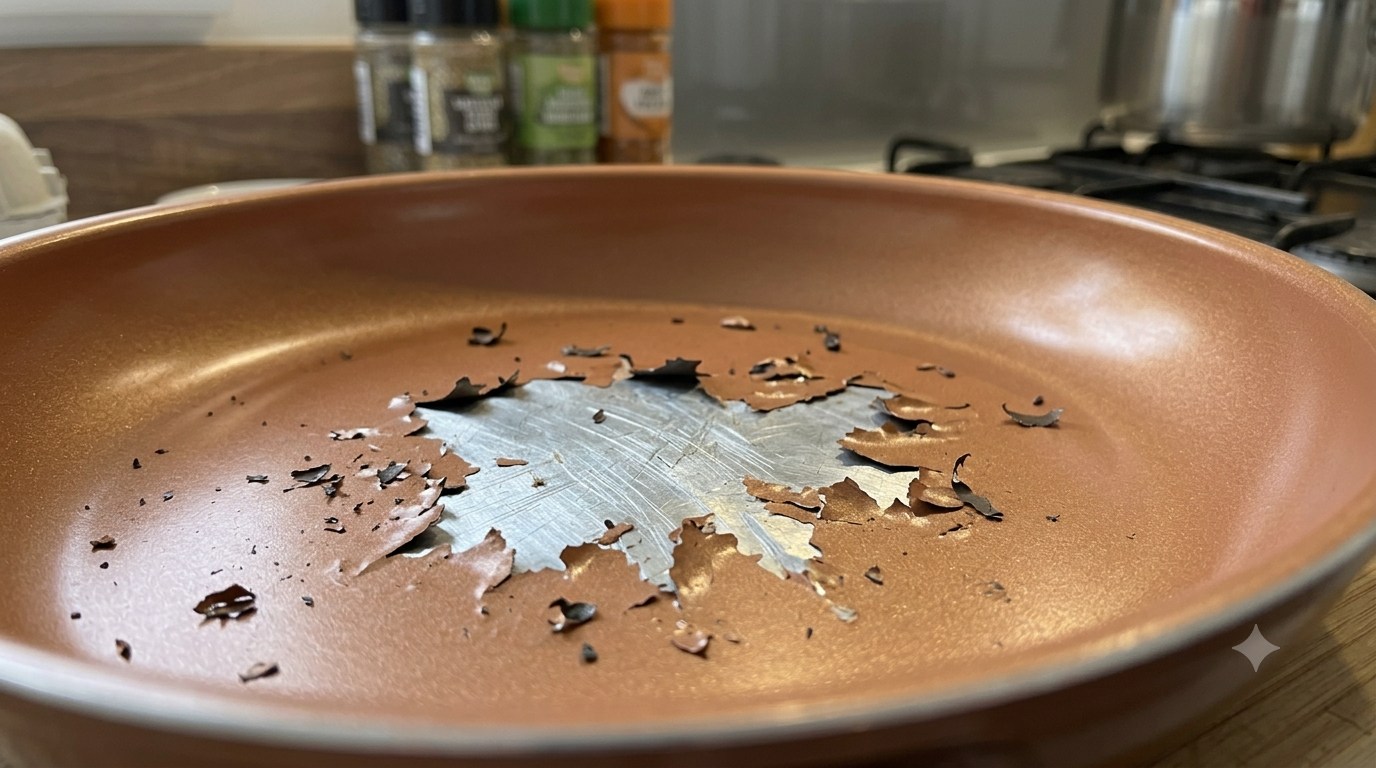
- Progressive failure — peeling only gets worse, never better, and flaking will continue into your food
Any nonstick pan manufactured before 2015 should be discarded regardless of its condition, since older coatings may contain compounds that have since been phased out.
Real Decisions: What Should You Actually Do?
| Situation | What to Do |
| Small scratch, no visible flaking | Keep using it, but switch to silicone/wood utensils immediately |
| Visible flaking or bubbling | Replace it — the coating won’t reattach or repair itself |
| Pan is 5+ years old and losing nonstick performance | Replace, even without visible peeling |
| Food increasingly sticks despite oiling | Early warning sign — plan to replace soon |
| Pan predates 2015 | Replace regardless of appearance |
How to Prevent Peeling in the Future
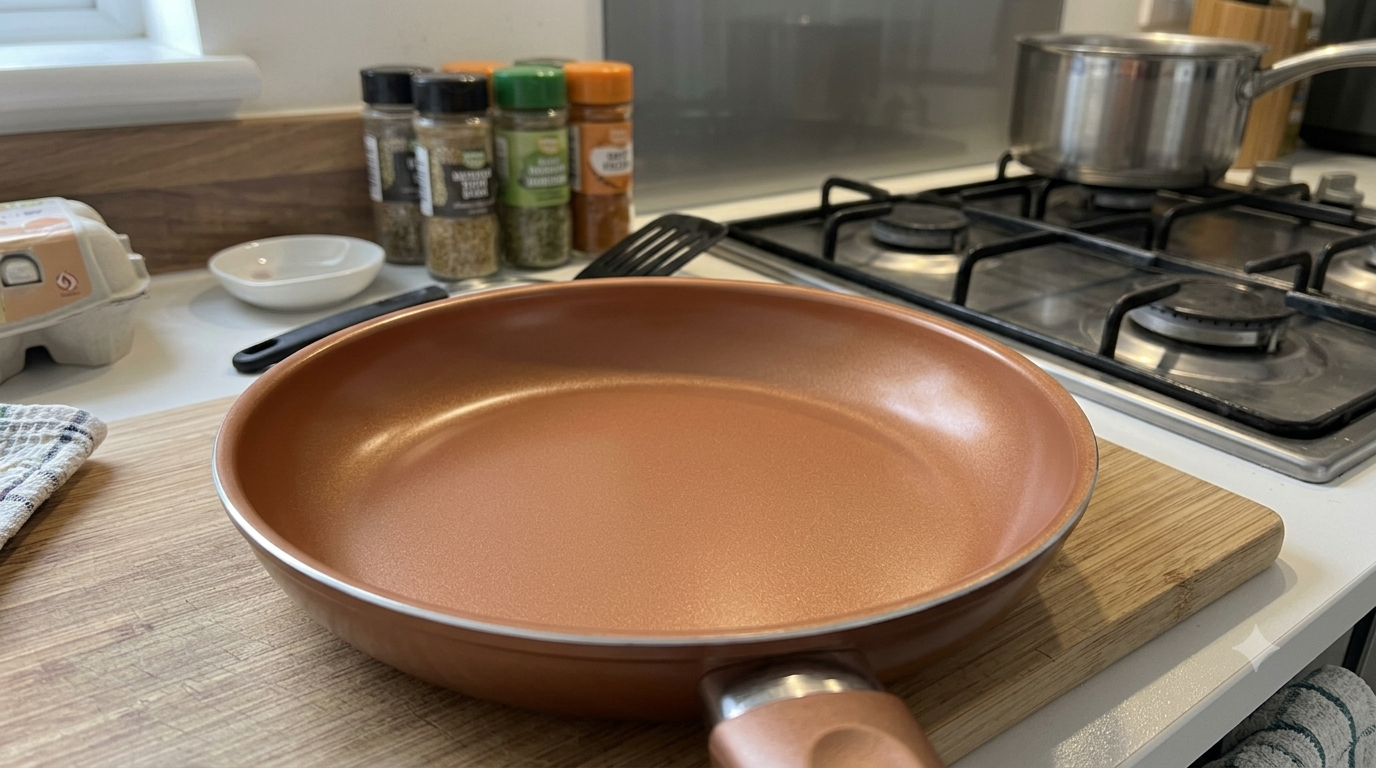
- Cook on low-to-medium heat; avoid preheating an empty nonstick pan on high
- Use only silicone, wood, or nylon utensils — never metal
- Hand-wash with a soft sponge; skip steel wool and abrasive cleaners
- Let the pan cool before washing to avoid thermal shock
- Store pans with a protective liner or pan protector to prevent stacking scratches
- Avoid aerosol cooking sprays; use oil from a bottle instead
Frequently Asked Questions
Why is my nonstick pan peeling after only a year?
Likely causes are high heat use, metal utensils, or a lower-quality thin coating — premium pans use thicker, stronger-bonded layers that last longer.
Can a peeling nonstick pan be repaired?
No. Once the coating separates from the metal, it cannot be reattached or resealed — replacement is the only fix.
Is Teflon peeling dangerous to breathe or eat?
Ingested flakes are not absorbed by the body. The real risk is inhaling fumes if a damaged pan is significantly overheated, which is why a peeling pan should be replaced rather than pushed to its limit.
How long do nonstick pans normally last?
With proper care, most nonstick pans last 5–7 years; ceramic-coated pans often wear out faster than traditional PTFE coatings.
What’s the difference between ceramic and PTFE peeling risk?
Ceramic coatings are more vulnerable to damage from aerosol sprays and thermal shock, while PTFE is more sensitive to overheating and metal utensil scratches.
Conclusion
A peeling nonstick pan is almost always the result of heat, scratching, or simple age catching up with the coating — not a sudden defect. It won’t poison you overnight, but it also won’t get better with time. The safest move is simple: once you see flaking, bubbling, or exposed metal, retire the pan rather than trying to cook through it. Switching to gentler utensils and lower heat will help your next pan last well past the average 5–7 year mark.