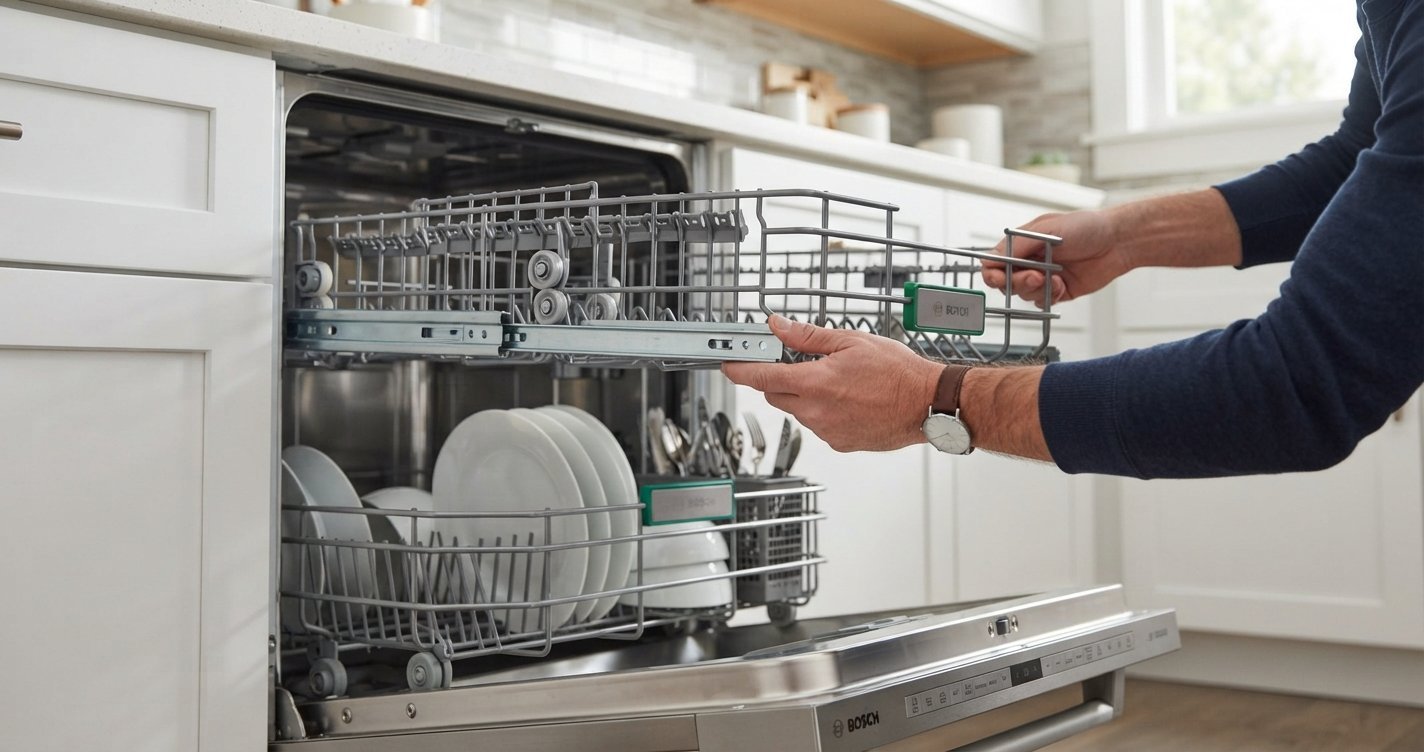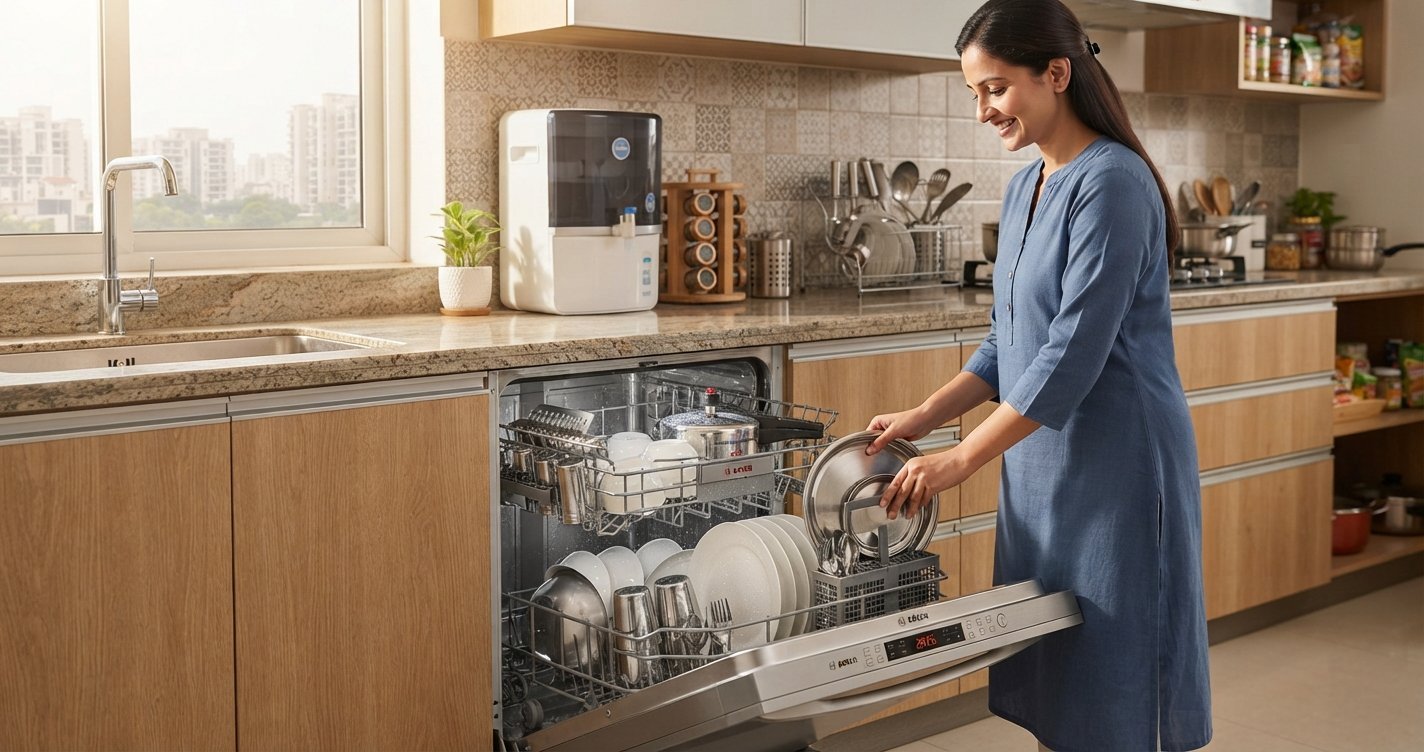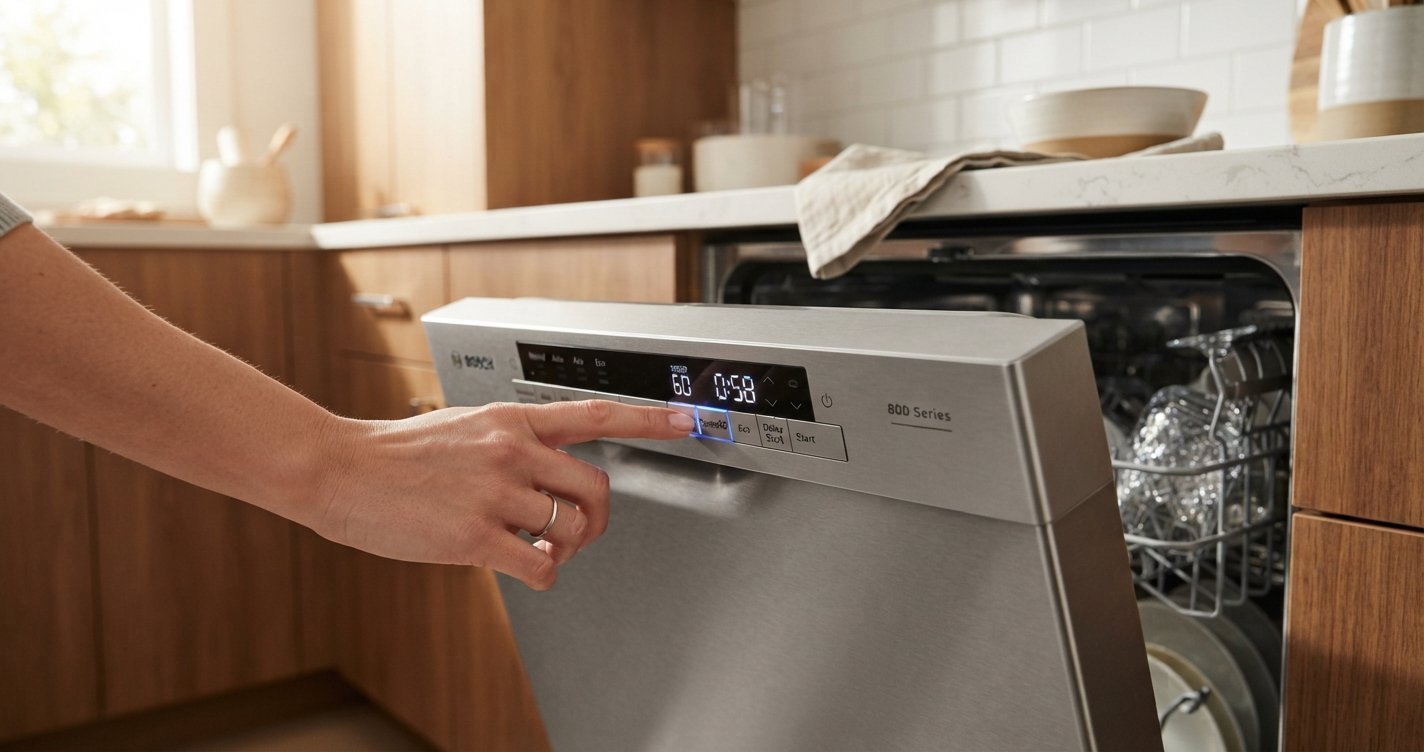
Choose Bosch if you want a quieter dishwasher, better drying, and a third rack on almost every model, and you can spend roughly $800 to $1,200 or more. Choose Whirlpool if you want a lower upfront price (often $400 to $900), simple controls, and cheap, easy repairs. Both brands are considered reliable, so the decision mostly comes down to budget, kitchen noise, and how much you value drying performance.
Read More: Bosch Dishwasher No Water Spray: Causes & Fixes
Table of contents
Bosch vs Whirlpool Dishwasher at a Glance
| Bosch | Whirlpool | |
| Typical price | About $500 to $2,500, often around $1,000 | About $400 to $1,100, often $600 to $900 |
| Noise (typical range) | Roughly 38 to 50 dBA | Roughly 47 to 64 dBA, with quieter units in newer lines |
| Tub | Stainless steel on most models; some entry models use a plastic tub | Stainless steel on most; plastic on budget models |
| Drying | Condensation drying, with AutoAir and CrystalDry on higher series | Heated-element drying |
| Third rack | On almost all models | Mainly on higher-end models |
| Model range | Large (about 60 models) | Smaller (about 14 models) |
| Repairs | Fewest service calls per unit among mass-market brands, per one repair company | Cheap, widely available parts, easy for any technician |
| Best for | Quiet kitchens, open-plan homes, better drying | Budgets, rentals, simple no-fuss use |
Figures come from the retailer and repair-company sources listed below. Prices and specifications vary by model and retailer, so confirm them on the product page before you buy.
Price: Whirlpool Costs Less Upfront
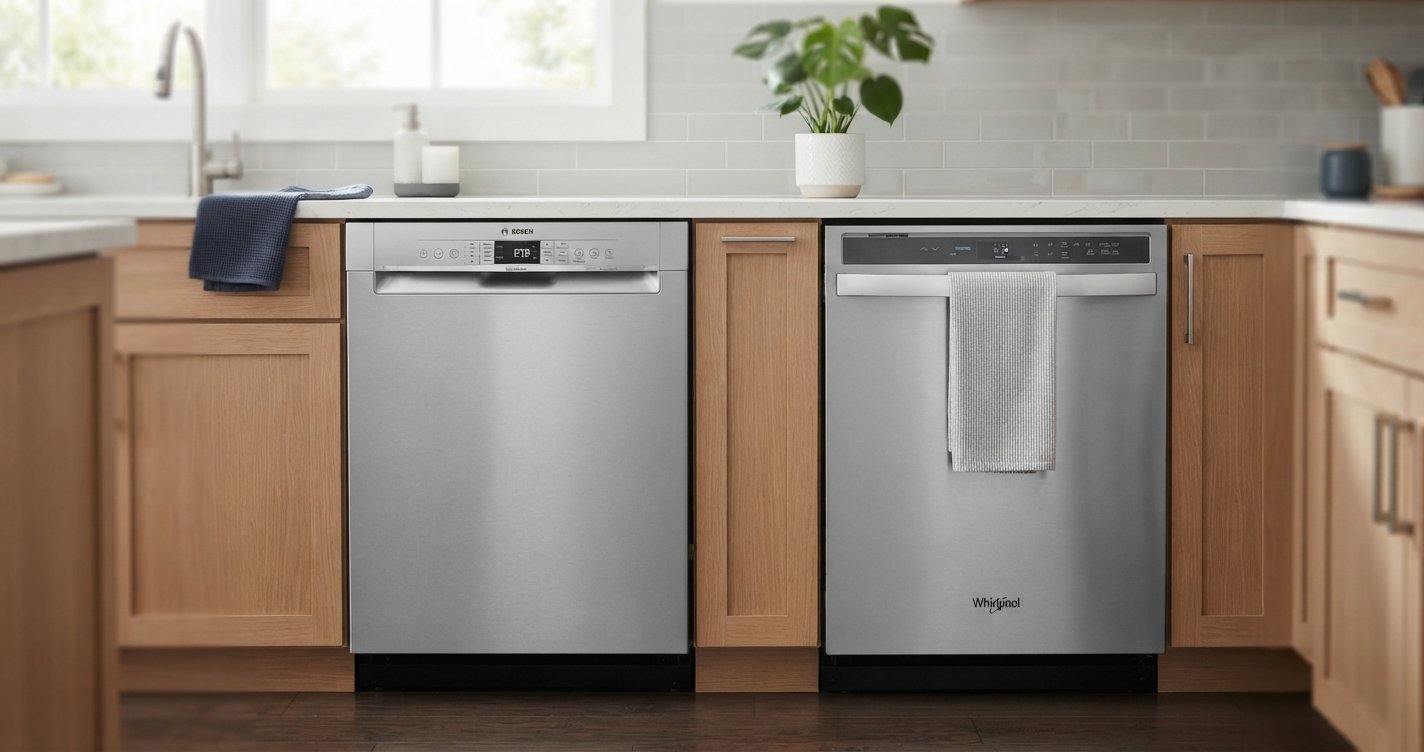
Whirlpool targets budget-conscious buyers with basic, no-frills models. Designer Appliances puts its sweet spot at $399 to $799, while Upsie’s comparison lists a typical range of $600 to $900.
Bosch aims at the mid to high end. The same sources put prices from about $500 for entry-level Ascenta/100 Series models to $2,000 or more for the Benchmark line, with $1,000 typical.
Bottom line: if your cap is under $700, Whirlpool gives you more choice. If you can stretch to the $800 to $1,200 range, Bosch’s 300 and 500 Series are where it starts to pull ahead.
Noise: Bosch Is Usually Quieter
Noise is Bosch’s most consistent advantage. Designer Appliances lists Bosch at roughly 38 to 50 dBA and Whirlpool at roughly 47 to 64 dBA, noting some older Whirlpool units still run above 60 dBA. A repair company’s reliability roundup puts typical Bosch models at about 42 to 44 dB.
Newer Whirlpool models are quieter than that older range suggests, so always check the dBA rating on the specific model. If your kitchen is open-plan or next to a living space, anything at or below 44 dBA is worth paying for.
Drying: Bosch Has the Edge
Bosch uses a condensation drying method, which avoids melting plastics, and its upper series add AutoAir Dry or CrystalDry for better results. Whirlpool relies on a traditional heating element, which dries effectively but can warp lightweight plastic items on the bottom rack.
If you wash a lot of plastic containers or want dry dishes without towelling, this is a real reason to choose Bosch.
Racks and Capacity: Third Rack Is Standard on Bosch
According to Designer Appliances, almost all Bosch dishwashers have a third rack, while Whirlpool offers it mainly on higher-end models, with a silverware tray alternative on some. A third rack frees up the lower racks for large pots and plates, and it’s one of the features people use daily.
Reliability and Repairs
Both brands have strong reputations. Upsie describes them as equally reliable and durable.
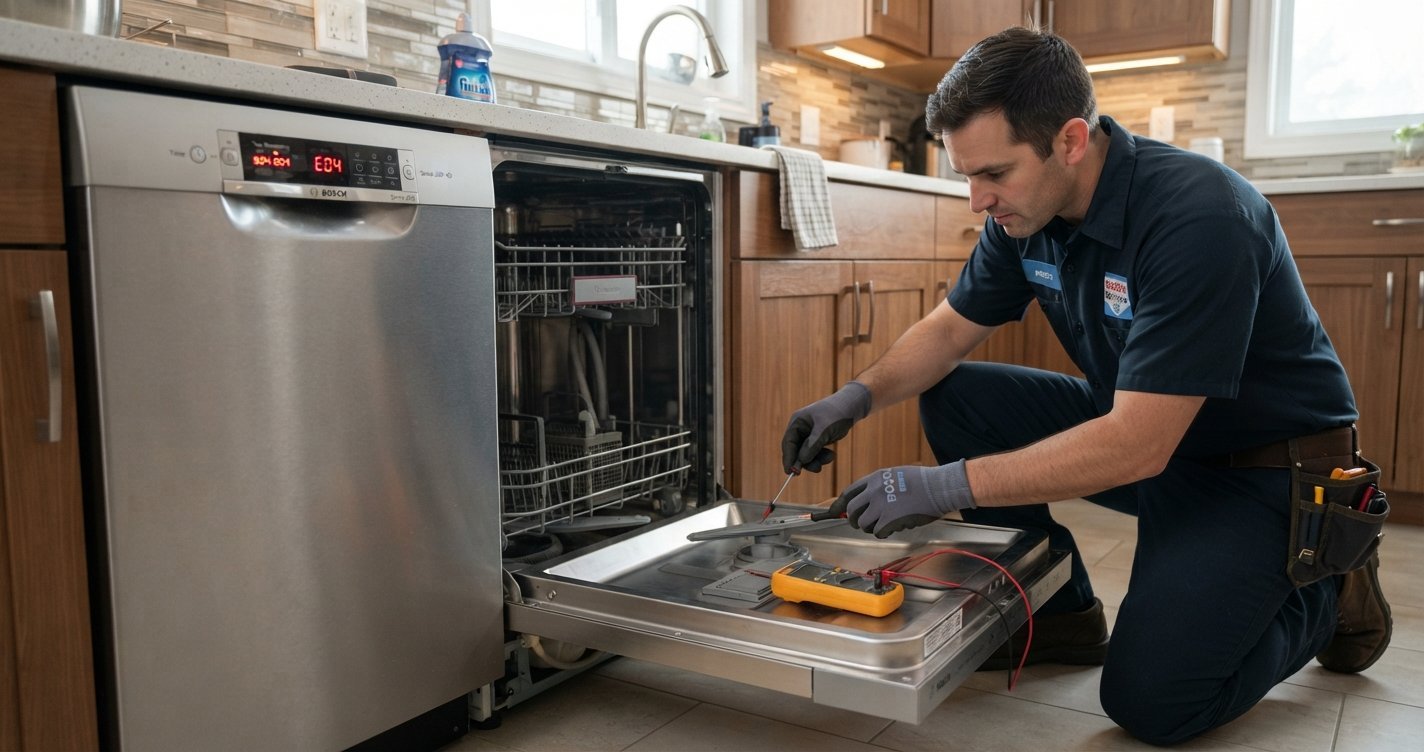
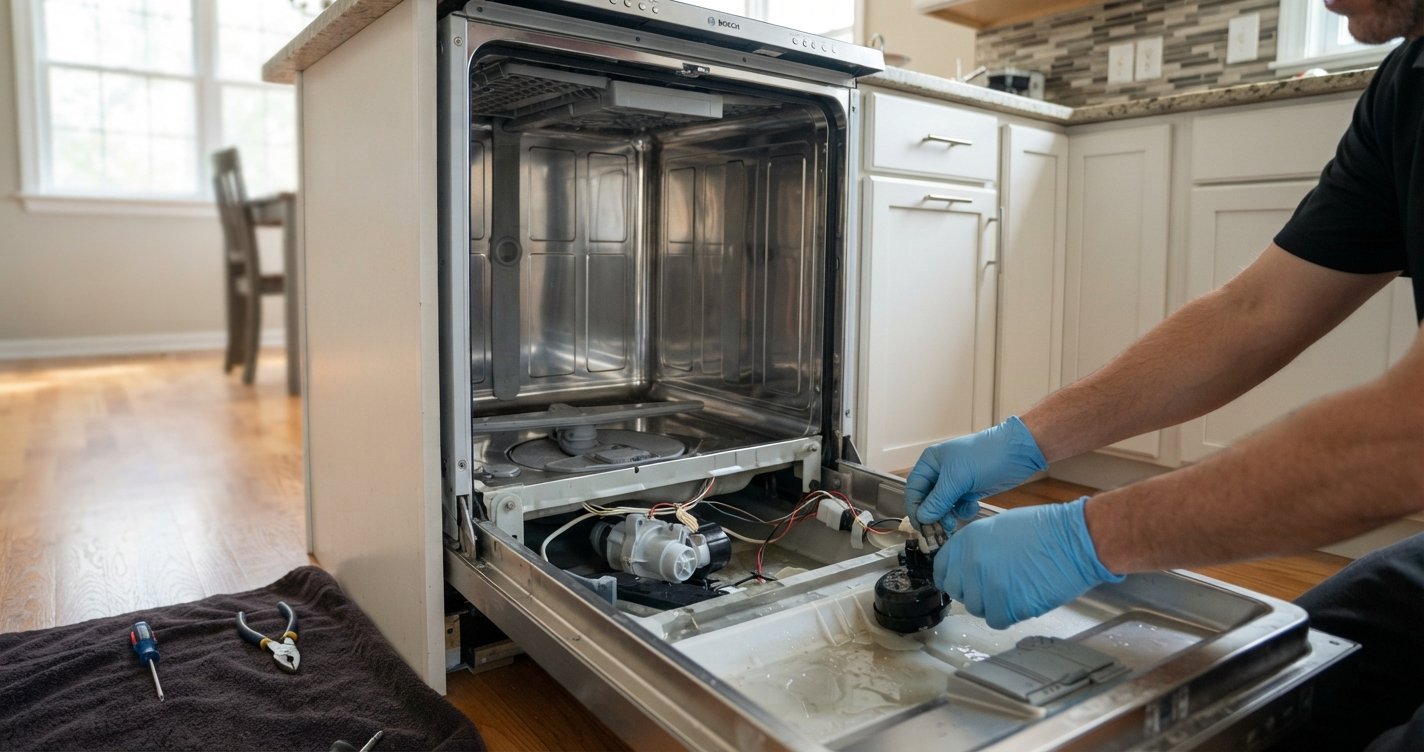
An appliance repair company ranks Bosch second overall and says it generates the fewest service calls per unit among mass-market brands, naming the E24 drain fault as its recurring weakness. It ranks Whirlpool fourth overall but says Whirlpool wins on repair cost, because the machines are mechanically simple and parts are cheap and everywhere. Note that this comes from a repair business, which has a natural bias toward brands that are easy to service.
Practical takeaway: Bosch is the safer pick for fewer problems. Whirlpool is the safer pick for lower repair bills when something does go wrong.
Warranty
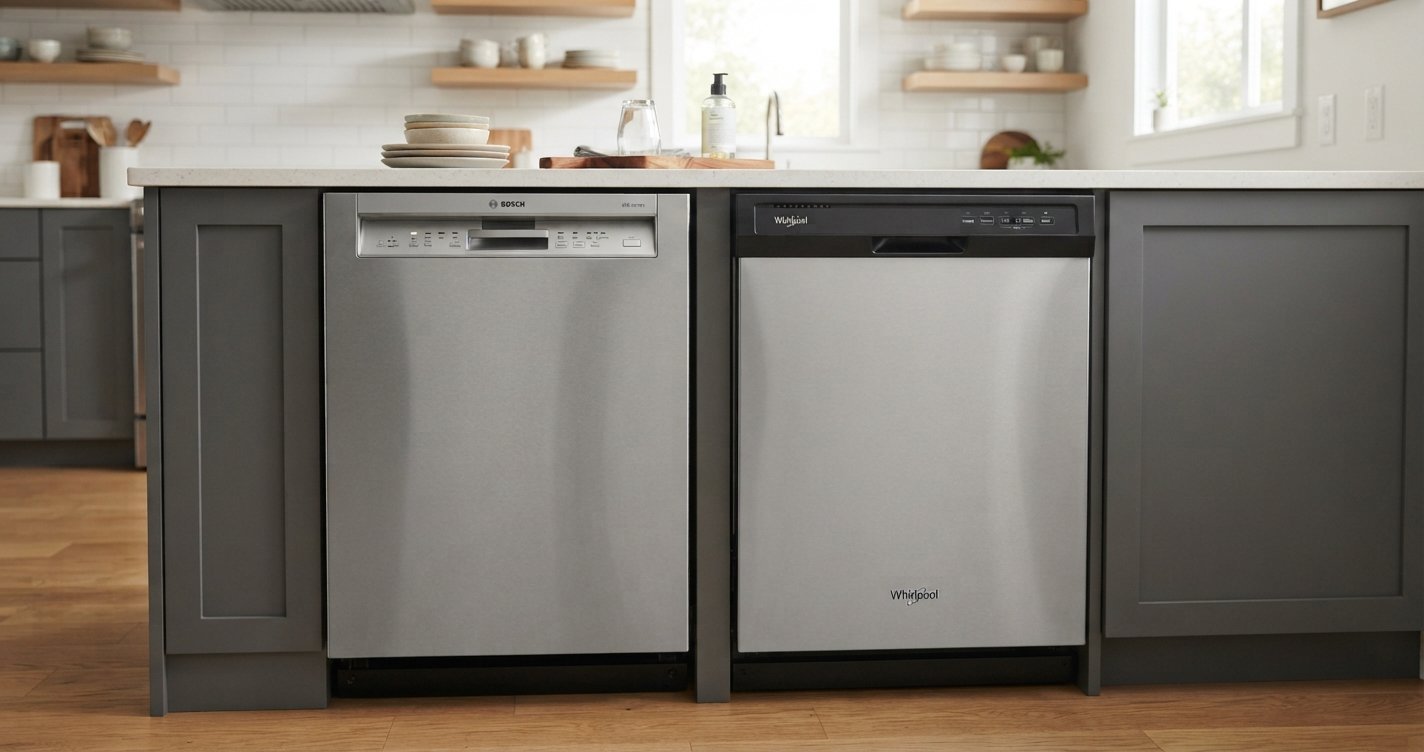
Both brands typically include a standard one-year manufacturer warranty covering defects, according to Upsie. Terms can differ by model and region, so check the warranty on the product page. For a more expensive Bosch, an extended plan may be worth considering.
Who Should Buy Bosch?
- You want a quiet dishwasher for an open-plan kitchen.
- You wash plastics or want dry dishes at the end of the cycle.
- You want a third rack without paying for a flagship model.
- You plan to keep the machine for a decade and can afford a higher price.
Who Should Buy Whirlpool?
- You’re working with a tight budget or buying for a rental.
- You prefer simple controls and easy-to-find parts.
- Noise isn’t a priority.
- You want the lowest cost if a repair is needed.
Which Is Better Value Over Time?
A Bosch can cost $300 to $500 more upfront. That premium buys quieter operation, better drying, and fewer service calls. A Whirlpool saves money on day one and on parts. If you’ll keep the dishwasher for ten years and value quiet, Bosch usually justifies its price. If you move often or just want something that works, Whirlpool is hard to argue with.
Frequently Asked Questions
Is Bosch better than Whirlpool for dishwashers?
For noise, drying, and features like a third rack, generally yes. For price and repair costs, Whirlpool often wins. Neither is better for everyone.
Which is quieter, Bosch or Whirlpool?
Bosch is usually quieter, with typical ratings around 38 to 50 dBA versus roughly 47 to 64 dBA for Whirlpool. Check the dBA rating on the specific model, since newer Whirlpool units run quieter than older ones.
Is Bosch worth the extra money?
It is if you value quiet operation and better drying and plan to keep the machine for a long time. If your budget is tight, a Whirlpool does the basics well.
Which is more reliable, Bosch or Whirlpool?
Both are well regarded. One repair company ranks Bosch higher and says it has the fewest service calls per unit, while another source calls the two equally reliable.
Which is cheaper to repair, Bosch or Whirlpool?
Whirlpool, typically. Its parts are widely available and inexpensive, and almost any technician can work on it.
Does Whirlpool have a third rack?
Some models do, mainly higher-end ones. Almost all Bosch dishwashers include one.
Which dries dishes better?
Bosch, especially models with AutoAir or CrystalDry. Whirlpool uses a heated element, which dries well but can warp some plastics.
What is the warranty on each brand?
Both commonly come with a one-year manufacturer warranty. Check the model’s listing for exact terms.
How much should I spend on a dishwasher?
For Whirlpool, plan on about $600 to $900. For Bosch, plan on about $800 to $1,200 for the best value, with entry-level models starting around $500.
Conclusion
Bosch and Whirlpool both make dishwashers that clean well and last, so the better choice depends on what you value. Pick Bosch for a quieter kitchen, better drying, and a third rack on nearly every model, accepting a higher price. Pick Whirlpool for a lower purchase price, simple controls, and repairs that cost less. Decide your budget first, check the dBA rating and rack layout on the exact model, and compare current prices at your retailer before you buy.
When