A Bosch dishwasher that isn’t cleaning is most often held back by a dirty filter, blocked spray arm jets, water that isn’t hot enough, poor loading, or a detergent tablet that hasn’t dissolved. Check these first, because they cost nothing to fix. If they’re all fine, the cause is usually hard-water scale or a worn circulation pump or spray arm bearing, which is where a technician helps.
Read More: Bosch vs Whirlpool Dishwasher: Which Should You Buy?
Table of contents
Read the Pattern First
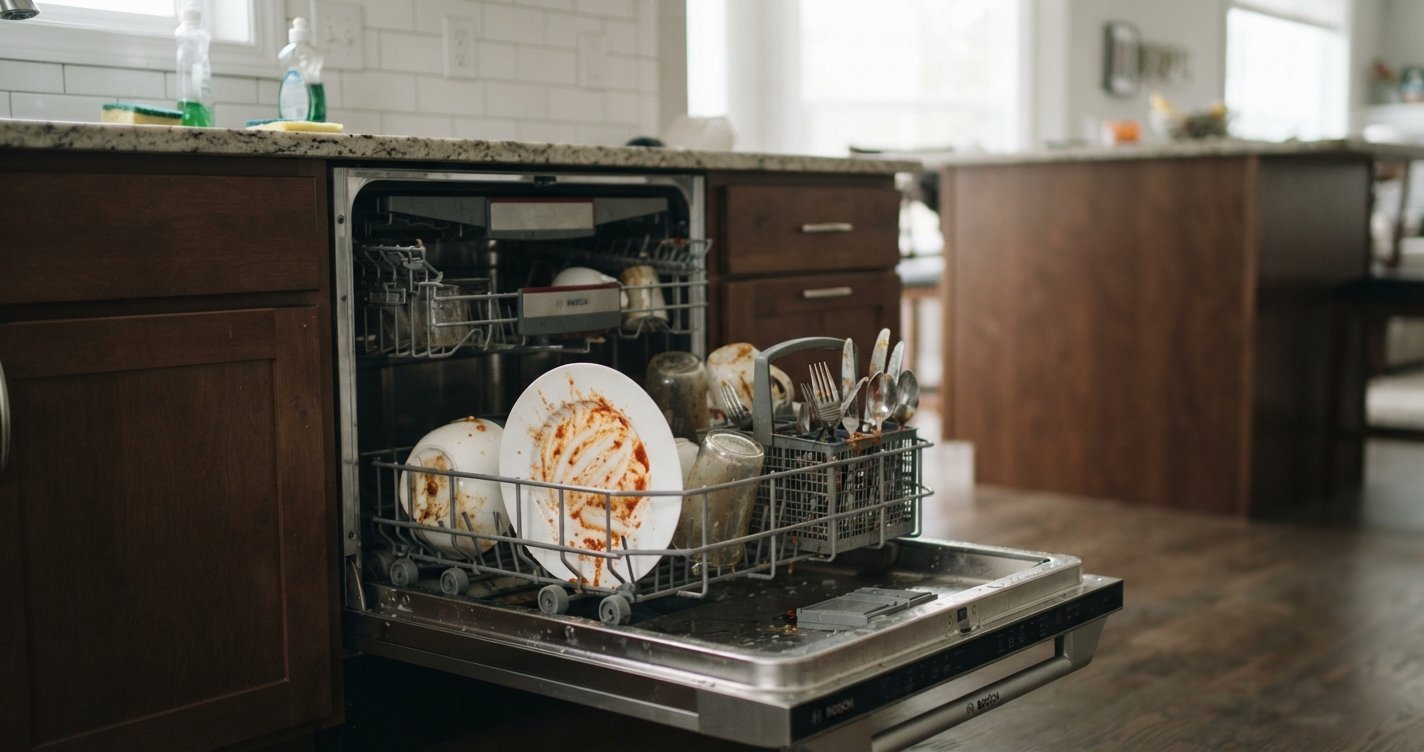
How the dishes look tells you where to start. One Bosch repair guide from EasyBear draws a useful distinction:
- Greasy film or dirt across the whole load points to water that isn’t hot enough or detergent that isn’t dissolving.
- The same spot is dirty every time points to a blocked spray arm or a loading problem, not a chemical one.
- Cloudy glassware but no visible food points to hard-water scale or too much detergent or rinse aid.
- Gritty residue and a musty smell point to a dirty filter.
Common Reasons a Bosch Dishwasher Isn’t Cleaning
1. Dirty or Clogged Filter
The filter catches food so it doesn’t recirculate, and when it clogs, water flow drops. Bosch’s own support page says a clogged filter disrupts the appliance’s water flow and stops it cleaning properly. A separate repair guide lists the clogged fine and coarse filter cylinder as the most likely Bosch-specific cause.
Fix: Twist out the cylinder filter and flat mesh filter, rinse them under running water with a soft brush, and wipe out the sump. Do this monthly.
2. Blocked or Scaled Spray Arm Jets
Debris or limescale in the jets means water doesn’t reach parts of the rack. Bosch advises checking that the spray arms rotate freely and the nozzles are clear, using tweezers or a cocktail stick to remove debris.
Fix: Spin each arm by hand, clear the jets with a toothpick, and soak scaled arms in white vinegar. A repair guide estimates this check takes about 20 minutes.
3. Water That Isn’t Hot Enough
EasyBear’s guide calls insufficient water temperature the most common issue, noting that water that isn’t hot enough leaves a greasy residue across the whole load. Sears Home Services puts the target at around 120°F.
Fix: Run the kitchen tap until it’s hot before starting the cycle. If the problem is heavy soiling, Bosch recommends choosing a programme with a higher temperature setting.
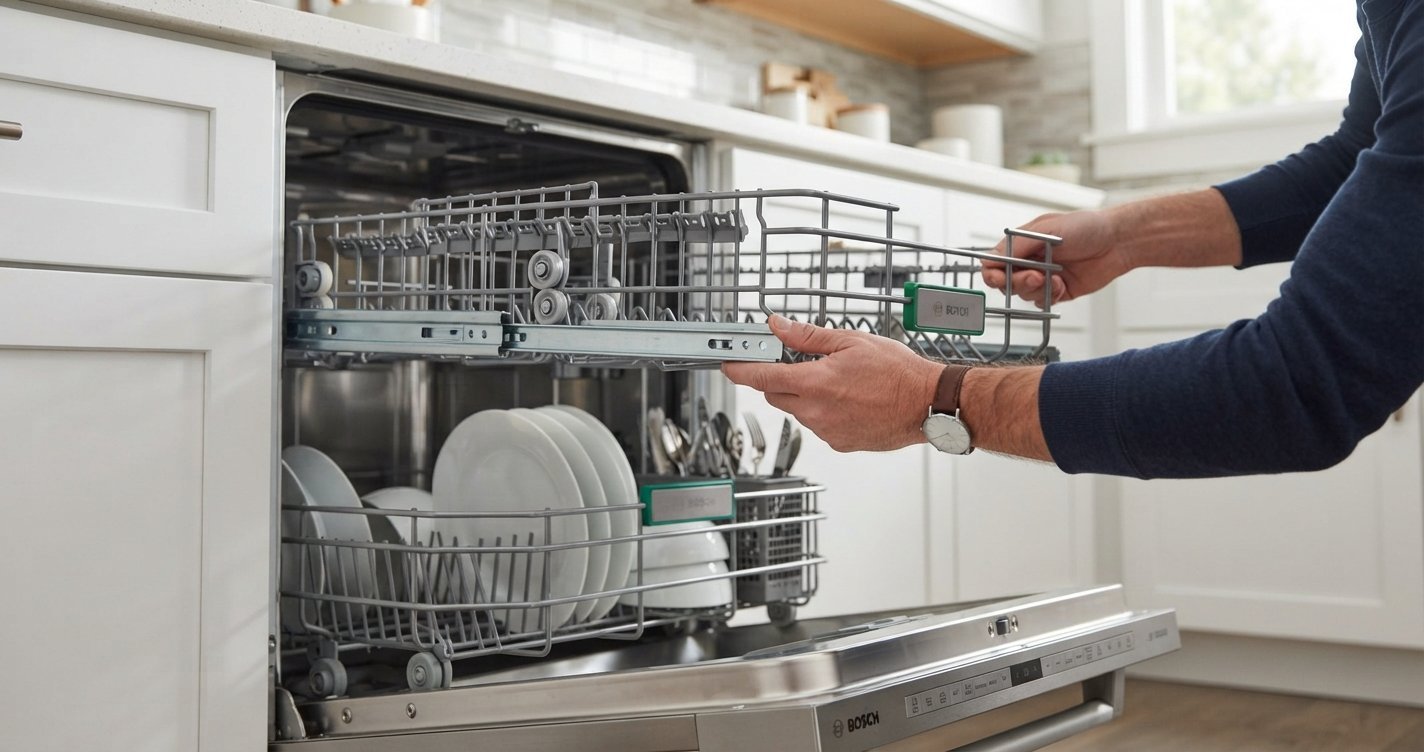
4. Poor Loading
Bosch says that if dishes aren’t well organised, water won’t reach every part of the items being washed.
Fix:
- Put cups and glasses in the upper basket and pots and pans in the lower basket.
- Don’t let large items block the spray arms or the detergent dispenser.
- Don’t nest bowls or stack plates.
- Avoid placing utensils above the detergent dispenser.
If you’re unsure how to arrange things, see the loading guide for your model in the manual.
5. Detergent Not Dissolving
Bosch lists a tablet that hasn’t dissolved properly as a cause. A blocked dispenser door, a tablet that fell into the wrong place, or a damp dispenser can stop it releasing.
Fix: Check that the dispenser door opens fully and isn’t blocked by a tall item. Use dry hands and a fresh tablet, and make sure the tablet sits in the dispenser rather than the bottom of the tub.
6. Hard-Water Scale
Scale builds up on the jets and inside the machine over time. One repair guide ranks it as the least likely cause of dirty dishes, since it tends to produce cloudy glassware rather than visible food.
Fix: Run a monthly dishwasher cleaner or a vinegar-based descaling cycle, and top up the dishwasher salt (if your model has a softener) and rinse aid.
7. Worn Circulation Pump or Spray Arm Bearing
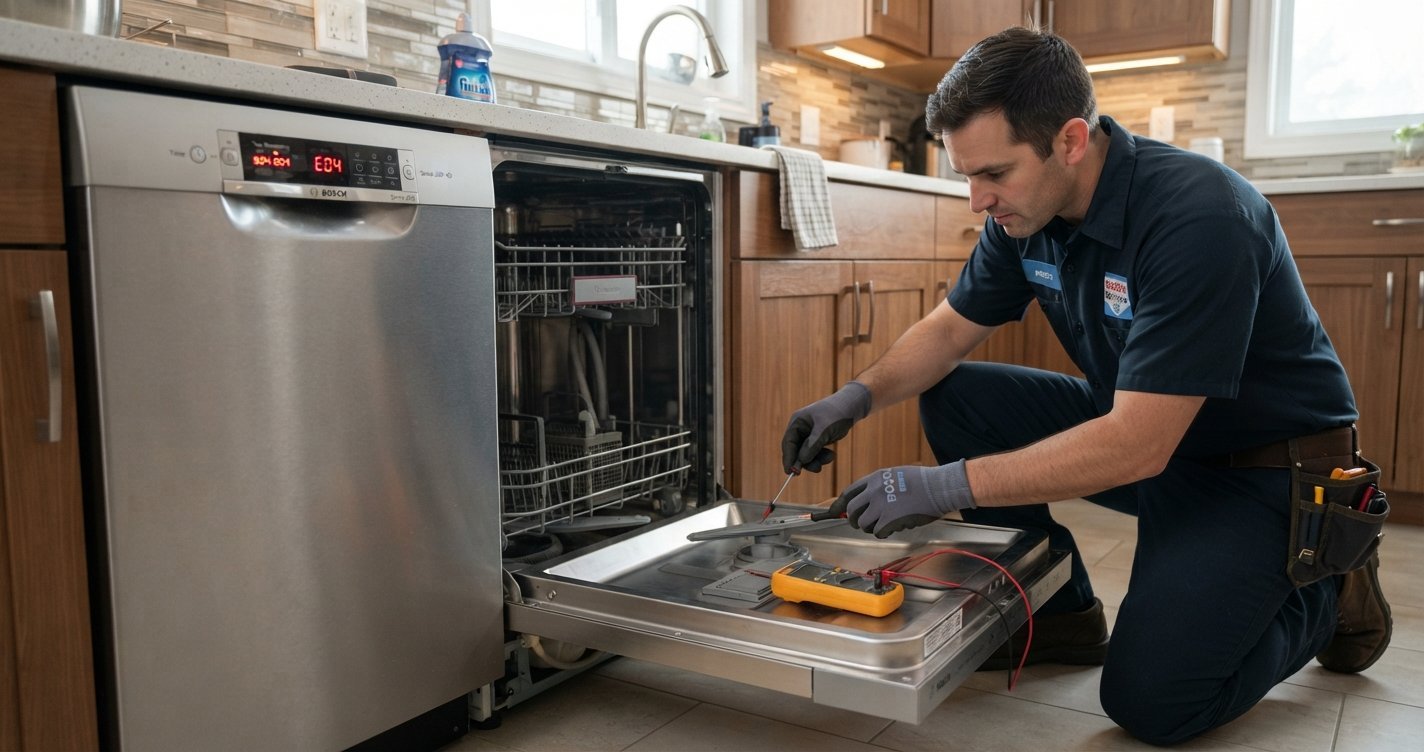
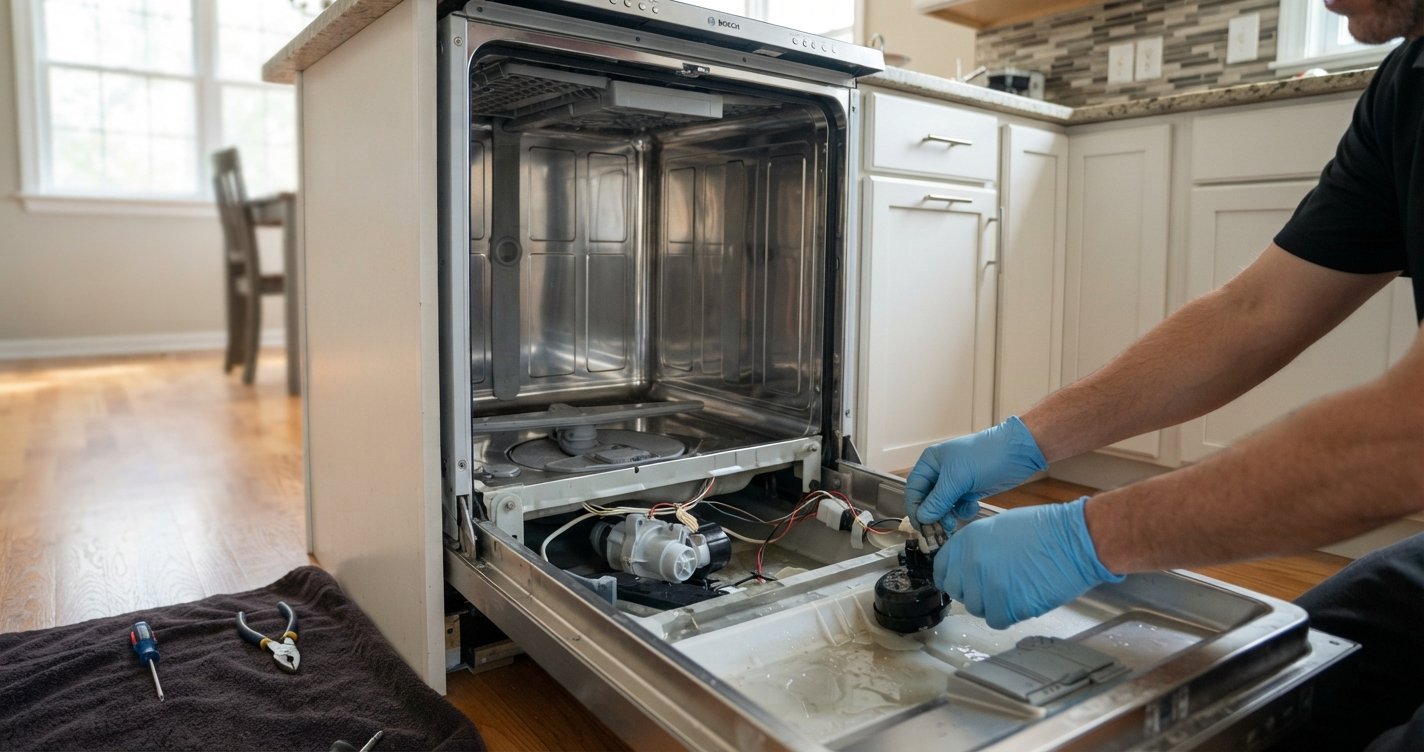
If everything above is clear and the dishes still come out dirty, a worn circulation pump impeller can reduce wash pressure, and a faulty spray arm bearing or seal can starve the upper arm of water. This is where a technician comes in.
8. A Previous Repair
EasyBear also notes that many Bosch units have been serviced before, and that earlier work can explain cases that don’t fit any other pattern. If your machine had a part replaced recently, check that the work was done correctly.
Step-by-Step Troubleshooting Order
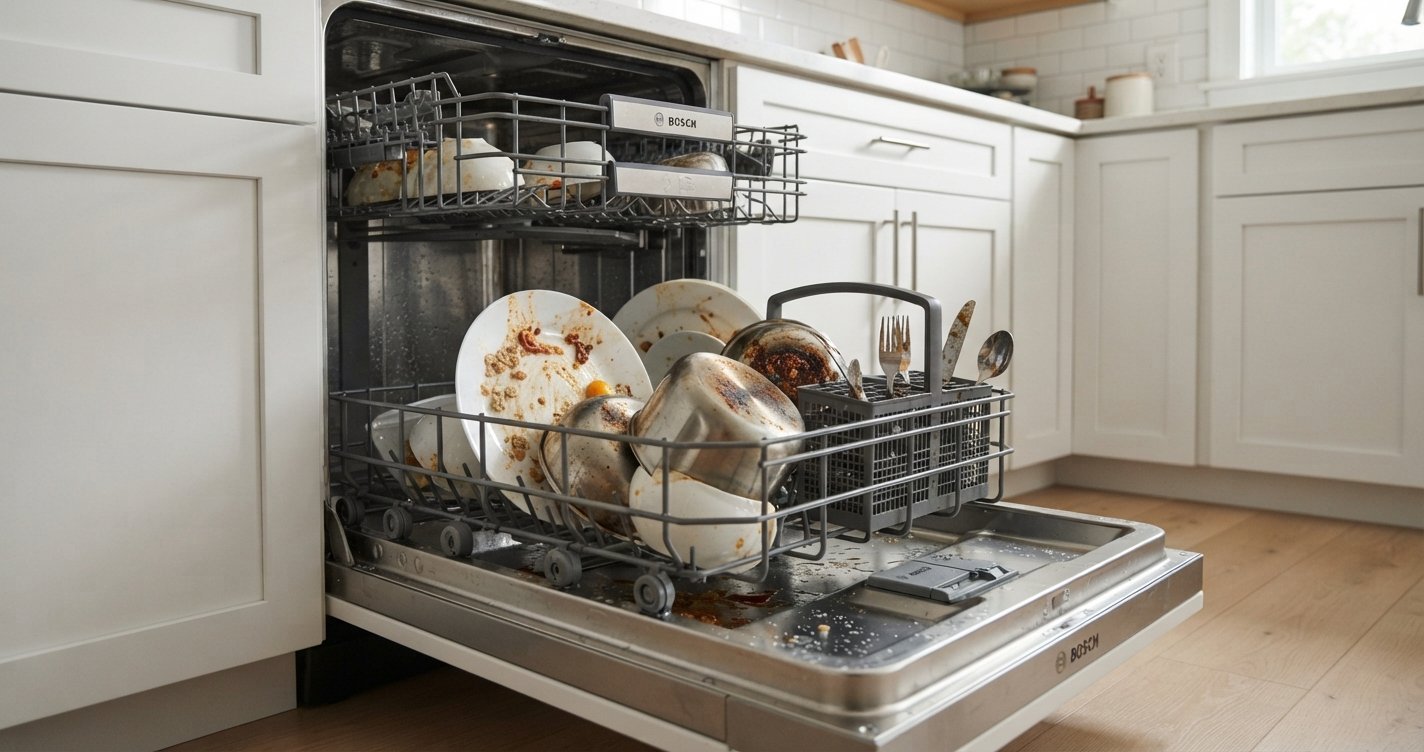
- Run the hot tap at the sink until the water is hot, then start the cycle.
- Clean the filters and wipe out the sump.
- Spin both spray arms and clear the jets.
- Check that the dispenser opens and the tablet dissolves.
- Reload the machine so nothing blocks the arms or the dispenser.
- Pick a hotter programme for greasy loads.
- Run a cleaner cycle to clear scale and grease from inside the machine.
- Call a technician if dishes are still dirty.
Quick Symptom Guide
| What you notice | Most likely cause |
| Greasy film on everything | Water not hot enough, or tablet not dissolving |
| Same area dirty every cycle | Blocked spray arm or loading problem |
| Gritty residue, musty smell | Dirty filter |
| Cloudy or spotted glasses | Hard-water scale, low rinse aid or salt |
| Tablet still intact after the cycle | Blocked dispenser or tablet misplaced |
| Everything checks out but weak spray | Worn pump or spray arm bearing |
DIY or Technician?
DIY: cleaning filters, clearing jets, reloading, running a cleaner cycle, and checking the dispenser.
Call a technician if:
- The filter, arms, loading, and temperature are all fine and dishes are still dirty.
- You suspect the circulation pump, spray arm bearing, or heating.
- The machine has to be pulled out to reach the part.
According to EasyBear, repairs for this problem typically run about $100 to $250 including labour, depending on the component. That figure comes from one repair company, so treat it as a guide and get a quote
How to Keep Your Bosch Cleaning Well
- Clean the filters monthly.
- Scrape plates, but don’t pre-rinse them completely, since detergent needs some food to work on.
- Run a dishwasher cleaner every month.
- Use rinse aid, and top up the salt if your model has a water softener.
- Choose a hotter programme for greasy pans.
- Check the spray arm jets every few months.
Frequently Asked Questions
Why is my Bosch dishwasher not cleaning dishes?
The most common causes are a dirty filter, blocked spray arm jets, water that isn’t hot enough, poor loading, and a tablet that hasn’t dissolved. Work through those before suspecting a part.
Why are my dishes coming out dirty even though the dishwasher runs?
Water is probably not reaching them or isn’t hot enough. Check the filters, spray arms, and loading, and run the hot tap before starting.
Why is there a greasy film on my dishes?
Usually the water isn’t hot enough, or the detergent isn’t dissolving fully. Run the hot tap first and use a hotter programme.
Why are my glasses cloudy after washing in my Bosch?
Cloudy glasses usually point to hard-water scale, or too much detergent or rinse aid. A cleaner cycle, the correct salt and rinse aid levels, and the right detergent amount help.
Why is the detergent tablet not dissolving?
It may be blocked by a tall item, caught in a damp dispenser, or placed in the wrong spot. Check that the dispenser door opens fully and use a dry, fresh tablet.
How often should I clean my Bosch dishwasher filter?
Monthly is a good routine, or more often if you don’t scrape plates before loading.
Can a worn pump cause poor cleaning?
Yes. A worn circulation pump impeller can reduce wash pressure, which leaves dishes dirty even when the filter and arms are clear.
How much does it cost to fix a Bosch that isn’t cleaning?
Most of the checks are free. One repair company quotes about $100 to $250, including labour when a part is needed.
Should I pre-rinse dishes before loading?
Scrape off large food, but you don’t need to rinse everything. Detergent needs some soil to work properly.
Conclusion
When a Bosch dishwasher isn’t cleaning, the cause is rarely the machine itself. Read the pattern on your dishes, then work through the easy fixes in order: run the hot tap, clean the filters, clear the spray arm jets, check the dispenser, and reload so water reaches everything. Run a cleaner cycle to clear scale and grease. If dishes are still dirty after all that, a worn pump or spray arm bearing is the likely cause, and it’s worth asking a technician to diagnose it rather than replacing parts by guesswork.