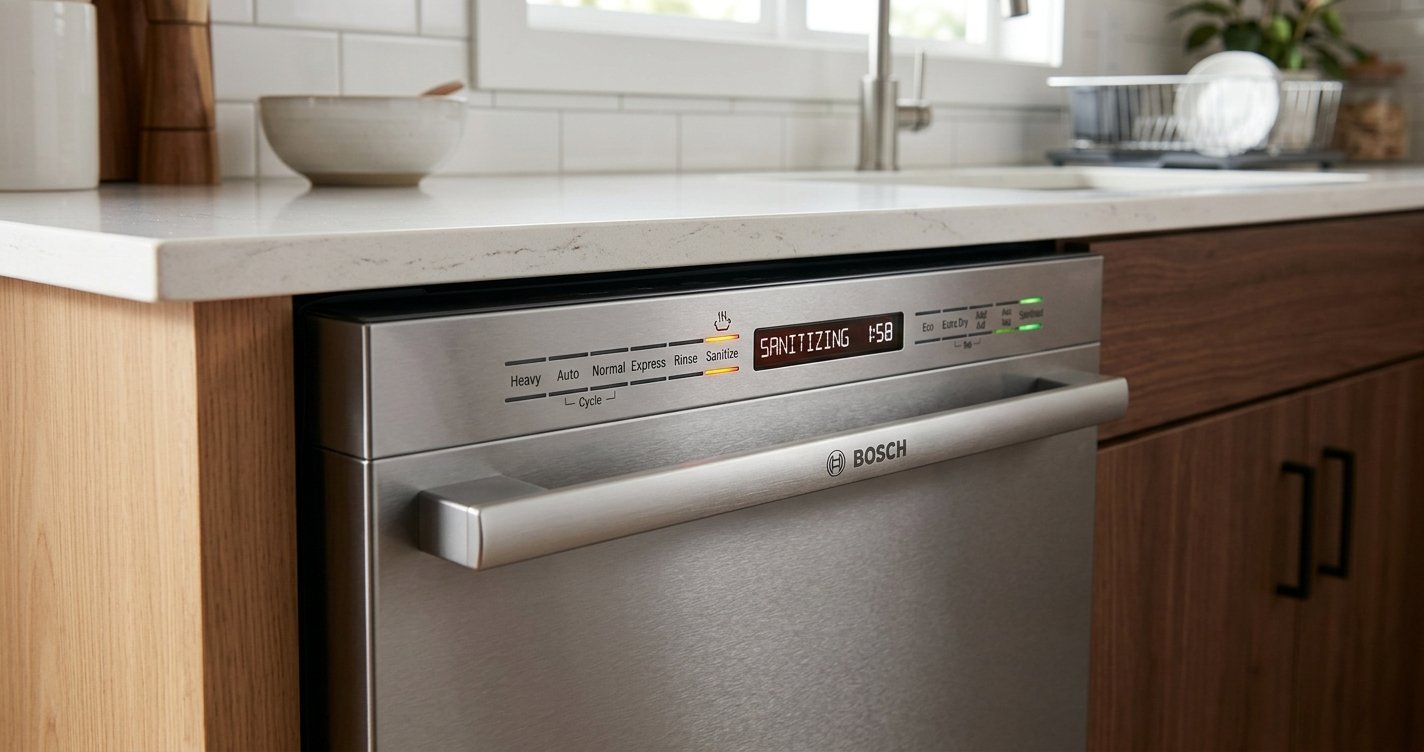
On a Bosch dishwasher, Sanitize is an option, not a separate cycle. Choose Heavy, Auto, or Normal, press the Sanitize button, then press Start. According to one Bosch US Use and Care Manual, the option raises the final rinse to 72°C (162°F), adds roughly 5 to 25 minutes, and lights a sanitize indicator when the sanitation requirements are met. Your model may differ, so check your own manual.
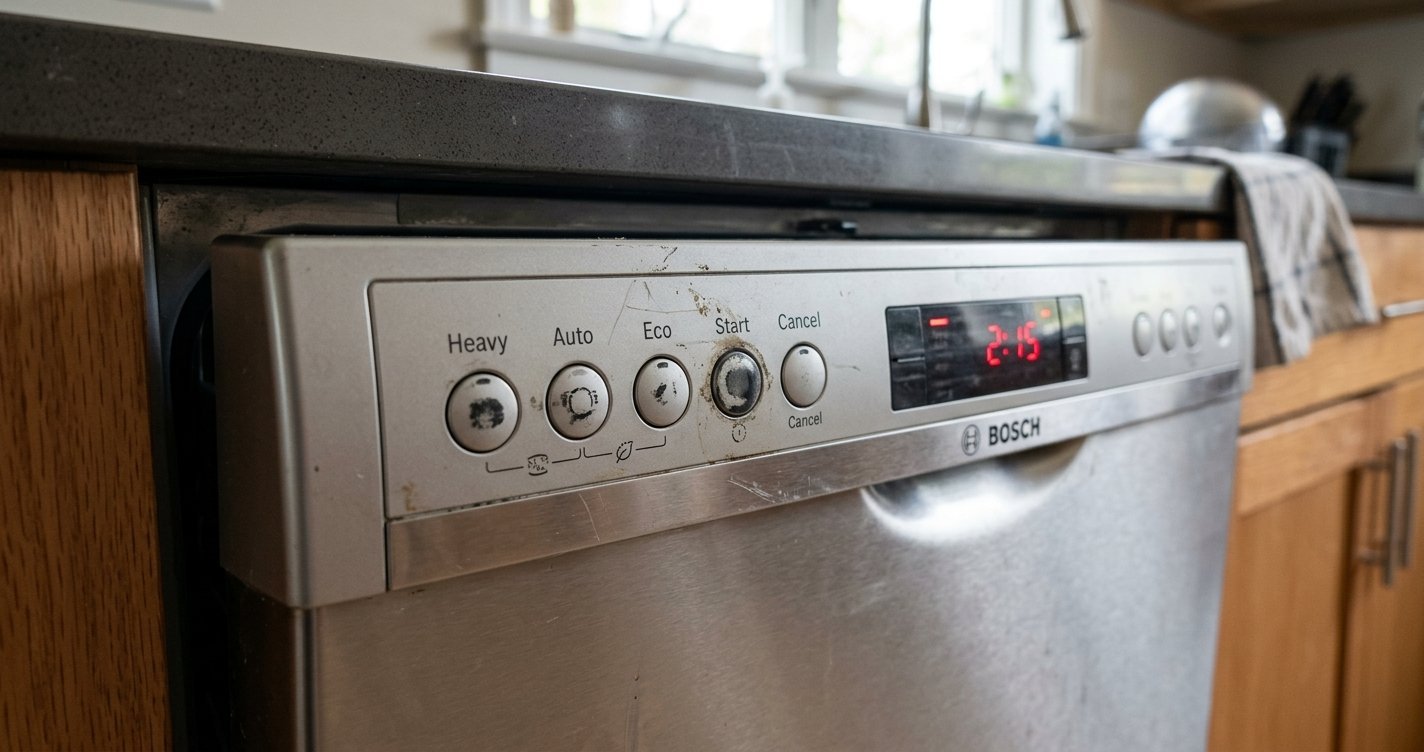
Read More: Bosch Dishwasher Buttons Rubbed Off: What to Do
Table of contents
Sanitize Is an Option, Not a Cycle
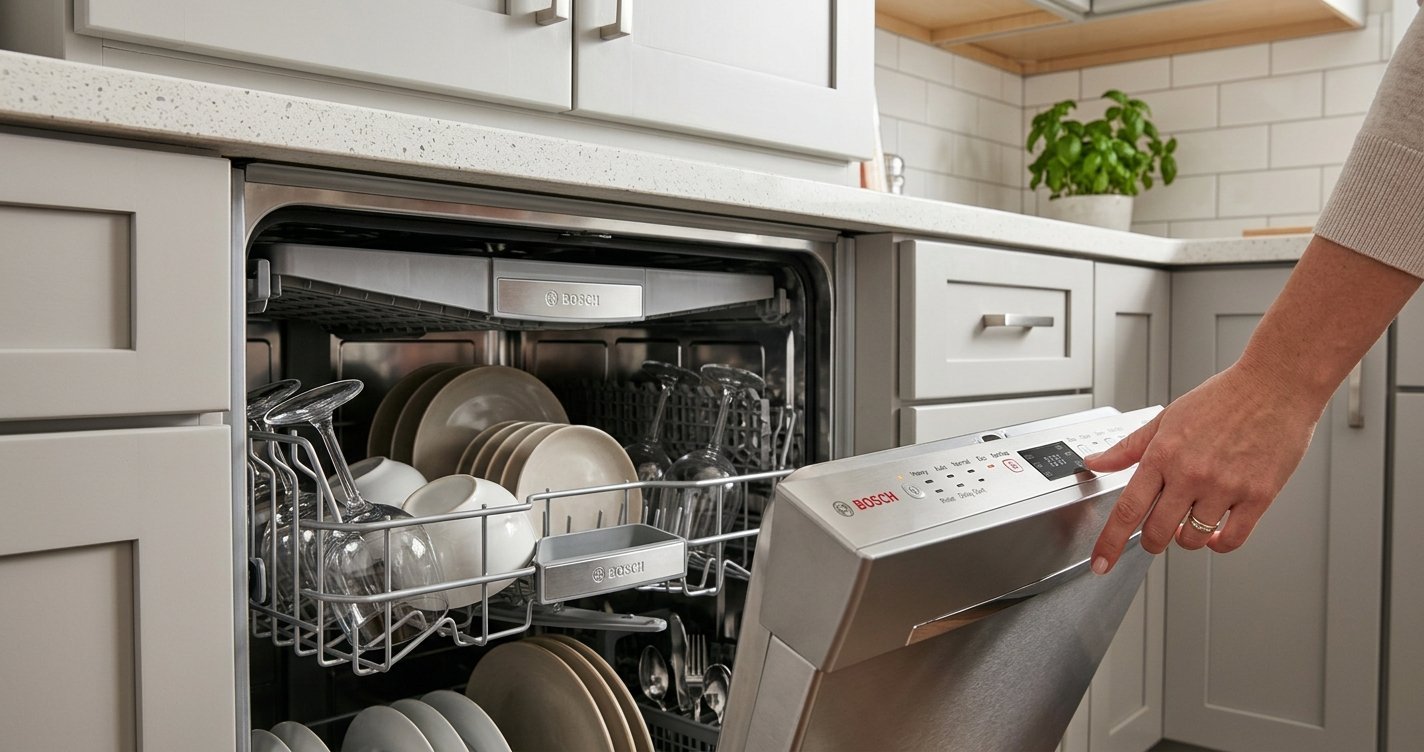
The keyword says “cycle,” but the Bosch manual I read treats Sanitize as an option that you add to certain cycles. That matters because it affects what you can combine it with and what the machine does.
The manual I used is a Bosch dishwasher Use and Care Manual (PDF). It doesn’t say which models it covers, and I could only read it through a summarizing tool, so verify the details against the manual for your model number (E-Nr, printed on the rating plate).
How to Use Sanitize: Step by Step
The manual gives no dedicated button sequence for Sanitize, only its general steps: select a cycle and the options you want, then press Start. Putting that together:
- Load the dishwasher and add detergent as you normally would.
- Turn it on and select Heavy, Auto, or Normal. The manual says Sanitize is available only with those three cycles.
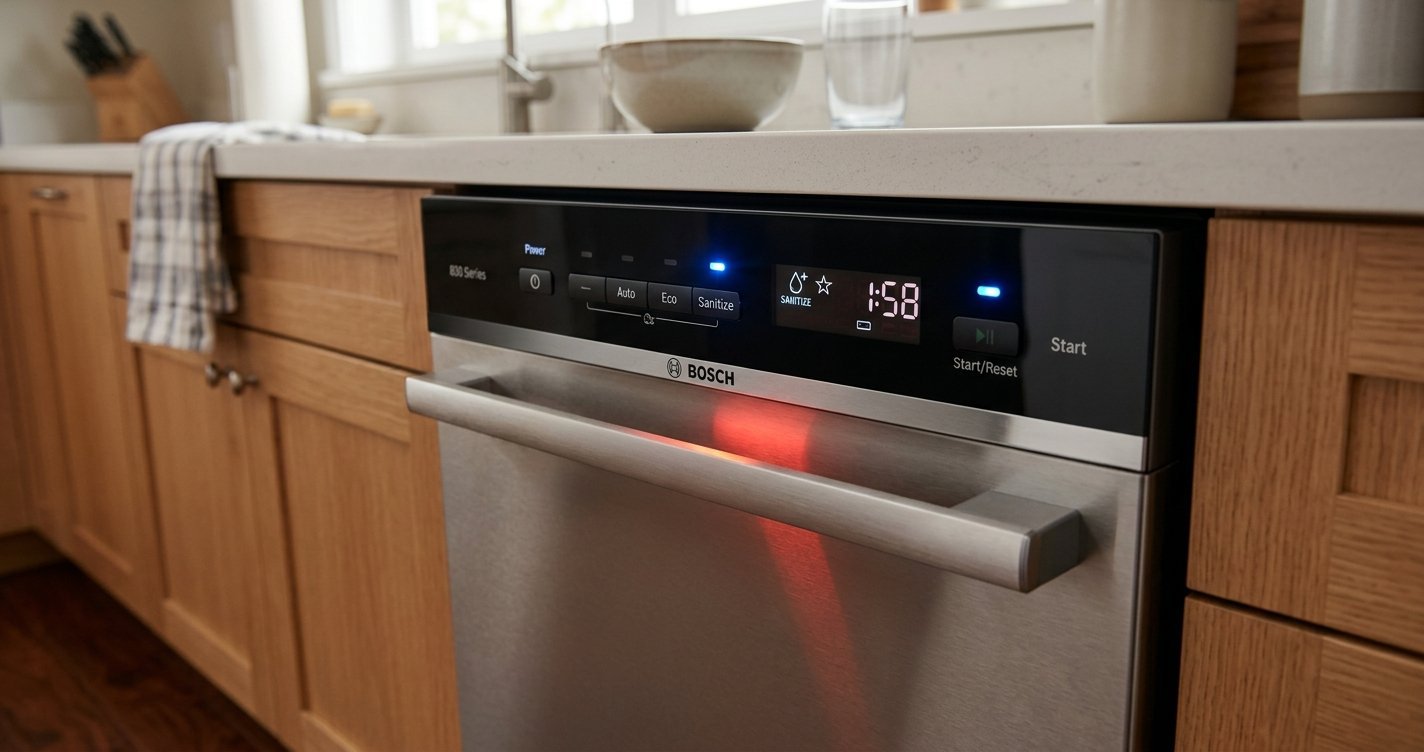
- Press the Sanitize button (model-dependent; look for the option button on your panel).
- Press Start and close the door.
- Wait for the cycle to finish. The manual says the Sanitize LED lights when the sanitation requirements are met.
The manual doesn’t say whether Sanitize can be added after a cycle has started, so select it before pressing Start.
Default setting: the manual says that if you used Sanitize in your last cycle, the dishwasher defaults to Auto Wash with Sanitize selected the next time you turn it on. If you didn’t mean to run it, check the display before you start.
What Sanitize Changes
Figures from the manual’s cycle table (Table 2):
| Cycle | Time without Sanitize | Time with Sanitize | Rinse temperature with Sanitize |
| Heavy | 110 to 135 min | 130 to 150 min | 72°C (162°F) |
| Auto | 105 to 129 min | 125 to 150 min | 72°C (162°F) |
| Normal | 130 to 135 min | 135 to 155 min | 72°C (162°F) |
- Added time: the manual doesn’t state a figure. The 5 to 25 minute range comes from comparing the table’s ranges, so it is my calculation.
- Water use with Sanitize: Heavy 4.9 to 6.4 gal, Auto 3.5 to 6.5 gal, Normal 2.4 to 5.5 gal.
- Wash temperature: The manual lists only the rinse temperature for Sanitize, not a separate wash temperature.
- Drying: the manual says the technical sanitation measures may also improve drying results.
What “Sanitized” Means
The manual says only sanitizing cycles were designed to meet the requirements for soil removal and sanitation efficacy, and that there is no intention to imply that all cycles on a certified machine passed the sanitization test. It also says NSF/ANSI 184 certified residential dishwashers aren’t intended for licensed food establishments.
Reviewed adds general context that isn’t Bosch-specific:
- NSF/ANSI 184 certification requires the final rinse to reach at least 150°F.
- The EPA defines sanitizing as removing 99.99% of bacteria.
- The article says no temperature has been definitively linked to killing COVID-19, so sanitizing isn’t proven against it.
- It suggests a regular cycle is likely enough for most dishes, since hot water and detergent do most of the work.
One retailer listing for an older Bosch model, the SHE3AR75UC at Town Appliance, says Sanitize can be used to meet NSF cleanliness standards and claims it eliminates 99.9% of bacteria. It doesn’t state that the model is NSF certified, so treat that as marketing.
When Should You Use Sanitize?
The sources don’t tell you when you must use it, but they point to these uses:
- Items you want extra-hot rinsed, such as baby bottles, sippy cups, or cutting boards, if they are dishwasher-safe. Reviewed names toys, sippy cups, and dishwasher-safe cutting boards as examples of items a sanitize cycle can handle.
- After someone in the home has been ill. One poster on a home-appliance forum uses it for this reason, saying the Bosch’s final rinse already runs hot otherwise. That is a single user’s habit, not a health recommendation.
- To help drying. Bosch says it may improve drying, and forum posters report drier dishes. Those posts are anecdotes.
You can skip it for everyday loads, since it adds run time per the manual’s figures.
Forum posters disagree on how useful it is. One cites a Consumer Reports comment that sanitizing options in home dishwashers are of limited use, arguing that recontamination after unloading limits the benefit and that removing soil and cleaning seals matter more. I couldn’t verify that quote, so read it as one poster’s argument.
Tips for Better Results
- Scrape large food scraps and load so spray arms can rotate freely. This is general dishwasher advice, not from the sources.
- Use dishwasher-safe items only, since the rinse is hotter than a normal one.
- Don’t expect it to work in other cycles. The manual limits it to Heavy, Auto, and Normal.
- Let the machine finish. The indicator tells you when the requirements were met, so don’t judge by the display alone.
- Open the door after the cycle if dishes are damp. One forum poster says this helps drying, though it’s a personal tip.
Troubleshooting
| Problem | What the sources say | What to do |
| Sanitize button won’t work | The manual says the option is limited to Heavy, Auto, and Normal | Pick one of those cycles, then press Sanitize |
| Sanitize light doesn’t come on | The manual says it lights when requirements are met | If it never lights, check your manual and contact Bosch support |
| Cycle takes much longer than expected | Sanitize adds roughly 5 to 25 minutes per the manual’s table | If it runs for hours, see below |
| Cycle runs for hours | A forum thread reports Bosch cycles of 4 hours or more, with no confirmed cause. Responders asked diagnostic questions, and one suggested a possible faulty circuit board | Note any error code and have it checked |
| Machine starts on Auto + Sanitize by itself | The manual says it defaults to that if you used Sanitize last time | Reselect your cycle before pressing Start |
I couldn’t find a trustworthy Bosch source on what a blinking sanitize light means. One page that appeared in my search turned out to be a construction company’s site with no appliance content, so I didn’t use it. Check your manual for your model’s indicator behavior
Frequently Asked Questions
Is Sanitize a cycle or an option on a Bosch dishwasher?
In the manual I read, it is an option that you add to Heavy, Auto,o or Normal.
Which cycles can I use Sanitize with?
Heavy, Auto, and Normal, according to the manual.
How hot does Sanitize get?
The manual lists a 72°C (162°F) rinse for Heavy, Auto,o and Normal when Sanitize is selected.
How much longer does Sanitize take?
The manual doesn’t state an added time. Comparing its cycle table, it takes about 5 to 25 minutes longer, depending on the cycle.
Is Sanitize NSF certified?
The manual refers to NSF/ANSI 184 certified residential dishwashers and says only sanitizing cycles were designed to meet the requirements. Whether your model is certified depends on the model, so check your documentation.
Is Sanitize the same as a hot rinse?
Not exactly. Bosch’s manual ties Sanitize to a specific rinse temperature and an indicator. Forum posters say the normal Auto rinse is already fairly hot, around 153 to 156°F, but those are user reports.
Does Sanitize help dry dishes?
Bosch’s manual says it may improve drying results. Some forum posters agree.
Do I need Sanitize for everyday dishes?
The sources don’t require it. Reviews suggest a regular cycle is likely enough for most dishes.
Why does my dishwasher start in Auto with Sanitize?
The manual says it defaults to Auto Wash with Sanitize if you used Sanitize last time.
Conclusion
To use Sanitize on a Bosch dishwasher, pick Heavy, Auto, or Normal, press the Sanitize option, and start the cycle. Expect a hotter final rinse of about 162°F, a cycle that runs roughly 5 to 25 minutes longer, and a sanitize light that comes on when the requirements are met. It’s most useful for items like bottles and cutting boards, and it isn’t needed for every load. Model buttons and details vary, so check the manual for your E-Nr, and contact Bosch if the light never comes on or cycles run unusually long.