Table of contents
Stainless Steel vs Carbon Steel
Choosing between stainless steel and carbon steel depends on your application, budget, strength requirements, and corrosion resistance. Stainless steel resists rust and needs less maintenance, while carbon steel offers higher hardness and lower cost for many industrial uses.
Read More: Ceramic vs Stainless Steel: Which Is Better?
Stainless Steel vs Carbon Steel: Quick Comparison
| Feature | Stainless Steel | Carbon Steel |
| Corrosion Resistance | Excellent | Poor without coating |
| Strength | High | Very High (high-carbon grades) |
| Hardness | Moderate to High | High |
| Rust Resistance | Excellent | Low |
| Maintenance | Low | High |
| Cost | Higher | Lower |
| Machinability | Moderate | Better in low-carbon grades |
| Weldability | Good (varies by grade) | Excellent in low-carbon steel |
| Appearance | Bright and polished | Dark gray finish |
| Best For | Kitchens, medical, and marine | Construction, tools, machinery |
What Is Stainless Steel?
Stainless steel is an iron alloy containing at least 10.5% chromium, which forms a protective layer that prevents rust and corrosion. Many grades also contain nickel, molybdenum, or other alloying elements to improve durability.
Common stainless steel grades
- 304 stainless steel
- 316 stainless steel
- 430 stainless steel
- Duplex stainless steel
What Is Carbon Steel?
Carbon steel is primarily made of iron and carbon with little or no chromium. It is valued for its strength, hardness, and affordability, but requires protective coatings to prevent rust.
Types of carbon steel
- Low-carbon steel
- Medium carbon steel
- High carbon steel
- Ultra-high carbon steel
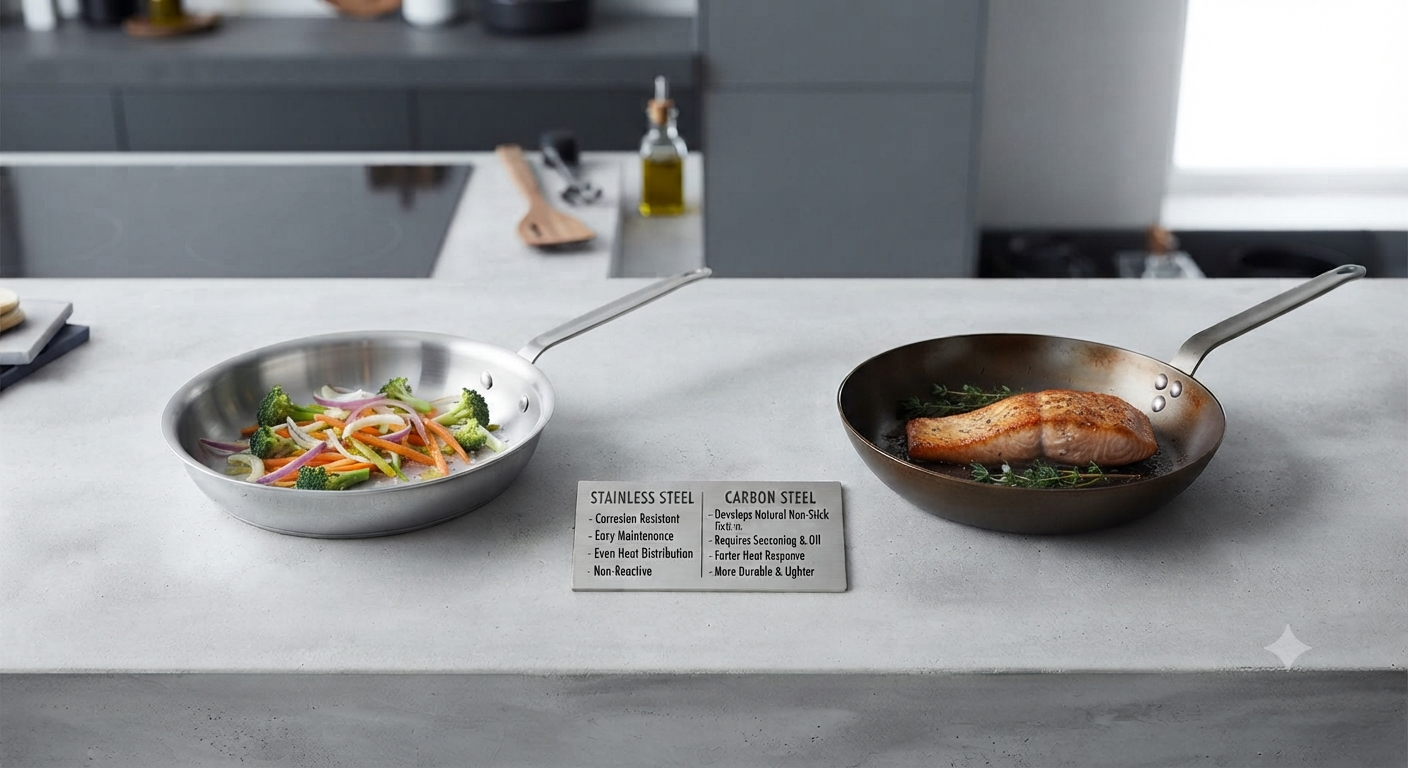
Stainless Steel vs Carbon Steel: Key Differences
| Comparison | Stainless Steel | Carbon Steel |
| Contains Chromium | Yes | No |
| Rust Resistant | Yes | No |
| Food Safe | Yes | Limited |
| Heat Resistance | High | Moderate |
| Wear Resistance | Good | Excellent |
| Magnetic | Some grades | Usually Yes |
| Lifespan | Longer | Depends on maintenance |
Strength Comparison
Which Is Stronger?
Carbon steel is generally stronger and harder than standard stainless steel, especially high-carbon grades.
👍Carbon steel wins for maximum strength, while stainless steel balances strength with corrosion resistance.
Rust Resistance
Which Steel Rusts Less?
Stainless steel is highly resistant to rust because chromium creates a self-healing protective oxide layer.
Carbon steel rusts quickly when exposed to moisture unless painted, galvanized, or coated.
Winner: Stainless Steel
Hardness Comparison
High-carbon steel is harder than most stainless steel grades.
This makes carbon steel ideal for:
- Knives
- Cutting tools
- Drill bits
- Springs
Durability
Both materials are durable.
Stainless steel lasts longer in wet or corrosive environments.
Carbon steel performs better under heavy impact and wear, but requires maintenance.
Cost Comparison
| Material | Average Cost |
| Carbon Steel | Lower |
| Stainless Steel | Higher |
Carbon steel is usually the better choice for budget-conscious projects.
Weight Comparison
There is very little weight difference between stainless steel and carbon steel.
Density varies slightly by alloy but is generally similar.
Maintenance
Which Requires More Maintenance?
Carbon steel needs:
- Painting
- Oiling
- Protective coatings
- Rust removal
Stainless steel usually requires only routine cleaning.
Heat Resistance
Stainless steel maintains performance at higher temperatures and is commonly used in:
- Exhaust systems
- Industrial furnaces
- Food processing
Carbon steel may lose strength under prolonged extreme heat.
Weldability
Low-carbon steel offers excellent weldability.
Some stainless steel grades also weld well but require proper techniques to avoid corrosion around welds.
Machinability
Low-carbon steel machines more easily.
Certain stainless steel grades are tougher to machine because of work hardening.
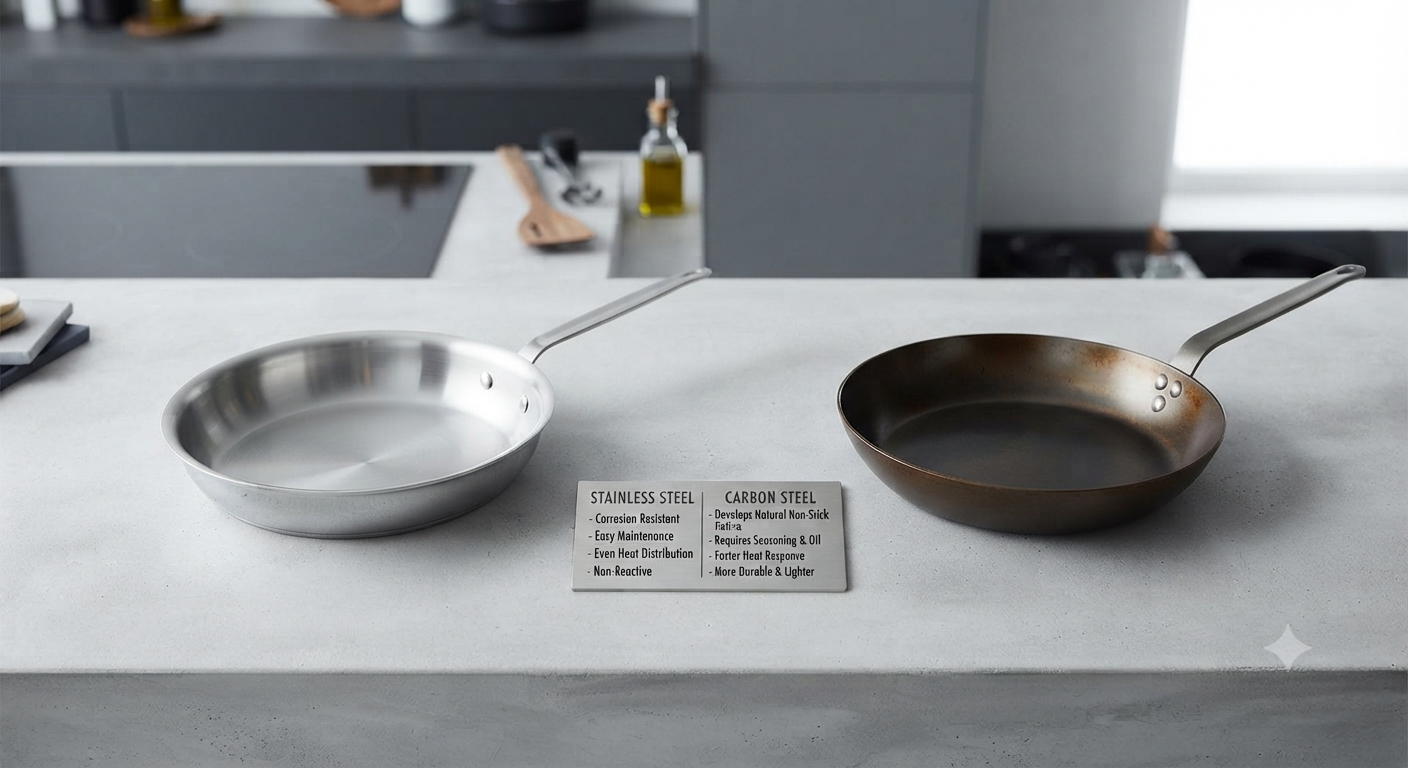
Appearance
Stainless steel offers a modern, polished finish suitable for visible applications.
Carbon steel has a darker industrial appearance and is often painted.
Applications
Best Uses for Stainless Steel
- Kitchen appliances
- Food processing equipment
- Medical instruments
- Marine equipment
- Chemical plants
- Architectural projects
Best Uses for Carbon Steel
- Structural beams
- Bridges
- Pipelines
- Automotive parts
- Construction
- Industrial machinery
- Hand tools
Pros and Cons
| Stainless Steel Pros | Stainless Steel Cons |
| Rust resistant | Higher price |
| Low maintenance | Harder to machine |
| Attractive finish | Some grades are less hard |
| Long lifespan | Higher material cost |
| Carbon Steel Pros | Carbon Steel Cons |
| Strong | Rusts easily |
| Affordable | Needs maintenance |
| Hard | Less corrosion-resistant |
| Easy to machine | Shorter lifespan outdoors |
Stainless Steel vs Carbon Steel: Which Is Better?
It depends on your needs.
| Need | Best Choice |
| Outdoor use | Stainless Steel |
| Marine environments | Stainless Steel |
| Kitchen equipment | Stainless Steel |
| Budget projects | Carbon Steel |
| Structural construction | Carbon Steel |
| High-strength tools | Carbon Steel |
| Decorative finish | Stainless Steel |
| Low maintenance | Stainless Steel |
Frequently Asked Questions
Is stainless steel stronger than carbon steel?
No. Carbon steel is generally stronger and harder, while stainless steel provides superior corrosion resistance.
Does carbon steel rust?
Yes. Carbon steel rusts unless it is coated, painted, or regularly maintained.
Why is stainless steel more expensive?
Stainless steel contains chromium and other alloying elements that improve corrosion resistance but increase manufacturing costs.
Which steel is better for knives?
High-carbon steel offers excellent edge retention, while stainless steel provides better rust resistance. The better choice depends on whether durability or corrosion resistance is the priority.
Which steel lasts longer?
Stainless steel generally lasts longer in wet, humid, or corrosive environments because it resists rust and requires less maintenance.
Is carbon steel food safe?
Yes, when properly seasoned and maintained, carbon steel cookware is food safe. However, stainless steel is easier to maintain and is commonly preferred for food preparation equipment.
Can stainless steel rust?
Yes. Although highly resistant, stainless steel can rust under extreme conditions, exposure to chlorides, or poor maintenance.
Which is easier to weld?
Low-carbon steel is generally easier to weld than most stainless steel grades.
Final Verdict
Choose stainless steel if you need corrosion resistance, low maintenance, long service life, or an attractive finish.
Choose carbon steel if you need maximum strength, hardness, lower cost, or better performance for structural and heavy-duty applications.
For most outdoor, food-grade, and marine applications, stainless steel is the better long-term investment. For construction, tools, machinery, and budget-focused projects, carbon steel remains a practical and cost-effective choice.