Table of contents
Cast Iron vs Enameled Cast Iron
Choosing between cast iron and enameled cast iron comes down to cooking style, maintenance, and budget. Both retain heat exceptionally well, but they differ in seasoning requirements, cleaning, durability, and ideal cooking tasks.
Read More: Stainless Steel vs Hard-Anodized Aluminum
Quick Comparison
| Feature | Cast Iron | Enameled Cast Iron |
| Needs seasoning | ✅ Yes | ❌ No |
| Rust resistant | ❌ No | ✅ Yes |
| Safe for acidic foods | ❌ Limited | ✅ Yes |
| Heat retention | Excellent | Excellent |
| Searing performance | Excellent | Very Good |
| Dishwasher safe | ❌ No | Usually No (hand wash recommended) |
| Maintenance | Higher | Lower |
| Price | Lower | Higher |
| Can rust | Yes | No (unless enamel chips expose iron) |
| Lifespan | Decades or generations | Decades with proper care |
Core Concepts
What Is Cast Iron?
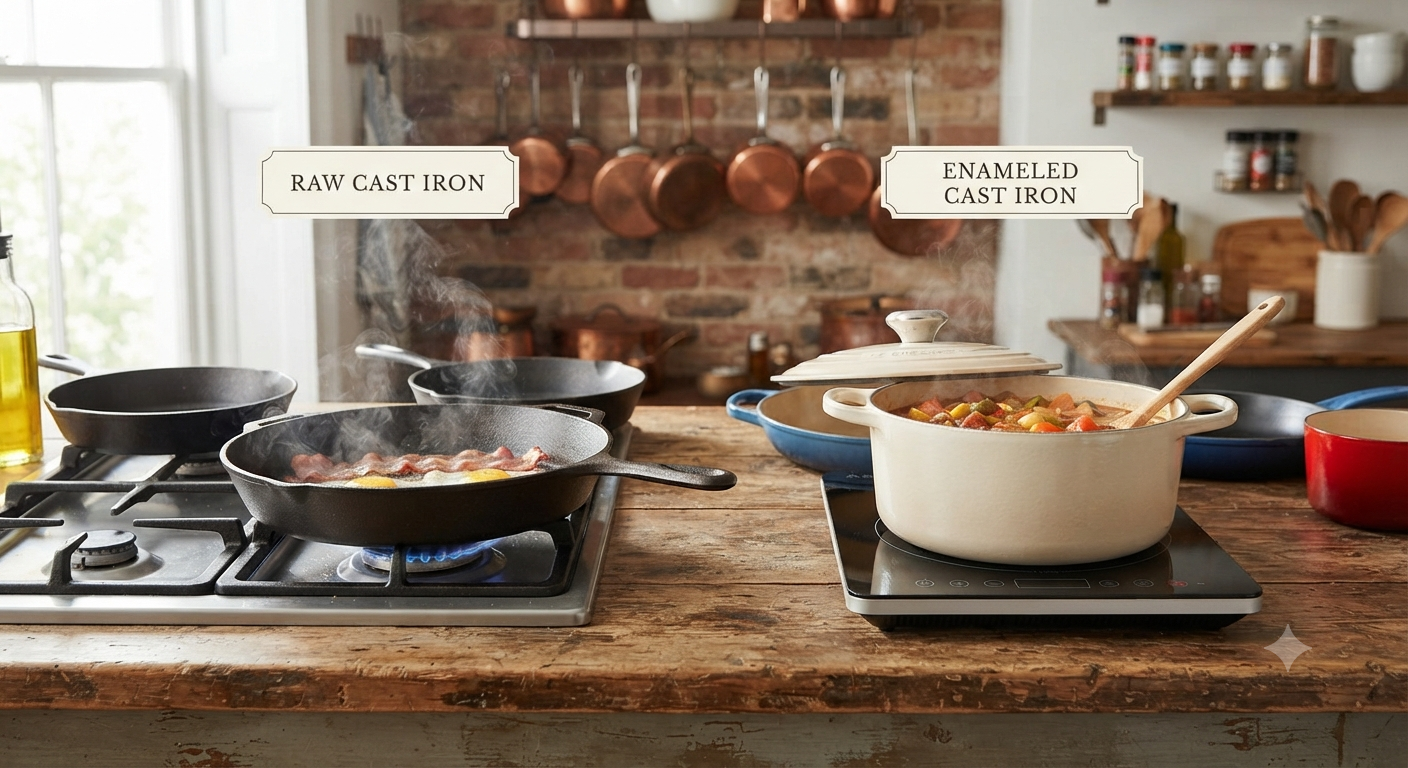
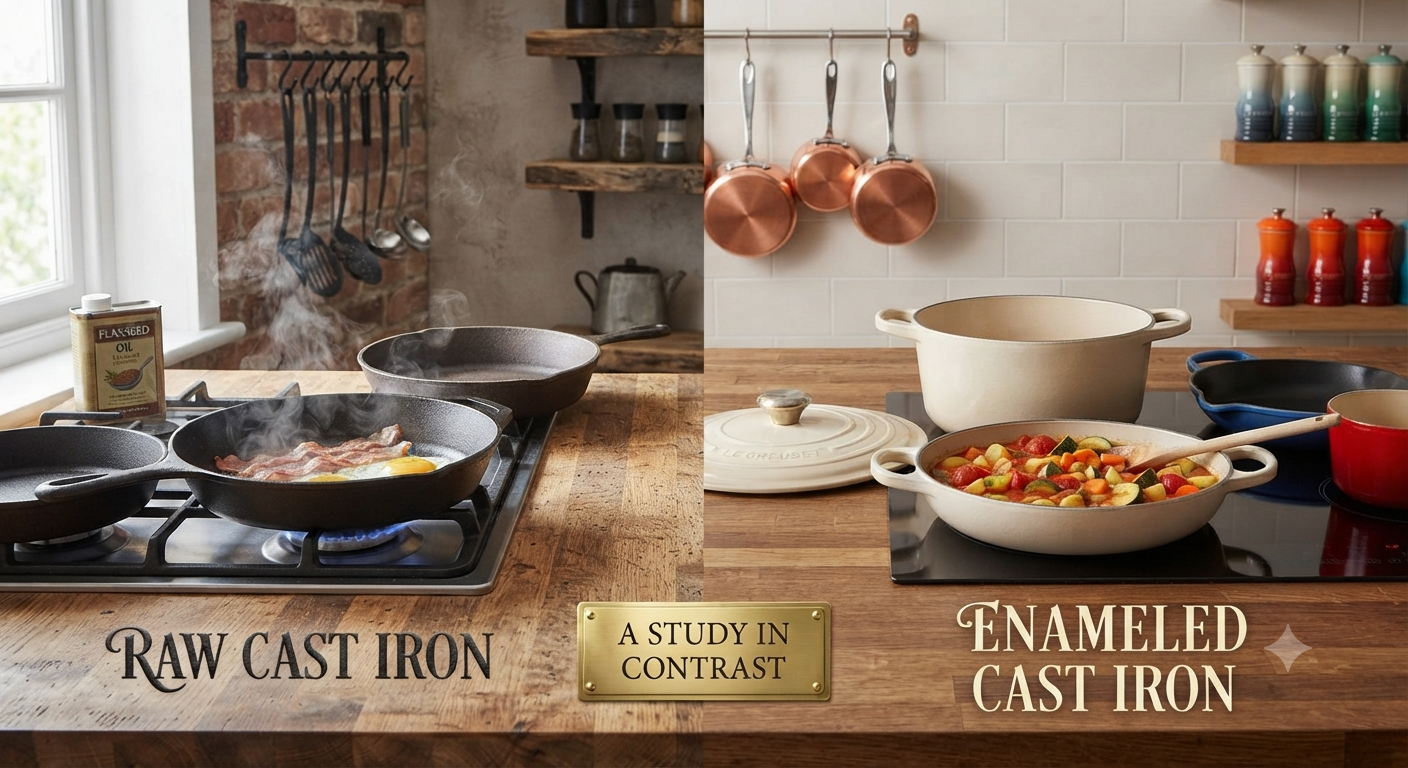
Cast iron cookware is made from molten iron poured into molds. It develops a naturally non-stick surface through seasoning, which is created by baking oil onto the metal.
Best for:
- Steaks
- Burgers
- Cornbread
- Fried foods
- Campfire cooking
- High-temperature searing
What Is Enameled Cast Iron?
Enameled cast iron has the same heavy cast iron core but is coated with a layer of porcelain enamel. This coating prevents rust and removes the need for seasoning.
Best for:
- Soups
- Stews
- Braising
- Tomato sauces
- Bread baking
- Slow cooking
Key Differences Between Cast Iron and Enameled Cast Iron
| Comparison | Cast Iron | Enameled Cast Iron |
| Surface | Seasoned iron | Glass-like enamel coating |
| Non-stick ability | Improves over time | Smooth but not naturally non-stick |
| Cleaning | Requires careful drying | Easier to clean |
| Maintenance | Regular seasoning | Minimal maintenance |
| Cooking acids | Not recommended | Completely safe |
| Appearance | Rustic black | Available in many colors |
Pros and Cons
Cast Iron
Pros
- Excellent heat retention
- Outstanding searing
- Very durable
- Affordable
- Naturally non-stick after seasoning
- Can last generations
Cons
- Requires seasoning
- Can rust
- Reacts with acidic foods
- Heavier to maintain
- Longer cleaning routine
Enameled Cast Iron
Pros
- No seasoning required
- Easy to clean
- Rust resistant
- Safe for acidic recipes
- Attractive appearance
- Great for slow cooking
Cons
- More expensive
- Enamel can chip
- Slightly less effective for extreme searing
- Requires careful handling
Which Is Better for Different Cooking Styles?
| Cooking Task | Best Choice |
| Steak | Cast Iron |
| Burgers | Cast Iron |
| Eggs | Seasoned Cast Iron |
| Bread | Both |
| Soups | Enameled Cast Iron |
| Chili | Enameled Cast Iron |
| Tomato Sauce | Enameled Cast Iron |
| Braising | Enameled Cast Iron |
| Frying Chicken | Cast Iron |
| Camping | Cast Iron |
Maintenance Comparison
| Task | Cast Iron | Enameled Cast Iron |
| Seasoning | Required | Not required |
| Prevent rust | Yes | No |
| Soap | Small amounts acceptable | Yes |
| Dry immediately | Yes | Recommended |
| Oil after washing | Yes | No |
Heat Performance
| Category | Winner |
| Heat retention | Tie |
| High-heat cooking | Cast Iron |
| Even cooking | Tie |
| Oven use | Tie |
| Slow cooking | Enameled Cast Iron |
Durability Comparison
| Factor | Cast Iron | Enameled Cast Iron |
| Crack resistance | Excellent | Good |
| Scratch resistance | Excellent | Moderate |
| Chip resistance | Excellent | Lower |
| Rust resistance | Lower | Excellent |
| Lifespan | Lifetime | Lifetime with care |
Cost Comparison
| Budget | Recommendation |
| Under $50 | Cast Iron |
| $50–$150 | Either |
| Premium cookware | Enameled Cast Iron |
Which Should You Buy?
| If You Want… | Choose |
| Maximum durability | Cast Iron |
| Easy maintenance | Enameled Cast Iron |
| Budget-friendly cookware | Cast Iron |
| Colorful cookware | Enameled Cast Iron |
| Outdoor cooking | Cast Iron |
| Cooking acidic dishes | Enameled Cast Iron |
| Best searing | Cast Iron |
| One versatile Dutch oven | Enameled Cast Iron |
Frequently Asked Questions
Is enameled cast iron better than cast iron?
It depends. Enameled cast iron is easier to maintain and ideal for acidic foods, while traditional cast iron excels at high-heat searing and develops a natural non-stick surface over time.
Does enameled cast iron need seasoning?
No. The enamel coating protects the iron, so seasoning is unnecessary.
Which lasts longer?
Both can last for decades. Bare cast iron can often be restored even after rust, while enameled cast iron lasts a long time if the enamel remains intact.
Can enameled cast iron rust?
The enamel prevents rust. However, exposed iron from chipped enamel may rust if not cared for properly.
Which is easier to clean?
Enameled cast iron is generally easier because food sticks less, and there is no seasoning layer to maintain.
Can you cook tomato sauce in cast iron?
It’s best to use enameled cast iron. Acidic ingredients can damage seasoning and may affect flavor in bare cast iron.
Is cast iron healthier?
Both are safe cookware choices. Bare cast iron may add small amounts of dietary iron to food, while enameled cast iron does not significantly contribute iron.
Final Tip
If you love high-heat cooking, enjoy maintaining cookware, and want maximum durability at a lower cost, choose cast iron. If you prefer convenience, easy cleanup, and frequently cook soups, stews, or tomato-based dishes, enameled cast iron is the better investment.