Table of contents
Stainless Steel vs Hard-Anodized Aluminum
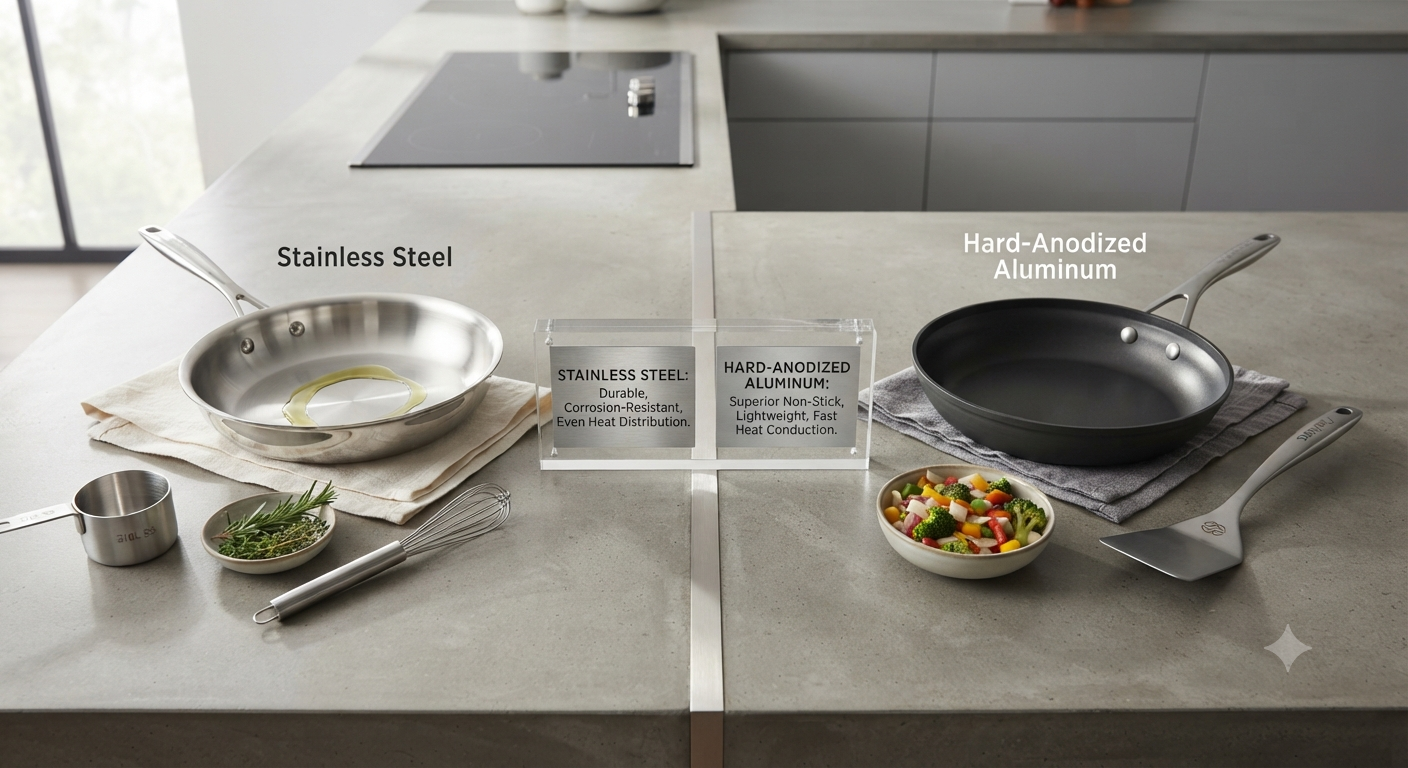
If you’re choosing between stainless steel and hard-anodized aluminum, the best option depends on your cooking style.
- Choose stainless steel for durability, searing, and long-term performance.
- Choose hard-anodized aluminum for faster heating, nonstick cooking, and easier cleanup.
Both materials are safe and widely used, but they excel in different situations.
Read More: Stainless Steel vs Carbon Steel: Essential Guide
Quick Comparison
| Feature | Stainless Steel | Hard-Anodized Aluminum |
| Durability | Excellent (20+ years) | Very Good (8–15 years) |
| Heat Conductivity | Moderate (often with an aluminum core) | Excellent |
| Nonstick | No | Yes (usually coated) |
| Scratch Resistance | Excellent | Good |
| Rust Resistance | Excellent | Excellent |
| Weight | Heavier | Lighter |
| Maintenance | Medium | Easy |
| Oven Safe | Usually Yes | Depends on the coating |
| Metal Utensils | Yes | Usually Not Recommended |
| Price | Medium to Premium | Budget to Mid-range |
| Best For | Searing, browning, and professional cooking | Eggs, pancakes, and everyday meals |
What Is Stainless Steel Cookware?
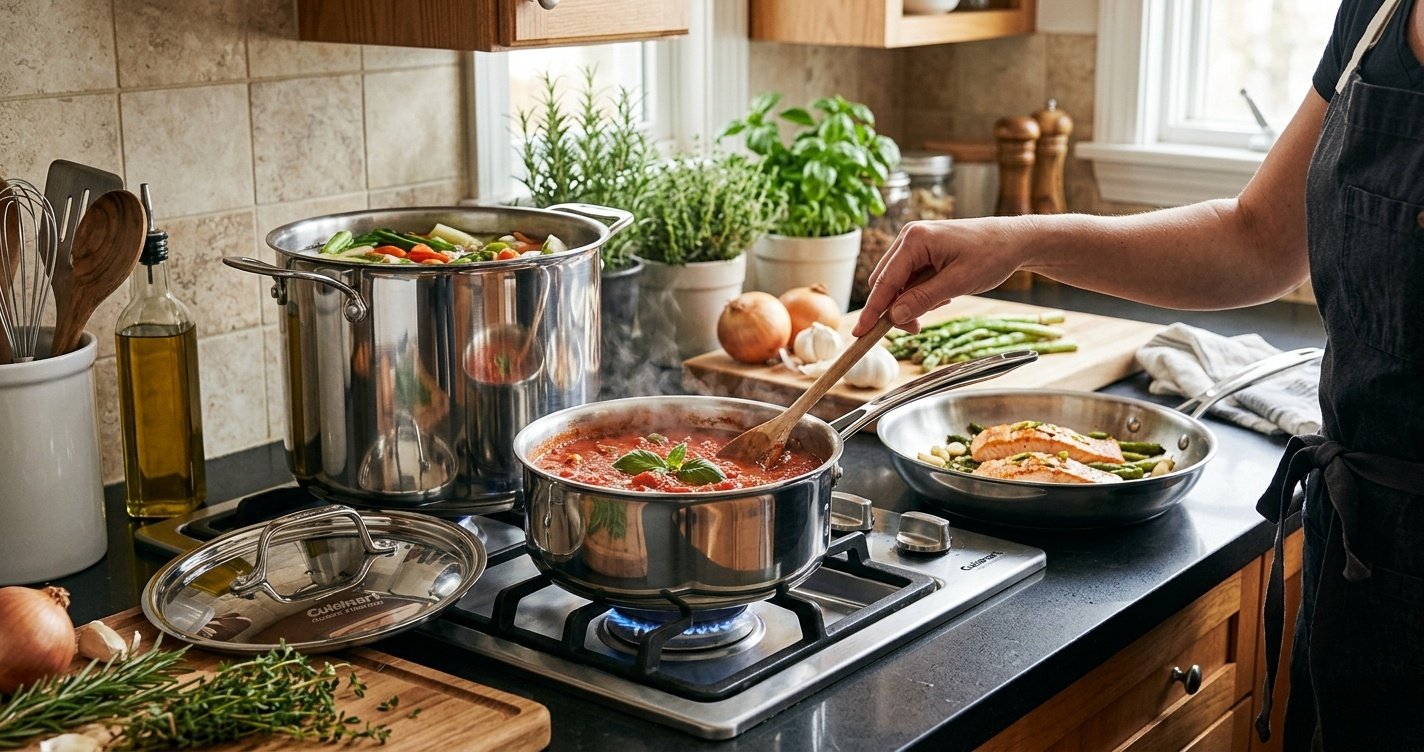
Stainless steel cookware is made from an alloy of steel containing chromium, making it resistant to rust, stains, and corrosion.
Most premium cookware uses a layer of aluminum or copper inside the base or walls to improve heat distribution.
Best For
- High-heat cooking
- Searing meat
- Browning
- Deglazing sauces
- Long-term durability
Pros
- Extremely durable
- Won’t rust
- Safe for high temperatures
- Dishwasher safe (most models)
- Compatible with induction cooktops
Cons
- Food can stick without proper technique
- Longer preheating time
- Usually more expensive
What Is Hard-Anodized Aluminum Cookware?
Hard-anodized aluminum is aluminum treated through an electrochemical process that creates a hard, non-reactive surface.
Most hard-anodized cookware also includes a nonstick coating.
Best For
- Everyday cooking
- Low-fat meals
- Delicate foods
- Quick cooking
Pros
- Excellent heat distribution
- Lightweight
- Easy to clean
- Requires less oil
- Affordable
Cons
- Nonstick coating wears over time
- Not ideal for very high heat
- Metal utensils may damage the surface
- Some models aren’t induction-compatible
Key Differences Between Stainless Steel and Hard-Anodized Aluminum
| Category | Stainless Steel | Hard-Anodized Aluminum |
| Material | Steel alloy | Treated aluminum |
| Cooking Surface | Bare steel | Hardened nonstick surface |
| Lifespan | 20–30 years | 8–15 years |
| Heat Speed | Moderate | Very Fast |
| Food Release | Lower | Excellent |
| Maintenance | Medium | Low |
| High Heat | Excellent | Good |
| Weight | Heavy | Light |
Heat Performance
Stainless Steel
- Retains heat longer
- Excellent for searing
- Better for steak and caramelization
- More even when multi-clad
Hard-Anodized Aluminum
- Heats quickly
- Responds rapidly to temperature changes
- Great for everyday cooking
- Excellent for eggs and vegetables
Winner: Hard-anodized aluminum for speed, stainless steel for high-heat cooking.
Durability Comparison
| Feature | Winner |
| Scratch Resistance | Stainless Steel |
| Dent Resistance | Stainless Steel |
| Long-Term Value | Stainless Steel |
| Coating Longevity | Stainless Steel (no coating) |
Hard-anodized cookware is durable, but its nonstick coating eventually wears out.
Winner: Stainless steel.
Which Is Healthier?
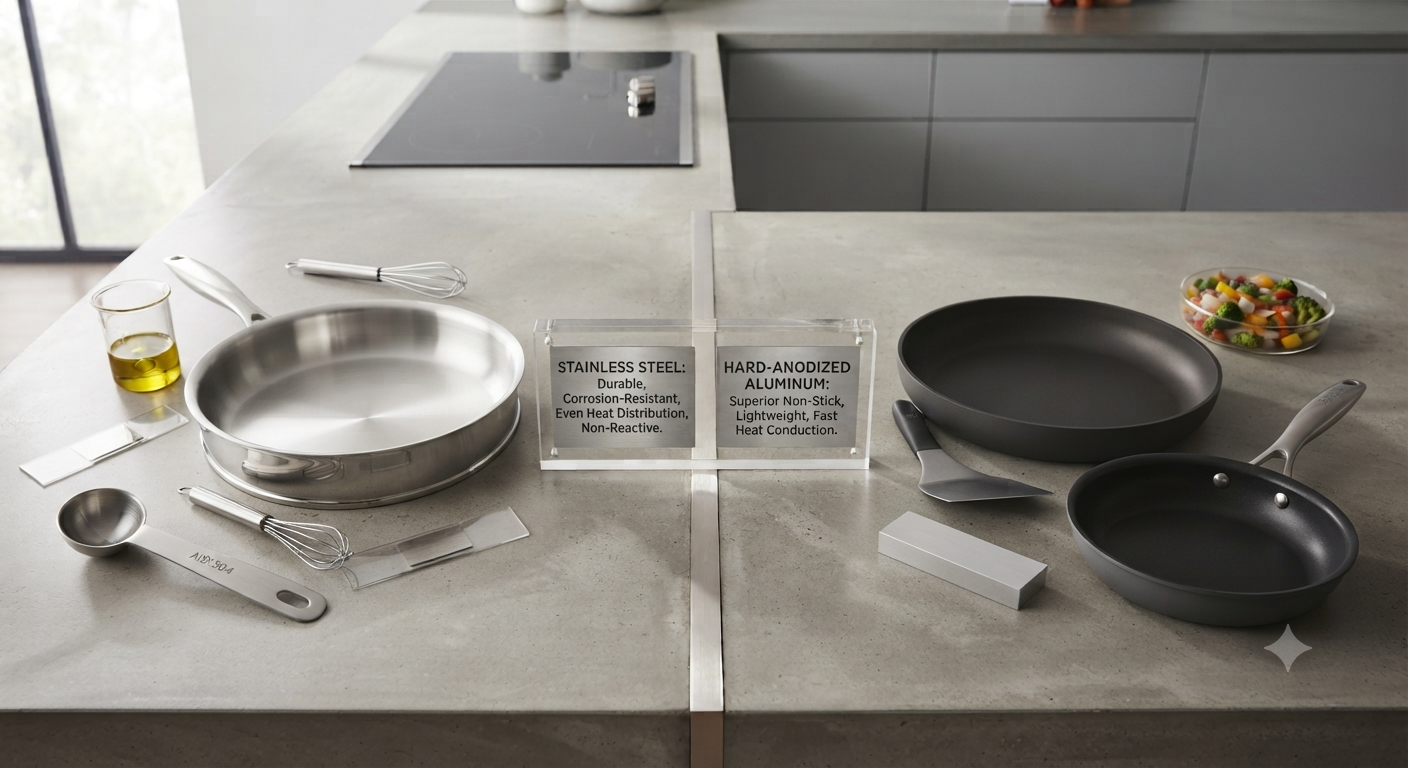
Both are considered safe for cooking when used as intended.
Stainless Steel
- No nonstick coating
- Doesn’t react with most foods
- Suitable for high temperatures
Hard-Anodized Aluminum
- Anodized layer seals the aluminum
- Most modern coatings are PFOA-free
- Avoid overheating or using damaged nonstick surfaces
Winner: Tie.
Which Is Easier to Clean?
| Task | Stainless Steel | Hard-Anodized Aluminum |
| Burnt Food | Harder | Easier |
| Dishwasher | Usually Yes | Often Hand Wash |
| Daily Cleaning | Moderate | Easy |
Winner: Hard-anodized aluminum.
Which Lasts Longer?
| Material | Average Lifespan |
| Stainless Steel | 20–30+ years |
| Hard-Anodized Aluminum | 8–15 years |
If you want cookware that can last decades, stainless steel is the better investment.
Which Is Better for Different Foods?
| Food | Best Choice |
| Eggs | Hard-Anodized Aluminum |
| Pancakes | Hard-Anodized Aluminum |
| Fish | Hard-Anodized Aluminum |
| Steak | Stainless Steel |
| Chicken | Stainless Steel |
| Stir Fry | Stainless Steel |
| Sauces | Stainless Steel |
| Vegetables | Tie |
Price Comparison
| Budget | Recommended Material |
| Under $100 | Hard-Anodized Aluminum |
| $100–300 | Either |
| Premium | Stainless Steel |
Hard-anodized cookware usually costs less while offering excellent everyday performance.
Pros and Cons
Stainless Steel
Pros
- Extremely durable
- High heat tolerance
- Oven safe
- Metal utensil friendly
- Long lifespan
Cons
- Food may stick
- Heavier
- Higher upfront cost
Hard-Anodized Aluminum
Pros
- Excellent nonstick performance
- Fast heating
- Lightweight
- Easy cleanup
- Lower cost
Cons
- The coating wears over time
- Lower maximum heat
- Not always dishwasher or induction safe
Which Should You Buy?
Choose stainless steel if you:
- Want cookware for decades
- Cook at high temperatures
- Frequently sear meat
- Prefer metal utensils
- Value durability over convenience
Choose hard-anodized aluminum if you:
- Want easy cleanup
- Cook eggs and delicate foods often
- Prefer lightweight cookware
- Need a lower-cost option
- Like nonstick performance
Frequently Asked Questions
Is stainless steel better than hard-anodized aluminum?
For durability and high-heat cooking, yes. For easy cooking and cleanup, hard-anodized aluminum is often the better choice.
Which cookware lasts longer?
Stainless steel typically lasts 20–30 years or more, while hard-anodized aluminum usually lasts 8–15 years, depending on the coating and care.
Is hard-anodized aluminum safe?
Yes. Hard-anodized aluminum cookware is generally safe when the surface remains intact and the cookware is used according to the manufacturer’s instructions.
Which is better for eggs?
Hard-anodized aluminum is usually better because its nonstick surface helps eggs release easily with less oil.
Does stainless steel cook more evenly?
High-quality multi-clad stainless steel with an aluminum or copper core cooks more evenly than basic stainless steel, but hard-anodized aluminum heats faster overall.
Which is better for induction?
Stainless steel cookware with a magnetic base is generally induction compatible. Hard-anodized aluminum requires a specially designed induction-ready base.
Final Tip
The best cookware isn’t the one with the most features—it’s the one that matches how you cook. If you prioritize longevity, versatility, and high-heat performance, choose stainless steel. If convenience, quick heating, and effortless cleanup matter most, hard-anodized aluminum is an excellent everyday option.