Table of contents
Nonstick vs Hard-Anodized Aluminum
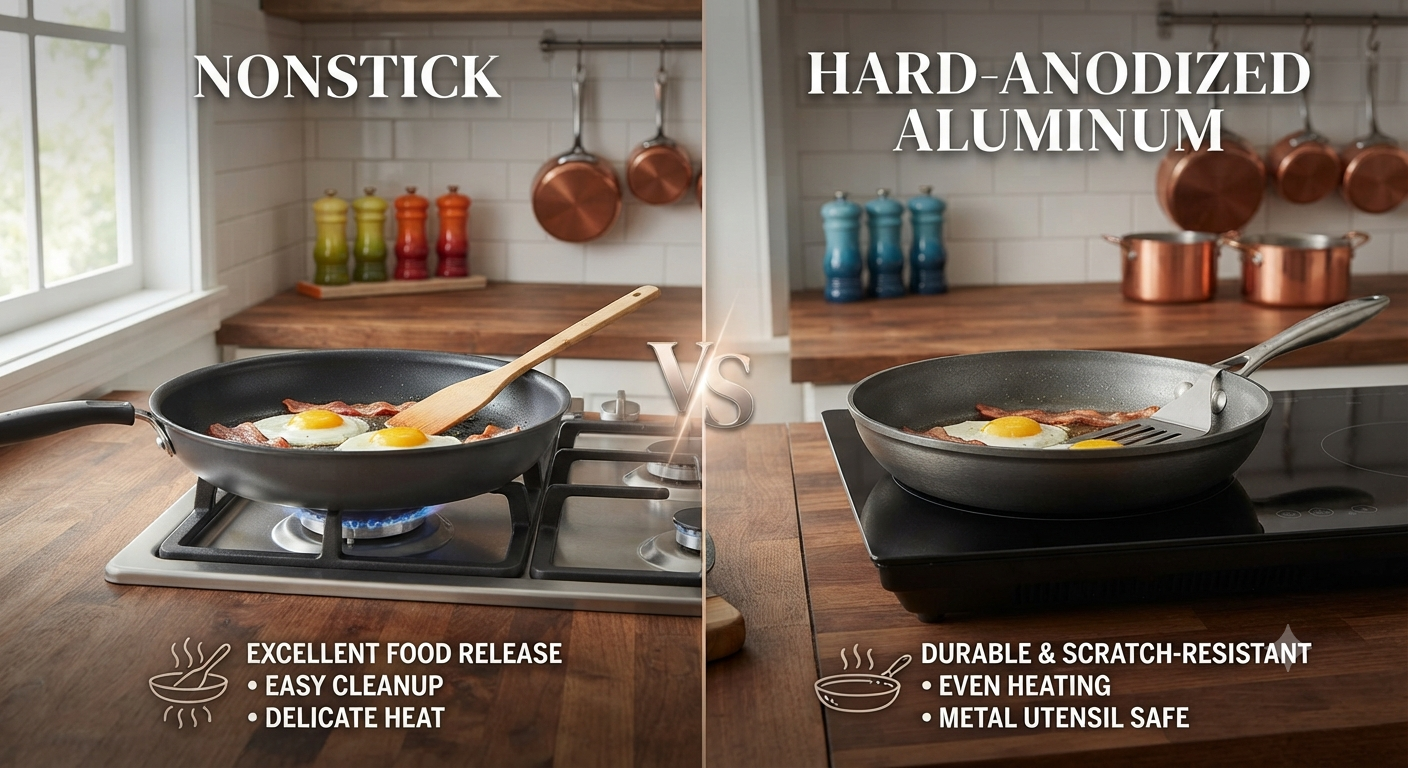
If you’re choosing between nonstick and hard-anodized aluminum cookware, the best option depends on how you cook. Nonstick pans excel at low-fat cooking and easy cleanup, while hard-anodized aluminum cookware offers greater durability, better heat distribution, and longer-lasting performance.
This guide compares both materials to help you make the right choice.
Read More: Cast Iron vs Enameled Cast Iron: Which Is Better?
Quick Comparison
| Feature | Nonstick | Hard-Anodized Aluminum |
| Cooking Performance | Excellent for delicate foods | Excellent for everyday cooking |
| Durability | Moderate | High |
| Scratch Resistance | Low | High |
| Heat Distribution | Very Good | Excellent |
| Metal Utensils | Not Recommended | Usually Safe (depends on coating) |
| Maintenance | Very Easy | Easy |
| Lifespan | 2–5 Years | 5–10+ Years |
| Best For | Eggs, pancakes, fish | Searing, sautéing, and daily cooking |
| Price | Affordable | Mid-range |
What Is Nonstick Cookware?
Nonstick cookware features a coating that prevents food from sticking to the cooking surface.
Pros
- Requires less oil
- Easy food release
- Quick cleanup
- Ideal for beginners
- Great for delicate foods
Cons
- The coating wears over time
- Can scratch easily
- Shorter lifespan
- Not ideal for high-heat cooking
Best For
- Eggs
- Omelets
- Pancakes
- Fish
- Low-fat cooking
What Is Hard-Anodized Aluminum?
Hard-anodized aluminum is aluminum treated through an electrochemical process that creates a harder, more durable surface.
Unlike standard aluminum, it resists corrosion, scratches, and warping while heating quickly and evenly.
Pros
- Extremely durable
- Excellent heat conductivity
- Resistant to corrosion
- Better for daily cooking
- Longer lifespan
Cons
- Usually more expensive
- Heavier than standard nonstick pans
- Some models still include a nonstick coating
Best For
- Searing meat
- Stir-frying
- Vegetables
- Everyday cooking
- High-heat recipes
Core Differences Between Nonstick and Hard-Anodized Aluminum
| Category | Nonstick | Hard-Anodized Aluminum |
| Material | Coated surface | Hardened aluminum body |
| Durability | Moderate | Excellent |
| Cooking Temperature | Low to Medium | Medium to High |
| Scratch Resistance | Low | High |
| Weight | Light | Medium |
| Lifespan | Shorter | Longer |
| Professional Use | Limited | Common |
Which Lasts Longer?
Hard-anodized aluminum lasts significantly longer.
Because the surface is hardened during manufacturing, it better resists scratches, dents, and warping. A quality hard-anodized pan can last over 10 years with proper care, while most nonstick coatings gradually wear out after several years of regular use.
Which Is Better for Everyday Cooking?
Hard-anodized aluminum.
It handles higher temperatures, distributes heat more evenly, and withstands frequent use better than traditional nonstick cookware.
Which Is Easier to Clean?
Nonstick.
Food releases effortlessly, making cleanup fast. Hard-anodized cookware is also easy to clean but may require soaking after cooking sticky or caramelized foods.
Which Is Better for High Heat?
Short Answer: Hard-anodized aluminum.
It tolerates higher cooking temperatures without damaging the cooking surface, making it suitable for browning and searing.
Which Is Better for Eggs?
Nonstick.
Eggs slide off easily with little or no oil, making nonstick the preferred choice for breakfast cooking.
Is Hard-Anodized Aluminum Nonstick?
Not always.
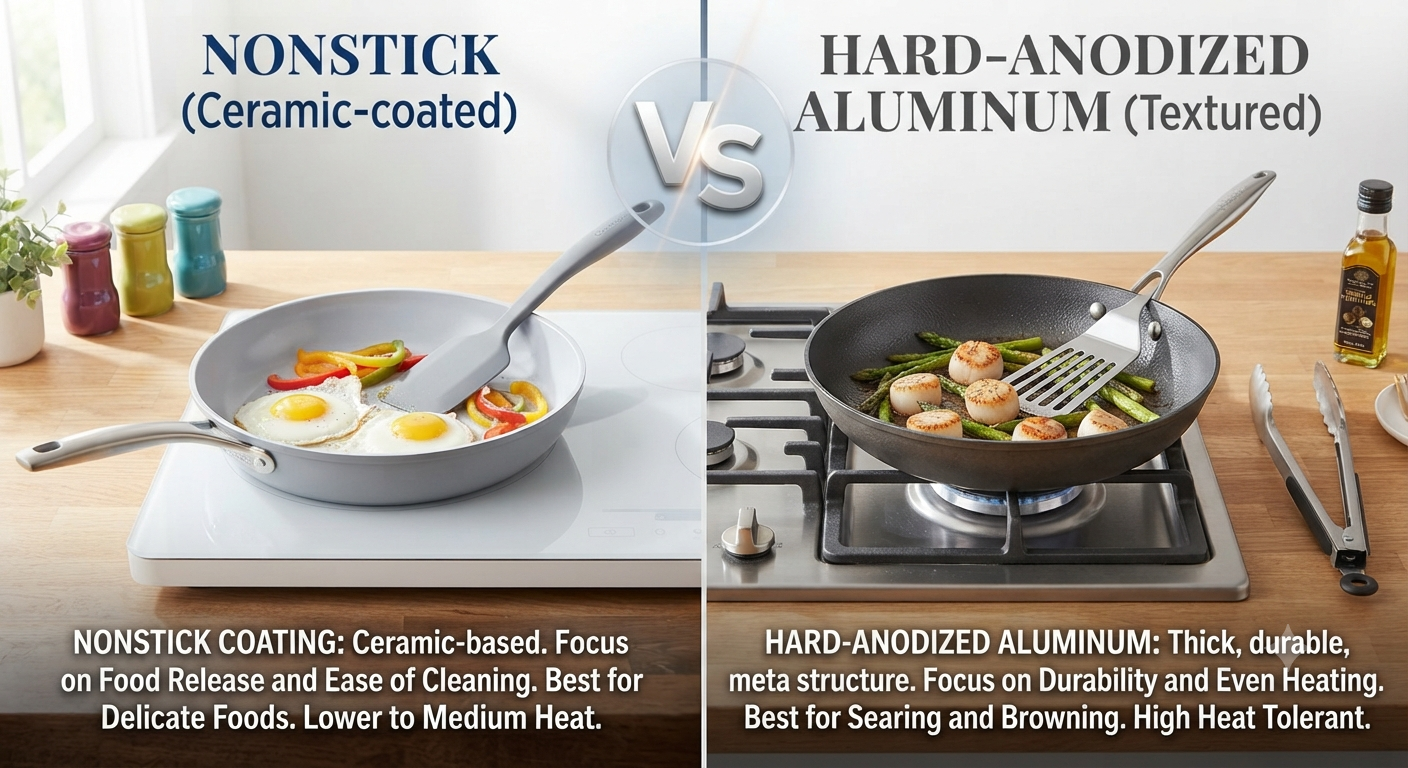
Hard-anodized aluminum refers to the cookware material. Some pans are uncoated, while others include a nonstick coating for easier food release.
Is Hard-Anodized Aluminum Safe?
Yes.
Quality hard-anodized cookware has a sealed surface that resists corrosion and does not react with acidic foods under normal cooking conditions.
Is Nonstick Cookware Safe?
Yes, when used correctly.
Modern nonstick cookware is generally considered safe when used within the manufacturer’s recommended temperature range and when damaged coatings are replaced.
Which Is More Scratch Resistant?
Hard-anodized aluminum.
Its hardened surface withstands everyday cooking better than standard nonstick coatings.
Which Is Better for Searing?
Hard-anodized aluminum.
It reaches and maintains higher temperatures, allowing food to develop better browning.
Which Is Better for Beginners?
Nonstick.
Its forgiving cooking surface reduces sticking and simplifies cleanup, making it ideal for new cooks.
Nonstick vs Hard-Anodized Aluminum: Pros and Cons
| Nonstick Pros | Nonstick Cons |
| Easy cleanup | Shorter lifespan |
| Less oil required | Scratches easily |
| Affordable | Not ideal for high heat |
| Great for eggs | The coating eventually wears out |
| Hard-Anodized Pros | Hard-Anodized Cons |
| Highly durable | Higher cost |
| Even heating | Slightly heavier |
| Scratch resistant | May require seasoning if uncoated |
| Long lifespan | Some models are not dishwasher safe |
How to Choose Between Nonstick and Hard-Anodized Aluminum
Choose nonstick if you:
- Cook eggs frequently
- Want effortless cleanup
- Prefer low-fat cooking
- Have a limited budget
Choose hard-anodized aluminum if you:
- Cook every day
- Need long-lasting cookware
- Frequently sear meat
- Want even heat distribution
- Prefer cookware that withstands heavier use
Frequently Asked Questions
Which is healthier: nonstick or hard-anodized aluminum?
Both can be healthy choices when used as intended. Nonstick allows cooking with less oil, while hard-anodized aluminum provides a durable, non-reactive cooking surface.
Does hard-anodized aluminum need seasoning?
Usually no. Most modern hard-anodized cookware does not require seasoning unless the manufacturer recommends it.
Can hard-anodized aluminum replace nonstick?
For many recipes, yes. However, dedicated nonstick cookware remains better for very delicate foods like eggs and crepes.
Which cookware is better for daily use?
Hard-anodized aluminum is generally the better long-term choice for frequent cooking because of its durability and versatility.
Is hard-anodized aluminum worth the higher price?
Yes, if you cook regularly. Its longer lifespan and better performance often provide greater value over time.
Final Tip
Choosing between nonstick and hard-anodized aluminum comes down to your cooking style. If convenience, easy cleanup, and delicate foods are your priorities, nonstick is an excellent option. If you want cookware that delivers even heating, handles higher temperatures, and lasts for years, hard-anodized aluminum is the stronger investment. Many home cooks benefit from owning both: a nonstick pan for eggs and pancakes, and a hard-anodized pan for everyday meals, searing, and sautéing. This combination provides flexibility, durability, and reliable performance in the kitchen.