Table of contents
Is Ceramic Cookware Safer Than Nonstick?
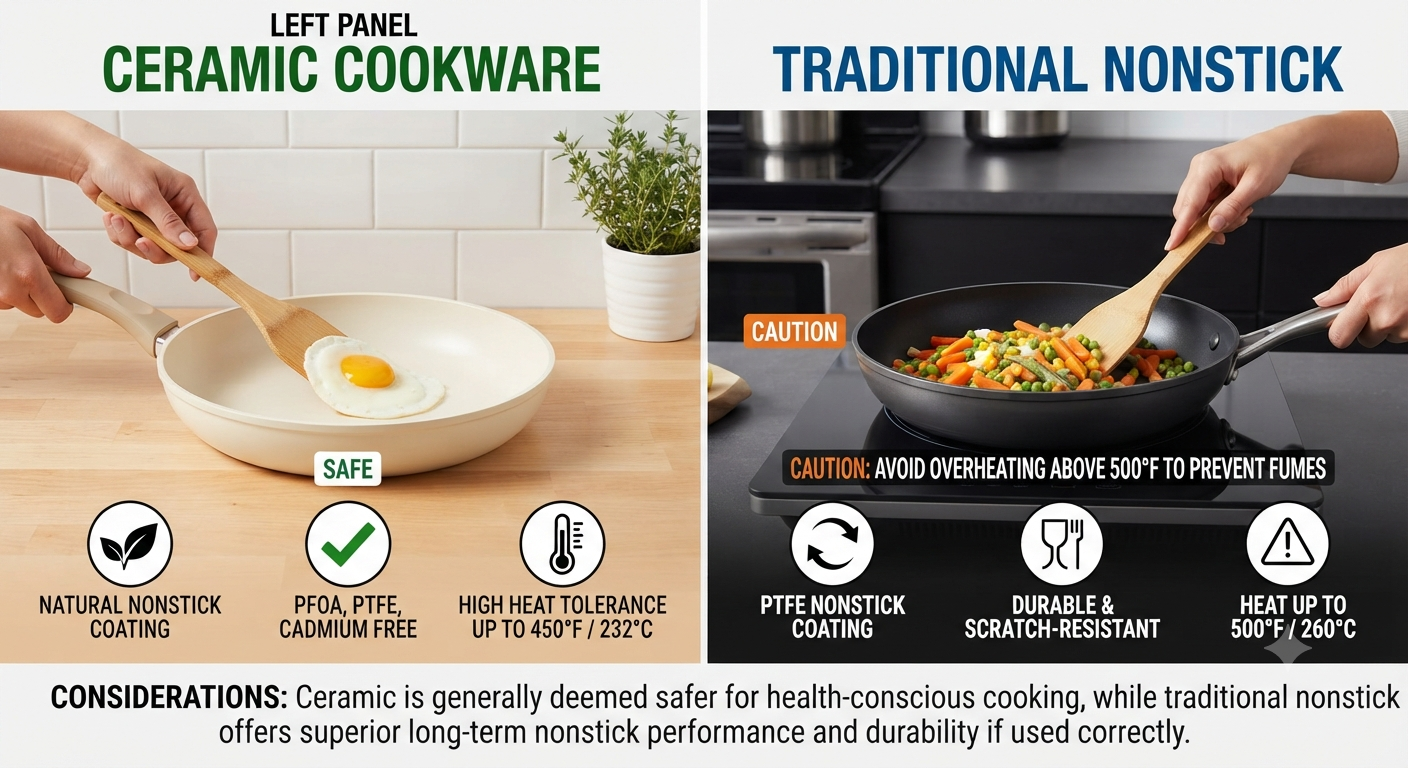
Yes, in most cases. Ceramic cookware — especially pure ceramic — is made without PTFE and PFAS, the chemicals responsible for most nonstick safety concerns. Ceramic-coated cookware is also PFAS-free, but quality varies by brand, and the coating tends to wear out faster than traditional Teflon-style nonstick.
Below is a breakdown of what actually differs between the two, what the research shows, and how to decide which one belongs in your kitchen.
Read More: Carbon Steel vs Nonstick: Which Pan Is Better?
What Is “Nonstick” Cookware, Really?
Traditional nonstick cookware is coated with PTFE (polytetrafluoroethylene), widely known by the brand name Teflon. PTFE is a type of PFAS (“forever chemical”) — a class of compounds that don’t break down naturally in the environment or the body.
The FDA allows PTFE for cookware and states that only negligible amounts transfer into food during normal use. The Consumer Product Safety Commission reviewed PTFE fumes in 2003 and didn’t require warning labels for typical household use. The real risk shows up at high heat: PTFE can start releasing fumes when a pan is overheated above roughly 500°F (260°C) — for example, an empty pan left on high heat.
What Is Ceramic Cookware?
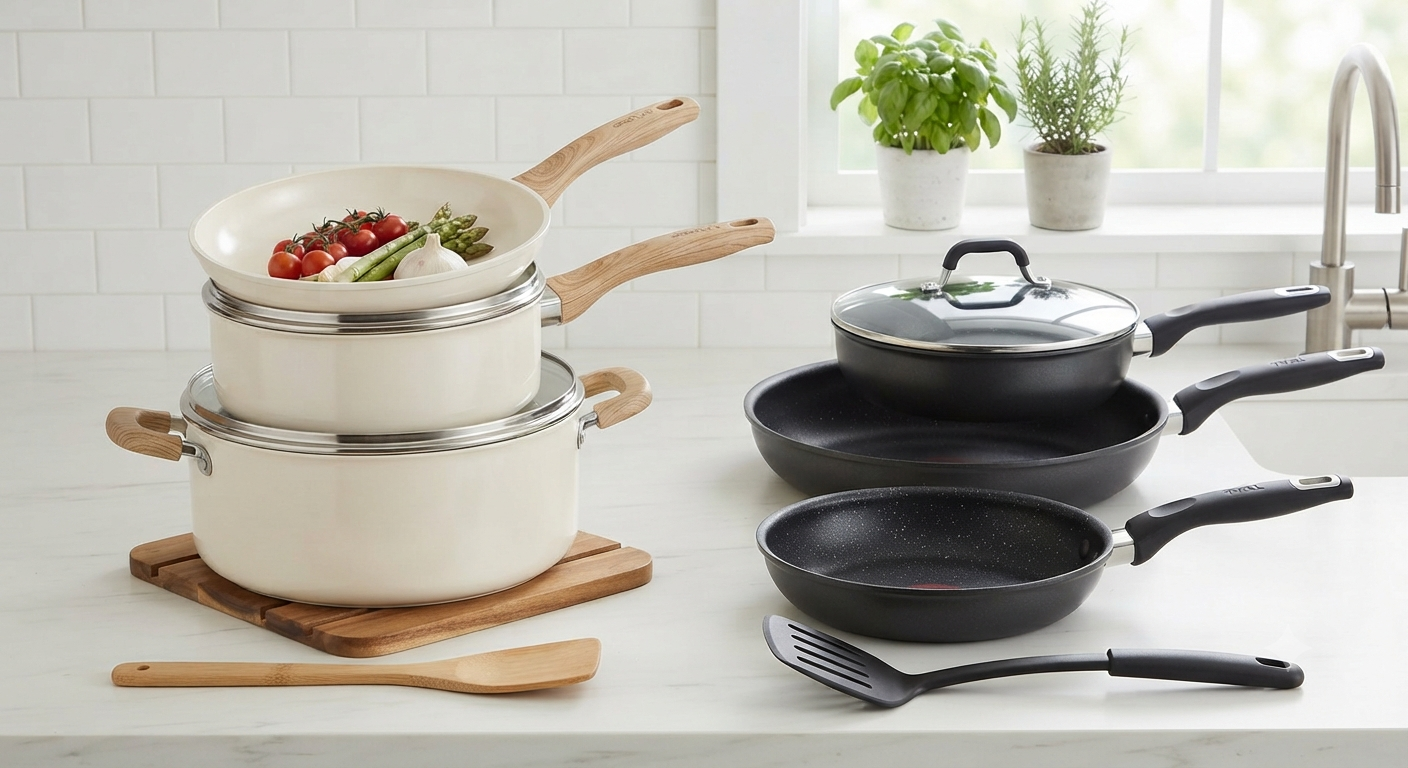
“Ceramic cookware” actually covers two different products, and mixing them up is where most confusion starts.
- Pure ceramic cookware — made entirely from kiln-fired clay, with no metal core and no separate coating. Think traditional bakeware or clay pots.
- Ceramic-coated cookware — a metal pan (usually aluminum) sprayed with a nonstick coating derived primarily from silica (sand). This is what most modern “ceramic” skillets and sauté pans actually are.
Both skip PTFE and PFAS entirely, which is the main reason they’re marketed as the nontoxic alternative.
Is Ceramic Cookware Actually Safer? What the Testing Shows
When Consumer Reports tested ceramic-coated pans for 96 different PFAS chemicals, neither pan tested showed detectable levels. That’s a meaningful data point in ceramic’s favor — though it doesn’t rule out the small number of PFAS compounds outside that specific test panel.
The catch is quality control. Ceramic-coated pans aren’t automatically “clean” just because they’re PFAS-free:
- In past testing, some ceramic-coated brands showed elevated titanium levels, pointing to titanium dioxide nanoparticles used in the coating.
- Some ceramic coatings have contained other metal oxides that raised separate safety questions.
- “Non-toxic” isn’t a regulated term in the U.S., so it doesn’t guarantee anything on its own — third-party lab testing (like NSF certification or independent reports) is a better signal than the label.
Bottom line: pure ceramic is close to as safe as cookware gets. Ceramic-coated is generally safer than PTFE nonstick, but the safety margin depends heavily on the brand.
Ceramic vs. Nonstick: Quick Comparison
| Factor | Ceramic (pure or coated) | Traditional PTFE Nonstick |
| Contains PFAS/PTFE | No | Yes (PTFE is a PFAS) |
| Fume risk at high heat | Low | Present above ~500°F if overheated |
| Nonstick performance | Good, but fades faster | Excellent, especially when new |
| Typical lifespan | 1–3 years for coated versions | 3–5 years with care |
| Scratch tolerance | Coating chips more easily | More scratch-resistant |
| Regulation status | Growing state-level oversight | Several states are banning PFAS cookware starting in 2026 |
Does It Matter If Ceramic Cookware Gets Scratched?
A scratch in a quality, PFAS-free ceramic coating doesn’t introduce the same concern that a damaged PTFE coating does — there’s no fluoropolymer to flake off. It will hurt the nonstick performance, though, and once a coating is visibly damaged, most manufacturers recommend replacing the pan rather than continuing to cook on the exposed surface.
Is Ceramic Cookware Worth the Trade-Off?
The honest trade-off: ceramic-coated pans generally don’t release as easily as fresh PTFE nonstick, and the coating wears down faster — often within one to three years even with careful use. If you want a coating-free option that lasts far longer, stainless steel, cast iron, and carbon steel are the more durable, PFAS-free choices, though none of them match the effortless release of nonstick.
How to Choose Cookware That’s Actually Safe
- Check for PFAS-free and NSF certification, not just a “non-toxic” label.
- Look for published third-party lab reports — brands that test for lead, cadmium, and a broad PFAS panel and share the results are giving you real transparency, not marketing language.
- Cook on low to medium heat. This matters for both PTFE and ceramic coatings — high heat is what degrades either surface fastest.
- Use silicone, wood, or nylon utensils to avoid scratching the coating regardless of which type you choose.
- Replace the pan once the coating chips or thins out visibly — that’s true whether it’s ceramic or traditional nonstick.
Frequently Asked Questions
Is ceramic cookware toxic?
No, quality ceramic cookware — pure or coated — is not toxic. It’s made without PTFE and PFAS. Some lower-quality ceramic-coated brands have raised concerns over titanium dioxide or other metal oxides, so brand quality matters.
Is ceramic cookware better than Teflon?
For chemical safety, yes — ceramic skips the PFAS family entirely. For pure nonstick performance and longevity, Teflon-style PTFE coatings still tend to outlast and outperform ceramic when new.
How long does ceramic cookware last?
Ceramic-coated pans typically last one to three years with regular use before the nonstick surface fades. Pure ceramic cookware without a coating can last much longer since there’s no coating to wear away.
Can ceramic cookware go in the oven?
Most ceramic and ceramic-coated cookware is oven-safe, often up to 400–500°F, but always check the manufacturer’s specific rating before use.
Is scratched ceramic cookware safe to use?
Yes, if the ceramic coating is PFAS-free, a scratch reduces nonstick performance but doesn’t introduce the same risk as damaged PTFE. Once the coating is visibly worn through, it’s best to replace the pan.
The Bottom Line
If avoiding PFAS is your main priority, ceramic cookware — pure or a well-made coated version — is the safer everyday choice over traditional PTFE nonstick. If long-term durability matters more than easy release, stainless steel, cast iron, or carbon steel will outlast any nonstick surface, coated or not. Either way, the brand and how you use the pan matter as much as the material itself.