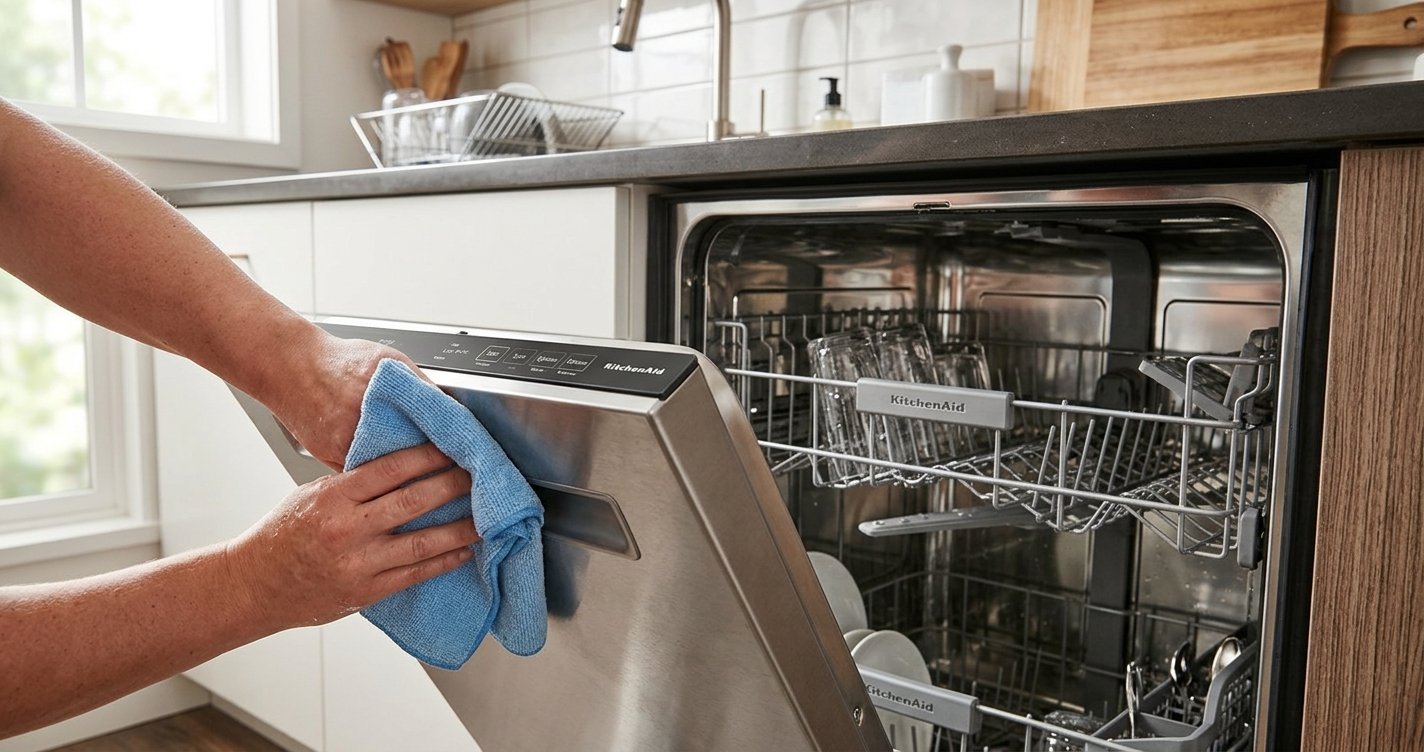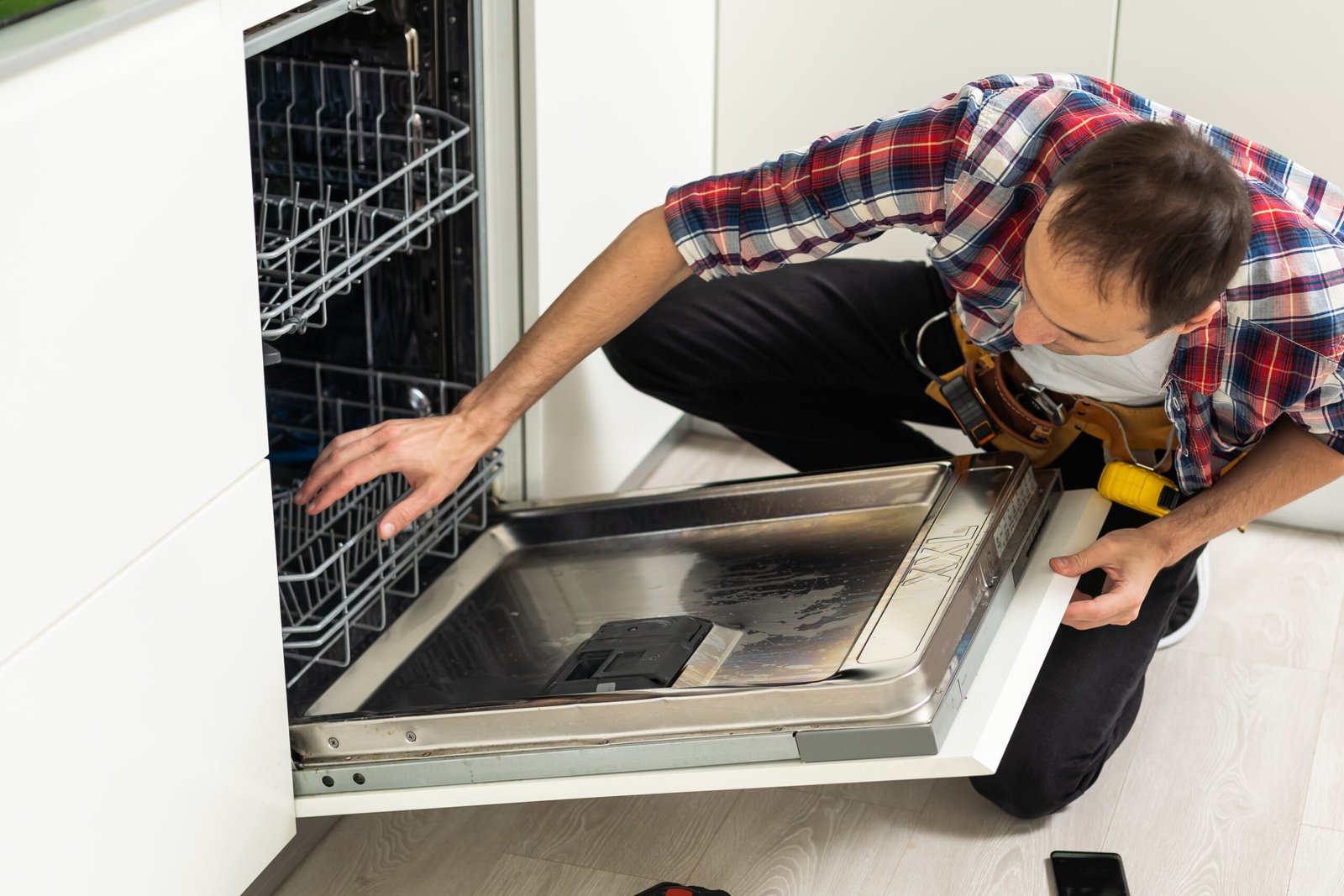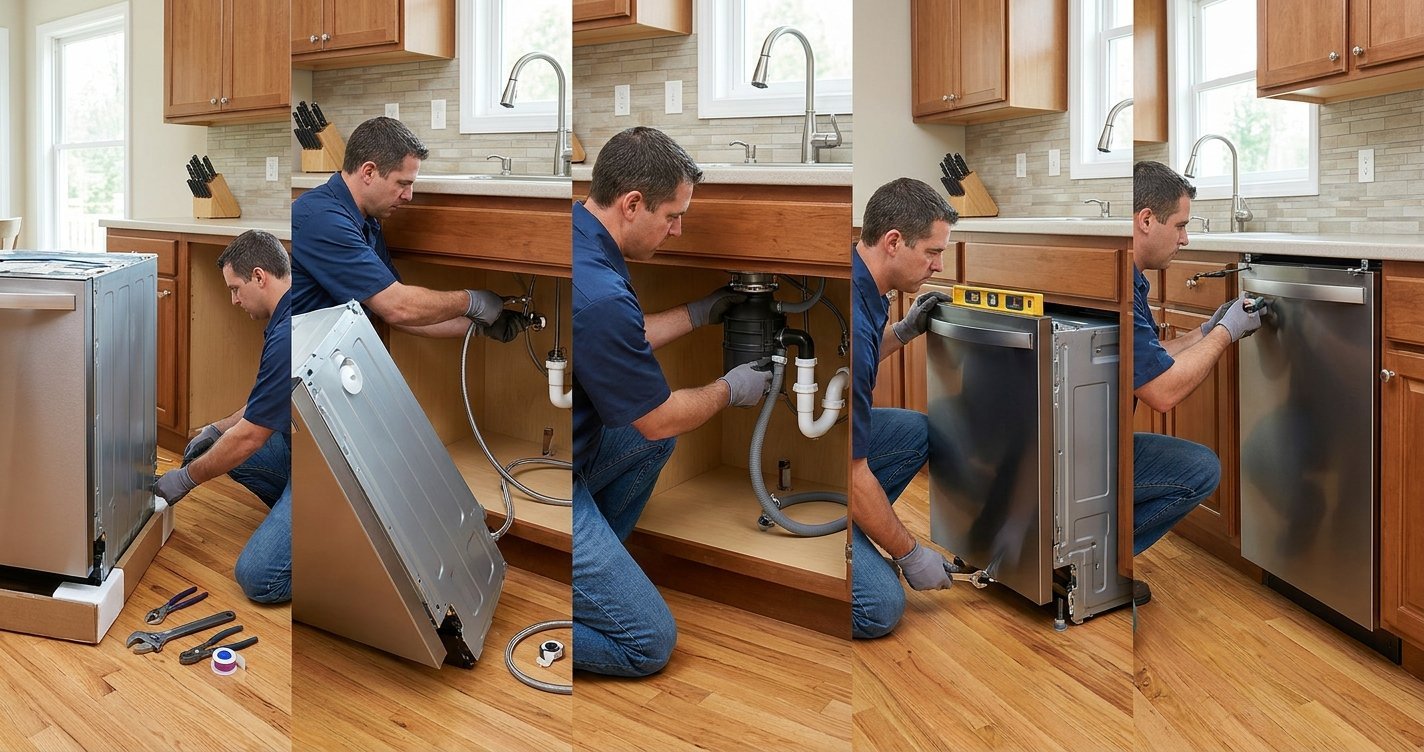
A Hotpoint dishwasher that won’t start, drain, fill, or clean dishes properly can often be fixed with a few simple troubleshooting steps. Common problems include blocked filters, clogged spray arms, drainage obstructions, water supply issues, and faulty door latches.
Before arranging a repair, check the dishwasher’s power supply, water connection, filters, drain hose, and control settings. These basic checks can resolve many everyday problems without professional assistance.
This guide explains how to troubleshoot your Hotpoint dishwasher, identify common faults, understand warning signs, and determine when to contact a qualified appliance technician.
Read More: Omichef Cookware Tips for a Healthy Kitchen Choice
Table of contents
Quick Troubleshooting Guide
Use this table to identify the likely cause of your dishwasher problem and the first action to take.
| Dishwasher Problem | Possible Cause | Recommended Fix |
| Dishwasher won’t start | Power supply or door latch issue | Check power and close the door securely |
| Dishes aren’t clean | Dirty filter or blocked spray arms | Clean filters and spray arms |
| Dishwasher won’t drain | Blocked filter or drain hose | Remove debris and inspect the hose |
| Water isn’t filling | Closed water valve or inlet issue | Check the water supply |
| Dishwasher is leaking | Damaged seal or loose connection | Inspect the door seal and hoses |
| Dishes aren’t drying | Incorrect settings or rinse aid shortage | Check the drying cycle and refill rinse aid |
| Unusual noises | Loose items or obstructed spray arms | Rearrange dishes and check for obstructions |
| Bad smell inside | Food residue or dirty filter | Clean the filter and dishwasher interior |
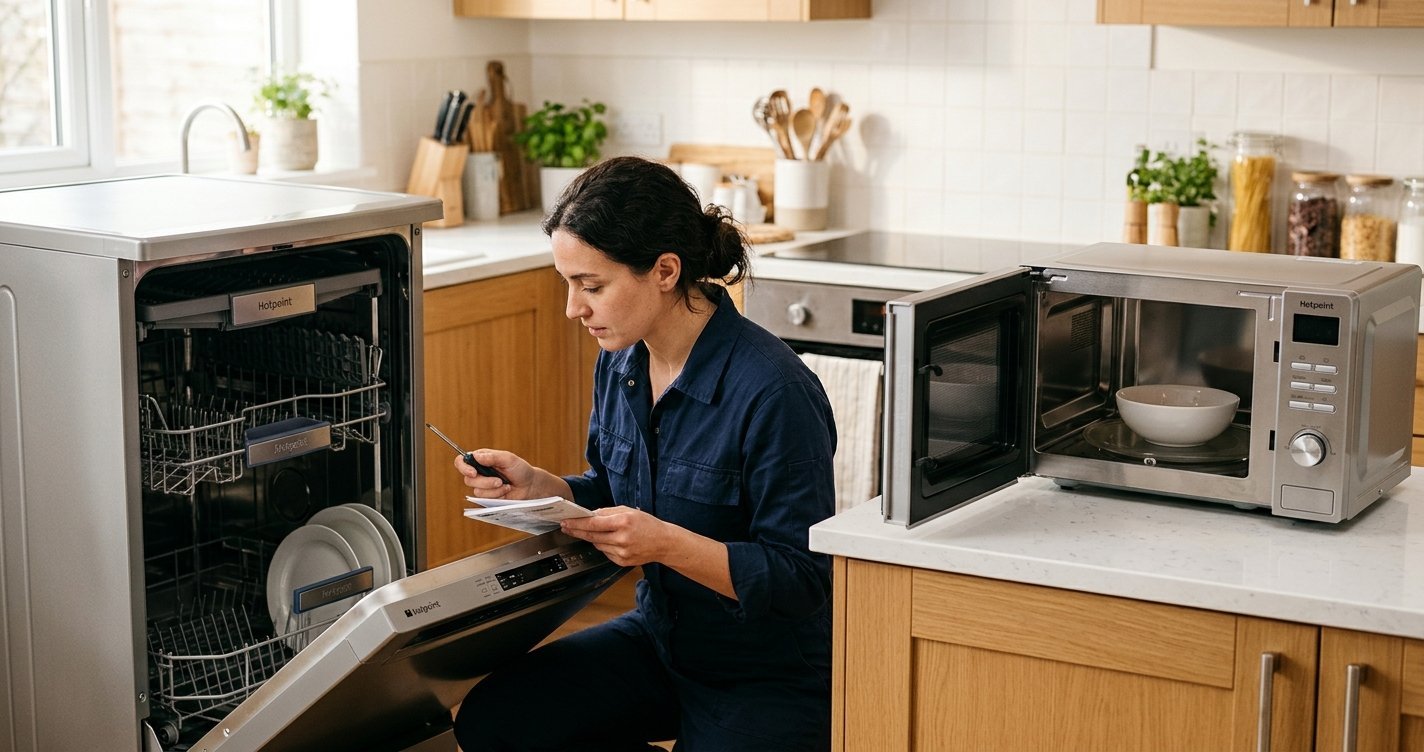
1. Check Why Your Hotpoint Dishwasher Won’t Start
If your Hotpoint dishwasher does not switch on or respond when you press the buttons, start by checking its electrical supply and door mechanism.
Possible causes:
- Power cord is disconnected.
- Circuit breaker has tripped.
- Dishwasher door is not properly closed.
- Door latch or control panel is malfunctioning.
- A cycle has not been selected correctly.
How to fix it:
- Check that the dishwasher is connected to a working electrical outlet.
- Inspect the household circuit breaker for a tripped switch.
- Open and firmly close the dishwasher door.
- Make sure the selected wash cycle is appropriate.
- Check whether the control panel displays an error or warning light.
- Consult your model’s manual for instructions on resetting or cancelling a cycle.
If the dishwasher still does not respond, the door latch, wiring, or electronic control system may need professional inspection.
2. Fix a Hotpoint Dishwasher That Won’t Drain
Standing water at the bottom of your dishwasher usually indicates a drainage problem. Food particles, grease, and other debris can block the filter or drain hose.
How to fix it:
- Switch off the dishwasher and disconnect its power before inspecting internal components.
- Remove the bottom dish rack.
- Locate and remove the dishwasher filter according to the user manual.
- Rinse the filter under warm running water and remove trapped food particles.
- Check the accessible drain area for debris.
- Inspect the drain hose for visible kinks or obstructions.
- Reinstall the filter correctly and run a short rinse cycle.
Important: Some water may remain in the sump area as part of normal operation. However, persistent standing water should be investigated.
If cleaning the filter does not resolve the issue, the drain pump or drainage system may require servicing.
3. Resolve Hotpoint Dishwasher Cleaning Problems
If dishes come out with food residue, grease, or white marks, the dishwasher may not be distributing water effectively.
Common causes:
- Clogged spray arm holes.
- Dirty filters.
- Incorrect detergent quantity.
- Overloaded racks.
- Low water temperature.
- Hard water deposits.
How to fix it:
- Remove and clean the spray arms if your model allows removal.
- Check the spray arm openings for trapped food particles.
- Clean the dishwasher filter.
- Avoid overcrowding the racks.
- Use dishwasher detergent designed for automatic dishwashers.
- Check that the spray arms can rotate freely.
- Refill the rinse aid dispenser if necessary.
For persistent white deposits, check your dishwasher’s water hardness settings and salt requirements if your model has a water-softening system.
4. Troubleshoot a Hotpoint Dishwasher That Won’t Fill
A dishwasher that starts a cycle but does not fill with water may have a supply problem.
Possible causes:
- Water supply valve is closed.
- Water inlet hose is kinked.
- Inlet filter is blocked.
- Water inlet valve is defective.
- Water pressure is insufficient.
How to fix it:
- Confirm that the household water supply is switched on.
- Check the water inlet hose for kinks.
- Make sure the hose is not crushed behind the appliance.
- Check the inlet filter if the manufacturer’s instructions permit access.
- Look for any displayed error codes.
- Restart the dishwasher using the model-specific instructions.
If the appliance still cannot fill, a faulty inlet valve or internal water-level component may require professional attention.
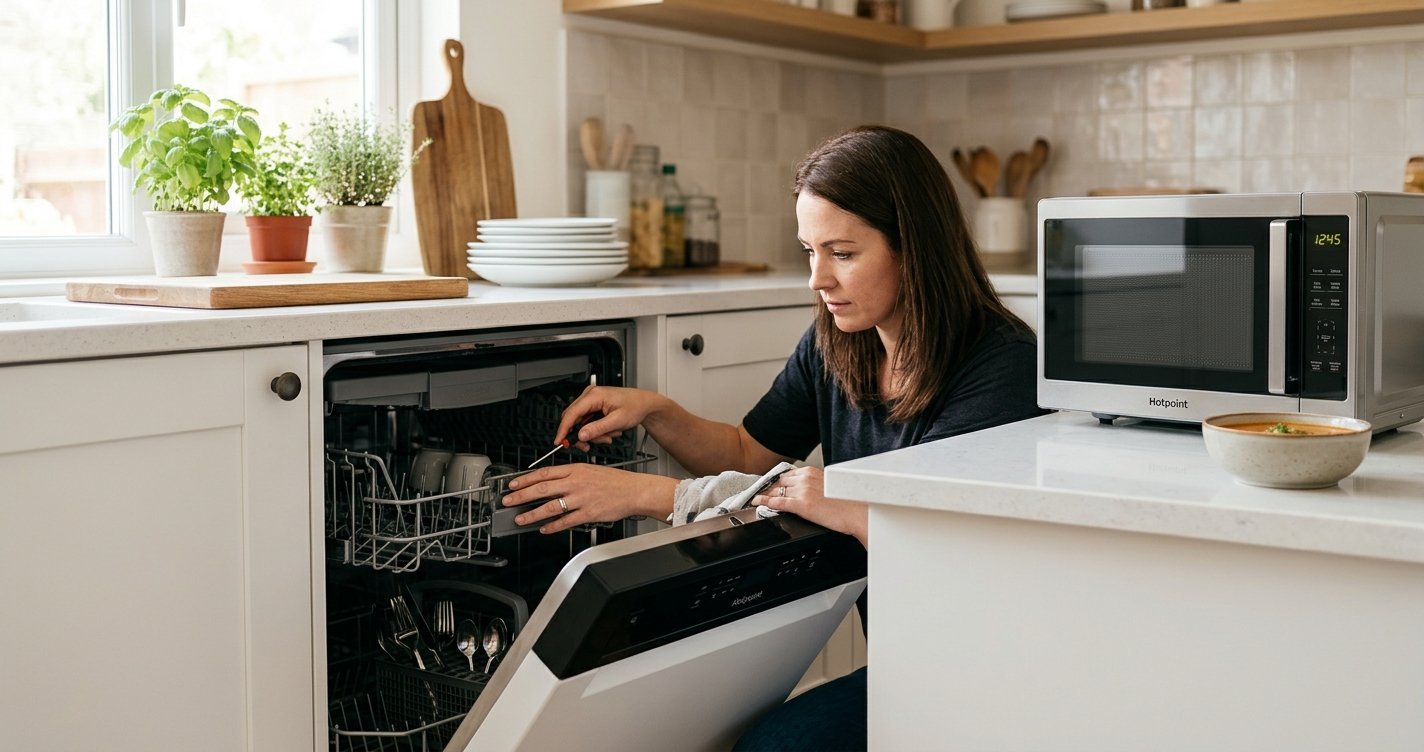
5. Stop Your Hotpoint Dishwasher From Leaking
Water leaking from a dishwasher should be addressed promptly to prevent damage to flooring and nearby cabinets.
Common causes:
- Damaged or dirty door gasket.
- Loose water connections.
- Cracked hoses.
- Excessive detergent or incorrect detergent.
- Dishwasher not sitting level.
How to fix it:
- Stop the wash cycle.
- Switch off the appliance and isolate its electrical supply if safe to do so.
- Turn off the water supply.
- Inspect the door gasket for dirt, cracks, or visible damage.
- Check accessible hose connections for signs of leakage.
- Ensure the dishwasher is installed level.
- Use only the recommended automatic dishwasher detergent.
Do not continue using the dishwasher if water is leaking near electrical components. Contact a qualified technician if the source cannot be identified safely.
6. Improve Poor Drying Performance
If your Hotpoint dishwasher completes a cycle but leaves dishes wet, several factors may be responsible.
Possible causes:
- Insufficient rinse aid.
- Incorrect wash programme.
- Plastic dishes retaining moisture.
- Poor loading arrangements.
- A heating or drying system fault.
How to fix it:
- Check and refill the rinse aid dispenser.
- Select a suitable wash programme with drying functionality.
- Avoid placing items too close together.
- Position cups and containers so water can drain.
- Allow the cycle to finish completely.
- Check the user manual for your model’s drying instructions.
Plastic items often retain more moisture than glass or ceramic dishes, even when the dishwasher is working properly.
If all dishes remain unusually wet, the heating or drying system may need inspection.
7. Investigate Unusual Dishwasher Noises
Some operating noise is normal, but grinding, banging, or persistent buzzing can indicate a problem.
How to fix it:
- Check that dishes are not touching one another.
- Make sure cutlery is secured in the correct basket.
- Check that spray arms can rotate without hitting dishes.
- Inspect the filter for loose debris.
- Listen for unusual noises during different stages of the wash cycle.
A grinding noise may indicate an obstruction or pump problem. Persistent mechanical noises should be inspected by a technician.
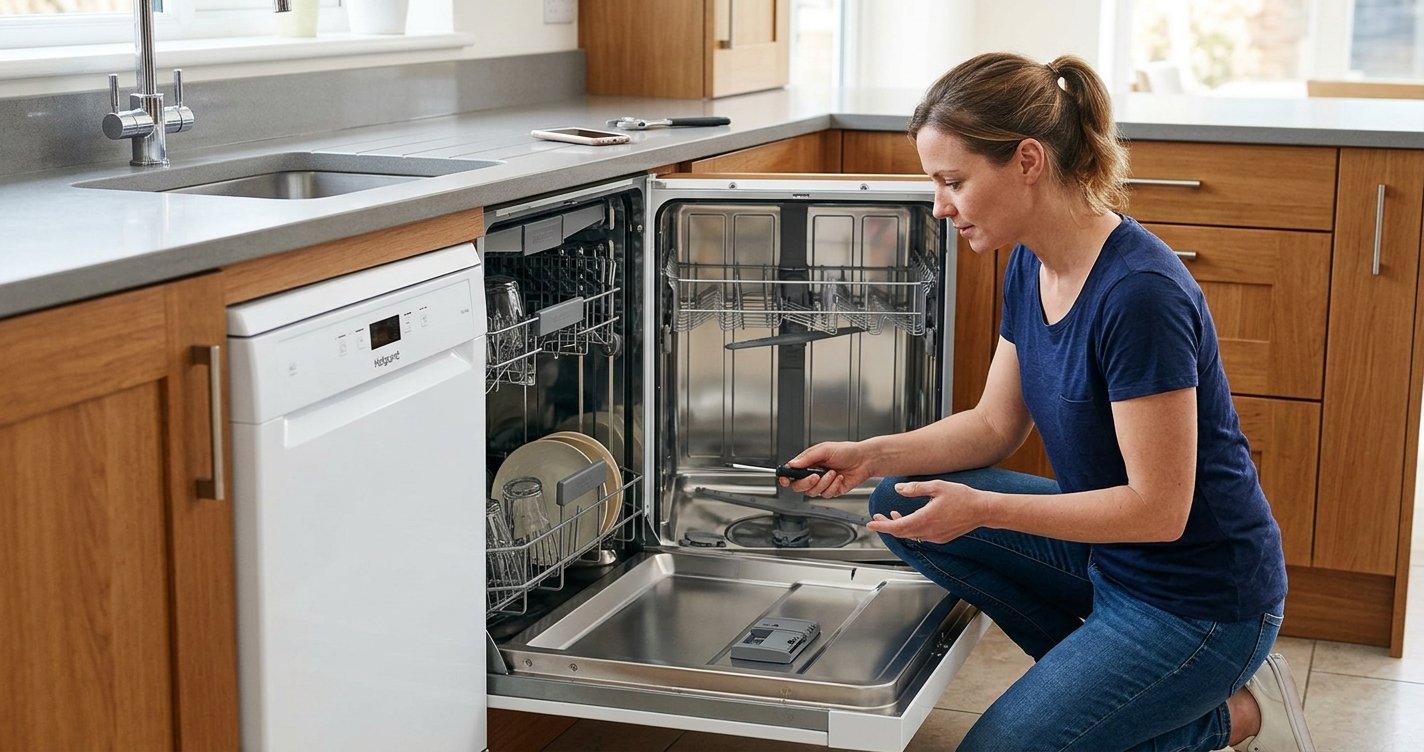
8. Understand Hotpoint Dishwasher Error Codes
Hotpoint dishwasher error codes help identify problems with water supply, drainage, heating, and other components.
The exact code meanings can vary depending on the dishwasher model and control system.
| Error Code | Common Fault Indication | What to Check |
| F01 | Anti-flood or water leakage protection on some models | Check for leaks and standing water |
| F02 | Water inlet or filling fault on some models | Inspect the water supply |
| F03 | Drainage fault on some models | Clean the filter and inspect the drain |
| F04 | Heating or temperature-related fault on some models | Check the model manual |
| F05 | Drainage or water-level-related fault on some models | Inspect the drainage system |
| F06 | Water filling or supply-related fault on some models | Check the inlet hose and water supply |
Note: These are general examples, not a universal Hotpoint error-code chart. Always verify the displayed code against the technical documentation for your exact model before attempting repairs.
9. Reset Your Hotpoint Dishwasher
A dishwasher may occasionally become unresponsive because of a temporary control or programme issue.
A reset may help restore normal operation.
General reset procedure:
- Press the Start/Pause or Reset button if your model provides one.
- Follow the user manual’s instructions for cancelling the current cycle.
- Switch off the dishwasher.
- Disconnect the electrical supply only if it is safe and accessible.
- Wait approximately one minute.
- Restore power.
- Select a new wash programme and check whether the dishwasher operates normally.
Some Hotpoint models use specific button combinations or different reset procedures. Check your model’s instructions rather than assuming every dishwasher resets the same way.
10. Know When to Call a Professional
Not every dishwasher problem can be resolved through basic maintenance.
Contact a qualified appliance technician if you notice:
- Repeated electrical faults or tripping breakers.
- Persistent water leaks.
- A dishwasher that repeatedly fails to heat water.
- A drain pump that makes unusual mechanical noises.
- Repeated error codes after basic checks.
- Damaged wiring or internal electrical components.
- A dishwasher that continues malfunctioning after cleaning and resetting.
Avoid opening sealed electrical components or attempting repairs involving live wiring, pumps, or internal control boards.
Preventive Maintenance Tips for Your Hotpoint Dishwasher
Regular maintenance can help prevent common dishwasher faults and maintain cleaning performance.
- Clean the filter regularly: Remove trapped food particles to support proper drainage.
- Inspect spray arms: Keep spray openings free from debris and mineral deposits.
- Use suitable detergent: Choose detergent specifically designed for automatic dishwashers.
- Refill rinse aid: Maintain drying performance and reduce water marks.
- Check the door seal: Wipe away grease and food residue.
- Avoid overloading: Leave enough space for water to circulate.
- Inspect hoses: Look for visible wear, kinks, and signs of leakage.
- Run appropriate cleaning cycles: Follow the manufacturer’s cleaning and maintenance recommendations.
Frequently Asked Questions
Why is my Hotpoint dishwasher not starting?
Check the electrical supply, circuit breaker, door latch, and selected wash programme. If the appliance remains unresponsive, it may have a faulty door switch or electronic control component.
How do I unclog my Hotpoint dishwasher?
Remove and clean the dishwasher filter, inspect accessible drainage areas, and check the drain hose for kinks. Clean the spray arms if they are blocked.
Why does my Hotpoint dishwasher have standing water?
Standing water can result from a clogged filter, obstructed drain hose, or faulty drain pump. Clean the filter first and inspect the accessible drainage system.
How do I reset my Hotpoint dishwasher?
Use the reset or cycle-cancellation procedure specified in your model’s manual. Some models require a particular button sequence, while others can be restarted after switching off the power.
Why is my Hotpoint dishwasher not cleaning properly?
Dirty filters, blocked spray arms, overloaded racks, incorrect detergent, and hard water deposits can reduce cleaning performance. Check these areas before arranging a repair.
Can I use vinegar to clean my Hotpoint dishwasher?
Check your model’s cleaning recommendations before using vinegar. Manufacturer-approved dishwasher cleaners are generally a safer choice because cleaning agents can affect seals and internal components.
How long should a Hotpoint dishwasher last?
The lifespan depends on the model, installation, usage, and maintenance. Regular filter cleaning, correct detergent use, and prompt attention to faults can help extend its service life.
Final Thoughts
Troubleshooting your Hotpoint dishwasher starts with identifying the symptoms and checking the most common causes. Cleaning filters, inspecting spray arms, checking water connections, and reviewing error codes can resolve many everyday problems.
Always follow the instructions for your specific Hotpoint model and avoid attempting repairs involving electrical components or complex internal mechanisms without the necessary expertise.
If basic troubleshooting does not restore normal operation, a qualified appliance technician can diagnose the fault and recommend the appropriate repair.