The best cookware in 2026 depends on your cooking style: stainless steel wins for durability and searing, cast iron for heat retention and longevity, ceramic non-stick for healthier everyday cooking, and carbon steel for high-heat, restaurant-style results. Most home cooks get the best value from a hybrid set that mixes 2–3 of these materials rather than a single-material set.
Read More: Healthiest Cookware Material for Daily Use (2026 Guide)
Table of contents
How We Evaluated Cookware for 2026
Every recommendation below was assessed against five practical criteria:
- Heat performance — even heating, responsiveness, heat retention
- Durability — warping resistance, coating lifespan, scratch resistance
- Safety — PFAS-free coatings, food-safe materials
- Maintenance — dishwasher safety, seasoning requirements
- Value — price relative to expected lifespan
1. Best Overall: Stainless Steel Clad Cookware Set
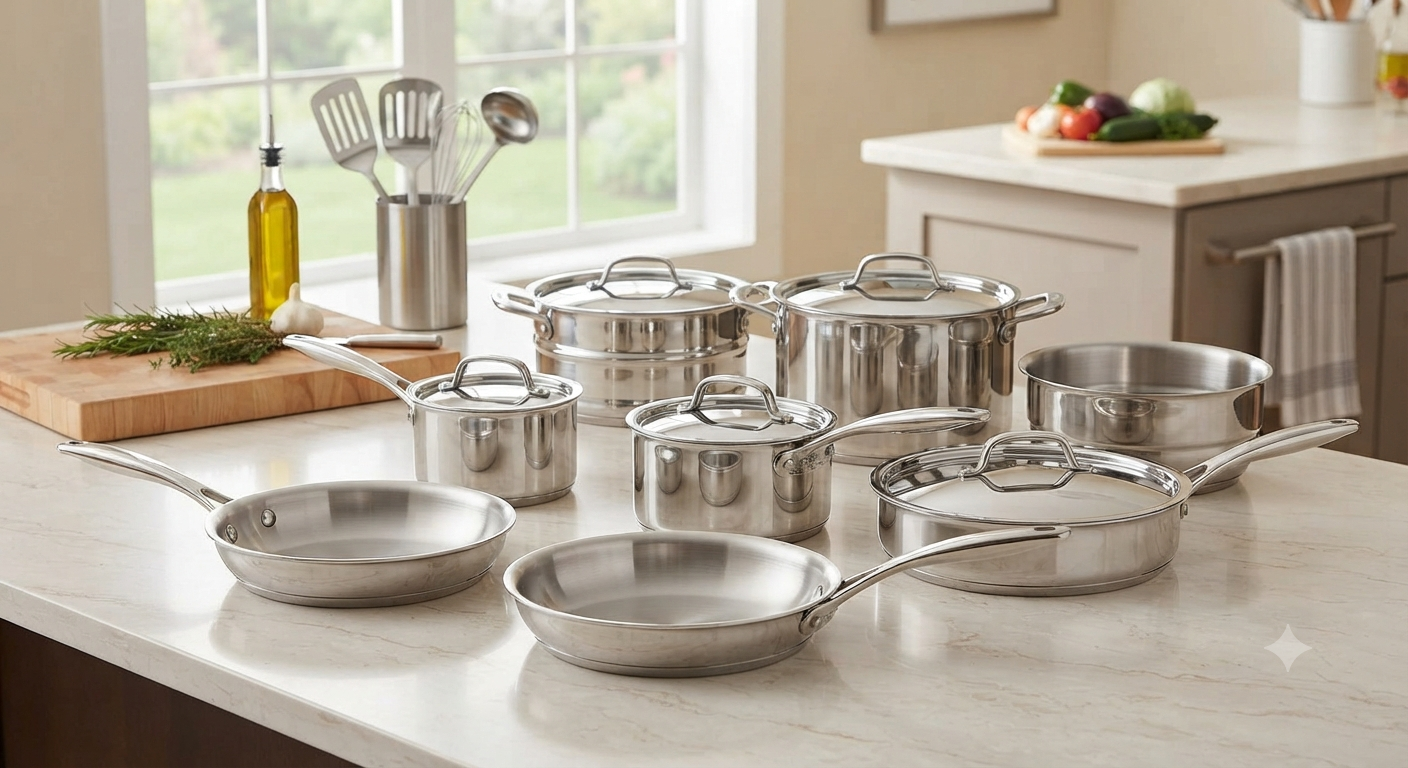
A tri-ply or 5-ply stainless steel set is the best all-around choice in 2026 because it sears well, lasts decades, and works on every stovetop including induction.
Stainless steel remains the benchmark for durability. Clad construction (steel bonded to an aluminum or copper core) fixes stainless’s biggest historical weakness — uneven heating — while keeping the surface non-reactive and dishwasher-safe. Kitchen-gear experts note that multi-ply pans with an aluminum or copper core give cooks both durability and control, which is why they’re often recommended over single-layer stainless.
Best for: Cooks who want one set to last 20+ years and don’t mind a slight learning curve with sticking.
2. Best for Everyday Non-Stick: Ceramic-Coated Cookware
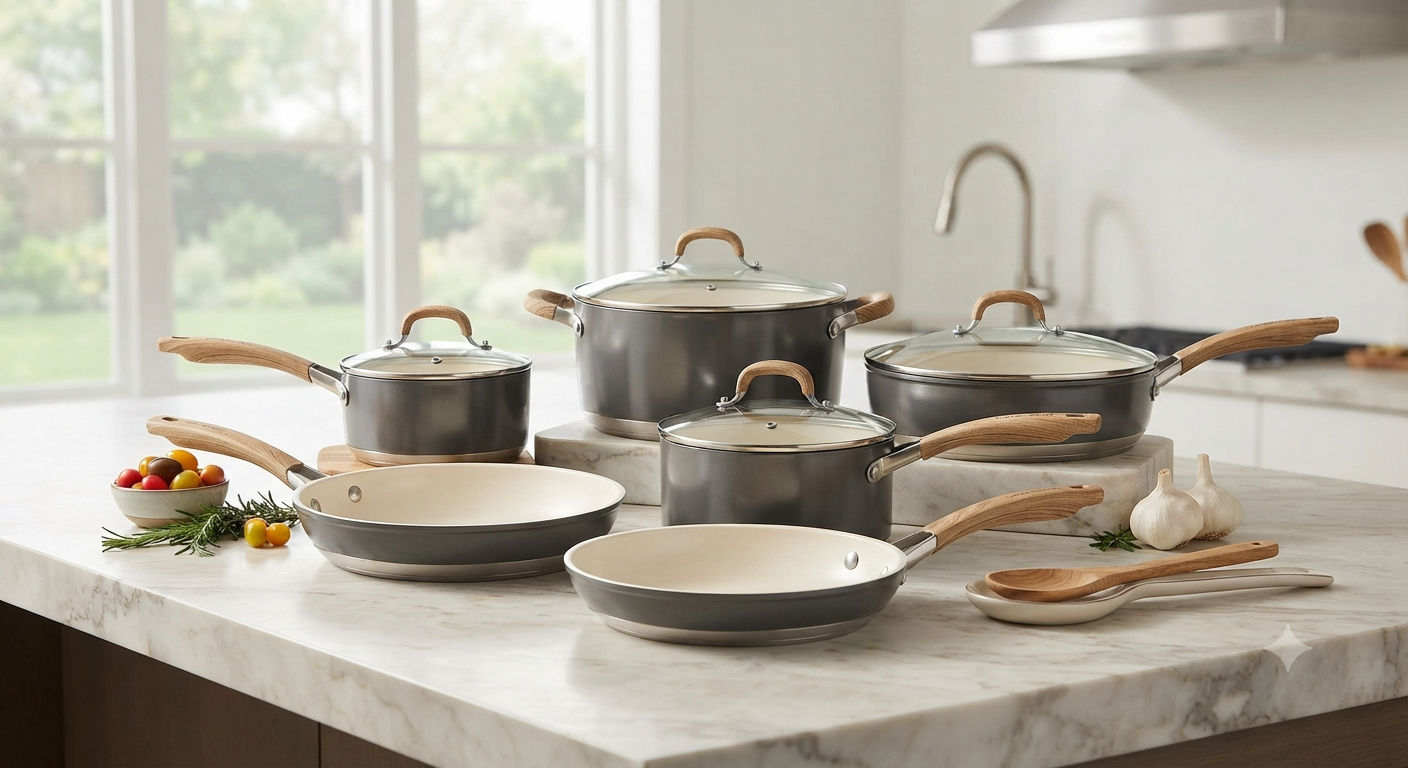
Ceramic non-stick cookware is the top pick in 2026 for health-conscious cooks because modern formulations are PFAS-free and perform well for eggs, fish, and delicate foods.
Traditional PTFE non-stick has fallen out of favor as more buyers look for PFAS-free options. Ceramic coatings have closed much of the performance gap in recent years, though they still don’t match traditional non-sticks’ lifespan — cookware testers have found that PFAS-free ceramic pans can deliver even heat distribution and strong searing performance when built well.
Best for: Low-fat cooking, easy cleanup, budget-conscious buyers.
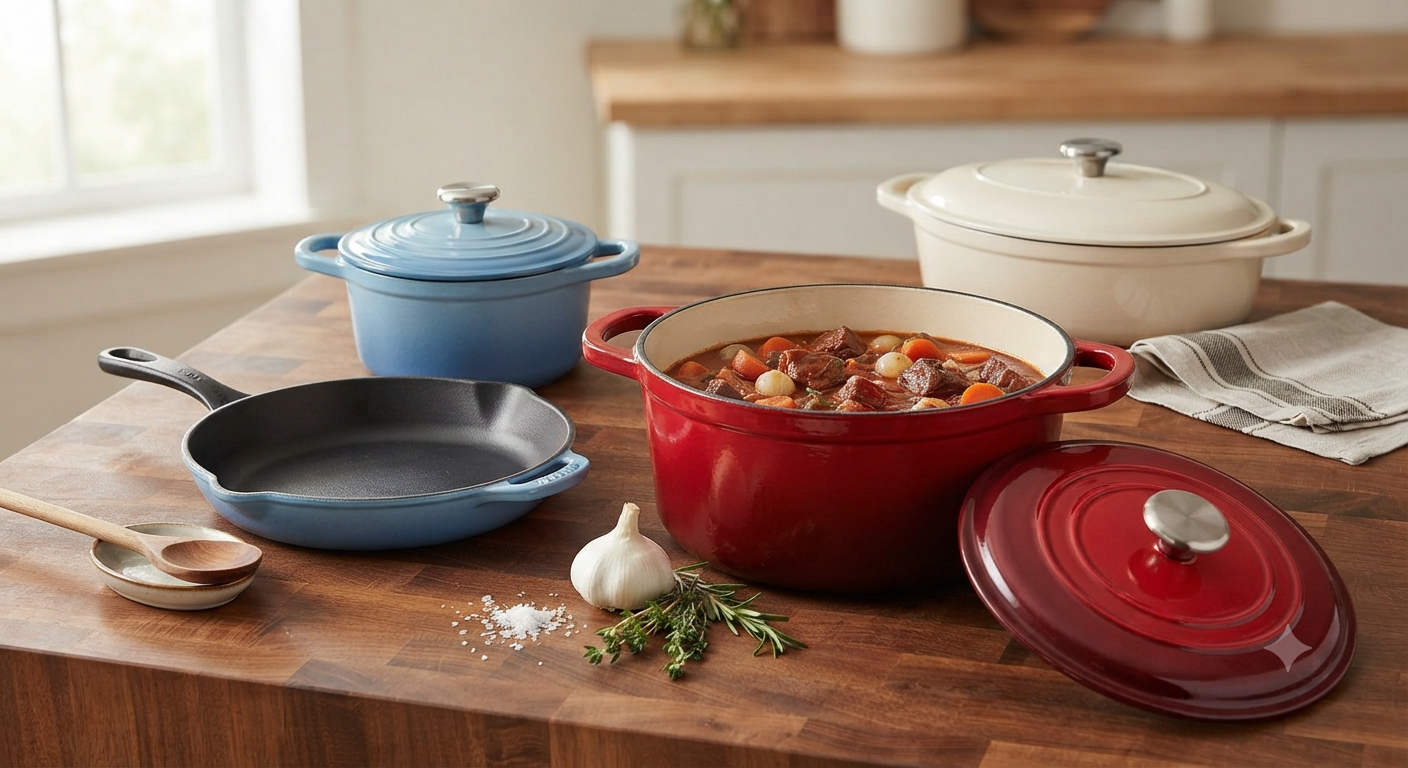
3. Best for Heat Retention: Enameled Cast Iron
Enameled cast iron is best for slow-cooking, braising, and one-pot meals because it holds heat longer than any other common cookware material.
Unlike bare cast iron, enameled versions need no seasoning and won’t react with acidic foods like tomato sauce. The tradeoff is weight and price.
Best for: Braises, stews, bread baking, oven-to-table dishes.
4. Best for High-Heat Searing: Carbon Steel Pans
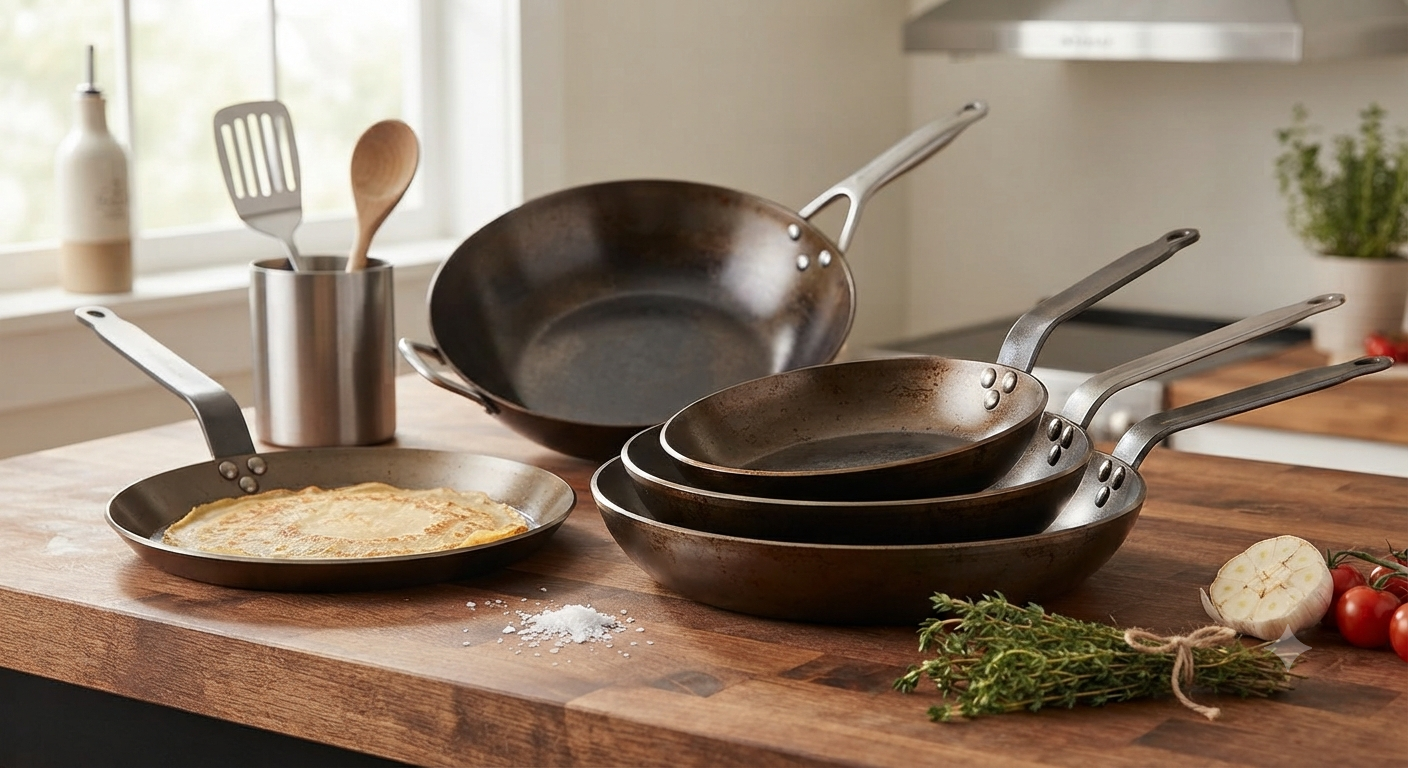
Carbon steel is the closest thing to a professional kitchen pan for home cooks in 2026, offering cast-iron-like heat retention in a lighter, faster-heating pan.
Carbon steel requires seasoning like bare cast iron but heats up faster and is significantly lighter, making it easier to maneuver for stir-frying and searing.
Best for: Stir-fries, steaks, restaurant-style searing.
5. Best Budget Option: Hard-Anodized Aluminum
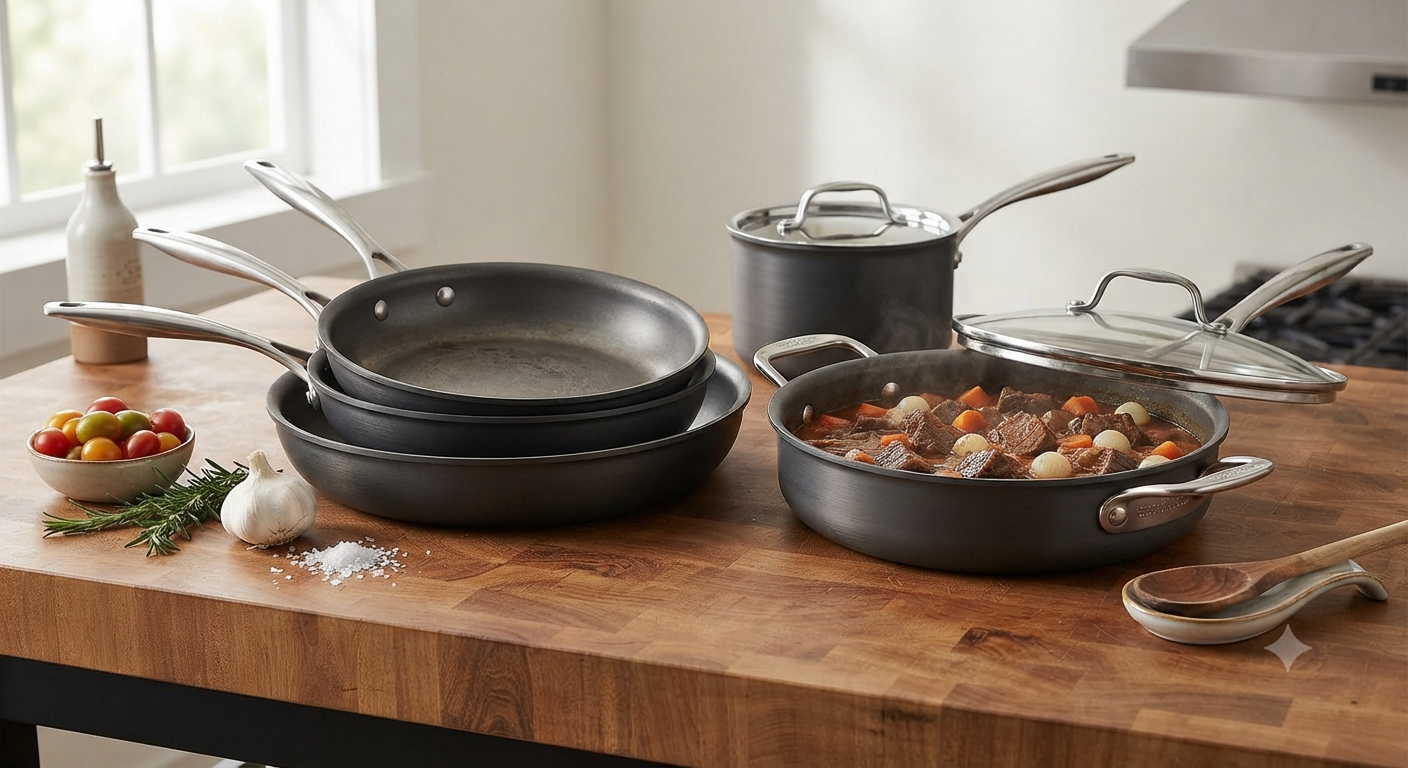
Hard-anodized aluminum cookware offers the best price-to-performance ratio in 2026, delivering even heating at a fraction of the cost of stainless or copper sets.
The anodizing process hardens the aluminum surface, making it more scratch- and corrosion-resistant than bare aluminum, without the price premium of steel-clad construction.
Best for: First kitchens, renters, budget-conscious households.
6. Best for Induction Cooktops: Multi-Ply Induction-Ready Sets
Look for cookware explicitly labeled “induction-ready” with a magnetic stainless steel base, since not all metals — like pure aluminum or copper — work on induction without it.
As induction cooktops become more common in 2026 kitchens, compatibility has become a top purchase filter. A magnet test on the pan’s underside is a quick way to confirm compatibility if labeling is unclear.
Best for: Induction cooktop owners, energy-conscious kitchens.
7. Best for Small Kitchens: Nesting or Stackable Cookware Sets
Stackable cookware sets save 30–50% of cabinet space compared to traditional sets, making them ideal for apartments, RVs, or small kitchens.
These sets typically use interchangeable lids and nested pot/pan designs, trading some individual pan performance for major space savings.
Best for: Apartments, small kitchens, minimalist cooks.
People Also Ask
What is the healthiest cookware to use in 2026?
Stainless steel, cast iron, and PFAS-free ceramic coatings are currently considered the safest options, since they avoid the chemical coatings found in older non-stick pans.
Is ceramic or stainless steel cookware better?
Stainless steel lasts longer and handles high heat better; ceramic is easier to cook with for delicate, low-fat foods, but wears out faster.
How much should I spend on a good cookware set?
A durable mid-range set typically costs $200–$500; sets under $100 often use thin metal that warps, while sets over $700 mainly add brand premium, not performance.
Do I need a full cookware set or individual pieces?
Most home cooks use only 3–4 pieces regularly, so buying individual high-quality pans (a skillet, saucepan, and stockpot) is often a better value than a full boxed set.
How often should cookware be replaced?
Non-stick coatings typically need replacing every 3–5 years with regular use; stainless steel, cast iron, and carbon steel can last decades with proper care.
Conclusion
There’s no single “best” cookware — only the best fit for how you cook. If you want one durable set that does almost everything, go stainless steel clad. If health and easy cleanup matter most, choose ceramic non-stick. For slow braises and bread, enameled cast iron wins. For restaurant-style searing, carbon steel is hard to beat. And if budget or space is the deciding factor, hard-anodized aluminum or a stackable set will serve you well.
The smartest approach for most kitchens in 2026 is a hybrid: one stainless pan for searing, one non-stick for eggs, and one cast iron or carbon steel piece for high heat — rather than committing to a single-material set.