If you are shopping for premium enameled cast iron cookware, Staub and Le Creuset are two names that consistently stand out. Both brands make durable Dutch ovens designed for slow cooking, braising, roasting, baking, and everyday stovetop use.
So, which is better: Staub or Le Creuset? The answer depends largely on how you cook, how much you value ease of monitoring, and which design features matter most to you.
Read More: KitchenAid Dishwasher Soap Dispenser Not Closing? Causes and Easy Fixes
Table of contents
Staub vs. Le Creuset at a Glance
| Feature | Staub | Le Creuset |
| Construction | Enameled cast iron | Enameled cast iron |
| Interior | Matte black enamel | Light-colored enamel |
| Lid design | Self-basting lid with raised bumps | Tight-fitting moisture-circulating lid |
| Seasoning required | No | No |
| Induction compatible | Yes, depending on model | Yes |
| Oven use | Model-dependent | Up to 500°F for Signature Dutch ovens |
| Cleaning | Generally easy; check model care instructions | Dishwasher-safe, though hand washing is recommended |
| Style | Dark, understated, traditional | Bright, colorful, iconic |
| Warranty | Varies by market/product | Limited lifetime warranty for enameled cast iron in the U.S. |
| Best suited to | Browning, braising, moisture retention | Versatile everyday cooking and easy visual monitoring |
Both brands use enameled cast iron, so either can provide the heat retention and versatility expected from premium Dutch ovens. Le Creuset’s current Signature Round Dutch Oven, for example, is suitable for induction and other major cooktops and is oven-safe to 500°F.
Staub Cookware: What Makes It Different?
Staub cookware is particularly recognizable for its black matte enamel interior and distinctive lids.
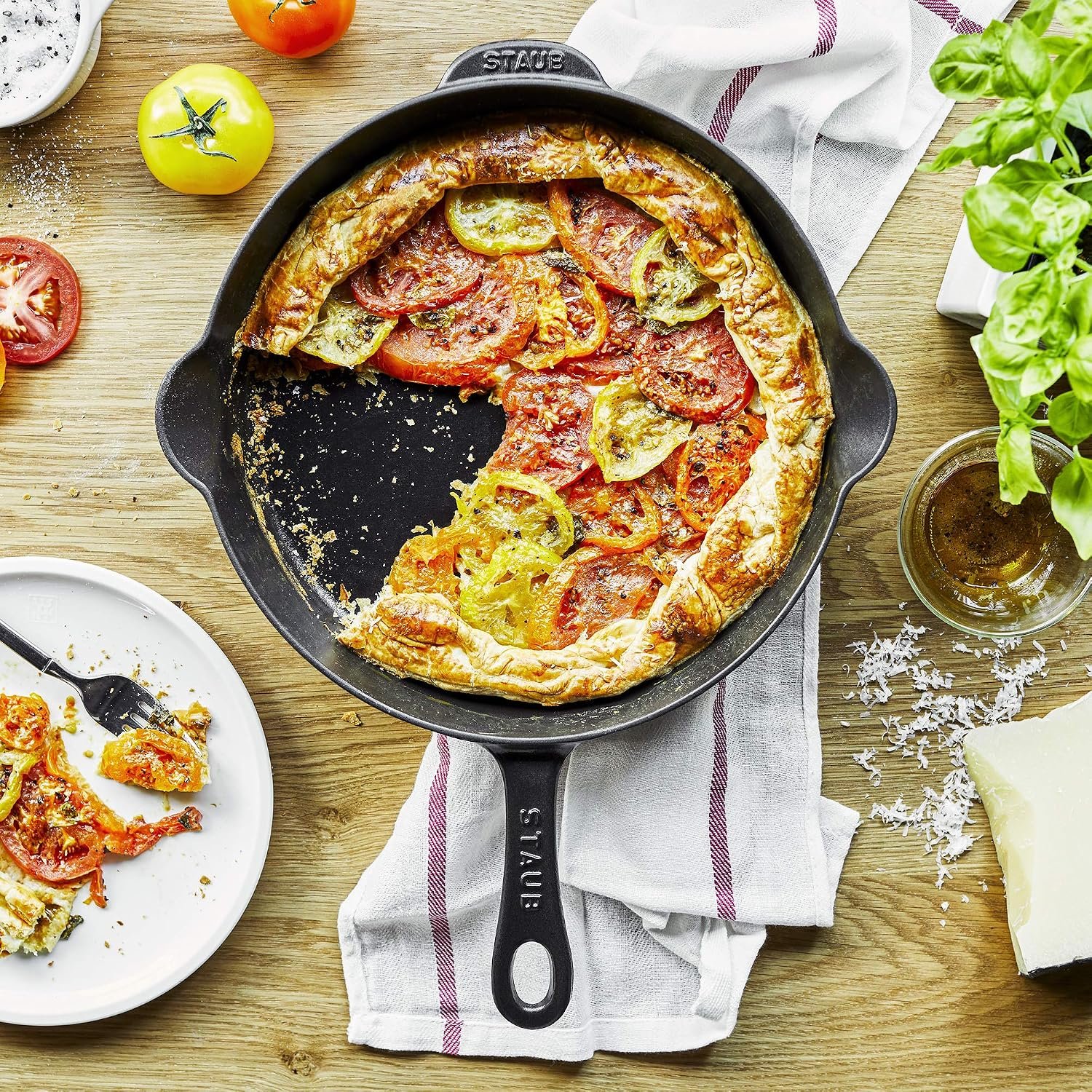
One of Staub’s signature features is the lid design. The underside contains small raised bumps, or “picots,” that help condensed steam fall back onto the food during cooking. Staub describes this as creating a continuous moisture cycle inside the cocotte.
Advantages of Staub
- Excellent moisture retention: The lid design is particularly useful for braises, stews, roasts, and other dishes that benefit from a moist cooking environment.
- Dark interior: The matte black enamel is well suited to browning and searing and does not show discoloration as readily as a light interior.
- Elegant appearance: Staub’s darker, more understated aesthetic works well for cooks who prefer a minimalist look.
- No seasoning required: Because the cooking surface is enameled, it can be used without seasoning like traditional bare cast iron.
- Excellent heat retention: Like Le Creuset, Staub’s cast iron construction makes it useful for slow, steady cooking.
Potential Drawbacks of Staub
The black interior can make it somewhat harder to visually judge the color of foods such as onions, sauces, and fond while cooking. If you frequently rely on visual cues to determine whether something is perfectly browned, this may be worth considering.
Le Creuset Cookware: What Makes It Different?
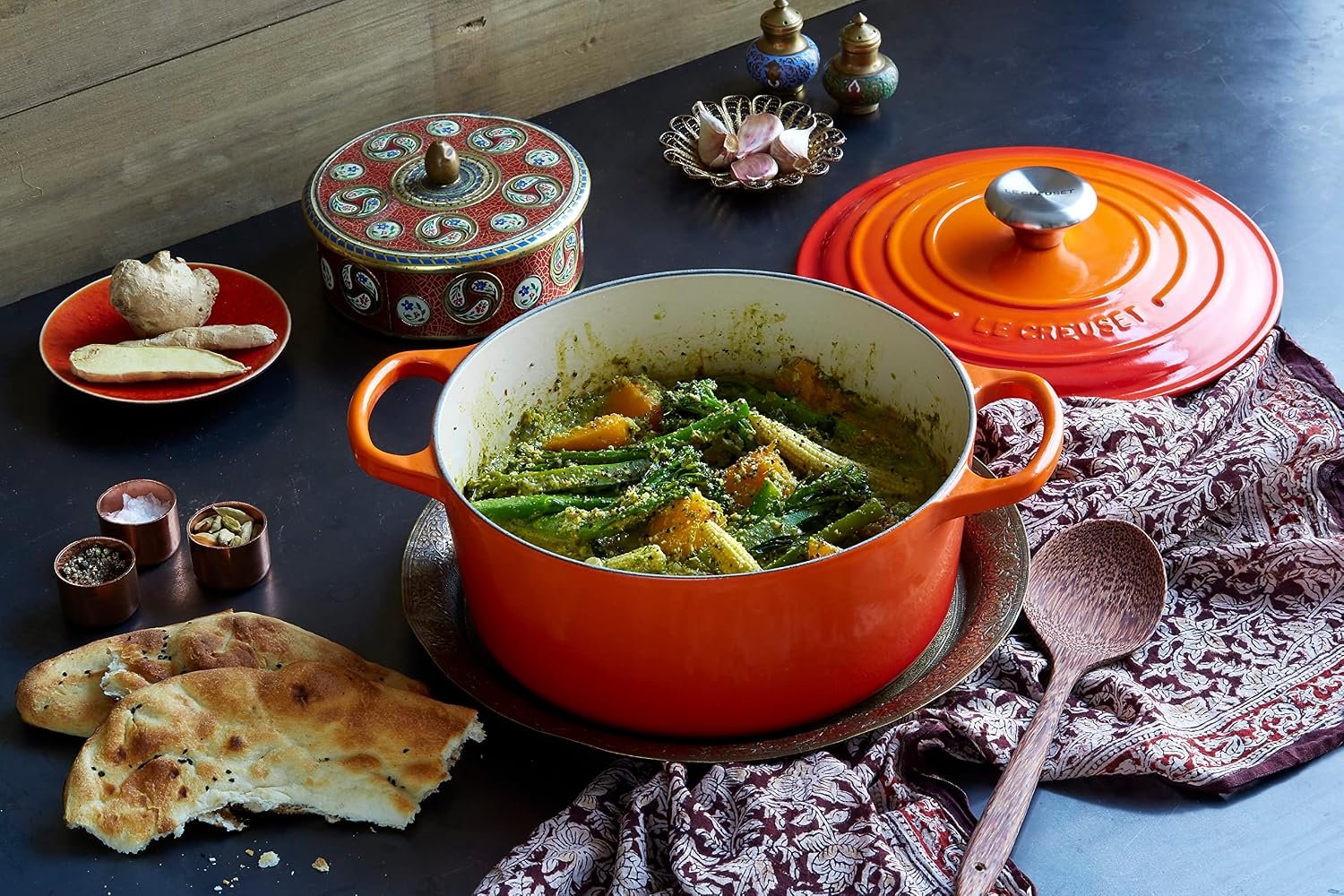
Le Creuset has been producing enameled cast iron cookware for generations, and its Signature Dutch Oven remains one of its best-known products.
A major difference is the light-colored interior enamel. Le Creuset specifically highlights the interior as making it easier to monitor cooking progress. Its Dutch ovens also use a tight-fitting lid designed to circulate steam and return moisture to the food.
Advantages of Le Creuset
- Light interior: The lighter cooking surface makes it easier to see browning, sauces, and fond.
- Relatively lightweight for cast iron: Le Creuset says its cast iron is the lightest by quart in the industry.
- Wide color selection: Le Creuset offers its cookware in numerous colors, making it attractive for cooks who want cookware that can go directly from the oven to the table.
- Versatility: Signature Dutch ovens are compatible with induction, gas, electric, ceramic, and other listed cooktops.
- Easy maintenance: The enamel does not require seasoning, and Le Creuset says its Dutch ovens are dishwasher-safe, although hand washing is recommended.
- Long warranty: In the U.S., Le Creuset’s enameled cast iron comes with a limited lifetime warranty for the original retail consumer purchaser, subject to its terms.
Potential Drawbacks of Le Creuset
The light interior can show stains and discoloration more easily over time. That’s mostly cosmetic, but cooks who prefer cookware that maintains a darker appearance may prefer Staub’s interior.
Le Creuset can also be expensive, particularly for larger pieces and special colors.
Staub vs. Le Creuset: Cooking Performance
In everyday cooking, the difference between these two brands is less dramatic than their visual differences might suggest.
Both are designed to provide the fundamental benefits of enameled cast iron: strong heat retention, slow and even cooking, and the ability to move from stovetop to oven.
For searing and browning
Staub has an appealing advantage for cooks who prefer a dark cooking surface. Its matte black enamel provides a high-contrast surface for ingredients as they brown.
However, Le Creuset’s light interior has its own advantage: it makes it easier to see the progression of browning and monitor fond.
For stews and braises
Both perform very well for long, slow cooking. Staub’s lid, with its raised interior bumps, is specifically designed to return condensed moisture to the food.
Le Creuset also designs its lid to circulate steam and return moisture, so both approaches are aimed at maintaining moisture during extended cooking.
For bread baking
Either can be used for Dutch-oven bread baking, provided the specific model and knob are rated for the required temperature.
Le Creuset’s current Signature Dutch Oven is rated to 500°F, including its knob
Staub vs. Le Creuset: Which Should You Buy?
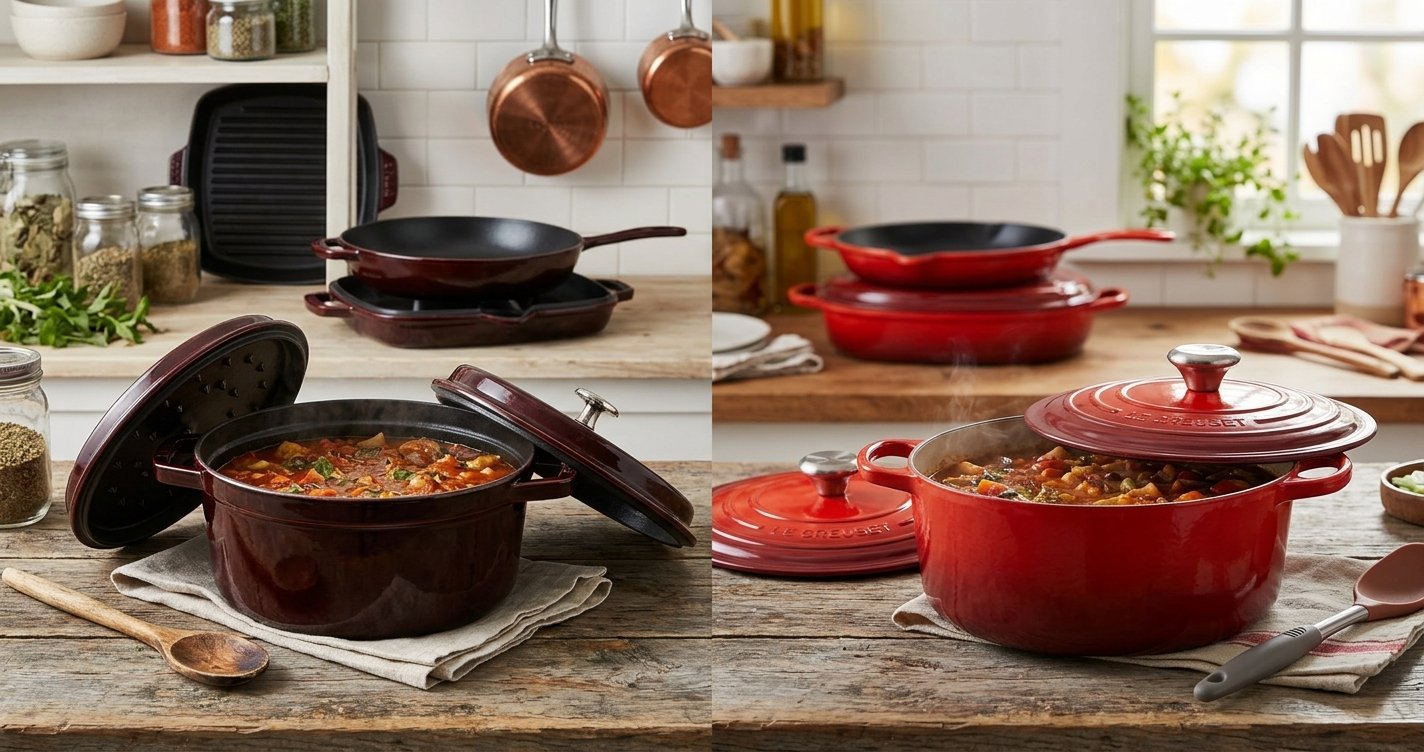
Rather than choosing solely by brand name, consider what you cook most often.
Choose Staub if you:
- Prefer a dark matte interior.
- Frequently cook stews, braises, roasts, and slow-cooked dishes.
- Like the idea of a lid designed to return condensed moisture to the food.
- Prefer a more understated aesthetic.
- Want a cooking surface that is less visually affected by staining.
Choose Le Creuset if you:
- Want a light-colored interior for monitoring browning.
- Prefer lighter cast iron by quart.
- Want a large range of bright colors and finishes.
- Value a long-established warranty program in the U.S.
- Want cookware that looks equally at home on the stovetop and dining table.
Staub vs. Le Creuset: Price and Value
Both brands occupy the premium end of the enameled cast iron cookware market, so neither is primarily a budget purchase.
Le Creuset’s current U.S. Signature Round Dutch Oven listings show prices varying substantially by size and model, with some listed sizes reaching several hundred dollars. The better value depends on how frequently you use the cookware. If a Dutch oven becomes your go-to pot for soups, curries, stews, bread, roasts, sauces, and one-pot meals, the cost can be easier to justify over years of use.
It’s also worth comparing sale prices rather than only list prices, since both brands are periodically discounted by retailers.
FAQs: Staub vs. Le Creuset Cookware
1. Is Staub better than Le Creuset?
Neither is universally better. Both offer high-quality enameled cast iron with excellent heat retention. Staub may appeal more to cooks who prefer a dark interior and moisture-retaining lid, while Le Creuset may be preferable for those who want a lighter interior and easier visibility while cooking.
2. Which is better for a Dutch oven, Staub or Le Creuset?
Both are excellent choices for Dutch ovens. Staub’s lid design is particularly useful for braising and moisture-rich dishes, while Le Creuset’s light interior makes it easier to monitor browning and sauces.
3. Does Staub or Le Creuset last longer?
Both can last for many years with proper care. Their cast iron construction is highly durable, but the enamel can chip or crack if handled improperly or exposed to thermal shock.
4. Is Staub easier to clean than Le Creuset?
Both are relatively easy to clean because their cooking surfaces are enameled. Staub’s dark interior tends to hide stains, while Le Creuset’s lighter interior makes food residue and discoloration easier to see.
5. Do Staub and Le Creuset require seasoning?
No. Their enameled cooking surfaces do not require the regular seasoning associated with traditional bare cast iron.
6. Which is lighter, Staub or Le Creuset?
Weight varies by model and size. Le Creuset states that its cast iron is designed to be relatively lightweight by quart, although both brands’ cookware can still be heavy compared with stainless steel or aluminum cookware.
7. Can Staub and Le Creuset be used on induction cooktops?
Yes. Many Staub and Le Creuset enameled cast iron pieces are compatible with induction cooktops. Always check the specifications for the particular model before buying.
Final Verdict: Staub or Le Creuset?
There isn’t a universal winner because Staub and Le Creuset prioritize slightly different design philosophies.
Staub stands out for its dark matte interior and distinctive moisture-returning lid design. Le Creuset emphasizes its light interior, relatively lightweight cast iron construction, broad color selection, and easy monitoring of food while cooking.