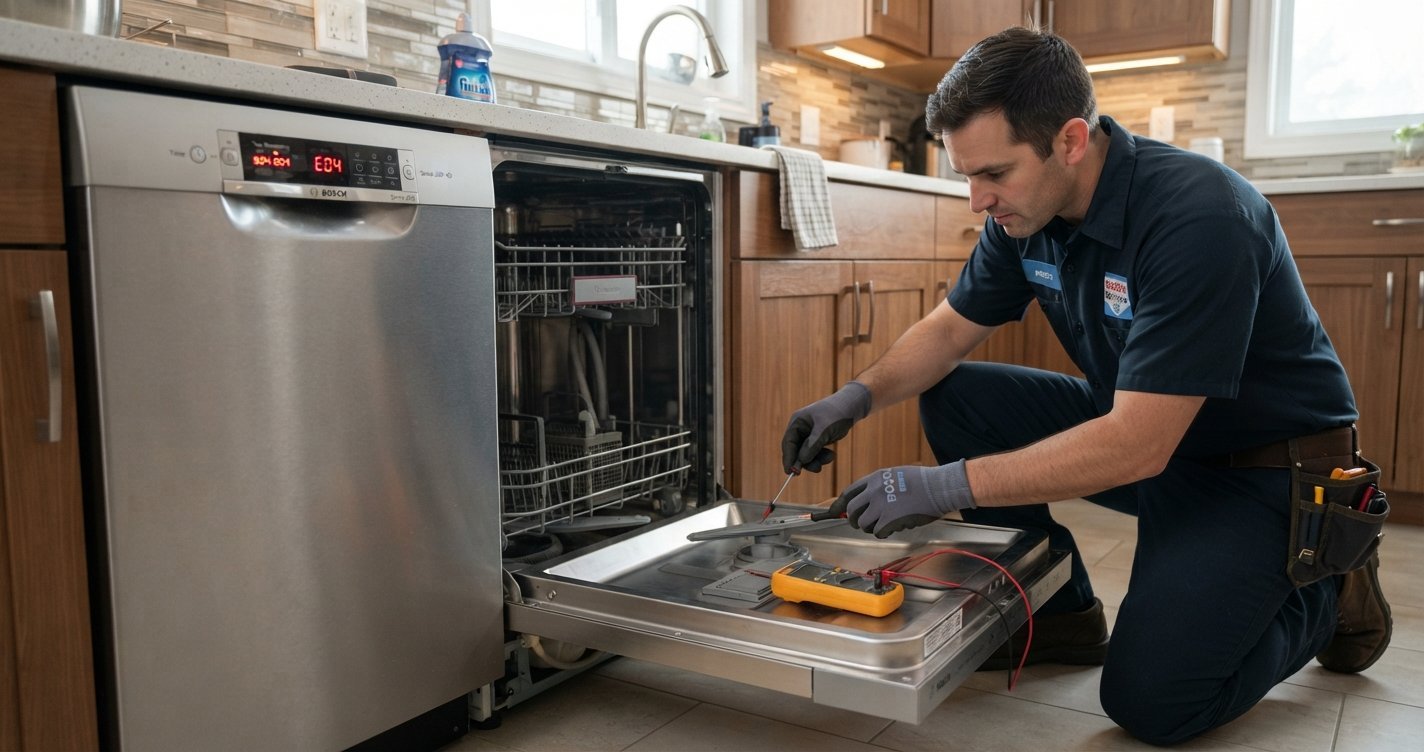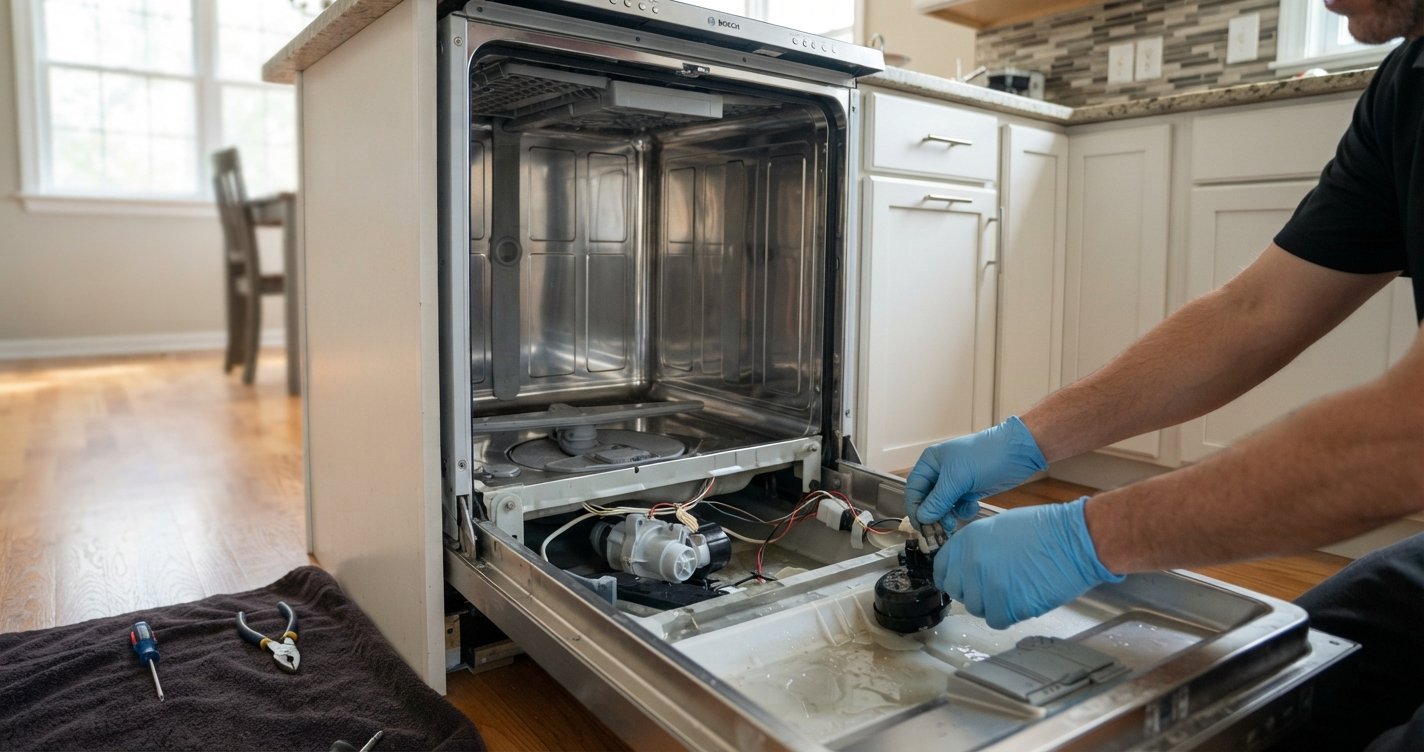
Bosch dishwashers generally offer strong cleaning performance, exceptionally quiet operation, thoughtful rack designs, and some of the better drying technology available on higher-end models. The main drawbacks are price, potentially long cycle times, and the fact that the most advanced drying features are reserved for more expensive models.
Read More: How to Clean Your Dishwasher: Step-by-Step Guide
Table of contents
The Quick Verdict
Bosch’s lineup ranges from relatively straightforward 100 and 300 Series machines to feature-rich 800 Series and Benchmark models. Across the range, Bosch emphasizes three things: cleaning performance, low noise, and condensation-based drying. Its current top-control lineup includes PrecisionWash cleaning technology and PureDry, while selected 500 Series models add AutoAir and selected 800 Series and Benchmark models use CrystalDry.
Independent testing supports Bosch’s reputation for cleaning and quiet operation. For example, Consumer Reports’ testing of the Bosch 300 DLX Series SHS863WD5N found very good washing performance on heavily soiled dishes, excellent energy performance, and very good noise performance. Its cycle time, however, was rated only fair. So, rather than simply asking whether Bosch dishwashers are good, it’s more useful to ask which Bosch dishwasher makes sense for your needs and budget.
How Well Do Bosch Dishwashers Clean?
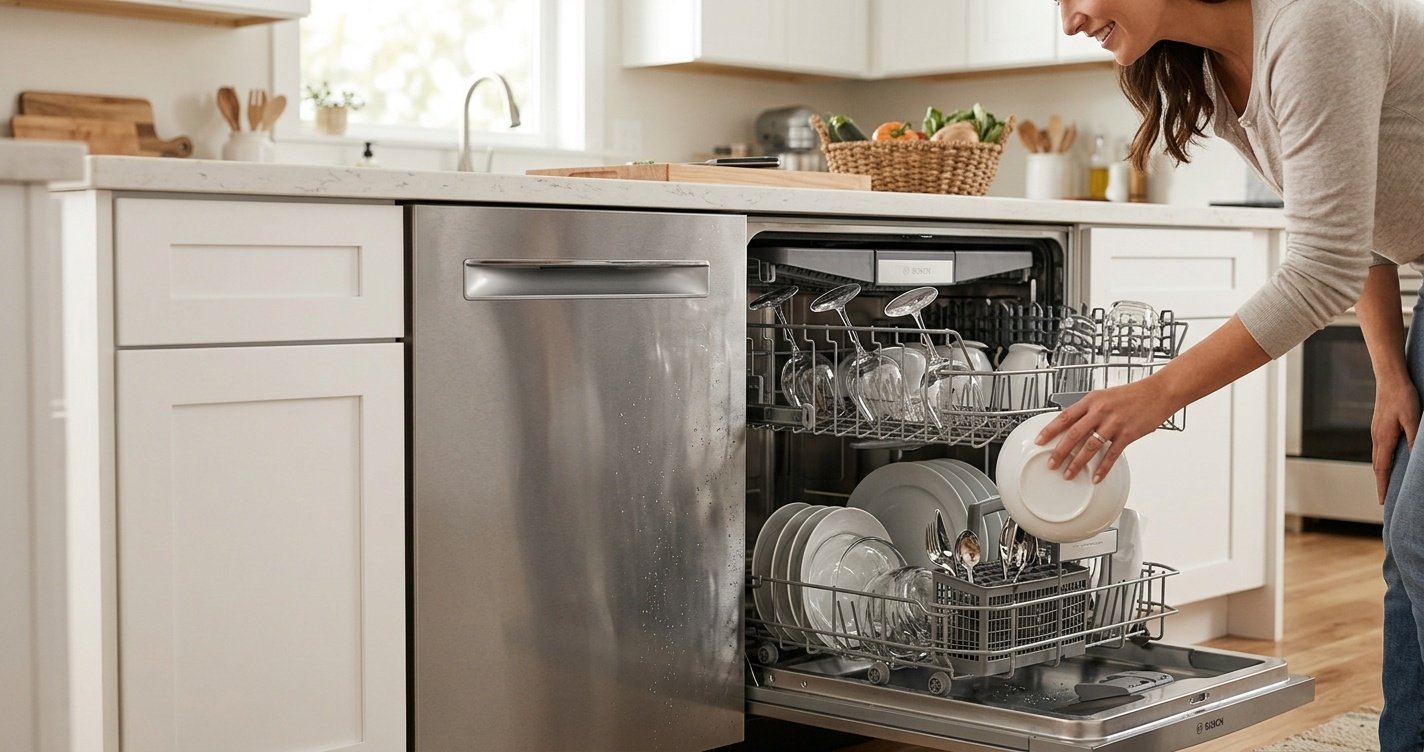
Cleaning performance is arguably the most important reason to buy a dishwasher, and Bosch has generally performed well in independent testing.
Bosch’s PrecisionWash system uses sensors to monitor conditions during the wash cycle and adjusts the cleaning process accordingly. The company also offers Zone Wash on selected 300 and 500 Series models and PowerControl on selected 800 Series and Benchmark machines for more concentrated cleaning. Consumer Reports’ testing of the Bosch 300 DLX SHS863WD5N found very good washing performance, including on heavily soiled dishes. Its testing of the substantially more expensive Benchmark SHP9PCM5N likewise found very good performance when washing heavily soiled dishes.In practical terms, that makes Bosch particularly appealing if you regularly deal with:
- Dried-on food
- Pots and pans
- Mixed loads
- Heavily soiled plates
- Large family-sized loads
As with any dishwasher, loading still matters. A powerful dishwasher cannot compensate indefinitely for dishes blocking one another or spray arms being obstructed.
Bosch Dishwashers Are Extremely Quiet
Noise is one of Bosch’s biggest selling points.
Current Bosch models span roughly the high-30s to high-40s dBA depending on the series and model. For example, the current 800 Series SHP78DP5N is rated at 42 dBA, while the Benchmark SHX9PCM5N is rated at just 39 dBA.For comparison, Bosch describes dishwashers operating at 48 dBA or below as quiet and says its quietest models operate between 38 and 48 dBA. Independent testing backs up the quiet-operation claim. Consumer Reports rated noise performance as very good for the Bosch 300 DLX model and excellent for the Benchmark SHP9PCM5N in its laboratory testing.
Why does the low noise matter?
A quiet dishwasher is especially useful if your kitchen opens into a living or dining area. You can run a load while watching television, working, or having a conversation without the dishwasher becoming a major source of background noise. If noise is a priority, however, don’t assume every Bosch model sounds identical. Check the specific model’s dBA rating before buying.
How Good Is Bosch’s Drying?
Drying is where Bosch’s lineup gets particularly interesting.
Bosch uses condensation-based drying rather than relying on an exposed heating element. PureDry is standard across its current dishwasher lineup, while AutoAir is available on selected 500 Series models and CrystalDry is offered on selected 800 Series and Benchmark models.
PureDry
PureDry is Bosch’s basic drying system. Because Bosch doesn’t use an exposed heating element, the company says plastics can be placed anywhere in the dishwasher without the same concern about direct contact with a heating element.
AutoAir
Selected 500 Series models use AutoAir, which automatically opens the door at the end of the cycle to help moisture escape.
CrystalDry
CrystalDry is Bosch’s more advanced option. It uses a mineral-based system to convert moisture into heat. Bosch says CrystalDry models can deliver up to 60% drier dishes compared with Bosch models using PureDry, based on the company’s aggregate testing methodology. That’s potentially important if you wash a lot of plastic containers, which traditionally tend to retain water more readily than glass or ceramic.
The catch is simple: CrystalDry is not available throughout the lineup. If drying performance is a major concern, you’ll need to pay attention to the exact model rather than simply buying a Bosch dishwasher.
What About the Third Rack?
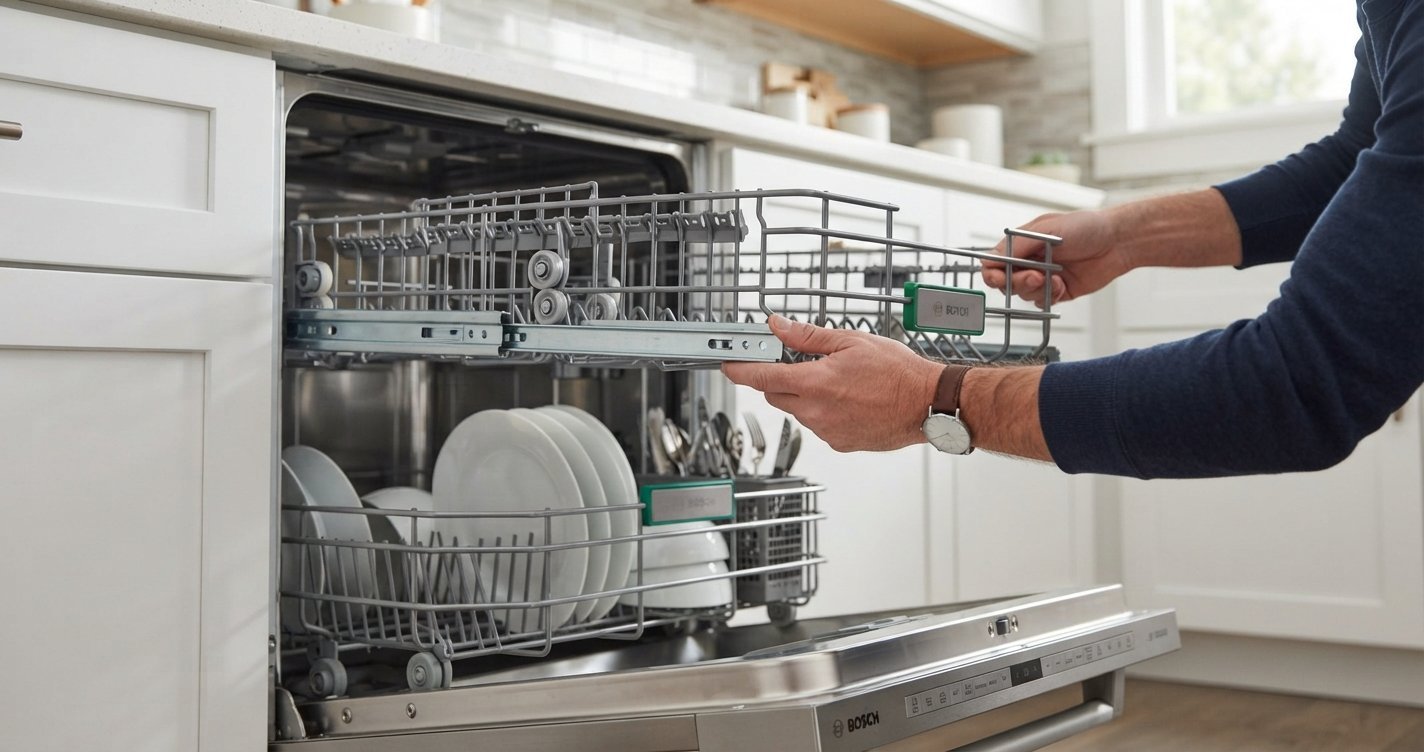
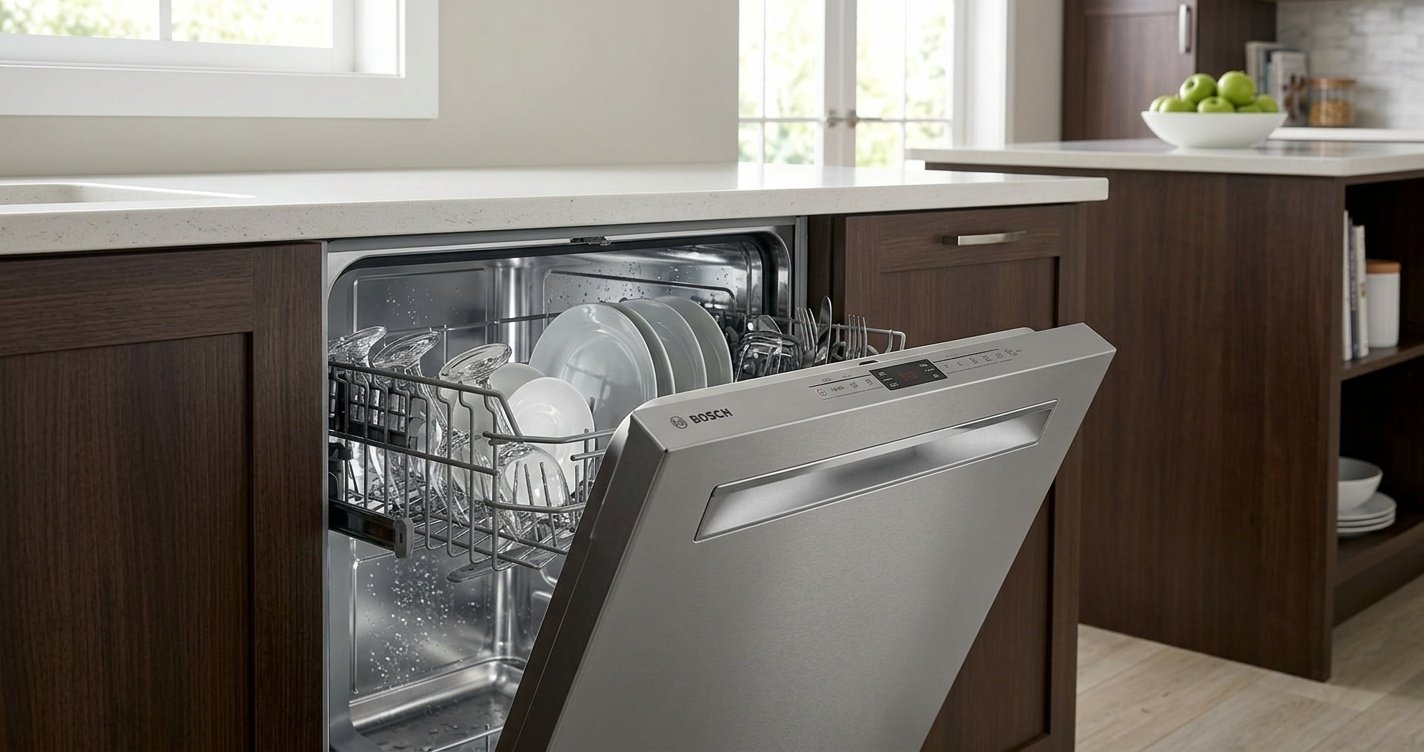
A third rack has become increasingly common on premium dishwashers, and Bosch offers it on many models. It provides additional space for silverware, utensils, cooking tools, and other shallow items. Bosch also incorporates adjustable rack systems and folding tines on various models, which can make it easier to accommodate unusually shaped dishes.
The advantage isn’t necessarily that you can fit three times as many dishes. Instead, the third rack can free up space in the lower two racks by moving utensils and smaller items upward. For households that frequently wash cooking utensils, travel mugs, or lots of cutlery, this can be a genuinely useful feature rather than simply a premium extra.
Are Bosch Dishwashers Energy Efficient?
Bosch has also emphasized water and energy efficiency throughout its lineup.
Consumer Reports’ testing of the Bosch 300 DLX found excellent energy performance when combining water and energy consumption for a fully soiled load. The Benchmark SHP9PCM5N also performed very well in Consumer Reports’ energy testing. Many Bosch models also carry ENERGY STAR certification, although certification and consumption figures vary by model. The broader point is that a dishwasher’s efficiency isn’t just about electricity. Dishwashers can also use substantially less water than washing the same load by hand, although actual consumption depends on the machine, cycle, and how you wash dishes manually.
Are Bosch Dishwashers Reliable?
Reliability is more complicated than cleaning performance.
Consumer Reports’ dishwasher evaluations incorporate both laboratory testing and owner-survey information. Its current dishwasher research draws on surveys of owners who purchased 77,011 new dishwashers from 2015 through 2025. However, Consumer Reports’ detailed Bosch reliability and owner-satisfaction scores are behind its membership access, so it would be misleading to assign Bosch a specific current reliability score based only on the publicly visible information.
Bosch 300 vs. 500 vs. 800 vs. Benchmark
Bosch’s different series can make shopping confusing because the basic dishwasher architecture is similar while the feature sets and prices increase substantially.
Bosch 300 Series
The 300 Series is aimed at buyers who want Bosch’s core dishwasher design without paying for every premium feature.
Depending on the model, you can get features such as:
- Stainless-steel interiors
- Adjustable upper racks
- Third racks
- PrecisionWash
- Hidden controls
- Quiet operation
- ENERGY STAR certification
Consumer Reports’ testing of the 300 DLX SHS863WD5N produced very good washing results, very good noise performance, and excellent energy performance.
Bosch 500 Series
CrystalDry
The 500 Series adds convenience and drying upgrades to the formula. Selected models include AutoAir, which opens the door after the cycle to help release moisture. This is the part of the lineup where it’s particularly important to compare individual model numbers rather than assuming every 500 Series dishwasher has exactly the same features.
Bosch 800 Series
The 800 Series is where Bosch’s premium features become more prominent.
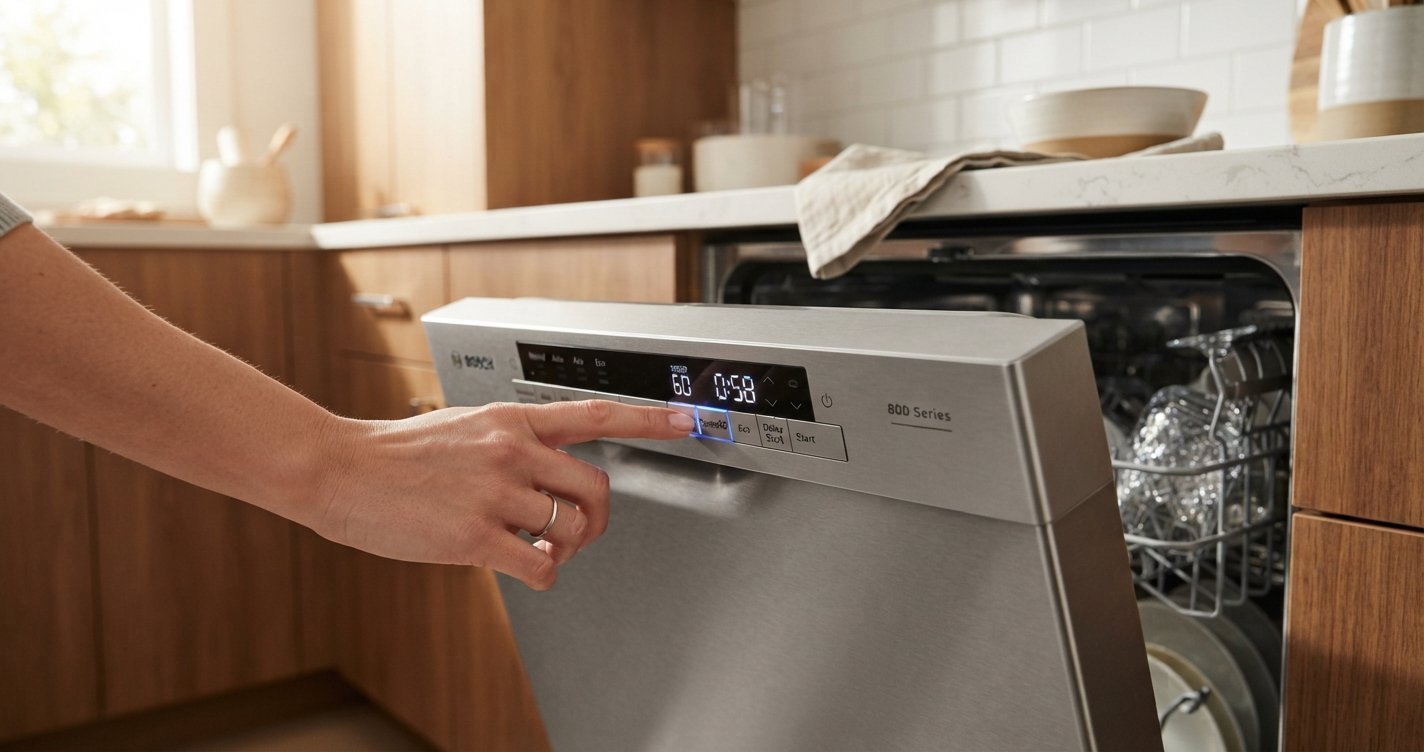
Current 800 Series models can include CrystalDry, a flexible third rack, stainless-steel interiors, Wi-Fi connectivity, and very low noise levels. The SHP78DP5N, for example, is rated at 42 dBA and includes CrystalDry and Home Connect.
Bosch Benchmark
Benchmark represents Bosch’s higher-end dishwasher range.
The SHX9PCM5N, for example, is rated at 39 dBA and includes CrystalDry, PowerControl, a flexible third rack, EasyGlide Plus racks, AquaStop leak protection, and Home Connect. Bosch lists the model at $1,999 on its U.S. website as of this writing. The premium features are impressive, but whether they’re worth the additional cost depends heavily on how much you value extremely quiet operation, enhanced drying, rack flexibility, and connected features.
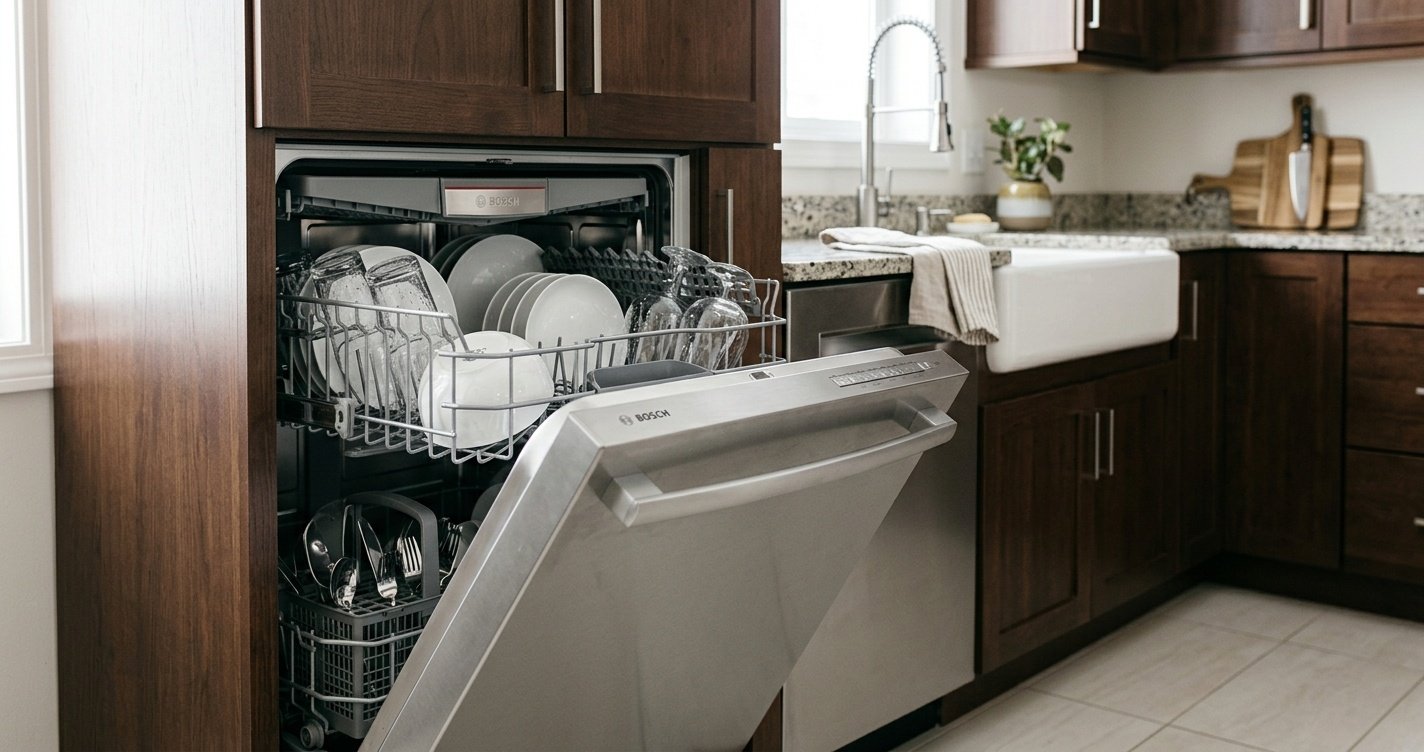
What We Like About Bosch Dishwashers
Based on the available laboratory testing and current specifications, several strengths stand out.
Quiet operation: Bosch’s low-dBA models are genuinely suited to open-plan kitchens and nighttime operation, with independent testing also showing strong noise results.
Cleaning performance: Independent testing of multiple Bosch models has found strong performance on heavily soiled dishes.
Rack design: Third racks, adjustable racks, and folding tines can make loading more flexible.
Drying technology: CrystalDry is particularly interesting for households that regularly wash plastic containers.
Design: Hidden controls and minimalist fronts. Bosch’s lineup isn’t one single product. A basic Bosch and a premium Benchmark can suit many buyers; the most meaningful Bosch upgrade isn’t another app feature— compromises are price and, on tested models, relatively long cycle times. give many Bosch models a clean, integrated appearance.
Efficiency: Tested Bosch models have performed well in energy-use testing.
What We Don’t Like
Bosch isn’t perfect, and there are several potential downsides to consider.
Higher prices: Premium Bosch models can cost well above $1,000, with Benchmark models reaching around $2,000 before installation and other costs.
Feature fragmentation: CrystalDry, AutoAir, Zone Wash, PowerControl, Wi-Fi, and other features aren’t available on every model. Comparing the actual model numbers is essential.
Long cycles: Consumer Reports rated cycle time as fair on the tested Bosch 300 DLX and Benchmark models.
Drying varies by model: Bosch’s best drying performance is concentrated in models equipped with CrystalDry. A less expensive Bosch shouldn’t automatically be expected to produce the same results.
Service matters: Like any sophisticated appliance, repairs can involve electronic components and specialized parts. Local service availability is therefore worth investigating before purchase.
So, Are Bosch Dishwashers Good?
The evidence points to Bosch being a strong performer in several of the areas that matter most in a dishwasher: cleaning, noise, rack flexibility, efficiency, and—on selected models—drying. But Bosch’s lineup isn’t one single product. A basic Bosch and a premium Benchmark can have significantly different features, particularly when it comes to drying and connectivity.
If you’re considering one, look beyond the Bosch badge and compare the exact model number, especially its dBA rating, drying system, rack configuration, third rack, cycle options, energy certification, and price. For many buyers, the most meaningful Bosch upgrade isn’t another app feature—it’s moving to a model with the drying system and rack configuration that actually fit their household.
Frequently Asked Questions
Are Bosch dishwashers good?
Yes. Bosch dishwashers are known for strong cleaning performance, quiet operation, flexible rack designs, and efficient water and energy use. Higher-end models also offer advanced drying technologies such as CrystalDry.
How long do Bosch dishwashers last?
A Bosch dishwasher can provide many years of service when properly installed, loaded, and maintained. Actual lifespan varies by model, usage, water conditions, maintenance, and repair history.
Are Bosch dishwashers quiet?
Yes. Quiet operation is one of Bosch’s major strengths. Depending on the model, Bosch dishwashers can operate in the high-30s to high-40s dBA range. Premium models can be particularly quiet.
Do Bosch dishwashers dry dishes well?
Bosch dishwashers use condensation-based drying, and drying performance varies by model. Models equipped with CrystalDry generally offer more advanced drying, particularly for plastic items.
What is the difference between Bosch 300, 500, and 800 Series dishwashers?
The series mainly differ in features, drying technology, rack configurations, noise levels, and price. The 300 Series focuses on core Bosch performance, while selected 500 and 800 Series models add features such as AutoAir, CrystalDry, enhanced racks, and connectivity.
Do Bosch dishwashers have a third rack?
Many Bosch dishwashers include a third rack, although the design and adjustability vary by model. Check the specific model’s specifications before buying.
Why are Bosch dishwashers so expensive?
Bosch prices reflect features such as quiet motors, stainless-steel construction, flexible rack systems, advanced drying, sensors, and smart-home connectivity on selected models. Not every buyer needs the premium features, so comparing individual models is important.
Are Bosch dishwashers energy efficient?
Many Bosch models are designed for efficient water and energy use, and numerous models carry ENERGY STAR certification. Actual consumption depends on the model and wash cycle.
Bottom Line
Bosch dishwashers have a strong combination of cleaning performance and quiet operation, with premium models adding some of the brand’s most sophisticated drying and loading features. Independent testing supports the brand’s strengths, while the main compromises are price and, on tested models, relatively long cycle times.