Choosing between HexClad and Caraway cookware comes down to more than appearance or brand popularity. Both brands offer modern, nonstick cookware designed for everyday cooking, but they take very different approaches.
HexClad combines stainless-steel ridges with a ceramic nonstick surface to create a hybrid cooking experience. Caraway, meanwhile, focuses on a smooth ceramic nonstick coating with an emphasis on easy cooking, attractive design, and simpler cleanup.
So, which one is better? HexClad is the stronger choice for durability, high-heat cooking, searing, and versatility, while Caraway is better suited to cooks who prioritize easy nonstick performance, aesthetics, and a lightweight everyday cooking experience.
Read More: Ceramic vs. Stainless Steel Cookware: Which to Buy?
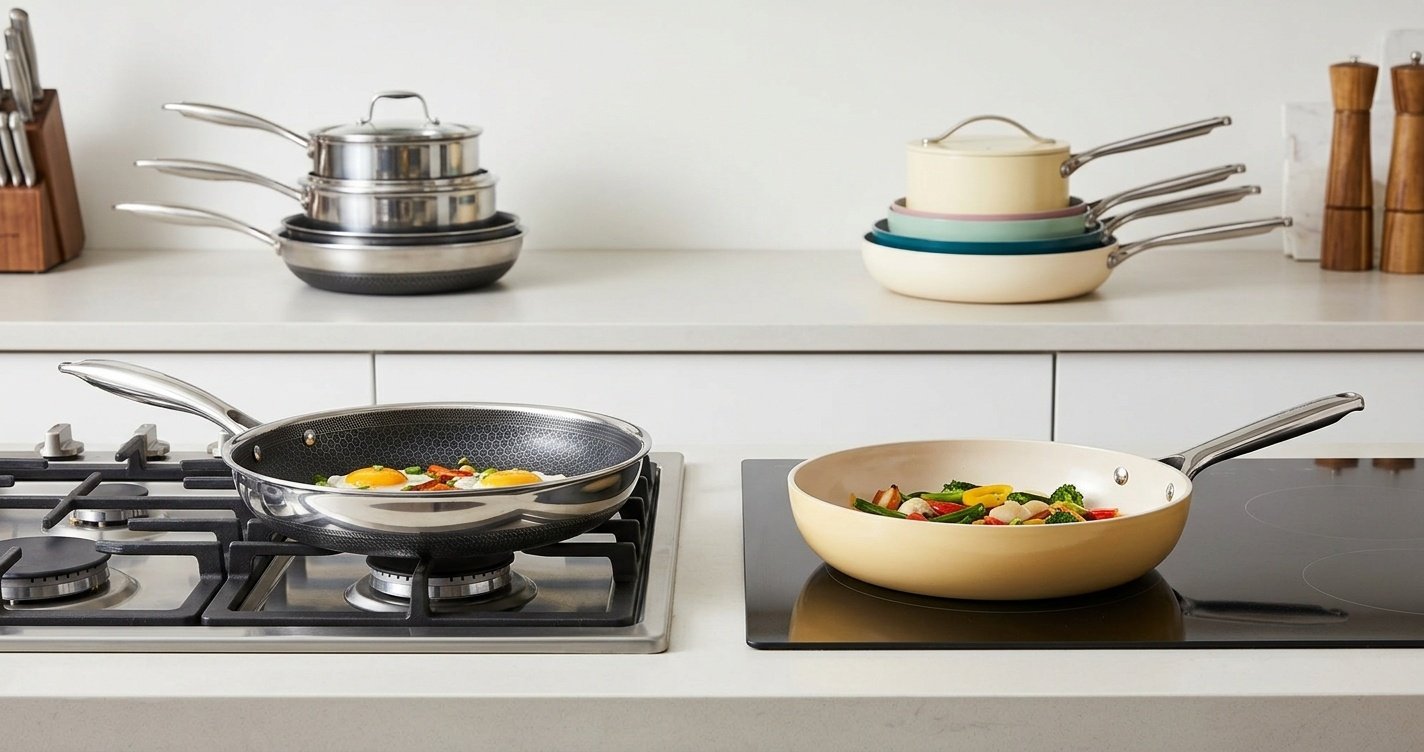
Table of contents
HexClad vs. Caraway: Quick Comparison
| Feature | HexClad | Caraway |
| Cooking surface | Hybrid stainless steel + ceramic nonstick | Ceramic nonstick |
| Nonstick coating | Ceramic, PFAS-free | Ceramic, PTFE/PFOA/PFAS-free |
| Oven safe | Up to 900°F for cookware | Up to 550°F |
| Dishwasher safe | Yes | No; hand washing recommended |
| Metal utensils | Yes | No; wood or nylon recommended |
| Induction compatible | Yes | Yes |
| Warranty | Lifetime cookware warranty | One-year warranty on ceramic cookware |
| Best for | Searing, versatility, durability | Everyday nonstick cooking |
| Maintenance | Relatively low | Requires more careful care |
Specifications can vary by individual product, so always check the manufacturer’s instructions before purchasing or using a particular piece. HexClad currently advertises dishwasher-safe cookware, metal-utensil compatibility, induction compatibility, and oven temperatures up to 900°F. Caraway’s ceramic cookware is induction compatible and oven safe up to 550°F, but the company recommends hand washing and using wooden or nylon utensils.
What Is HexClad Cookware?
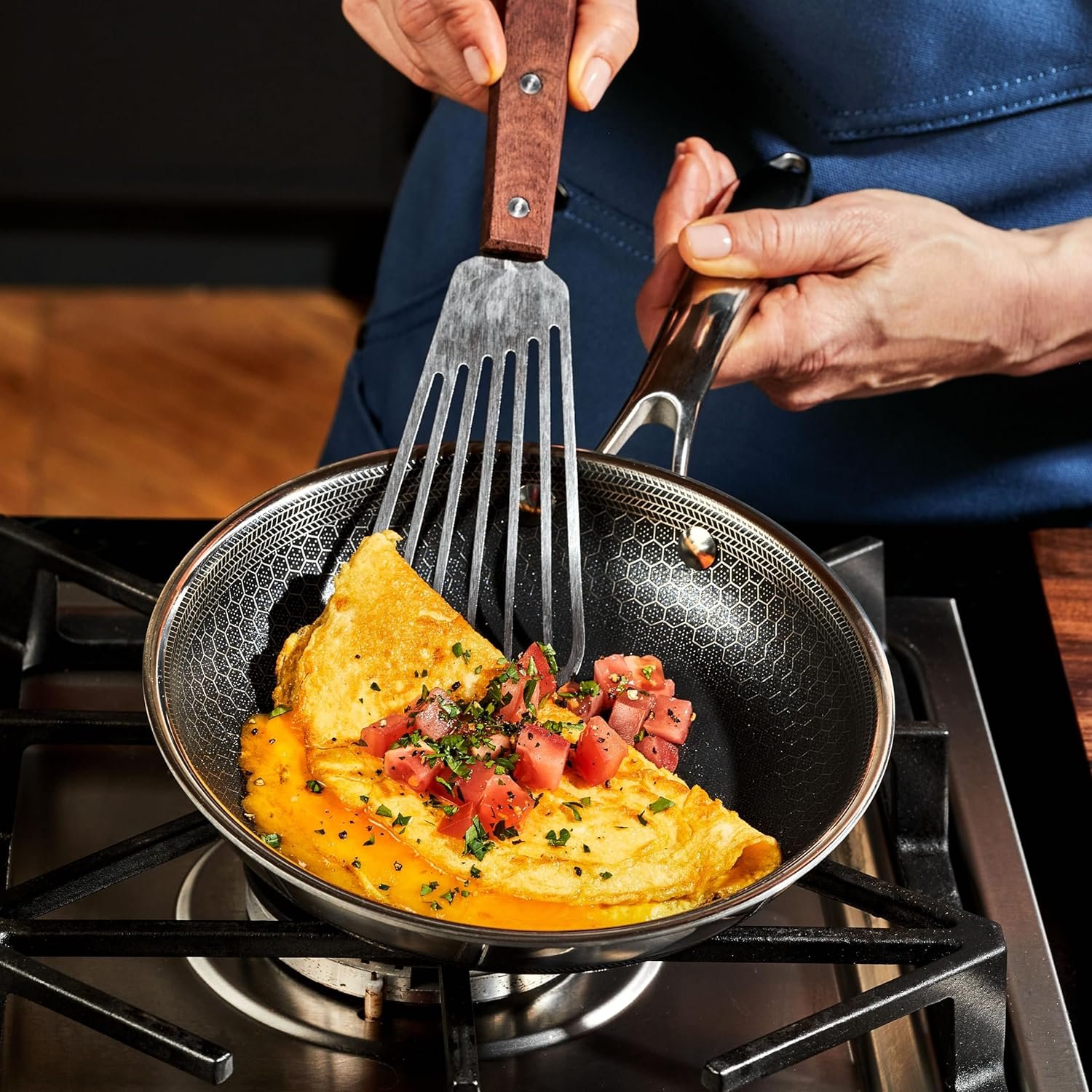
HexClad is best known for its distinctive hybrid cooking surface. Instead of using a completely smooth nonstick surface, the pans feature a laser-etched stainless-steel pattern that protects the ceramic nonstick coating underneath.
The idea is to combine some of the characteristics of stainless steel, cast iron, and nonstick cookware in one pan. HexClad’s current hybrid cookware uses its TerraBond ceramic nonstick coating, which the company describes as PFAS-free.The hybrid design is particularly appealing if you like to sear meat, brown vegetables, or move between different cooking techniques without switching pans.
Another major advantage is durability. HexClad says its cookware is metal-utensil safe, dishwasher safe, induction-ready, and oven safe up to 900°F.
Advantages of HexClad
- Excellent for searing and browning
- Very high oven-temperature rating
- Compatible with metal utensils
- Dishwasher safe
- Induction compatible
- Hybrid construction offers more versatility
- Lifetime warranty against manufacturer defects
HexClad’s cookware warranty covers manufacturer defects for the lifetime of the cookware, although damage caused by misuse, excessive heat, improper cleaning, and other excluded conditions isn’t covered.
Disadvantages of HexClad
- Generally positioned as premium cookware
- Heavier and more substantial than some traditional nonstick pans
- Requires seasoning according to HexClad’s care instructions
- The textured cooking surface feels different from conventional smooth nonstick
- The very high oven rating doesn’t apply equally to every component; for example, HexClad’s glass lids have a lower temperature limit.
What Is Caraway Cookware?
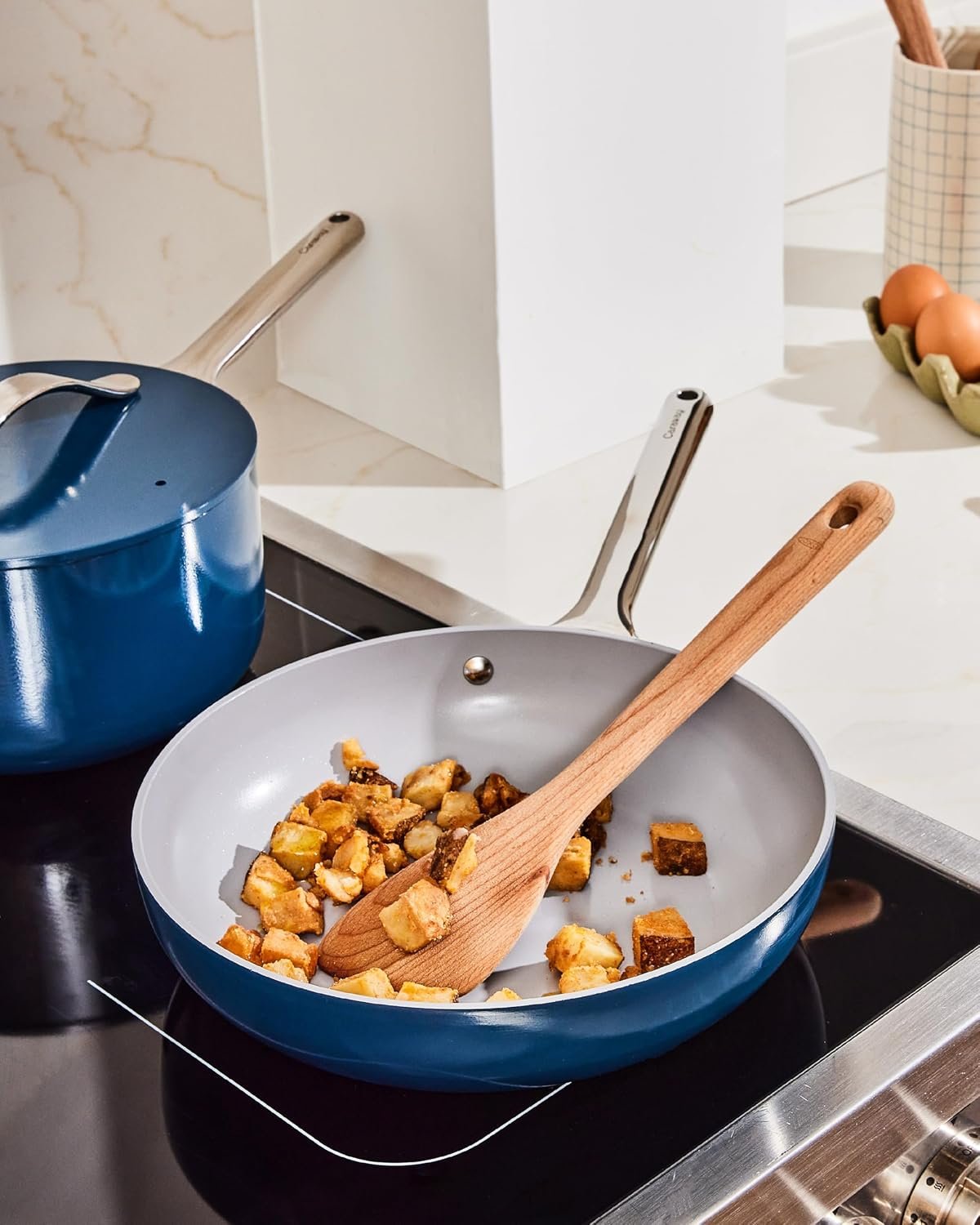
Caraway takes a more traditional ceramic-nonstick approach. Its cookware features a smooth ceramic-coated cooking surface designed to make food release and cleanup easy.
The brand puts considerable emphasis on aesthetics as well as functionality. Caraway cookware is available in a variety of colors and is designed with storage in mind, making it particularly attractive for kitchens where cookware is visible.
Caraway’s ceramic cookware is made without PTFE, PFOA, and PFAS, according to the company. Its current ceramic cookware is also induction compatible and oven safe up to 550°F.
The trade-off is that Caraway requires more careful maintenance. The company recommends hand washing rather than using a dishwasher because harsh detergents and abrasive cleaning can shorten the life of the nonstick coating. It also recommends wooden or nylon utensils.
Advantages of Caraway
- Very smooth ceramic nonstick surface
- Easy food release
- Attractive modern design
- Wide range of colors
- Induction compatible
- Free from PTFE, PFOA, and PFAS
- Oven safe up to 550°F
- Useful storage accessories available with some sets
Disadvantages of Caraway
- Not dishwasher recommended
- Metal utensils should be avoided
- Lower maximum oven temperature than HexClad
- Ceramic nonstick requires careful maintenance
- Standard ceramic cookware has a one-year limited warranty in the U.S.
HexClad vs. Caraway: Cooking Performance
For searing and browning
Winner: HexClad
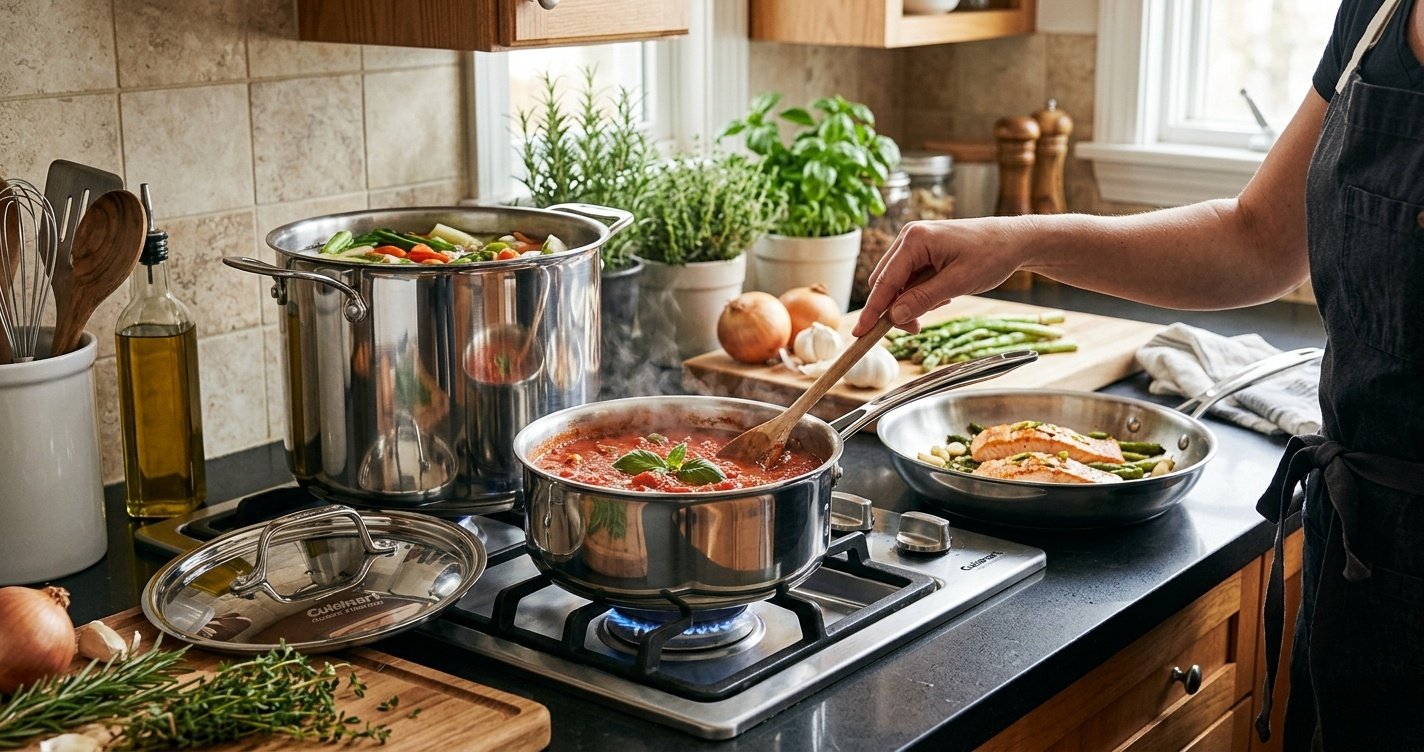
If you regularly cook steaks, burgers, chicken thighs, or vegetables that benefit from strong browning, HexClad has the advantage.
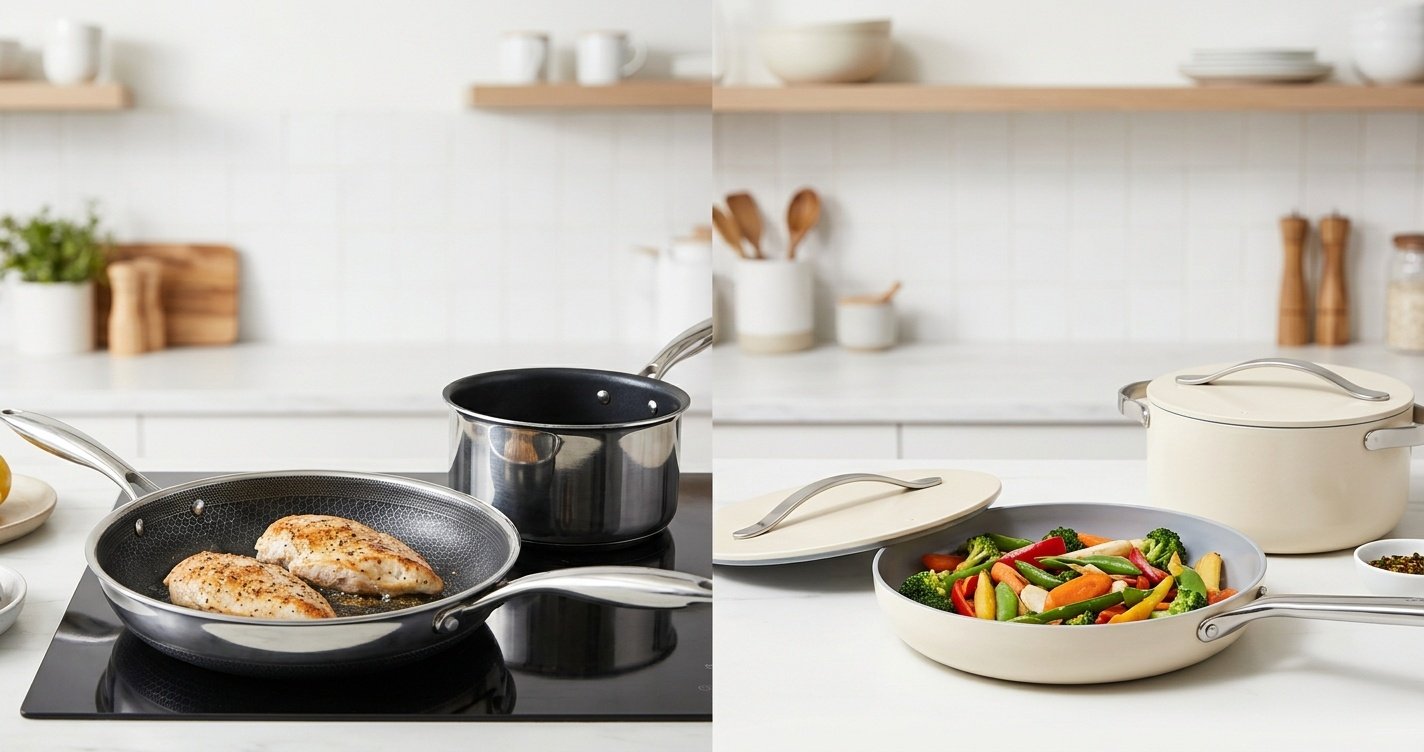
Its stainless-steel ridges are designed to provide a more searing-oriented cooking surface while the ceramic nonstick valleys help with food release. This gives HexClad a middle ground between conventional nonstick cookware and stainless steel.
Caraway can certainly brown food, but its smooth ceramic nonstick surface is designed more around easy release and everyday cooking than aggressive high-heat searing.
For eggs and delicate foods
Winner: Caraway
For foods such as eggs, pancakes, crepes, and delicate fish, Caraway’s smooth ceramic surface can be particularly appealing.
The absence of the raised stainless-steel pattern also gives it the familiar feel of conventional nonstick cookware.
That said, nonstick performance depends heavily on temperature, cooking oils, cleaning, and the age of the coating. Caraway itself recommends low to medium-low heat to protect its nonstick performance.
For high-heat cooking
Winner: HexClad
This is one of the biggest differences between the brands.
HexClad’s cookware is rated for oven temperatures up to 900°F, while Caraway’s ceramic cookware is rated up to 550°F.
For normal home cooking, 550°F is already plenty. But if you frequently finish dishes in a very hot oven or want maximum temperature flexibility, HexClad has the clear advantage.
Cleaning and Maintenance
Winner: HexClad
This category is relatively straightforward.
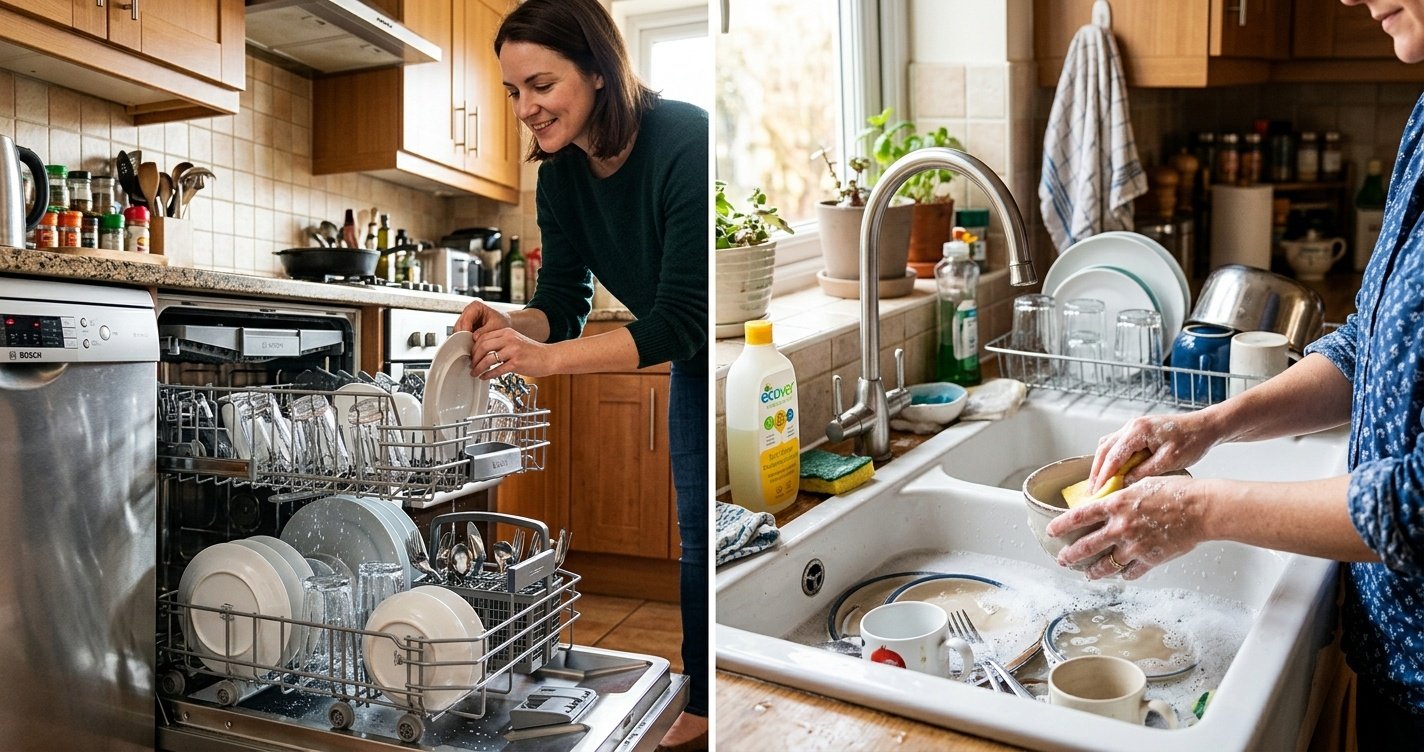
HexClad cookware is dishwasher safe, although the manufacturer still provides specific cleaning and seasoning instructions.
Caraway takes the opposite approach. The company specifically recommends hand washing its ceramic cookware because dishwasher detergents and abrasive cleaning can reduce the life of the nonstick coating.
If convenience is important and you don’t want to hand wash your pans, HexClad is the better choice.
Durability and Warranty
Winner: HexClad
HexClad has the stronger warranty offering for its cookware. Its cookware comes with a lifetime warranty against manufacturer defects.
Caraway’s standard ceramic cookware currently carries a one-year limited warranty in the United States.
It’s important to remember that neither warranty means normal wear or improper use is automatically covered. Nonstick coatings can deteriorate through overheating, abrasive cleaning, or other improper care.
Still, if long-term warranty coverage is a major factor in your decision, HexClad has the advantage.
Design and Storage
Winner: Caraway
This is where Caraway stands out.
Caraway cookware has a distinctly modern appearance and is available in numerous colors. Its cookware sets can also include storage solutions such as lid holders and pan racks, helping keep a kitchen organized.
HexClad has a more industrial, stainless-steel appearance. Its design is highly recognizable, but Caraway is arguably the better option if your cookware is going to double as part of your kitchen’s visual design.
Price and Value
Both brands occupy the premium cookware category, so neither is the obvious budget choice.
For example, Caraway’s current 7-piece Fry & Sauté Set is listed at $695, with a sale price shown at $645 at the time of writing. HexClad’s current Hybrid 12-piece set is listed at $699, with the page showing a $999 reference value.
Prices and promotions can change frequently, so comparing the exact pieces included in each set is more useful than comparing the headline price alone.
A seven-piece set from one brand may contain very different cookware from a 12-piece set from another.
HexClad vs. Caraway: Which Should You Buy?
Choose HexClad if you:
- Cook steak, chicken, burgers, or other foods that benefit from searing
- Want cookware that can handle very high oven temperatures
- Prefer dishwasher-safe cookware
- Want to use metal utensils
- Cook on induction
- Want a more rugged, versatile pan
- Value a lifetime cookware warranty
Choose Caraway if you:
- Primarily cook everyday meals
- Want a very smooth ceramic nonstick surface
- Cook lots of eggs, pancakes, and other delicate foods
- Prefer colorful, minimalist cookware
- Don’t mind hand washing
- Are willing to use wooden or nylon utensils
- Care more about easy nonstick cooking than extreme heat performance
HexClad vs. Caraway: Final Verdict
HexClad is the better all-around choice for versatility and durability. Its hybrid construction, metal-utensil compatibility, dishwasher-safe design, higher oven rating, and lifetime cookware warranty make it especially appealing to serious home cooks who want one set of pans to handle a wide range of techniques.
Caraway is the better choice for simple everyday nonstick cooking. Its smooth ceramic surface, attractive designs, and emphasis on easy food release make it a strong option for cooks who primarily prepare eggs, vegetables, fish, pancakes, and other everyday dishes. The trade-off is that you’ll need to be more careful with cleaning, utensils, and cooking temperatures.
Ultimately, there isn’t a universal winner. If performance, versatility, and durability come first, choose HexClad. If smooth nonstick cooking, aesthetics, and everyday simplicity matter more, choose Caraway.