Table of contents
Ceramic vs Stainless Steel — Which Is Better?
Stainless steel is usually better for durability, high-heat cooking, and long-term value. Ceramic cookware is better for easy cleaning, non-stick performance, and low-fat cooking. The best choice depends on your cooking style, budget, and priorities.
Read More: Hard-Anodized vs Cast Iron: Which Is Better?
What Is the Difference?
| Feature | Ceramic | Stainless Steel |
|---|---|---|
| Material | Ceramic coating or ceramic construction | Steel alloy containing chromium |
| Cooking Surface | Naturally non-stick when coated | Usually requires proper technique |
| Durability | Moderate | Excellent |
| Heat Resistance | Good | Excellent |
| Cleaning | Easier | Requires more effort |
| Lifespan | Shorter | Long-lasting |
| Maintenance | Gentle care needed | Low maintenance |
| Price | Affordable to mid-range | Mid-range to premium |
| Best For | Easy everyday cooking | Professional-style cooking |
Ceramic vs Stainless Steel Cookware: Which Is Better?
The answer depends on what you value most.
| If You Want… | Better Choice |
|---|---|
| Long-lasting cookware | Stainless steel |
| Easy food release | Ceramic |
| High-temperature cooking | Stainless steel |
| Less oil cooking | Ceramic |
| Restaurant-style searing | Stainless steel |
| Simple cleanup | Ceramic |
| Lifetime investment | Stainless steel |
Is Ceramic Better Than Stainless Steel?
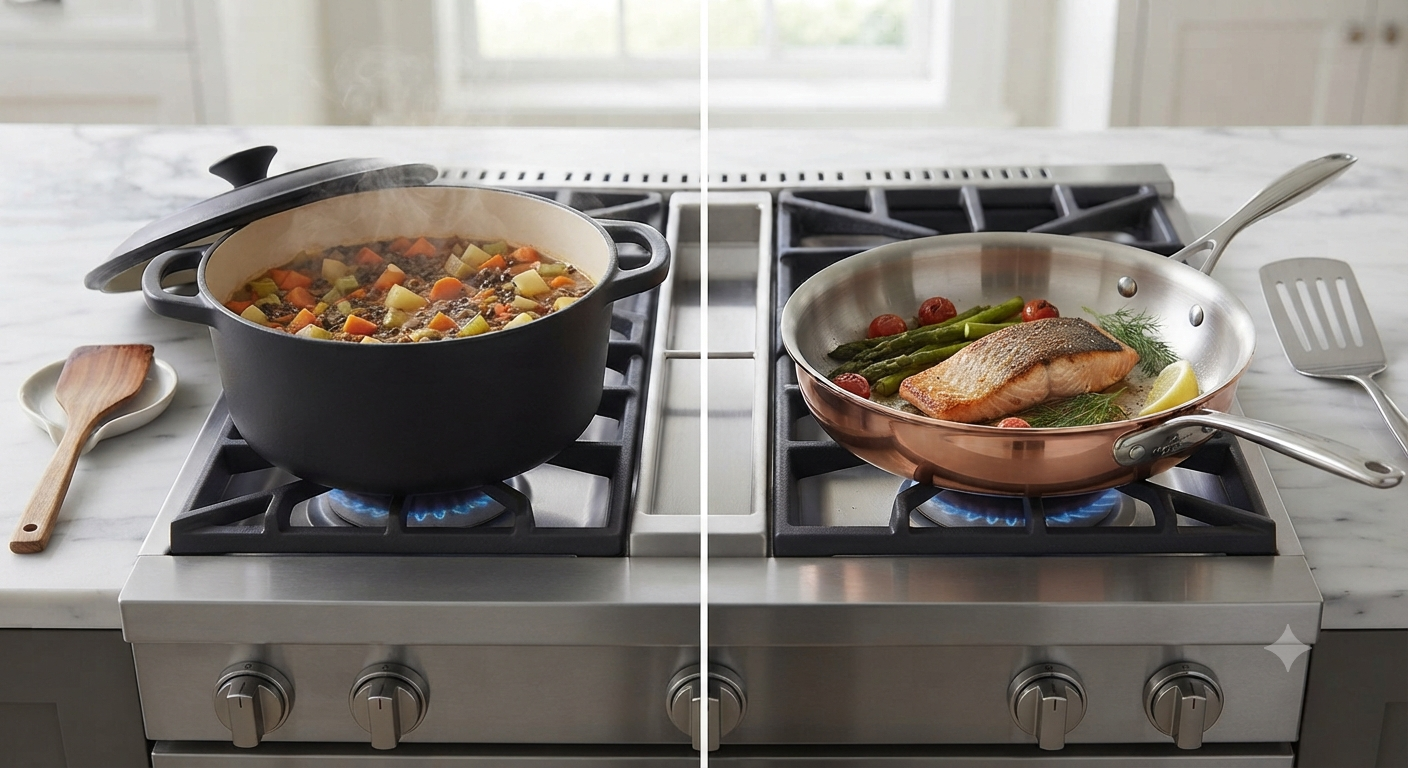
Ceramic is better than stainless steel for people who prioritize convenience. Ceramic cookware offers a naturally slippery cooking surface, making it easier to cook eggs, pancakes, and delicate foods with less oil.
However, ceramic coatings can wear down over time, especially with high heat, metal utensils, or harsh cleaning methods.
Is Stainless Steel Better Than Ceramic?
Stainless steel is better for durability and performance. It can handle higher temperatures, is resistant to scratches, and can last decades with proper care.
Professional kitchens often prefer stainless steel because it supports browning, searing, and advanced cooking techniques.
Ceramic vs Stainless Steel Cookware: Pros and Cons
| Material | Pros | Cons |
|---|---|---|
| Ceramic | Non-stick surface, easy cleaning, attractive designs, requires less oil | Coating may wear, sensitive to high heat, shorter lifespan |
| Stainless Steel | Extremely durable, oven-safe, excellent heat performance, long lifespan | Food may stick without proper technique |
Which Is Safer?
Both materials can be safe when high-quality products are used correctly.
| Safety Factor | Ceramic | Stainless Steel |
|---|---|---|
| Chemical concerns | Depends on coating quality | Generally stable |
| High heat safety | Moderate | Excellent |
| Scratch resistance | Lower | Higher |
| Long-term reliability | Moderate | High |
For maximum durability and fewer replacement cycles, stainless steel is often preferred.
Which Lasts Longer?
Stainless steel lasts longer.
A good stainless steel pan can last decades or even a lifetime. Ceramic cookware usually has a shorter lifespan because the non-stick coating gradually loses effectiveness.
| Lifespan Comparison | Expected Durability |
|---|---|
| Ceramic cookware | Several years with careful use |
| Stainless steel cookware | Decades with proper care |
Which Is Easier to Clean?
Ceramic cookware is easier to clean.
The smooth non-stick surface reduces food sticking, while stainless steel may require soaking or specific cleaning methods after cooking.
| Cleaning Factor | Winner |
|---|---|
| Quick cleanup | Ceramic |
| Removing burnt food | Stainless steel with proper cleaning |
| Dishwasher compatibility | Depends on product |
| Daily convenience | Ceramic |
Which Is Better for Everyday Cooking?
For everyday cooking, the choice depends on your habits.
Choose ceramic if you:
- Cook simple meals daily
- Prefer easy cleanup
- Use low to medium heat
- Want less oil
Choose stainless steel if you:
- Cook frequently
- Need long-lasting cookware
- Sear meat or cook at high temperatures
- Want professional performance
Which Should You Buy?
| User Type | Recommended Choice |
|---|---|
| Beginner cooks | Ceramic |
| Busy home cooks | Ceramic |
| Professional cooks | Stainless steel |
| Long-term buyers | Stainless steel |
| Health-focused cooks | Either high-quality option |
| Budget-conscious buyers | Ceramic |
| Premium cookware buyers | Stainless steel |
What Is the Difference?
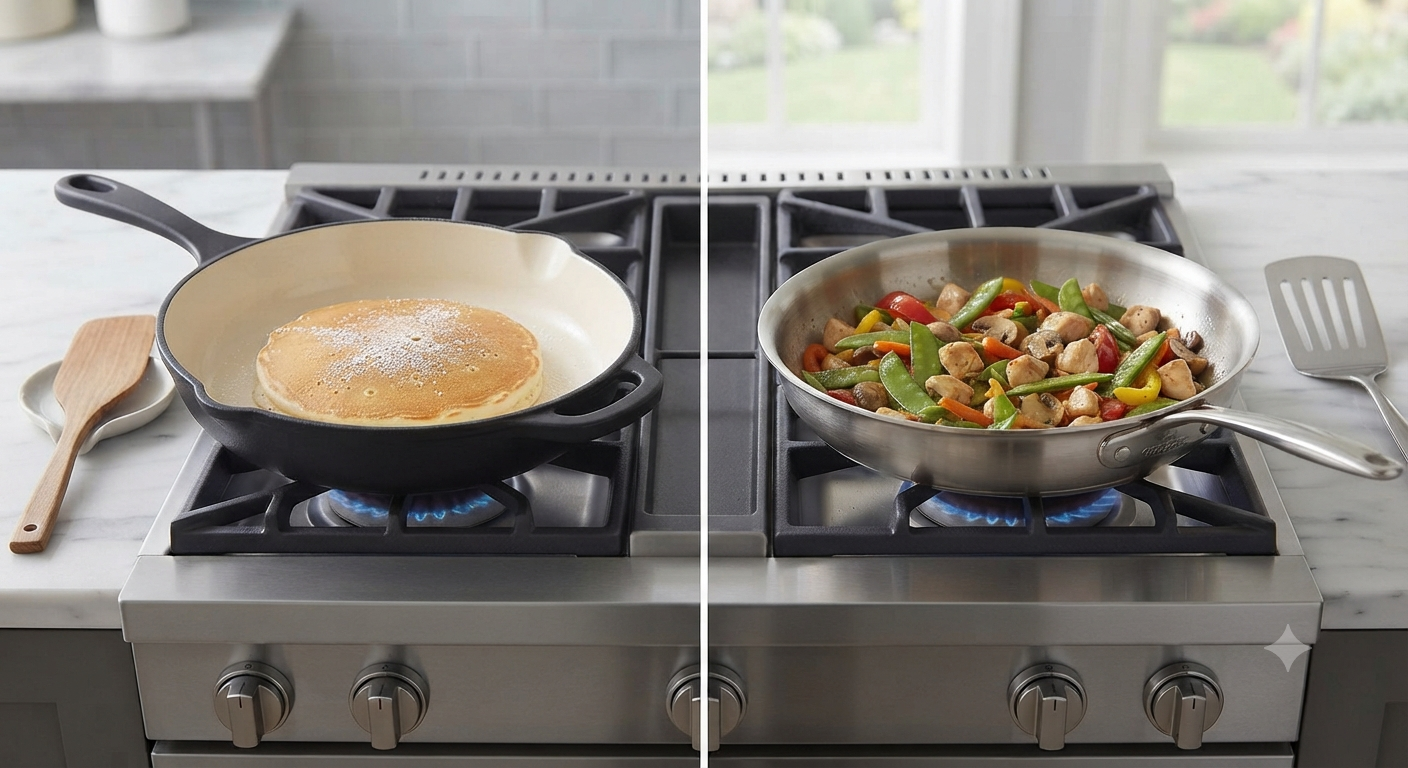
A major difference is that stainless steel is the actual cookware material, while ceramic is often a coating applied over another metal base.
| Feature | Stainless Steel | Ceramic Coating |
|---|---|---|
| Base Material | Steel alloy | Usually aluminum with ceramic layer |
| Surface Type | Metal | Non-stick coating |
| Scratch Resistance | High | Lower |
| Replacement Need | Rare | More frequent |
Which Is Better for Healthy Cooking?
Both can support healthy cooking.
Ceramic cookware may reduce the need for oil because of its non-stick properties. Stainless steel is valued because it is durable, stable, and does not rely on a coating surface.
The healthiest option is usually the cookware that is high-quality, properly maintained, and used according to manufacturer instructions.
People Also Ask (PAA)
Is ceramic cookware better than stainless steel?
Ceramic is better for easy cooking and cleanup, while stainless steel is better for durability and high-heat performance.
Which lasts longer, ceramic or stainless steel?
Stainless steel lasts significantly longer and can often last for decades.
Is ceramic cookware safer than stainless steel?
Both can be safe when made with quality materials and used correctly.
Should I buy ceramic or stainless steel cookware?
Choose ceramic for convenience and stainless steel for durability and professional cooking results.
What is the best cookware material for everyday use?
Stainless steel is generally the best all-purpose cookware material, while ceramic is easier for beginners.
Final Verdict
Ceramic is the better choice if you want convenience, easy cleaning, and a non-stick cooking experience.
For most people, stainless steel is the better long-term investment because it is more durable, versatile, and heat-resistant.