Table of contents
Stainless Steel vs Cast Iron: Which Is Better?
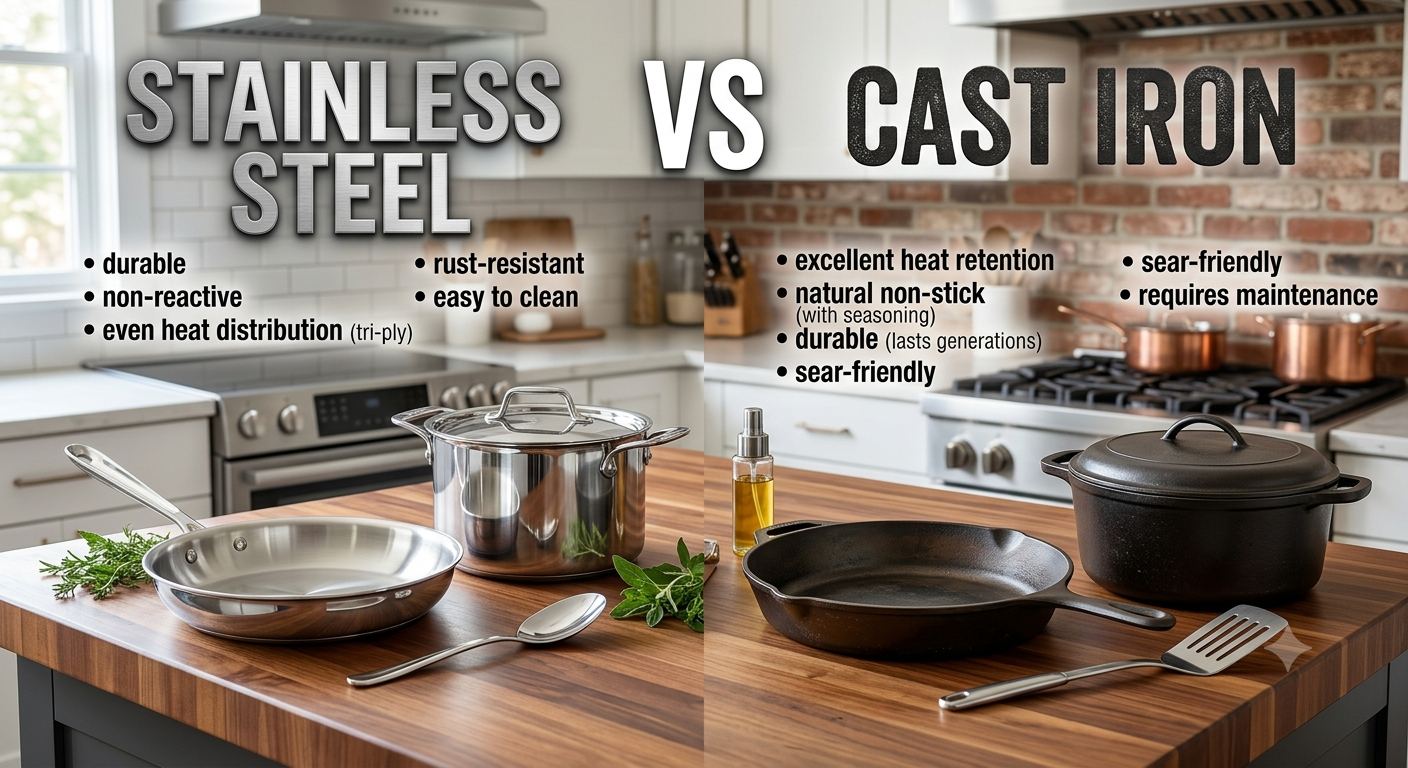
Stainless steel is better for everyday cooking, versatility, and easy maintenance, while cast iron is better for high heat, searing, heat retention, and long-lasting durability. The best choice depends on your cooking style.
Read More: Tramontina vs Cuisinart Cookware: Which Is Better?
Stainless Steel vs Cast Iron: Key Differences
| Feature | Stainless Steel | Cast Iron |
|---|---|---|
| Best For | Everyday cooking, sauces, sautéing | Searing, frying, slow cooking |
| Heat Retention | Moderate | Excellent |
| Heat Distribution | Good with quality construction | Improves with preheating |
| Durability | Extremely durable, rust-resistant | Extremely durable but requires care |
| Maintenance | Easy to clean | Requires seasoning and maintenance |
| Weight | Lighter | Much heavier |
| Reactivity | Non-reactive | Can react with acidic foods if not seasoned |
| Cooking Surface | Naturally stick-resistant when used correctly | Naturally develops seasoning |
| Oven Safe | Usually yes | Yes |
| Lifespan | Decades | Generations |
Stainless Steel vs Cast Iron: Which Is Better for Cooking?
Stainless steel is better for flexible daily cooking, while cast iron is better for foods that need intense heat and deep browning.
Stainless Steel Cooking Benefits
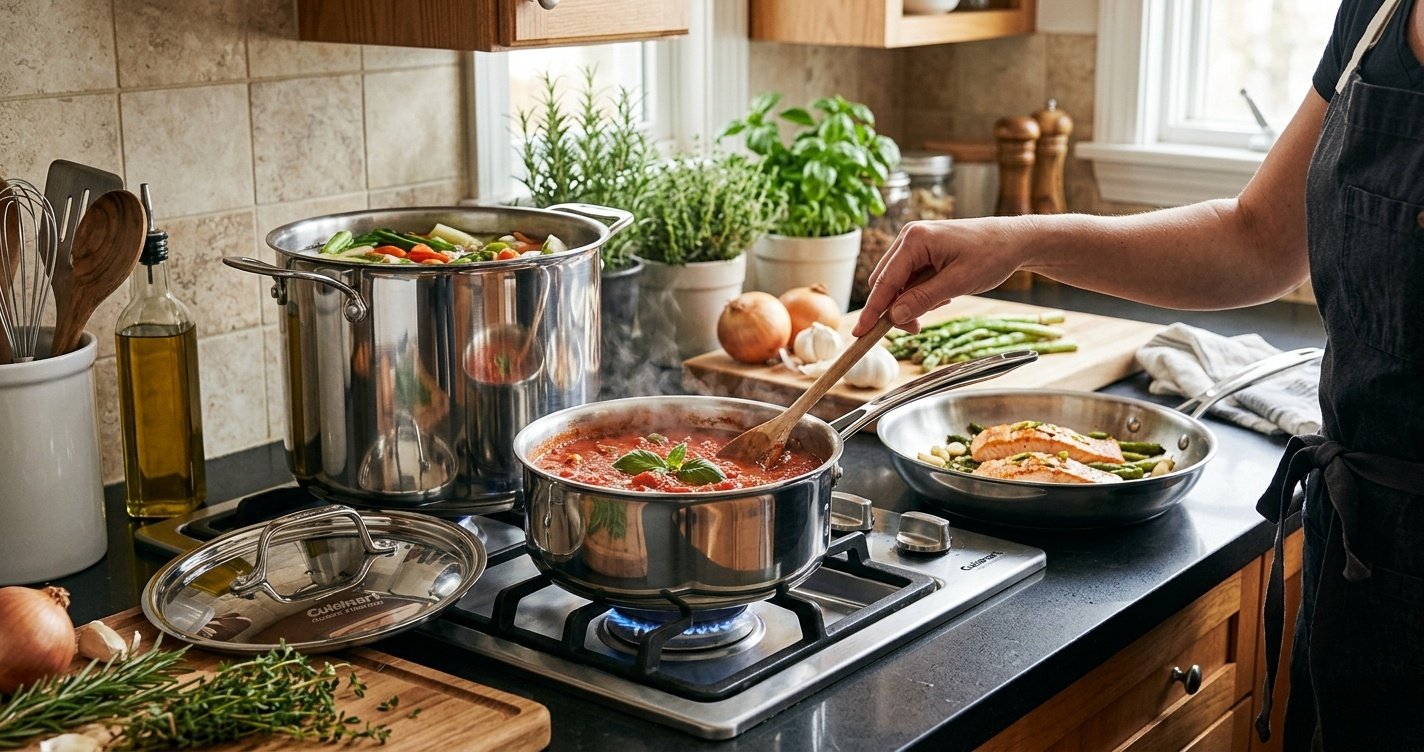
- Excellent for vegetables, meat, fish, and sauces
- Handles acidic foods like tomatoes and wine-based sauces
- Does not require seasoning
- Easy to maintain
- Works well with modern kitchens
Cast Iron Cooking Benefits
- Holds heat longer than most cookware
- Creates excellent crusts on steaks and burgers
- Naturally develops a non-stick surface through seasoning
- Ideal for frying, baking, and outdoor cooking
- Can last for generations
Is Stainless Steel Healthier Than Cast Iron?
Both are generally safe cookware choices. Stainless steel is non-reactive, while cast iron may add small amounts of iron to food.
| Health Factor | Stainless Steel | Cast Iron |
|---|---|---|
| Chemical stability | Excellent | Good when properly maintained |
| Adds iron to food | No | Possible small amounts |
| Best for acidic foods | Yes | Limited |
| Maintenance impact | Low | Requires seasoning |
Which Lasts Longer: Stainless Steel or Cast Iron?
Both can last a lifetime, but cast iron often lasts for generations with proper care, while stainless steel usually requires less maintenance.
| Durability Factor | Winner |
|---|---|
| Rust resistance | Stainless Steel |
| Heavy-duty use | Cast Iron |
| Low maintenance lifespan | Stainless Steel |
| Generational cookware | Cast Iron |
Stainless Steel vs Cast Iron for Steak
Cast iron usually produces a better steak crust because it retains more heat when cold meat touches the surface.
| Steak Factor | Better Choice |
|---|---|
| High heat searing | Cast Iron |
| Pan sauce preparation | Stainless Steel |
| Restaurant-style crust | Cast Iron |
| Easy cleanup | Stainless Steel |
Stainless Steel vs Cast Iron for Everyday Cooking
Stainless steel is the better everyday option because it handles more cooking tasks with less maintenance.
| Cooking Task | Best Choice |
|---|---|
| Eggs | Stainless steel (with proper technique) |
| Steak | Cast iron |
| Vegetables | Stainless steel |
| Fried chicken | Cast iron |
| Sauces | Stainless steel |
| Baking | Cast iron |
Is Cast Iron Harder to Maintain Than Stainless Steel?
Yes. Cast iron requires seasoning, careful cleaning, and drying to prevent rust. Stainless steel needs less maintenance.
Cast Iron Maintenance Tips
- Avoid long soaking
- Dry immediately after washing
- Apply a thin oil layer when needed
- Maintain seasoning regularly
Stainless Steel Maintenance Tips
- Preheat before cooking
- Use proper oil temperature
- Remove stuck food with soaking or gentle scrubbing
Which Is Better for Beginners: Stainless Steel or Cast Iron?
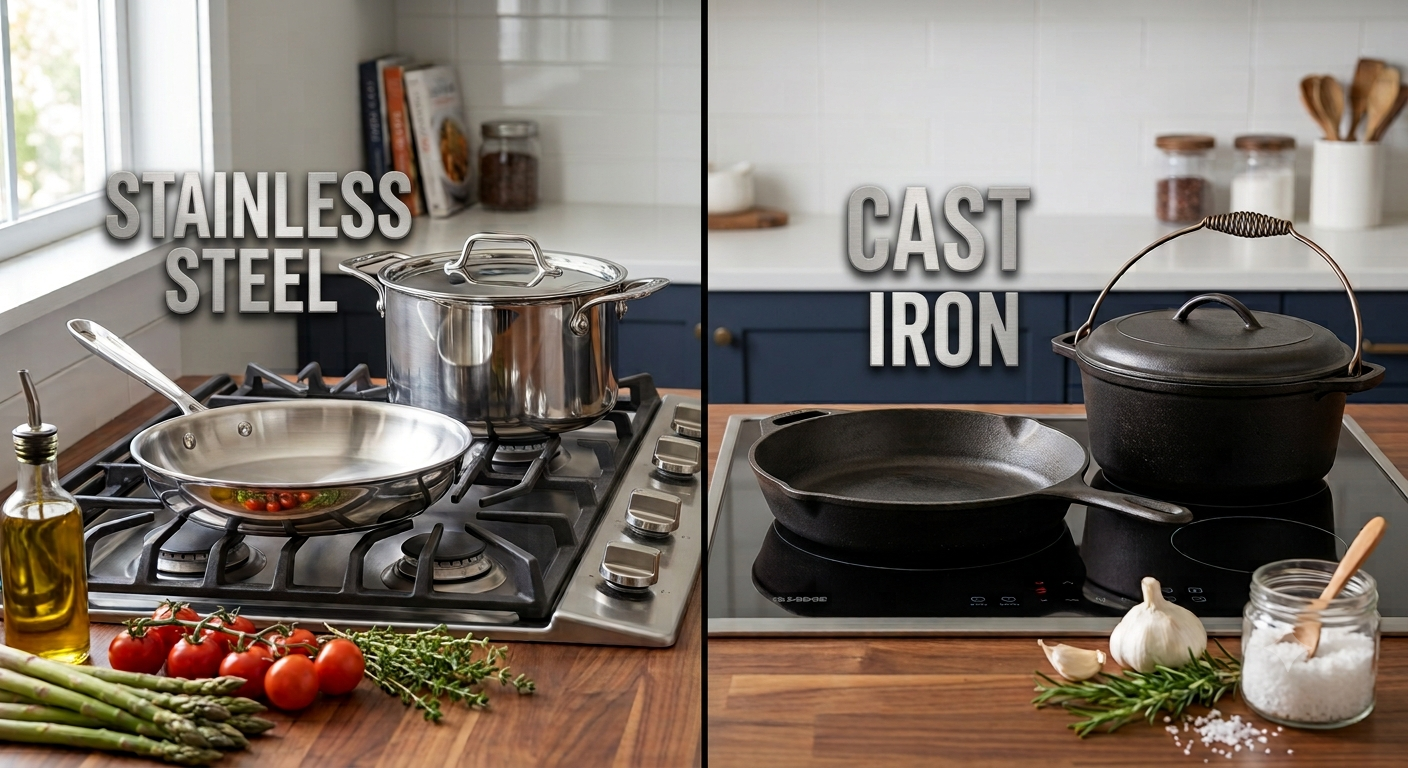
Stainless steel is usually easier for beginners because it requires less maintenance and handles more cooking styles.
Choose stainless steel if you want:
- One versatile pan
- Easy cleaning
- Everyday cooking performance
Choose cast iron if you want:
- Maximum heat retention
- Better searing
- Traditional cooking experience
Stainless Steel vs Cast Iron: Pros and Cons
| Cookware | Pros | Cons |
|---|---|---|
| Stainless Steel | Durable, easy care, versatile, non-reactive | Can stick if used incorrectly |
| Cast Iron | Excellent heat retention, extremely durable, great searing | Heavy, requires seasoning |
Frequently Asked Questions (PAA)
Is stainless steel better than cast iron?
For most kitchens, stainless steel is better because it is versatile and easier to maintain. Cast iron is better for high-heat cooking.
Can you cook everything in cast iron?
Most foods can be cooked in cast iron, but acidic foods may affect seasoning and flavor if cooked for long periods.
Does stainless steel last as long as cast iron?
Yes. High-quality stainless steel cookware can last decades, while cast iron can last for generations.
Which is easier to clean: stainless steel or cast iron?
Stainless steel is easier because it does not require seasoning or special storage
Which is better for health: cast iron or stainless steel?
Both are safe choices. Stainless steel is non-reactive, while cast iron can provide small amounts of dietary iron.
Can cast iron replace stainless steel cookware?
Cast iron can replace some stainless steel tasks, but stainless steel remains more versatile for sauces, acidic foods, and everyday cooking.
Final Verdict: Stainless Steel vs Cast Iron
| If You Need… | Choose |
|---|---|
| Everyday versatility | Stainless Steel |
| Best steak sear | Cast Iron |
| Low maintenance | Stainless Steel |
| Maximum heat retention | Cast Iron |
| Lifetime durability | Both |
| Beginner-friendly cookware | Stainless Steel |
Conclusion
Stainless steel is the best all-purpose cookware choice for most people, while cast iron is ideal for high-heat cooking and superior searing. Choose stainless steel for convenience and versatility, or cast iron for durability and traditional cooking performance.