Table of contents
Hard-Anodized vs Cast Iron: Which Is Better?
Hard-anodized cookware is better for lightweight everyday cooking, quick heating, and easy maintenance, while cast iron is better for high heat, searing, heat retention, and long-term durability.
Choosing between hard-anodized vs cast iron cookware depends on your cooking style, maintenance preference, budget, and the type of food you prepare.
Read More: Stainless Steel vs Cast Iron: Which Is Better?
| Feature | Hard-Anodized Cookware | Cast Iron Cookware |
|---|---|---|
| Material | Electrochemically hardened aluminum | Heavy iron-carbon alloy |
| Weight | Lightweight | Heavy |
| Heat Response | Heats quickly | Heats slowly but retains heat longer |
| Heat Retention | Moderate | Excellent |
| Durability | Very durable | Extremely durable |
| Nonstick Options | Common | Requires seasoning |
| Maintenance | Easy cleaning | Needs seasoning and care |
| Best For | Daily cooking, eggs, vegetables | Steaks, frying, slow cooking |
| Lifespan | Many years | Generations with proper care |
What Is Hard-Anodized Cookware?
Hard-anodized cookware is aluminum cookware treated with an electrochemical process that creates a harder, corrosion-resistant surface.
Hard-anodized aluminum is stronger than regular aluminum because the surface layer is converted into aluminum oxide. This makes the cookware:
- More scratch-resistant
- Less reactive with acidic foods
- More durable than standard aluminum pans
- Lightweight and easy to handle
Benefits of Hard-Anodized Cookware
| Advantage | Why It Matters |
|---|---|
| Lightweight design | Easier for everyday cooking |
| Fast heating | Saves cooking time |
| Durable surface | Handles frequent use |
| Easy maintenance | Requires less care |
| Good heat distribution | Reduces hot spots |
Disadvantages of Hard-Anodized Cookware
| Drawback | Explanation |
|---|---|
| Lower heat retention | Does not hold heat like cast iron |
| Coating wear | Some nonstick versions can degrade over time |
| Not ideal for extreme heat | Less suitable for high-temperature searing |
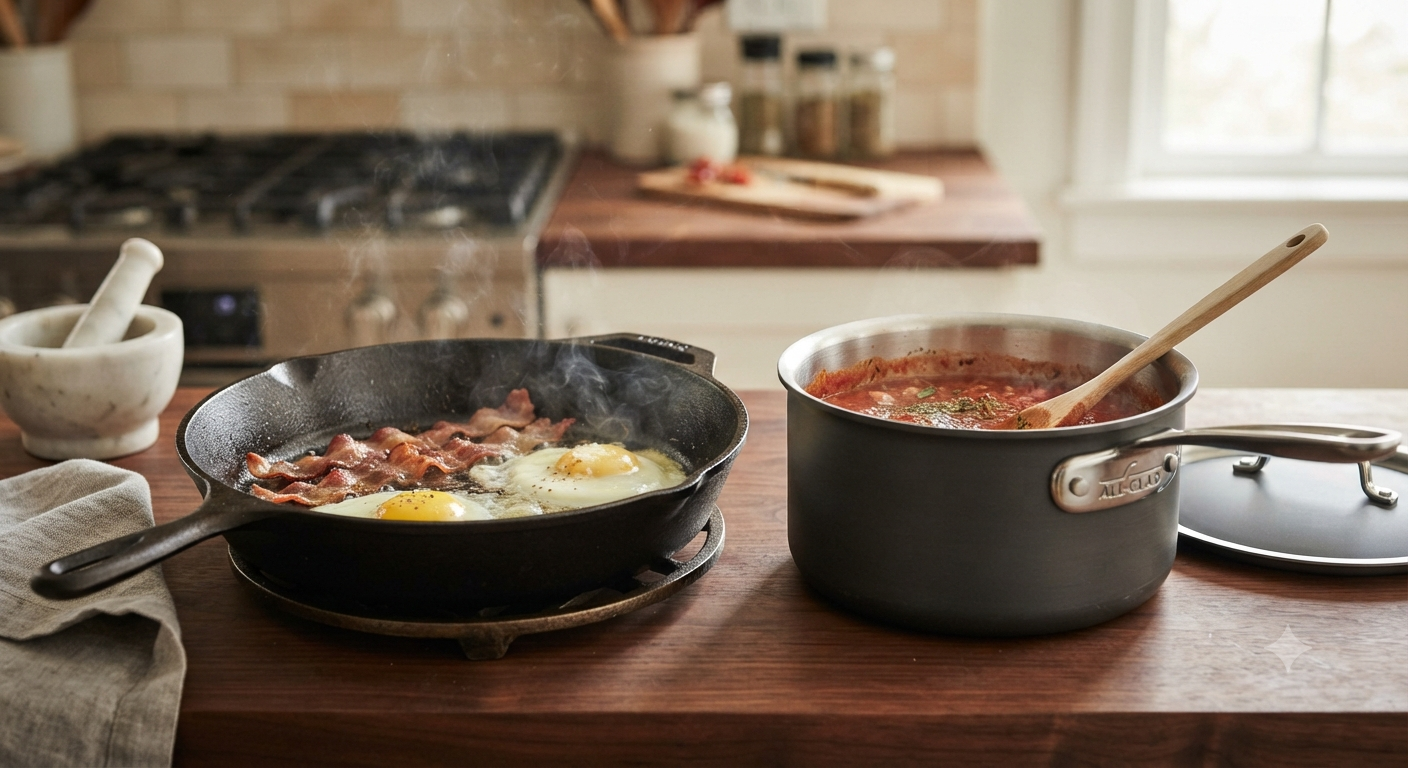
What Is Cast Iron Cookware?
Cast iron cookware is made from iron and carbon, known for exceptional heat retention, durability, and high-temperature cooking performance.
Cast iron pans have been used for centuries because they can withstand intense heat and improve with proper seasoning.
Benefits of Cast Iron Cookware
| Advantage | Why It Matters |
|---|---|
| Superior heat retention | Perfect for searing and browning |
| Extremely durable | Can last generations |
| Oven safe | Works for baking and roasting |
| Natural nonstick surface | Improves with seasoning |
| Versatile cooking | Works on stovetop, oven, and grill |
Disadvantages of Cast Iron Cookware
| Drawback | Explanation |
|---|---|
| Heavy weight | Difficult for some users to handle |
| Requires seasoning | Needs regular maintenance |
| Slow heating | Takes longer to reach temperature |
| Can rust | Requires proper drying and care |
Cooking Performance Comparison
Cast iron performs better for high-heat cooking, while hard-anodized cookware performs better for fast everyday meals.
| Cooking Task | Better Choice | Reason |
|---|---|---|
| Searing steak | Cast Iron | Superior heat retention |
| Cooking eggs | Hard-Anodized | Easier release and cleaning |
| Stir frying | Hard-Anodized | Lightweight and responsive |
| Baking cornbread | Cast Iron | Holds oven heat well |
| Making sauces | Hard-Anodized | Easier temperature control |
| Slow cooking | Cast Iron | Maintains steady heat |
Which Lasts Longer?
Cast iron usually lasts longer and can survive for generations, while hard-anodized cookware typically lasts many years with proper care.
| Durability Factor | Winner |
|---|---|
| Lifetime use | Cast Iron |
| Scratch resistance | Hard-Anodized |
| Rust resistance | Hard-Anodized |
| Repairability | Cast Iron |
| Family heirloom potential | Cast Iron |
Which Is Easier to Maintain?
Hard-anodized cookware is easier to maintain because it requires less care, while cast iron needs seasoning to stay protected.
| Maintenance Task | Hard-Anodized | Cast Iron |
|---|---|---|
| Hand washing | Easy | Required |
| Seasoning | Not usually needed | Required |
| Dishwasher use | Depends on manufacturer | Not recommended |
| Rust prevention | Minimal | Essential |
| Cleaning effort | Low | Moderate |
Is Hard-Anodized Cookware Safer Than Cast Iron?
Both cookware types are generally considered safe when used correctly and maintained properly.
| Safety Factor | Hard-Anodized | Cast Iron |
|---|---|---|
| Food reaction | Low | Low |
| Chemical coating concerns | Depends on coating type | No synthetic coating |
| Iron transfer | Minimal | Possible small amounts |
| Acidic foods | Better choice | Can affect seasoning |
Which Is Better for Health?
Both can be healthy choices. Cast iron may add small amounts of dietary iron, while hard-anodized cookware offers a stable cooking surface.
| Health Consideration | Better Option |
|---|---|
| Increasing iron intake | Cast Iron |
| Low-maintenance cooking | Hard-Anodized |
| Avoiding added coatings | Cast Iron |
| Everyday healthy meals | Either |
Which Is Better for Beginners?
Hard-anodized cookware is usually better for beginners because it is easier to use, clean, and control.
Beginners often prefer hard-anodized pans because:
- They heat quickly
- They require less maintenance
- They are easier to lift
- They work well for everyday recipes
Cast iron is ideal for beginners willing to learn seasoning and care techniques.
Hard-Anodized vs Cast Iron for Different Cooking Styles
| Cooking Style | Recommended Cookware |
|---|---|
| Busy weekday cooking | Hard-Anodized |
| Professional-style searing | Cast Iron |
| Healthy low-oil cooking | Hard-Anodized |
| Outdoor cooking | Cast Iron |
| Baking | Cast Iron |
| Quick breakfast meals | Hard-Anodized |
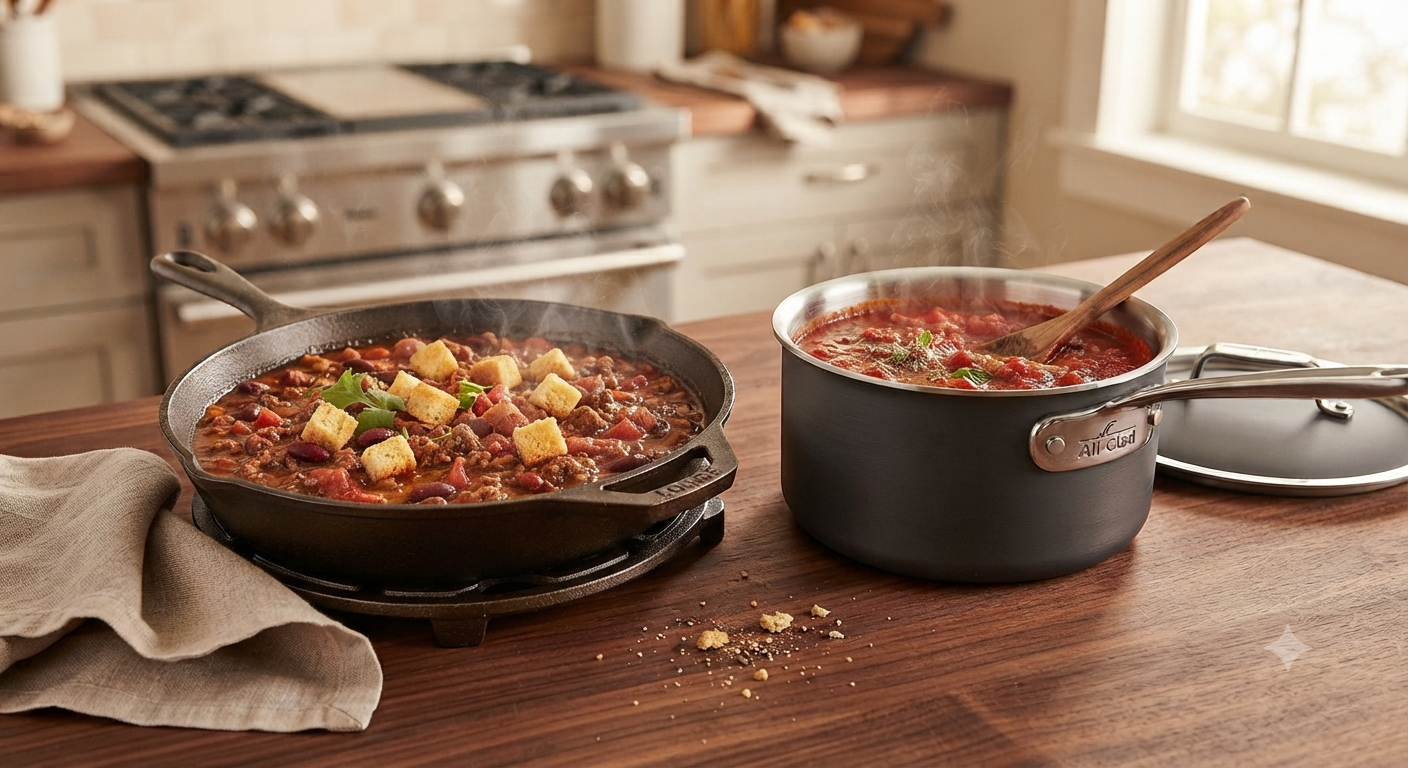
Hard-Anodized vs Cast Iron: Pros and Cons
Hard-Anodized Cookware Pros and Cons
| Pros | Cons |
|---|---|
| Lightweight | Less heat retention |
| Durable | Some coatings wear over time |
| Easy cleaning | Not ideal for extreme heat |
| Fast heating | Usually more expensive than basic aluminum |
Cast Iron Pros and Cons
| Pros | Cons |
|---|---|
| Extremely durable | Heavy |
| Excellent heat retention | Requires seasoning |
| Naturally nonstick when maintained | Slower heating |
| Versatile | Needs moisture control |
Which Is Better: Hard-Anodized or Cast Iron?
The best choice depends on your cooking needs. Choose hard-anodized for convenience and daily cooking, and choose cast iron for durability and high-heat performance.
Choose Hard-Anodized If You Want:
✔ Lightweight cookware
✔ Easy cleaning
✔ Quick meals
✔ Everyday versatility
✔ Less maintenance
Choose Cast Iron If You Want:
✔ Maximum durability
✔ Restaurant-style searing
✔ Long heat retention
✔ Oven-to-table cooking
✔ A lifetime cookware investment
Frequently Asked Questions (FAQs)
1. Is hard-anodized cookware better than cast iron?
Hard-anodized cookware is better for everyday cooking because it is lightweight, heats quickly, and requires little maintenance. Cast iron is better for high-heat cooking, searing, and long-term durability.
2. Which cookware lasts longer, hard-anodized or cast iron?
Cast iron generally lasts longer. With proper seasoning and care, a cast iron pan can last for generations, while hard-anodized cookware typically lasts 5–15 years depending on quality and use.
3. Can hard-anodized cookware replace cast iron?
Hard-anodized cookware can replace cast iron for most everyday meals, but it does not match cast iron’s heat retention or performance for searing steaks and baking.
4. Is cast iron healthier than hard-anodized cookware?
Both are safe cooking options. Cast iron can add small amounts of iron to food, while hard-anodized cookware provides a non-reactive cooking surface that is ideal for acidic ingredients.
5. Which is better for cooking steak: hard-anodized or cast iron?
Cast iron is the better choice for cooking steak because it retains high heat, creating a flavorful, even sear.
6. Can you cook acidic foods in cast iron?
Yes, but frequent cooking of highly acidic foods like tomato sauce or vinegar-based dishes can wear down the seasoning. Hard-anodized cookware is generally a better option for acidic recipes.
Hard-Anodized vs Cast Iron: Final Verdict
| Winner Category | Best Choice |
|---|---|
| Everyday cooking | Hard-Anodized |
| Durability | Cast Iron |
| Easy maintenance | Hard-Anodized |
| High heat cooking | Cast Iron |
| Beginner friendly | Hard-Anodized |
| Long-term investment | Cast Iron |
Conclusion
Hard-anodized cookware is best for everyday convenience, while cast iron is better for high-heat cooking and long-term durability.
Choose hard-anodized if you want lightweight, easy-to-clean cookware. Choose cast iron if you want exceptional heat retention and cookware that can last for generations. The best choice depends on your cooking style and maintenance preference.