Table of contents
Hard-Anodized vs Ceramic Cookware
Choosing between hard-anodized vs ceramic cookware can significantly affect your cooking experience, food quality, and the lifespan of your kitchen equipment. Both options offer non-stick performance and are popular alternatives to traditional stainless steel or cast iron, but they excel in different areas.
If you’re wondering whether hard-anodized or ceramic cookware is better, this guide compares their durability, safety, cooking performance, maintenance, pricing, and ideal use cases so you can make a confident buying decision.
Read More: Enameled Cast Iron vs Cast Iron: Key Differences
What Is Hard-Anodized vs Ceramic Cookware?
What Is Hard-Anodized Cookware?
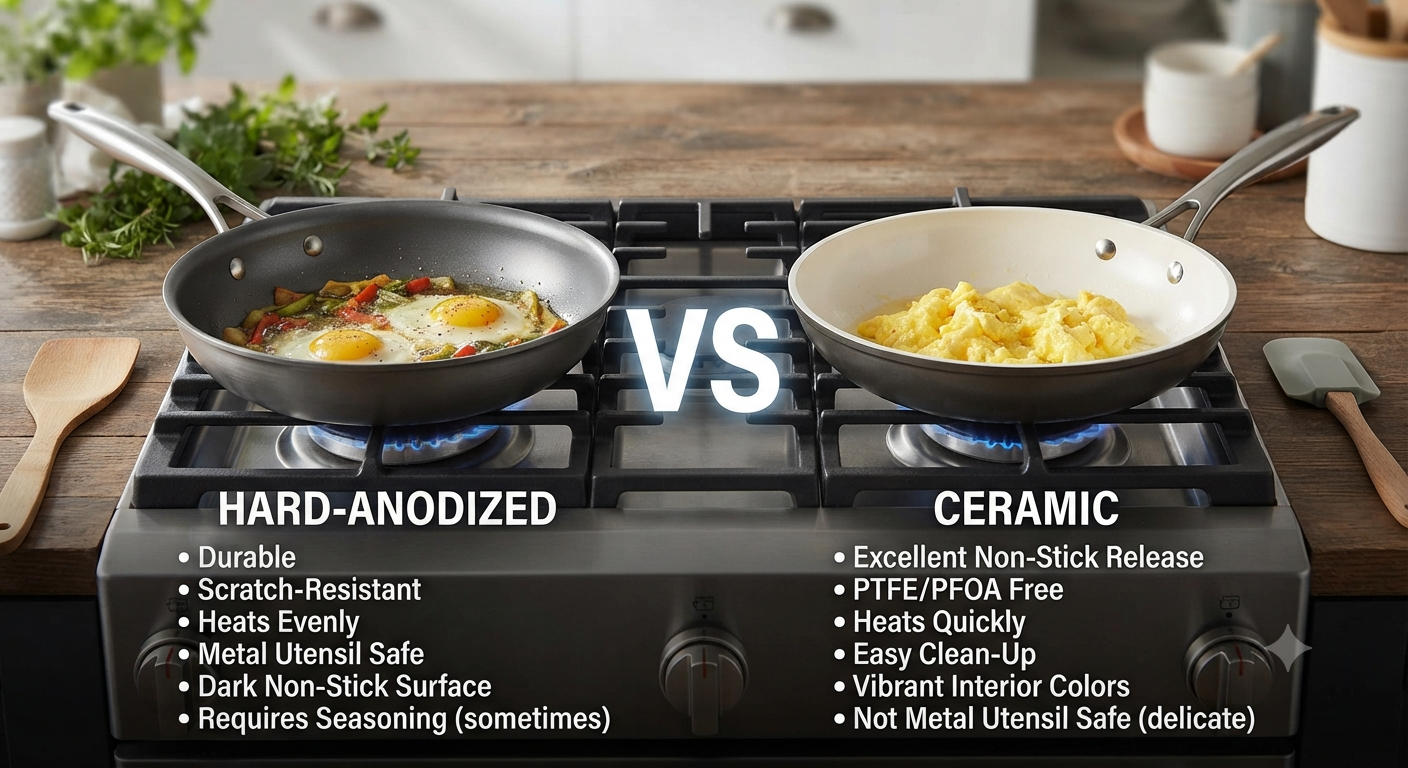
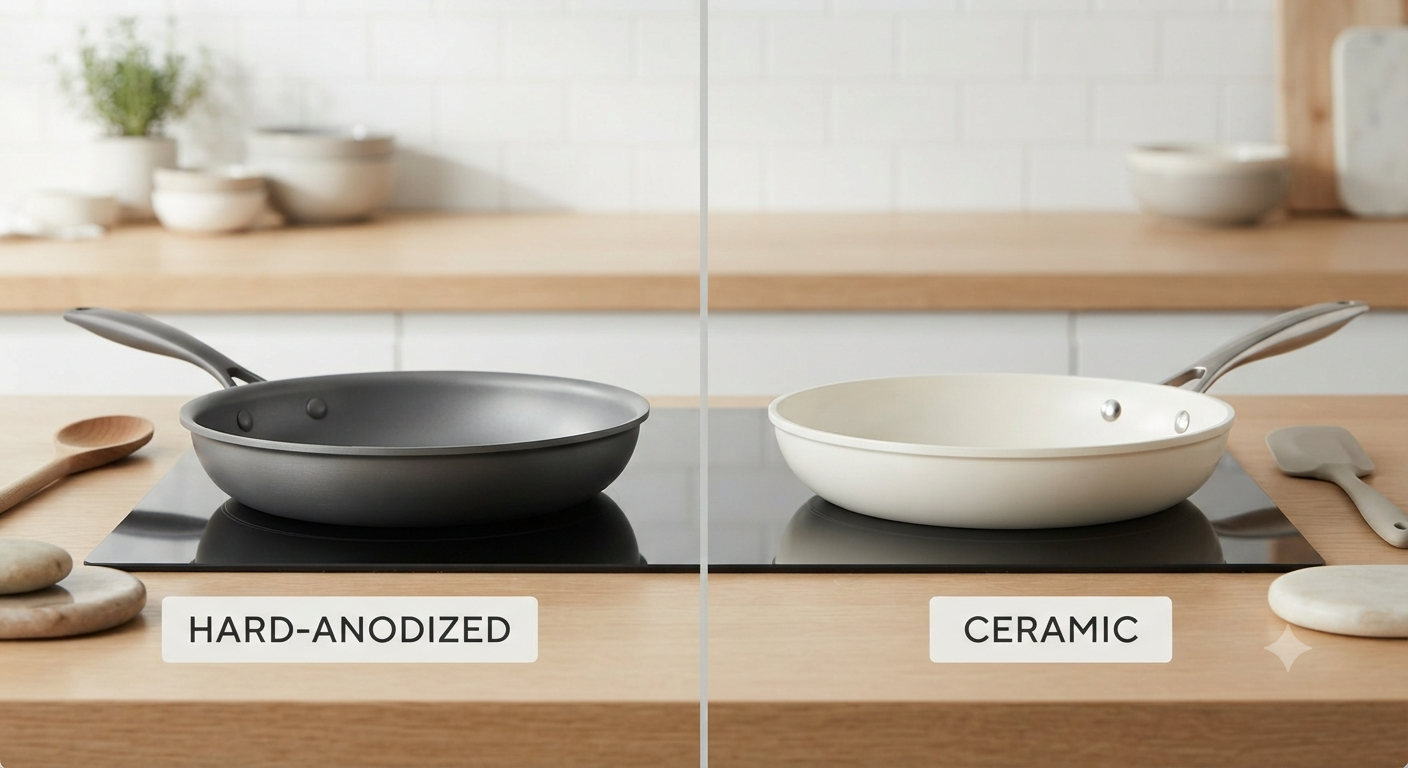
Hard-anodized cookware is made from aluminium that undergoes an electrochemical process, making the surface much harder than standard aluminium. It is durable, scratch-resistant, heats evenly, and is often coated with a non-stick layer.
Common uses:
- Everyday cooking
- Frying
- Sautéing
- High-heat cooking
What Is Ceramic Cookware?
Ceramic cookware generally refers to metal cookware coated with a ceramic-based non-stick surface (rather than solid ceramic). It provides a naturally slick cooking surface that requires less oil and is often marketed as free from PTFE and PFOA.
Common uses:
- Low-fat cooking
- Eggs
- Pancakes
- Delicate foods
- Medium-heat cooking
Why Hard-Anodized vs Ceramic Cookware Matters for Users
Your cookware affects:
- Cooking performance
- Food sticking
- Cleaning effort
- Durability
- Health concerns
- Budget
- Compatibility with cooktops
- Long-term value
Someone who cooks every day has very different needs from someone who only prepares occasional meals.
Best Options for Hard-Anodized vs Ceramic Cookware
| Cookware | Best For | Durability | Non-Stick Performance | Price Range |
|---|---|---|---|---|
| T-fal Hard-Anodized | Everyday cooking | Excellent | Very Good | ££ |
| Calphalon Hard-Anodized | Frequent home chefs | Excellent | Excellent | £££ |
| Ninja NeverStick Hard-Anodized | High durability | Excellent | Excellent | £££ |
| GreenPan Ceramic | Healthy cooking | Good | Excellent | £££ |
| Caraway Ceramic | Design and eco-conscious buyers | Good | Excellent | ££££ |
| GreenLife Ceramic | Budget buyers | Moderate | Good | ££ |
Hard-Anodized vs Ceramic Cookware Features Comparison
| Feature | Hard-Anodized Cookware | Ceramic Cookware |
|---|---|---|
| Base Material | Anodized aluminium | Aluminium with ceramic coating |
| Cooking Surface | Non-stick coating | Ceramic non-stick coating |
| Heat Distribution | Excellent | Excellent |
| Heat Retention | Very Good | Good |
| Maximum Heat Tolerance | High | Medium |
| Scratch Resistance | High | Moderate |
| Lifespan | 5–10+ years | 2–5 years |
| Oven Safe | Often yes | Often yes (varies by brand) |
| Dishwasher Safe | Some models | Some models |
| Metal Utensil Friendly | Usually more resistant | Not recommended |
| Chemical-Free Coating | Depends on brand | Often marketed as PTFE- and PFOA-free |
| Maintenance | Low | Moderate |
| Best For | Daily cooking | Health-focused cooking |
Hard-Anodized vs Ceramic Cookware Performance Comparison
| Category | Winner | Why |
|---|---|---|
| Durability | Hard-Anodized | More resistant to wear and scratches |
| Non-Stick Performance | Ceramic (initially) | Food releases very easily when new |
| Long-Term Performance | Hard-Anodized | Maintains performance longer |
| Healthy Cooking | Ceramic | Requires less oil and is often free from traditional non-stick chemicals |
| Heat Resistance | Hard-Anodized | Better suited for higher temperatures |
| Cleaning | Tie | Both clean easily with proper care |
| Value for Money | Hard-Anodized | Longer lifespan offsets higher initial cost |
| Appearance | Ceramic | Modern colours and stylish finishes |
Hard-Anodized Cookware Pros and Cons
Pros
- Extremely durable
- Excellent heat distribution
- Longer lifespan
- Scratch resistant
- Suitable for everyday cooking
- Performs well at higher temperatures
- Better investment over time
Cons
- Usually heavier
- Often more expensive than entry-level ceramic
- Some models still use PTFE-based coatings
- Not all are induction compatible
Ceramic Cookware Pros and Cons
Pros
- Naturally slick cooking surface
- Requires less oil
- Attractive modern designs
- Easy to clean
- Often marketed as free from PTFE and PFOA
- Great for low- to medium-heat cooking
Cons
- Coating wears faster
- More susceptible to scratches
- Performance declines over time
- Not ideal for prolonged high heat
- Usually shorter lifespan
Pricing Factors: Hard-Anodized vs Ceramic Cookware
Several factors influence the cost of cookware.
| Factor | Hard-Anodized | Ceramic |
|---|---|---|
| Material Quality | High impact | Moderate impact |
| Brand Reputation | High | High |
| Number of Pieces | High | High |
| Oven Safety | Moderate | Moderate |
| Induction Compatibility | May increase cost | May increase cost |
| Warranty | Premium models cost more | Premium models cost more |
Typical Price Ranges
| Cookware Type | Estimated Price |
|---|---|
| Budget Sets | £40–£80 |
| Mid-Range Sets | £80–£180 |
| Premium Sets | £180–£400+ |
Real User Decision-Making Factors
Before choosing between hard-anodized vs ceramic cookware, consider the following questions.
Choose Hard-Anodized Cookware If You:
- Cook every day
- Want cookware that lasts for years
- Frequently sear meats
- Cook at higher temperatures
- Prefer long-term value
- Need scratch resistance
Choose Ceramic Cookware If You:
- Prioritise low-oil cooking
- Mostly prepare eggs, fish, vegetables, or pancakes
- Prefer cookware marketed as free from PTFE and PFOA
- Want lightweight cookware
- Value colourful, modern kitchen aesthetics
Which Hard-Anodized vs Ceramic Cookware Is Best for You?
| User Type | Recommended Choice |
|---|---|
| Beginner Cook | Ceramic |
| Daily Home Cook | Hard-Anodized |
| Family Kitchen | Hard-Anodized |
| Health-Conscious Cook | Ceramic |
| Budget Buyer | Ceramic |
| Long-Term Investment | Hard-Anodized |
| Heavy Cooking | Hard-Anodized |
| Light Cooking | Ceramic |
Expert Recommendation
If durability and longevity matter most, hard-anodized cookware is generally the stronger choice. It handles frequent use, resists wear, and maintains performance over many years.
If you prioritise effortless food release with minimal oil and mainly cook at moderate temperatures, ceramic cookware is an excellent option, provided you’re prepared for a shorter coating lifespan.
FAQs (PAA-Style Short Answers)
Is hard-anodized cookware better than ceramic?
For durability and long-term performance, yes. For naturally slick, low-oil cooking, ceramic often performs better when new.
hich cookware lasts longer?
Hard-anodized cookware typically lasts significantly longer than ceramic-coated cookware when properly maintained.
Is ceramic cookware healthier?
Ceramic cookware is often chosen because many products are marketed as free from PTFE and PFOA. Healthy cooking also depends on using appropriate temperatures and avoiding damaged coatings.
Does hard-anodized cookware scratch easily?
No. Hard-anodized cookware is generally more scratch-resistant than ceramic cookware, although using wooden or silicone utensils can help extend the life of any non-stick surface.
Which is better for everyday cooking?
Hard-anodized cookware is generally better for frequent, everyday cooking because it offers excellent durability and consistent heat distribution.
Is ceramic cookware worth buying?
Yes, especially if you prefer low-fat cooking, easy food release, and modern cookware designs. Keep in mind that ceramic coatings usually wear out sooner than hard-anodized alternatives.
Can hard-anodized cookware go in the oven?
Many models are oven-safe, but temperature limits vary by manufacturer. Always check the product’s specifications before use.
Which cookware is easier to clean?
Both are easy to clean when maintained correctly. Ceramic releases food very easily when new, while hard-anodized cookware often retains its non-stick performance for longer.
Final Verdict
The choice between hard-anodized vs ceramic cookware comes down to how you cook.
- Choose hard-anodized cookware if you want maximum durability, excellent heat distribution, and cookware that can withstand daily use for years.
- Choose ceramic cookware if you value low-oil cooking, a naturally slick surface, and an attractive design, while accepting that the coating may need replacing sooner.
For most households seeking the best balance of performance, longevity, and value, hard-anodized cookware is typically the better all-round investment. Ceramic cookware remains an excellent choice for lighter cooking styles and those who prioritise an easy-release, PTFE-free cooking surface.