Table of contents
Enameled Cast Iron vs Cast Iron Cookware
Choosing between enameled cast iron vs cast iron cookware can significantly impact your cooking experience. Both types are renowned for excellent heat retention, durability, and versatility, but they differ in maintenance, cooking performance, cost, and ideal use cases.
If you’re deciding which cookware deserves a place in your kitchen, this comprehensive comparison will help you understand the strengths, weaknesses, and practical differences so you can confidently choose the right option for your cooking style.
Read More: Enameled Cast Iron vs Stainless Steel: Essential Guide
What is Enameled Cast Iron vs Cast Iron Cookware?
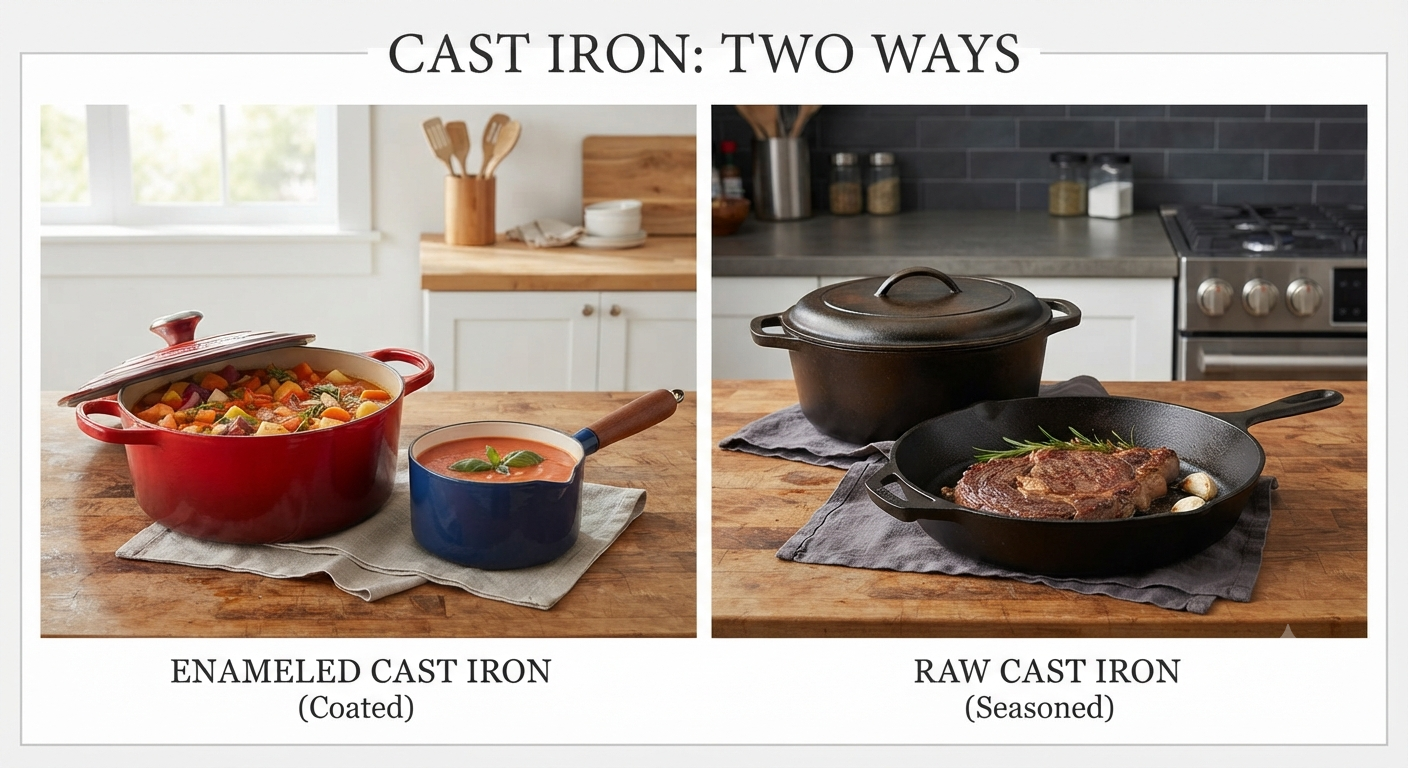
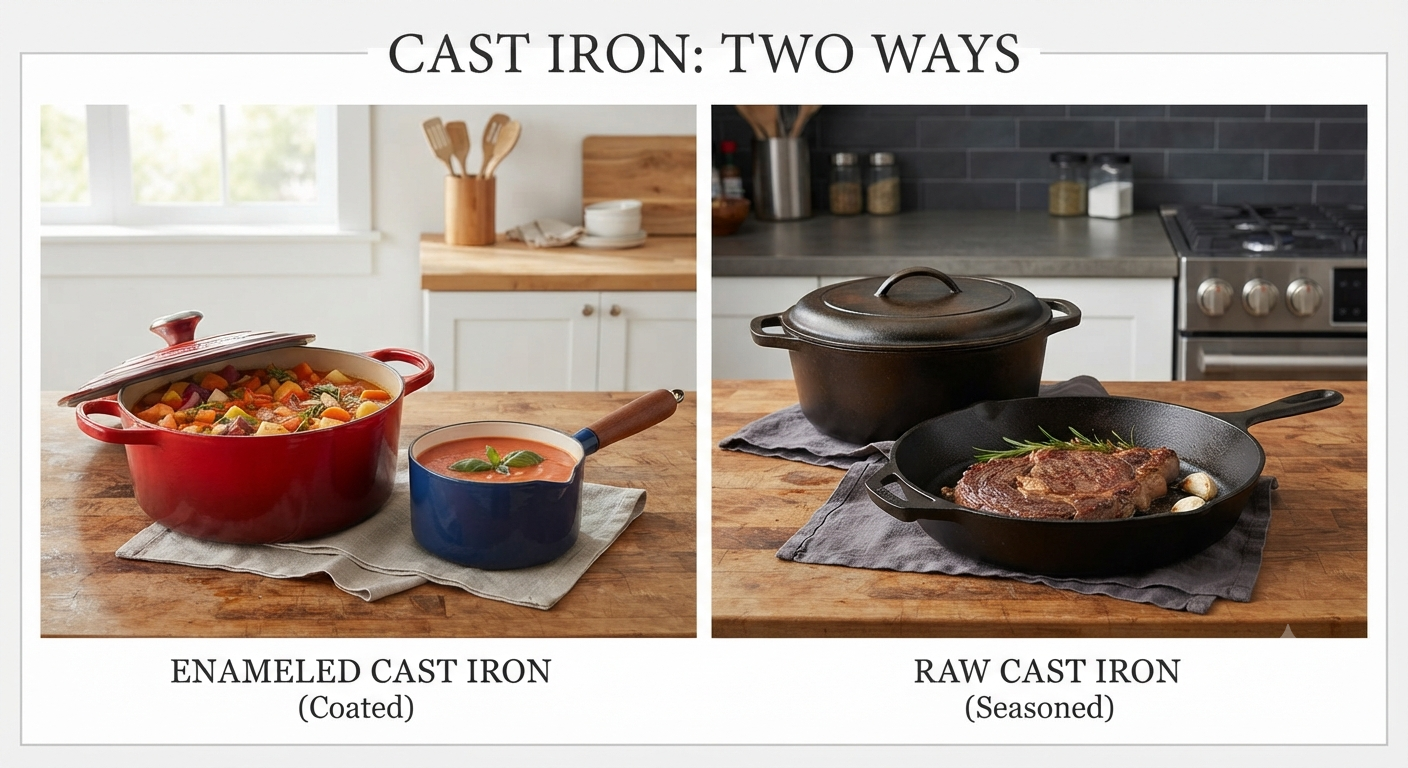
Cast iron cookware is made entirely from seasoned iron. It develops a naturally non-stick surface through seasoning and is prized for exceptional heat retention and durability.
Enameled cast iron cookware is traditional cast iron coated with a layer of porcelain enamel. This protective coating eliminates the need for seasoning while making the cookware resistant to rust and suitable for cooking acidic foods.
Although both share the same cast iron core, their cooking experience and maintenance requirements are quite different.
Best Options for Enameled Cast Iron vs Cast Iron Cookware
| Cookware | Best For | Key Advantages | Potential Drawbacks |
|---|---|---|---|
| Enameled Dutch Oven | Soups, stews, braising, baking | No seasoning, easy cleaning, acidic food safe | Higher price |
| Enameled Skillet | Everyday cooking | Attractive, low maintenance | Enamel can chip |
| Traditional Cast Iron Skillet | Searing, frying, grilling | Excellent seasoning, affordable | Requires maintenance |
| Cast Iron Grill Pan | High-heat cooking | Superior searing | More difficult cleaning |
| Cast Iron Dutch Oven | Outdoor cooking, campfire | Extremely durable | Needs regular seasoning |
Enameled Cast Iron vs Cast Iron Cookware Features Comparison
| Feature | Enameled Cast Iron | Traditional Cast Iron |
|---|---|---|
| Heat Retention | Excellent | Excellent |
| Heat Distribution | Excellent | Excellent |
| Requires Seasoning | No | Yes |
| Rust Resistant | Yes | No |
| Non-Stick Surface | Smooth enamel | Improves with seasoning |
| Acidic Foods | Safe | Not recommended for long cooking |
| Dishwasher Safe | Some brands | Generally no |
| Oven Safe | Usually 230–260°C | Often 260°C+ |
| Metal Utensils | Limited | Yes |
| Maintenance | Very easy | Moderate |
| Lifespan | Decades with care | Lifetime or longer |
| Outdoor Cooking | Limited | Excellent |
| Appearance | Colourful finishes | Traditional black |
| Weight | Heavy | Heavy |
Enameled Cast Iron vs Cast Iron Cookware: Cooking Performance Comparison
| Cooking Task | Winner | Why |
|---|---|---|
| Steak Searing | Cast Iron | Higher heat tolerance |
| Slow Cooking | Enameled Cast Iron | Moisture retention |
| Bread Baking | Tie | Excellent heat retention |
| Tomato Sauce | Enameled Cast Iron | No reaction with acid |
| Frying | Cast Iron | Superior seasoning |
| Braising | Enameled Cast Iron | Easier cleanup |
| Outdoor Cooking | Cast Iron | Nearly indestructible |
| Everyday Convenience | Enameled Cast Iron | Minimal maintenance |
Pros and Cons of Enameled Cast Iron
Pros
- No seasoning required
- Rust resistant
- Easy to clean
- Safe for acidic ingredients
- Attractive colours and finishes
- Doesn’t absorb flavours
- Excellent for slow cooking
- Great for beginners
Cons
- Higher purchase price
- Enamel may chip if mishandled
- Cannot easily restore damaged coating
- Usually slightly less tolerant of extremely high heat
Pros and Cons of Traditional Cast Iron
Pros
- Extremely durable
- Usually more affordable
- Naturally non-stick when seasoned
- Excellent for high-temperature cooking
- Ideal for grilling and searing
- Can last generations
- Can be restored even after rusting
Cons
- Requires seasoning
- Can rust if neglected
- Reacts with acidic foods
- More maintenance after washing
- Heavier cleaning routine
Enameled Cast Iron vs Cast Iron Cookware: Pricing Factors
Several factors influence the price of both cookware types.
| Factor | Enameled Cast Iron | Cast Iron |
|---|---|---|
| Manufacturing Process | More complex | Simpler |
| Coating | Porcelain enamel | None |
| Brand Premium | High | Moderate |
| Maintenance Costs | Lower | Lower but requires seasoning supplies |
| Typical Price Range | £60–£350+ | £20–£120+ |
| Long-Term Value | Excellent | Excellent |
Premium brands command higher prices due to manufacturing quality, enamel durability, and warranty coverage.
Real User Decision-Making Factors
Before choosing between enameled cast iron and cast iron cookware, consider these practical questions.
Do you enjoy maintaining cookware?
- Yes → Traditional cast iron
- No → Enameled cast iron
Do you cook acidic recipes often?
- Tomato sauce
- Wine reductions
- Citrus dishes
Choose enameled cast iron.
Do you primarily cook steaks and burgers?
Traditional cast iron generally delivers the best searing performance.
Is appearance important?
Enameled cookware comes in many stylish colours suitable for serving directly at the table.
Do you camp or cook outdoors?
Traditional cast iron is the clear winner because it handles open flames and rough use exceptionally well.
Are you buying your first cast iron cookware?
Most beginners find enameled cast iron easier to own due to its low maintenance.
Which Enameled Cast Iron vs Cast Iron Cookware Is Best for You?
Choose enameled cast iron if you:
- Want easy maintenance
- Cook soups and stews regularly
- Frequently prepare acidic dishes
- Prefer beautiful cookware for serving
- Don’t want to season cookware
Choose traditional cast iron if you:
- Love steak and high-heat cooking
- Want maximum durability
- Enjoy maintaining cookware
- Need affordable cookware
- Cook outdoors frequently
Frequently Asked Questions (PAA Style)
Is enameled cast iron better than cast iron?
It depends on your needs. Enameled cast iron is easier to maintain, while traditional cast iron excels at high-heat cooking and develops a natural non-stick surface over time.
Which lasts longer: enameled cast iron or cast iron?
Traditional cast iron can last for generations and is often easier to restore. Enameled cast iron also lasts decades but may become unusable if the enamel coating is severely chipped or cracked.
Can you use metal utensils on enameled cast iron?
It’s best to avoid metal utensils because they can scratch or chip the enamel. Wooden, silicone, or nylon utensils are recommended.
Why is enameled cast iron more expensive?
The additional porcelain enamel coating, extra manufacturing steps, quality control, and premium finishes increase production costs.
Is cast iron healthier than enameled cast iron?
Both are safe to cook with. Traditional cast iron may add small amounts of iron to food, particularly when cooking acidic ingredients.
Can enameled cast iron rust?
The enamel coating protects the iron from rust. However, if the enamel chips and the exposed iron is left wet, rust can develop on the damaged area.
Which cookware is easier to clean?
Enameled cast iron is generally much easier to clean because food is less likely to stick permanently, and it does not require re-seasoning after washing.
Can both types go in the oven?
Yes. Both enameled cast iron and traditional cast iron are oven-safe, though the maximum safe temperature depends on the manufacturer’s recommendations, especially for enameled cookware with lids or knobs.
Final Verdict: Enameled Cast Iron vs Cast Iron Cookware
When comparing enameled cast iron vs cast iron cookware, there is no universal winner—only the better choice for your cooking style.
If you value convenience, easy cleaning, and versatility with acidic foods, enameled cast iron is the better investment despite its higher upfront cost.
If you prioritise exceptional searing, maximum durability, affordability, and don’t mind regular seasoning, traditional cast iron remains one of the best long-term cookware choices available.
For many home cooks, owning both offers the greatest flexibility: an enameled Dutch oven for slow cooking and a traditional cast iron skillet for high-heat searing and everyday frying. This combination delivers the strengths of each material while minimising their respective compromises.