Stainless steel cutlery is built to last, but it isn’t stain-proof. Hard water, salt, acidic foods, and dishwasher heat can leave behind cloudy spots, rust-like marks, and a dull finish over time. The good news: almost every stain on stainless steel can be removed with things you already have at home.
This guide covers quick answers to the most common questions, then walks through complete cleaning methods for everyday care, stubborn stains, and long-term shine.
Read More: Dishwasher Loading Guide: 7 Rules for Spotless Dishes
Table of contents
What’s the Fastest Way to Clean Stainless Steel Cutlery?
The fastest method is to soak the Stainless steel cutlery in warm water with a few drops of dish soap for 5 minutes, scrub gently with a soft sponge in the direction of the grain, then dry immediately with a microfiber cloth. Drying right away is the step most people skip—and it’s the one that prevents new water spots from forming.
Why Does Stainless Steel Cutlery Get Stained?
Stainless steel resists rust, but it isn’t fully immune to it. Stains usually come from one of these causes:
- Hard water minerals left behind after air-drying
- Salt and acidic foods (vinegar, citrus, tomato sauce) sitting too long before washing
- Dishwasher chemical reactions, especially when cutlery touches other metals
- Leftover food residue trapped in engraved patterns or between fork tines
- Chloride exposure, which can cause small orange or brown rust-like pitting
Understanding the cause helps you pick the right fix below.
Best Ways to Clean Stainless Steel Cutlery
1. Everyday Cleaning (Dish Soap Method)
Best for: regular upkeep after meals
- Rinse cutlery under warm water to remove loose food.
- Wash with a soft sponge and mild dish soap.
- Rinse thoroughly—soap residue causes dullness.
- Dry immediately with a clean towel.
Dish soap and warm water handle 90% of everyday grime; the key is drying right after washing.
2. Removing Water Spots and Cloudy Film
Best for: dull, hazy cutlery after air-drying or dishwasher use
- Mix equal parts white vinegar and warm water.
- Soak cutlery for 10–15 minutes.
- Wipe with a soft cloth, following the grain.
- Rinse and dry fully.
White vinegar dissolves mineral buildup from hard water and restores shine without scratching.
3. Removing Rust Spots or Orange Marks
Best for: small rust-like pitting or discoloration
- Make a paste with baking soda and a small amount of water.
- Apply to the stained area and let sit for 5 minutes.
- Scrub gently with a soft-bristle brush or sponge.
- Rinse and dry completely.
Baking soda paste is mildly abrasive and lifts surface rust without damaging the steel underneath.
4. Removing Stubborn Stains or Discoloration
Best for: deep stains that soap and vinegar don’t fully clear
- Combine baking soda with a splash of hydrogen peroxide to form a paste.
- Apply directly to the stain.
- Let sit for 15–20 minutes.
- Scrub gently, rinse, and dry.
The peroxide-baking soda combo works as a mild oxidizer, breaking down stains that vinegar alone can’t remove.
5. Polishing for Long-Term Shine
Best for: restoring a like-new finish
- Apply a small amount of olive oil to a soft cloth.
- Buff cutlery in the direction of the grain.
- Wipe off excess oil with a dry cloth.
A light oil polish seals the surface, reduces future water spotting, and adds shine.
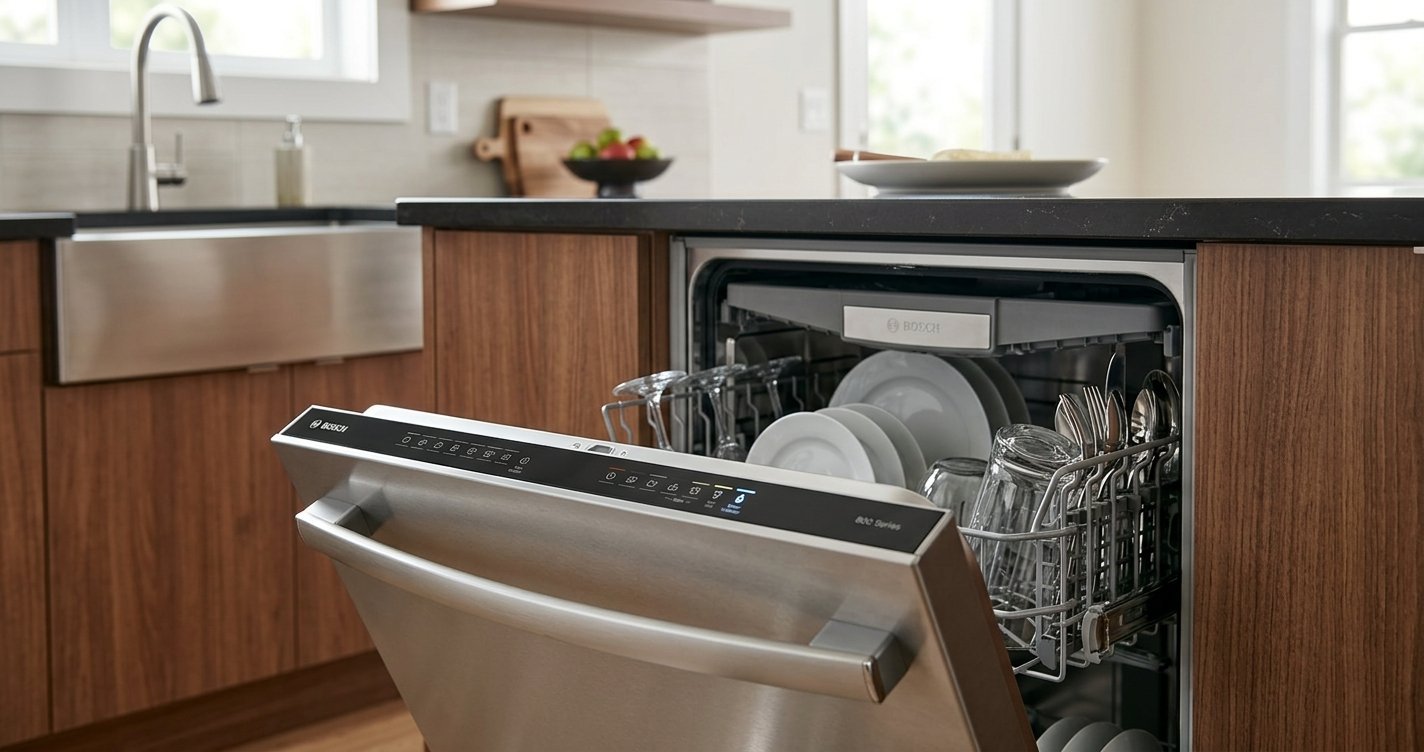
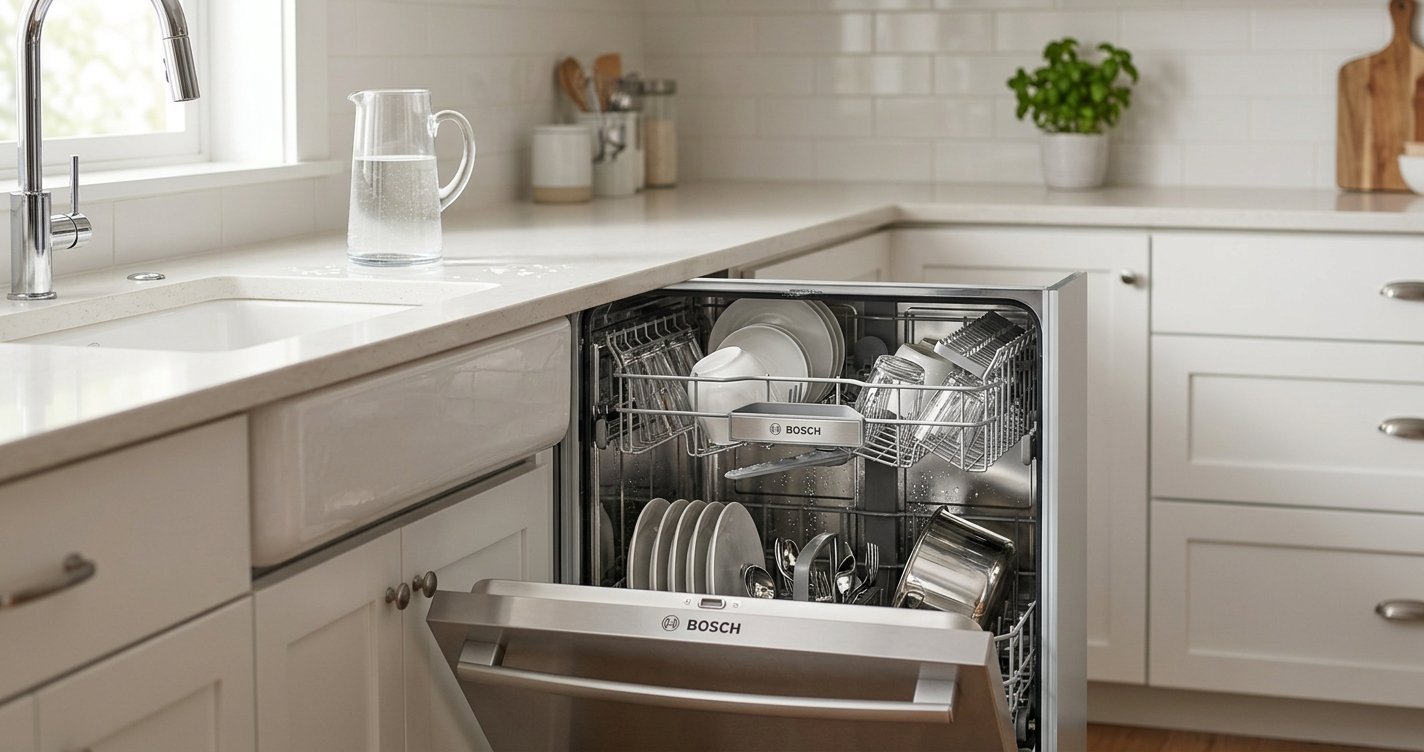
Should You Clean Stainless Steel Cutlery in the Dishwasher?
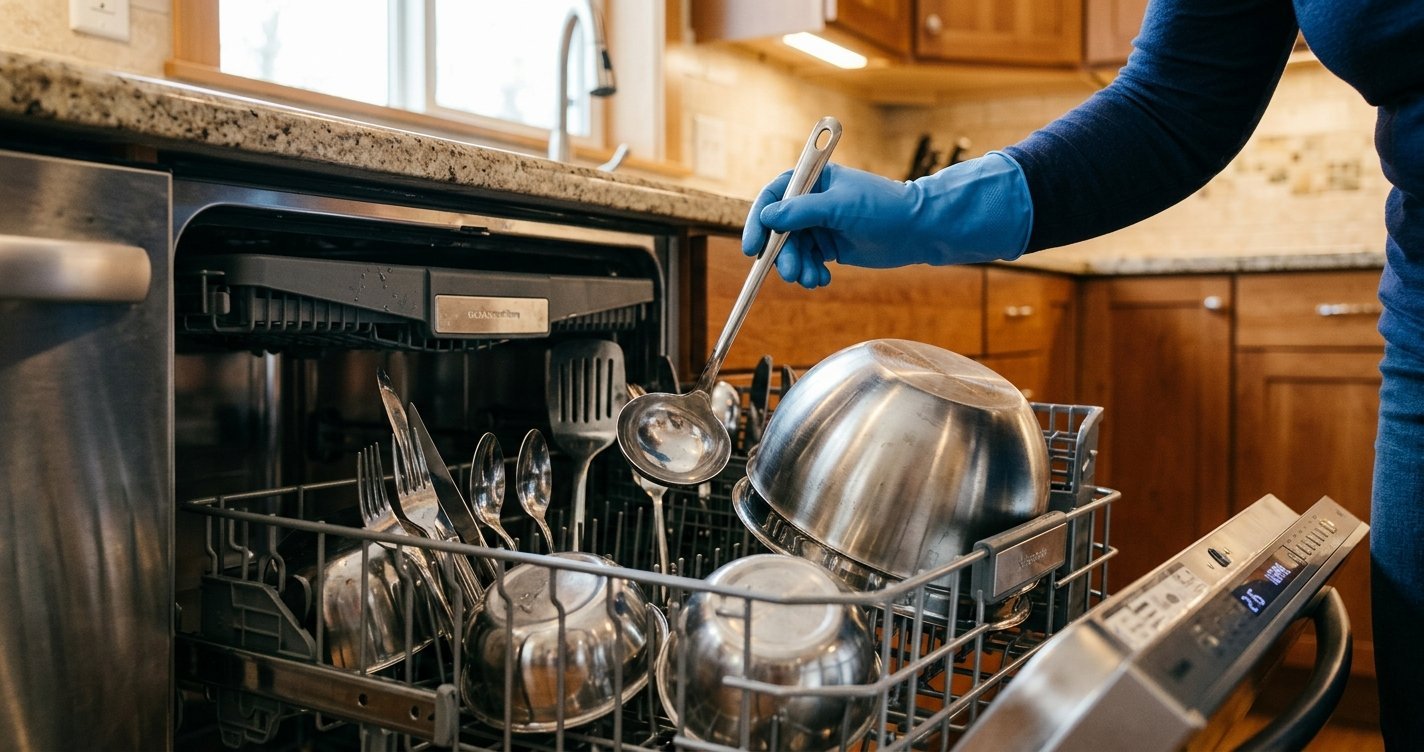
Yes, but with precautions. Dishwashers are safe for stainless steel as long as you:
- Avoid mixing it with silverware, aluminum, or copper items (chemical reaction risk)
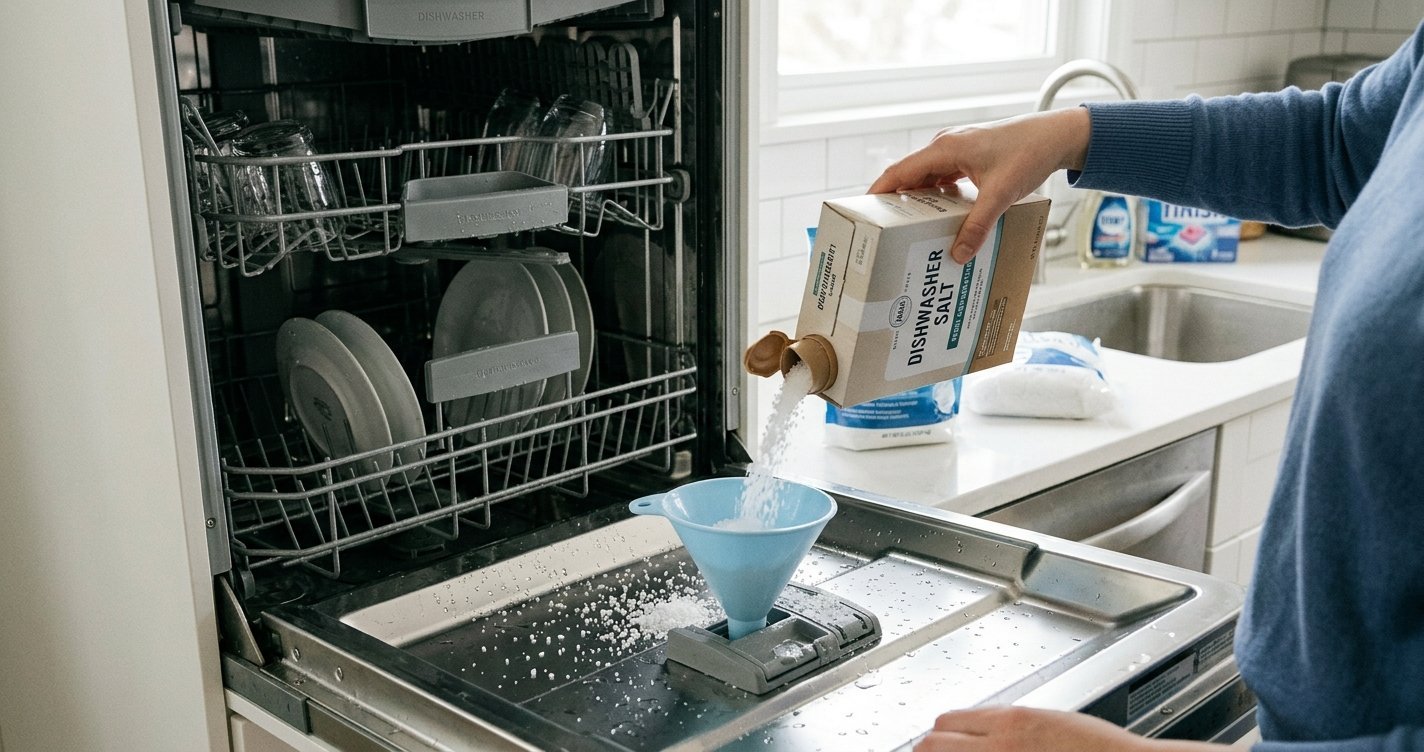
- Use a rinse aid to prevent water spots
- Avoid dishwasher tablets with high chlorine content
- Unload cutlery promptly instead of letting it sit in a damp basket
Dishwashers are safe if you separate metals, use rinse aid, and dry cutlery promptly after the cycle ends.
What Should You Avoid When Cleaning Stainless Steel?
- Steel wool or abrasive scrubbers — these scratch the surface and create micro-grooves where stains collect
- Bleach or chlorine-based cleaners — these accelerate corrosion and pitting
- Letting cutlery air-dry — this is the #1 cause of water spots
- Soaking for extended periods — prolonged moisture exposure increases rust risk
Avoid abrasive tools, bleach, and air-drying—these three habits cause most stainless steel damage.
How Often Should You Deep Clean Stainless Steel Cutlery?
For households using cutlery daily, a deep clean (vinegar soak or baking soda scrub) every 2–4 weeks keeps buildup from setting in. Everyday soap-and-water washing after each use is enough for routine maintenance.
FAQs
Does vinegar damage stainless steel?
No. White vinegar is safe on stainless steel when diluted with water and not left to soak for hours. It dissolves mineral deposits without harming the metal’s protective layer.
Can I use a magic eraser on stainless steel cutlery?
It’s best to avoid it. Magic erasers are mildly abrasive and can dull the finish or create fine scratches over repeated use. Stick to soft sponges or cloths instead.
Why does my stainless steel cutlery still look dull after washing?
Dullness is usually caused by soap residue or hard water minerals left behind from air-drying. Rinse thoroughly and dry immediately with a cloth to restore shine.
Is rust on stainless steel cutlery permanent?
Not usually. Surface rust is typically just a bonded contaminant, not true corrosion of the steel itself, and can be removed with a baking soda paste and gentle scrubbing.
Can I use ketchup to clean stainless steel?
Yes, in a pinch. The mild acidity in ketchup can help lift light tarnish, though vinegar or baking soda are more reliable and don’t leave a lingering smell.
How do I get rust off stainless steel forks and knives?
Apply a baking soda paste to the rust spot, let it sit for 5 minutes, then scrub gently with a soft brush. Rinse and dry fully afterward.
Is it safe to put stainless steel cutlery in the dishwasher every day?
Yes, as long as it’s not mixed with other metals like aluminum or silver, a rinse aid is used, and cutlery is unloaded promptly to prevent water spots.
Final Tip
The single habit that prevents most stainless steel stains isn’t a special product—it’s drying immediately after washing. Moisture left on the surface is what allows minerals, salts, and rust-causing elements to bond with the metal. Wash promptly, dry completely, and your cutlery will hold its shine for years.