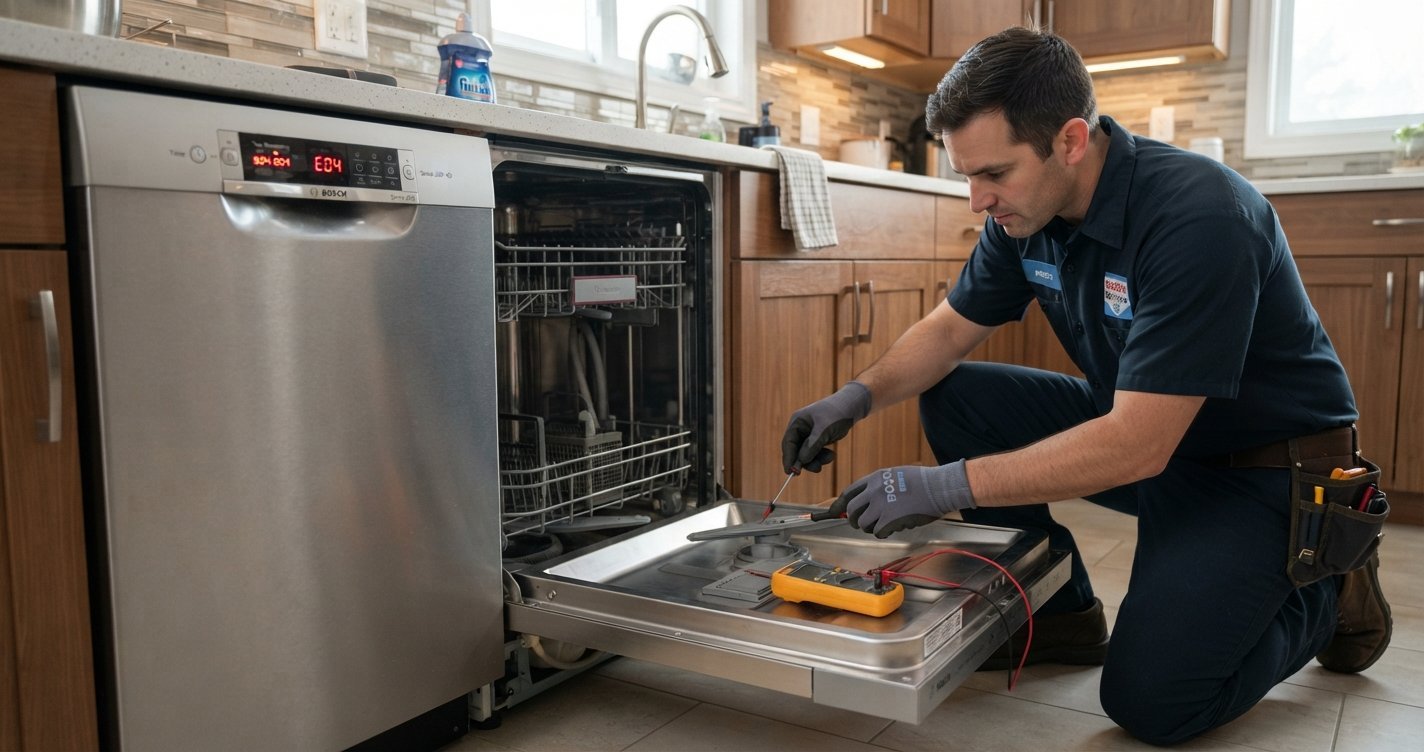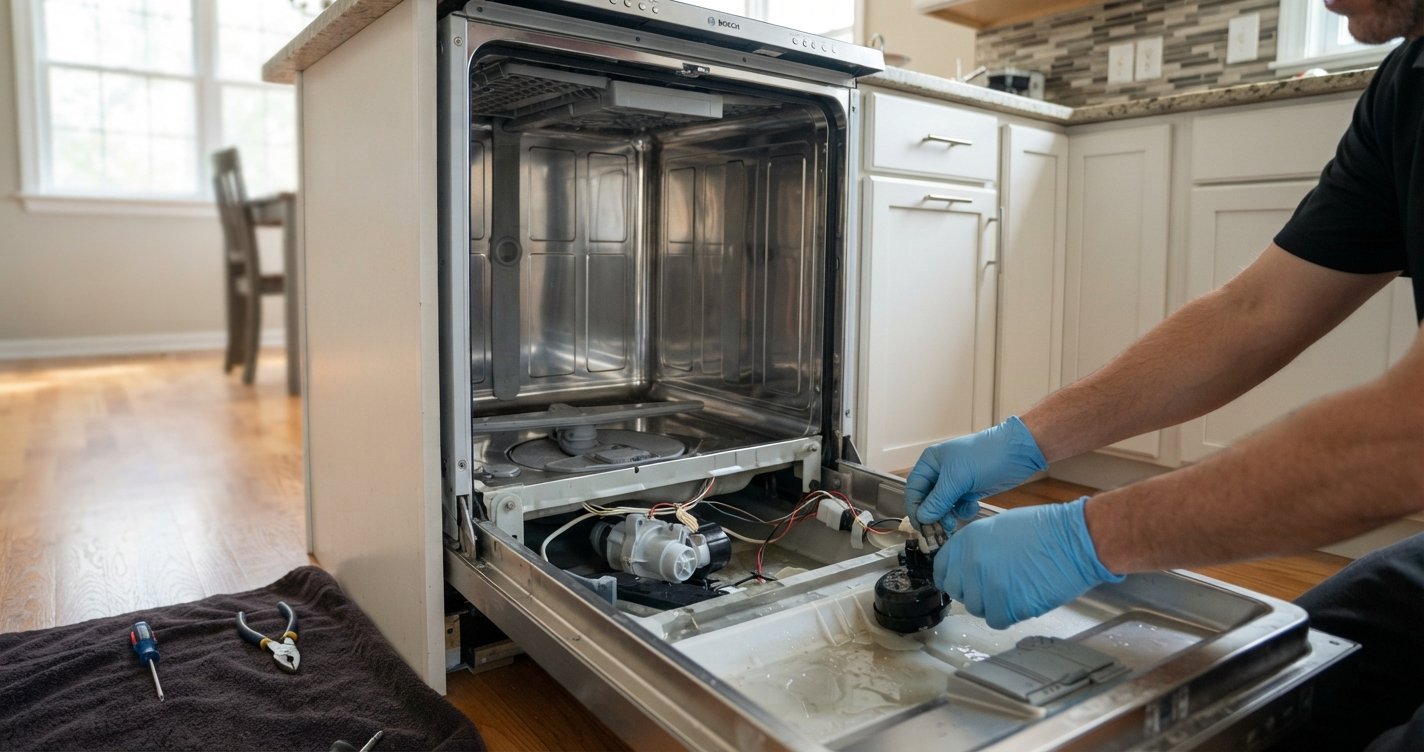
The most common reason a Bosch dishwasher leaks is a worn or mineral-clogged door gasket, which lets water seep out around the lower corners of the door during a cycle. Other frequent causes are a leaking water inlet valve, a worn spray arm bearing seal, a failed tub-to-sump seal, and loose hose connections. Bosch units also have a complication most brands don’t: the AquaStop flood-protection system can trigger an E15 error from condensation in the base pan, so what looks like a leak is sometimes just moisture. Start by checking the door gasket and the base pan, and only move to valve or seal replacement if those come up clean.
Read More: Bosch Dishwasher Stuck on Auto Mode: Causes & Fixes
Table of contents
Why Bosch Leaks Are Different: How AquaStop and E15 Work
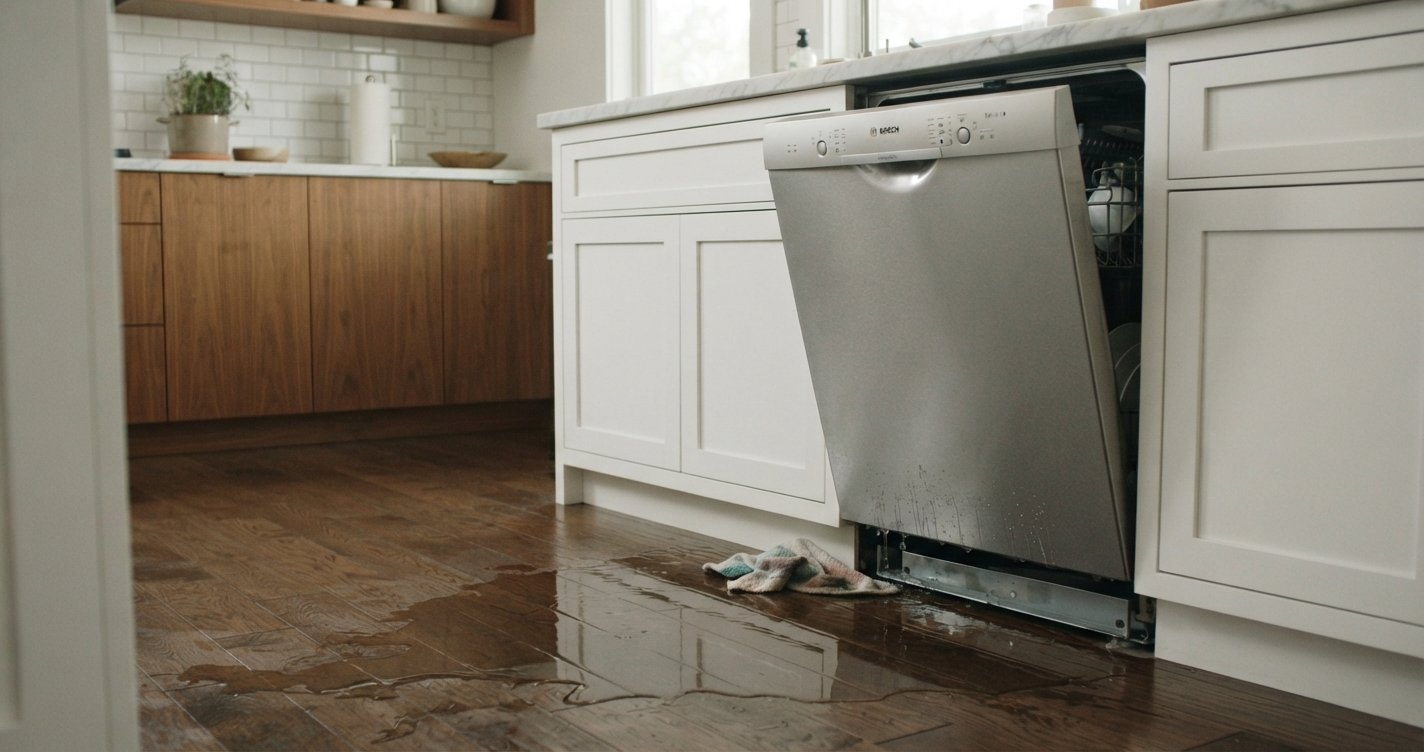
Bosch builds flood protection into its dishwashers, and it changes how you should diagnose a leak. According to EasyBear Appliance Repair’s Bosch leak diagnosis guide, even a small amount of water in the base pan trips the E15 error code, closes the AquaStop valve in the supply hose, and halts the machine.
That has two practical consequences:
- E15 means water was detected, not necessarily that a large leak exists. Technicians at the same company note that AquaStop can trigger from condensation building up on the base pan, especially in humid climates.
- A real leak usually shows up as E15 first. If the code returns within days of clearing it, a genuine leak (often the gasket) is the likelier explanation.
Safety note: standing water in the base pan can reach electrical components, so disconnect power before pulling the unit out or tilting it.
Quick Test: Condensation or a Real Leak?
- Turn off power at the breaker.
- Pull the dishwasher out slightly and check for puddles on the floor or a wet base pan.
- Tilt the unit back about 45 degrees for roughly 30 seconds so the base pan drains, then restore power. A technician’s tip from EasyBear is that if E15 clears, it was likely condensation rather than a leak.
- Run a cycle and watch the lower corners of the door for dripping.
If E15 comes back after the next cycle, move on to the causes below.
The Main Reasons Your Bosch Dishwasher Leaks
1. Worn, Hardened, or Mineral-Clogged Door Gasket (Most Common)
The gasket is the rubber seal around the tub opening. Over time it can tear, harden, or take on a permanent flattened shape where the door presses against it. Hard water makes this worse, since minerals embed in the rubber surface and create channels for water to seep through at the lower corners.
EasyBear’s gasket replacement guide says Bosch gaskets typically last 8 to 15 years depending on usage and water conditions, and their leak diagnosis article estimates the gasket is behind roughly 30% of the leak cases they see (that’s one repair company’s own figure, not an industry statistic).
What to check: open the door and inspect the entire perimeter for tears, hardening, or food debris stopping the seal from closing.
Typical cost: about $30 to $65 for an OEM gasket, with professional replacement commonly quoted at $100 to $180 and often taking 20 to 30 minutes.
2. Leaking Water Inlet Valve
The inlet valve lets water into the tub. When its internal seals or solenoid wear out, it can drip slowly even when the dishwasher isn’t running, and that water collects in the base pan and triggers E15. ServiceMag lists the inlet valve as the most common E15 source on their calls.
Clue: water in the base pan after the dishwasher has sat idle.
Fix: replacement. iFixit’s leak guide specifically advises against cleaning and reinstalling a clogged valve, since the part is likely to fail after disassembly. Match the part to your model: ServiceMag notes units with the AquaStop supply line use a different valve than standard models, and the two shouldn’t be swapped.
Typical cost: about $200 to $280 all-in for a professional replacement, per ServiceMag.
3. Worn Spray Arm Bearing Seal
EasyBear’s repair notes describe water spraying sideways past a worn spray arm bearing and running into the door gasket area, which can look like a door leak even when the gasket is fine.
Clue: leaking mid-cycle, but the gasket looks healthy.
4. Failed Tub-to-Sump Seal or Cracked Sump
A failed seal between the tub and sump lets water drip directly into the base pan without ever passing through the door. This is one reason a leak can appear even with a perfect gasket.
Clue: water in the base pan with no sign of seepage at the door.
Fix: usually a technician job, since it involves tilting or removing the unit.
5. AquaStop Hose Problems
The AquaStop supply hose is a sealed unit containing both the shutoff valve and a sensor. According to EasyBear’s own diagnostic notes, if it has tripped, the whole hose has to be replaced because it can’t be reset.
Clue: the hose connector shows signs of leaking or the system has already shut off the water.
6. Loose Hose Clamps and Connections
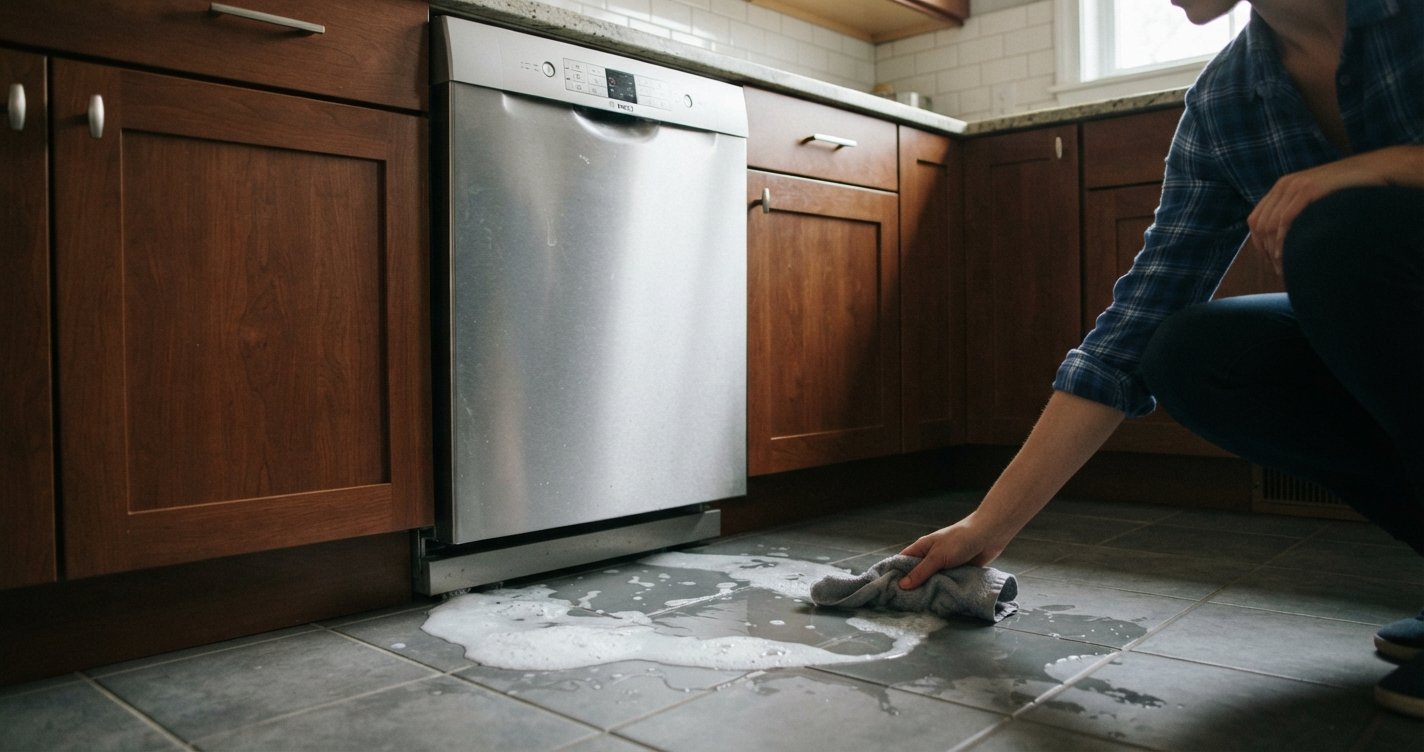
Inspect every hose clamp and connection under the unit for drips. Loose clamps on the inlet or drain hose are a simple fix and worth ruling out before ordering parts.
7. Door Hinges and Door Alignment
iFixit’s guide points out that if water leaks from the door and the seal looks fine, the hinges are the next thing to check. Hinges that sag or a heavy custom door panel can pull the door slightly away from the gasket.
8. Residual Water After a New Installation
EasyBear notes that a brand-new unit can trigger E15 from residual shipping water, so a first-week E15 isn’t always a defect.
Which Cause Is It? A Symptom Guide
| What you notice | Most likely cause |
| Drips at the lower corners of the door during a cycle | Worn or mineral-clogged door gasket |
| Water in the base pan while the dishwasher is idle | Leaking inlet valve |
| E15 that clears after draining the pan and doesn’t return | Condensation false trigger |
| E15 that returns within days | Gasket, inlet valve, or sump seal leak |
| Water in the pan but none at the door | Tub-to-sump seal or sump housing |
| Leak plus a visibly damaged or kinked supply hose | AquaStop hose or hose clamps |
Should You Fix It Yourself or Call a Technician?
Reasonable DIY: draining the base pan, cleaning the gasket, tightening hose clamps, and replacing a door gasket (it’s a snap-in part, though fitting it evenly takes patience).
Call a technician if:
- E15 keeps returning after you’ve replaced the gasket.
- You suspect the inlet valve, AquaStop hose, or a sump/tub seal.
- The unit has to be removed from the cabinet or tilted onto its back.
- You see water near wiring or any electrical components.
Repair costs for E15-related leaks are often quoted between $100 and $350 depending on the cause, and a relatively new Bosch may still be under warranty, so check coverage before paying for parts.
How to Prevent Bosch Dishwasher Leaks
- Run a monthly cleaning cycle with a dishwasher cleaner to dissolve detergent and mineral buildup on the gasket and inside the wash system.
- Wipe the gasket occasionally and clear out food debris so the door seals fully.
- Descale periodically if you have hard water.
- Check the hoses and clamps under the unit once or twice a year.
- Don’t ignore E15. Clearing it repeatedly without finding the cause risks real water damage to your floor and cabinets.
Frequently Asked Questions
Why is my Bosch dishwasher leaking from the bottom of the door?
The most likely cause is a worn, hardened, or mineral-clogged door gasket letting water seep out at the lower corners. A worn spray arm bearing seal or sagging door hinges can produce the same symptom, so inspect the gasket first and then those parts.
What does E15 mean on a Bosch dishwasher?
E15 is Bosch’s anti-flood error. It means the system detected water in the base pan and shut off the water supply. It can reflect a real leak or just condensation, so drain the pan and see whether the code returns.
Can a Bosch dishwasher leak without any error code?
Yes. A slow or small leak may not trigger E15 right away, especially if the water escapes through the door rather than collecting in the base pan. Look for puddles or dripping at the door corners during a cycle.
Is it safe to run my Bosch dishwasher if it’s leaking?
It’s better not to. Standing water in the base pan can reach electrical components, and a leak can damage your floor and cabinets. Stop using it until you find the source.
How much does it cost to fix a leaking Bosch dishwasher?
It depends on the part. A door gasket is about $30 to $65 for the part and $100 to $180 with professional installation, while an inlet valve replacement runs about $200 to $280 all-in, according to repair services. Overall, E15-related repairs are commonly quoted between $100 and $350.
How long does a Bosch dishwasher door gasket last?
Typically 8 to 15 years, depending on usage and water conditions. Hard water and infrequent cleaning shorten that.
Can I reset E15 myself?
Yes. After disconnecting power, drain the base pan (tilting the unit back about 45 degrees helps), then restore power. If E15 returns, there is an actual leak to find.
Can I clean and reuse a clogged water inlet valve?
iFixit advises against it, since the valve is likely to fail after disassembly. Replacing it is the more reliable fix.
Conclusion
A leaking Bosch dishwasher is usually a diagnosable problem, not a dead machine. Start with the cheapest and most common suspects: confirm whether the E15 alert is just condensation in the base pan, then check the door gasket for wear, hardening, and mineral buildup. If the gasket is fine, work through the inlet valve, spray arm bearing seal, hose clamps, and tub-to-sump seal. If the repair involves pulling the unit out, the AquaStop hose, or the sump, it’s time to call a technician. Whatever you find, don’t keep resetting E15 and running cycles, since the code is there to protect your floors and the dishwasher’s electronics.