Table of contents
Braiser vs Dutch Oven: Essential Differences
Choosing between a braiser and a Dutch oven depends on what you cook most often. Both are heavy-duty cookware that retain heat exceptionally well, but each is designed for different cooking styles.
If you frequently make stews, soups, and bread, a Dutch oven is usually the better choice. If you cook braised meats, shallow sauces, and one-pan meals, a braiser offers better performance.
Read More: Wok vs Frying Pan: Key Differences & Best Uses
Braiser vs Dutch Oven: Quick Comparison
| Feature | Braiser | Dutch Oven |
| Shape | Wide and shallow | Tall and deep |
| Depth | Low sides | High sides |
| Best For | Braising, searing, and casseroles | Soups, stews, bread, boiling |
| Liquid Capacity | Moderate | High |
| Surface Area | Large | Smaller |
| Evaporation | Faster | Slower |
| Oven Safe | Yes | Yes |
| Stovetop Use | Yes | Yes |
| Weight | Slightly lighter | Heavier |
| Everyday Versatility | Good | Excellent |
What Is a Braiser?
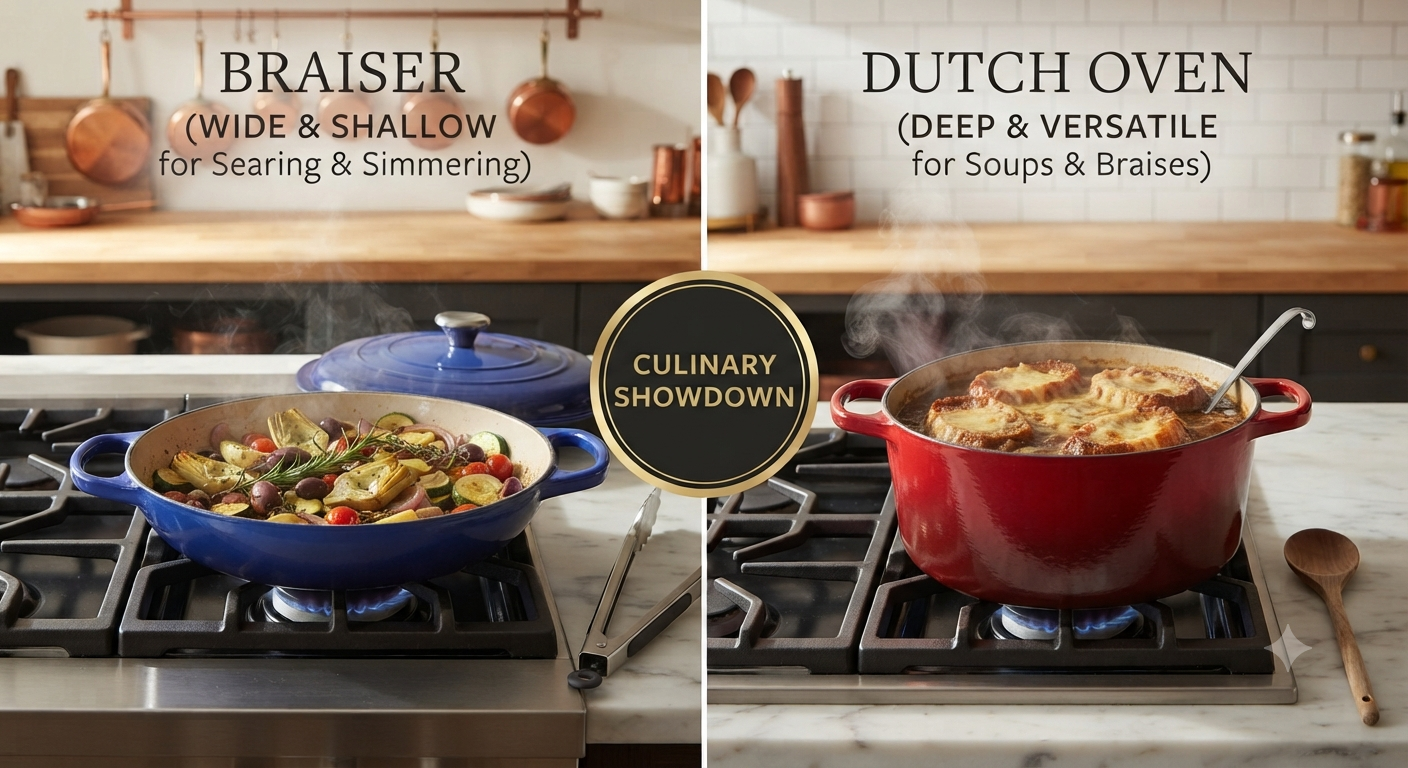
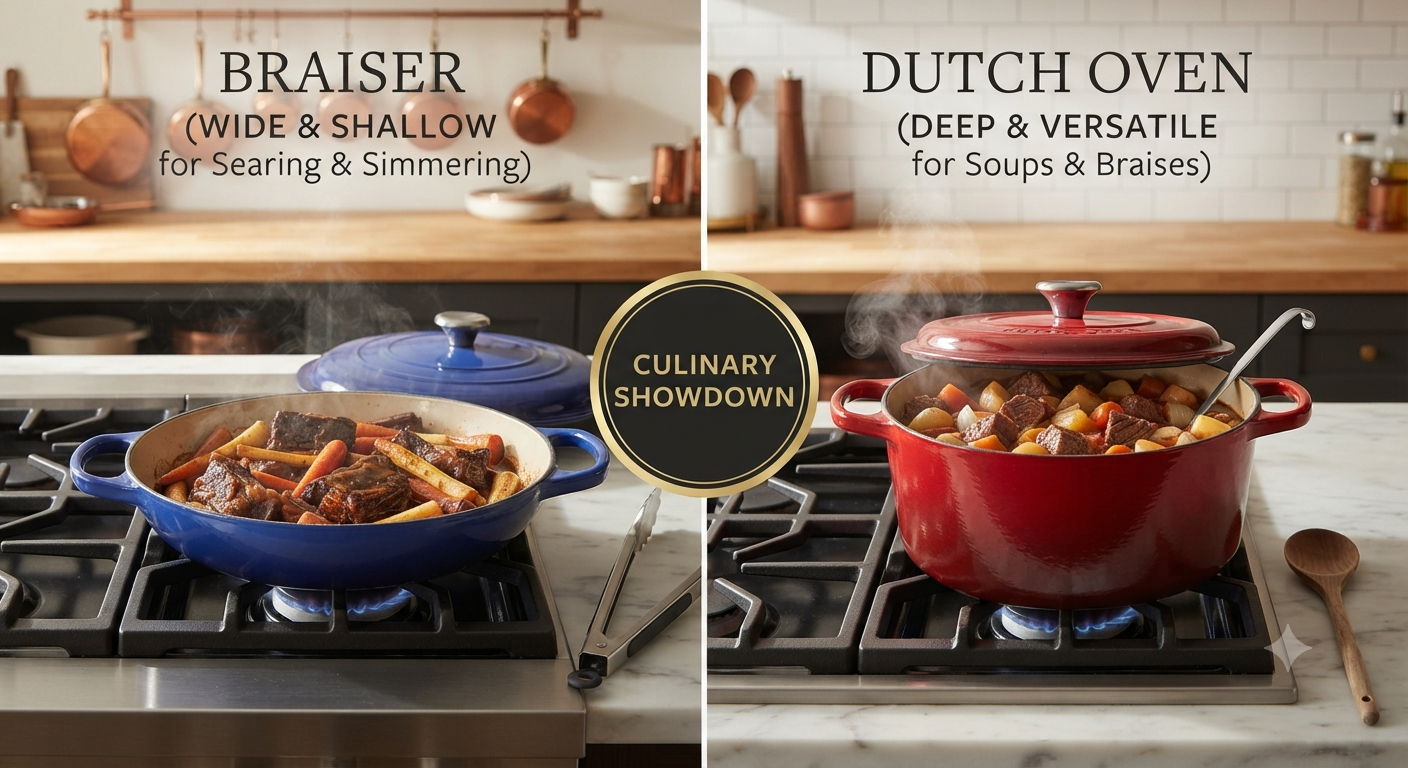
A braiser is a wide, shallow, heavy pot with a tight-fitting lid. Its larger cooking surface allows more food to brown evenly before slow cooking.
Best Uses
- Braised short ribs
- Chicken thighs
- Pork chops
- Shakshuka
- Risotto
- One-pan pasta
- Vegetable dishes
- Casseroles
Pros
- Excellent browning
- Easy to turn food
- Faster liquid reduction
- Perfect for serving at the table
Cons
- Holds less liquid
- Not ideal for deep frying
- Limited for soups
What Is a Dutch Oven?
A Dutch oven is a deep, heavy pot with thick walls and a heavy lid designed to trap moisture and heat.
It excels at long cooking times.
Best Uses
- Beef stew
- Chili
- Soups
- Bread baking
- Pasta sauce
- Pot roast
- Beans
- Stocks
Pros
- Extremely versatile
- Large capacity
- Excellent moisture retention
- Great heat distribution
Cons
- Heavier
- Smaller browning surface
- Can be bulky to store
Braiser vs Dutch Oven: Key Differences
| Category | Braiser | Dutch Oven |
| Shape | Wide | Deep |
| Cooking Style | Braise then reduce | Simmer slowly |
| Browning | Better | Good |
| Soup Making | Fair | Excellent |
| Bread Baking | Limited | Excellent |
| Roasting | Very Good | Excellent |
| Storage | Easier | Bulkier |
| Serving | Attractive for the table | More functional |
Which Is Better for Braising?
A braiser is better because the wider base browns more meat at once and encourages better sauce reduction.
Which Is Better for Soup?
A Dutch oven is better because its deep sides hold more liquid and reduce evaporation.
Which Is Better for Bread?
A Dutch oven is the clear winner because it traps steam, creating a crisp crust and soft interior.
Which Is Better for Searing?
A braiser performs better thanks to its larger cooking surface.
Which Is Better for Everyday Cooking?
A Dutch oven is more versatile because it handles soups, pasta, roasting, bread baking, braising, and stews in one pot.
Braiser vs Dutch Oven for Different Foods
| Food | Better Choice |
| Pot Roast | Dutch Oven |
| Short Ribs | Braiser |
| Beef Stew | Dutch Oven |
| Soup | Dutch Oven |
| Chili | Dutch Oven |
| Bread | Dutch Oven |
| Risotto | Braiser |
| Chicken Thighs | Braiser |
| Pasta Bake | Braiser |
| Curry | Dutch Oven |
Can a Braiser Replace a Dutch Oven?
Sometimes.
A braiser can cook many of the same dishes, but it cannot hold as much liquid, making it less suitable for soups, stocks, and large stews.
Can a Dutch Oven Replace a Braiser?
Yes.
A Dutch oven can braise meat successfully, although it offers less browning space than a braiser.
Braiser vs Dutch Oven: Pros and Cons
| Braiser Pros | Dutch Oven Pros |
| Better browning | More versatile |
| Large cooking surface | Larger capacity |
| Faster sauce reduction | Better moisture retention |
| Easier serving | Excellent for bread |
| Braiser Cons | Dutch Oven Cons |
| Less liquid capacity | Heavier |
| Not ideal for soups | Smaller browning area |
| Limited bread baking | Takes more storage space |
Who Should Buy a Braiser?
Choose a braiser if you:
- Cook braised meats regularly
- Love one-pan dinners
- Make casseroles often
- Prefer faster sauce reduction
- Entertain guests with table-ready cookware
Who Should Buy a Dutch Oven?
Choose a Dutch oven if you:
- Make soups often
- Bake artisan bread
- Cook stews
- Prepare large family meals
- Want one versatile pot
Braiser vs Dutch Oven Buying Guide
| Need | Best Choice |
| Best Overall | Dutch Oven |
| Best for Braising | Braiser |
| Best for Soups | Dutch Oven |
| Best for Bread | Dutch Oven |
| Best for Searing | Braiser |
| Best for Beginners | Dutch Oven |
| Best Value | Dutch Oven |
| Best for One-Pan Meals | Braiser |
Frequently Asked Questions
Is a braiser the same as a Dutch oven?
No.
A braiser is wider and shallower, while a Dutch oven is deeper and designed for holding more liquid.
Can you bake bread in a braiser?
Yes, but a Dutch oven produces better results because it traps steam more effectively.
Which is better for a pot roast?
A Dutch oven.
Its deep walls keep the meat submerged in cooking liquid for tender results.
Can you fry in a Dutch oven?
Yes.
Its deep sides reduce oil splatter and make it ideal for deep frying.
Is a braiser worth buying?
Yes, if you frequently cook braised meats, shallow stews, casseroles, or skillet-style meals.
Which cookware lasts longer?
Both.
High-quality enameled cast-iron braisers and Dutch ovens can last for decades with proper care.
Final Tip
If you can only buy one piece of cookware, choose a Dutch oven. Its deep design makes it the most versatile option for soups, stews, bread, sauces, braises, roasting, and everyday meals.
If you already own a Dutch oven and often cook braised meats, casseroles, or recipes that benefit from a wide cooking surface, adding a braiser is an excellent upgrade.