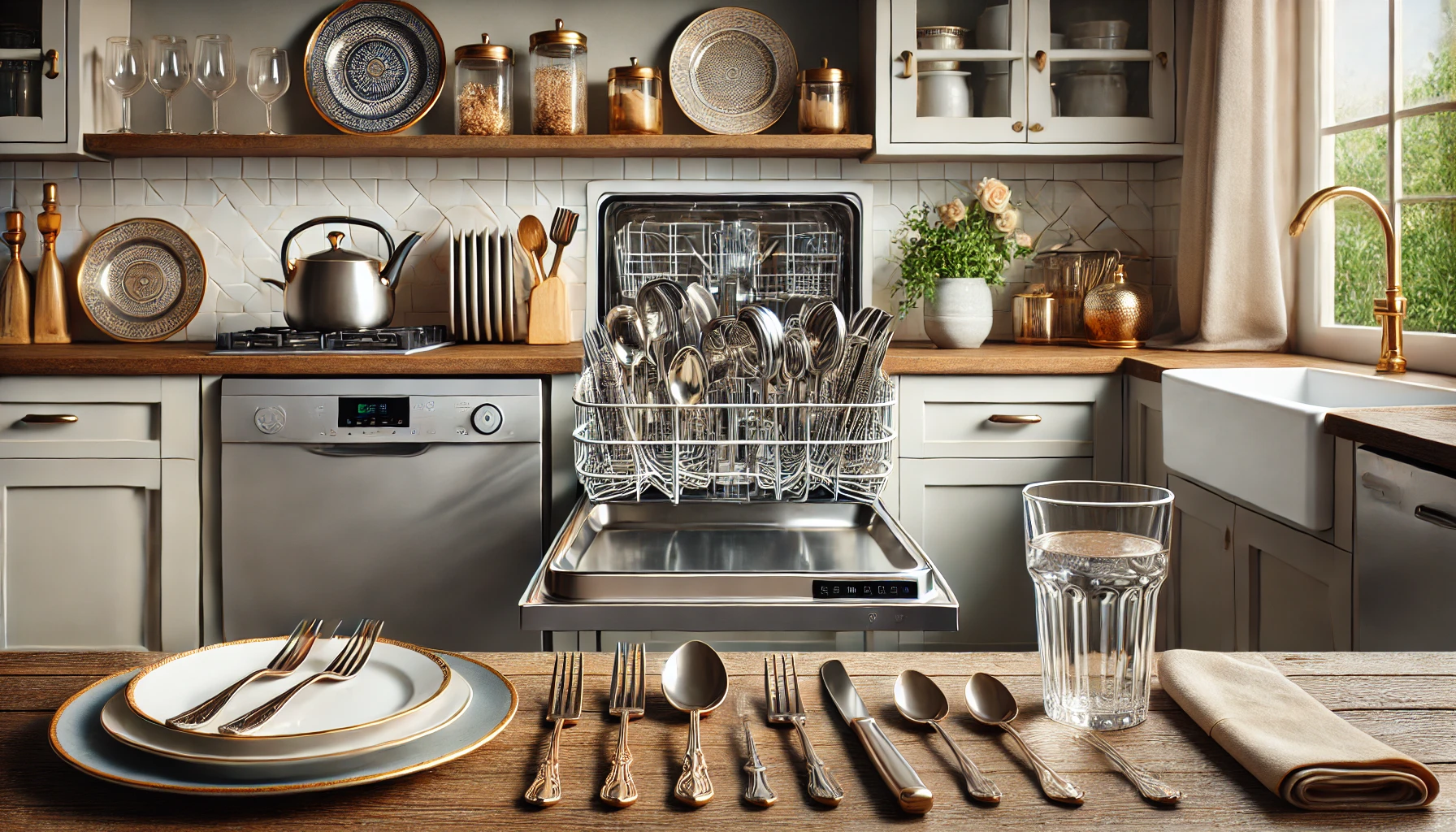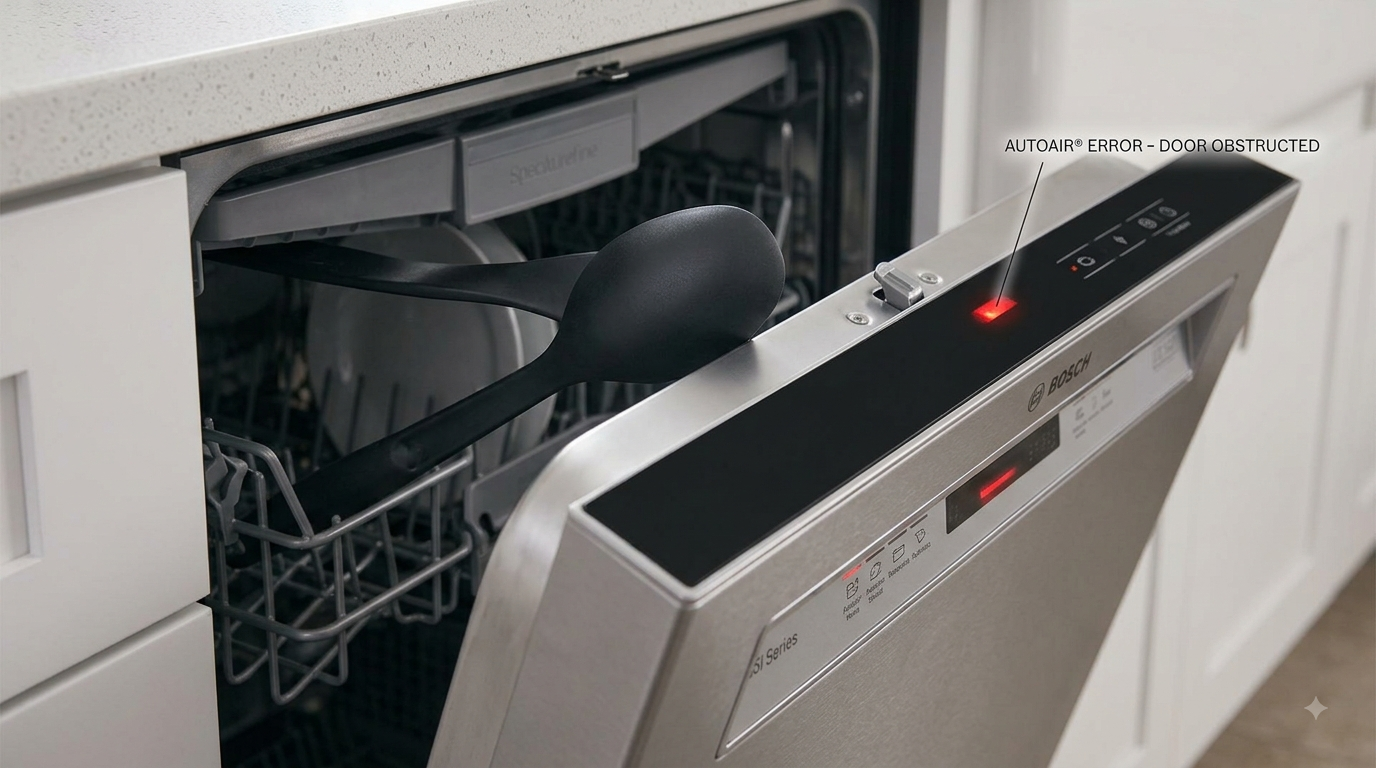
Can Dishwashers and Flatware Go Together?
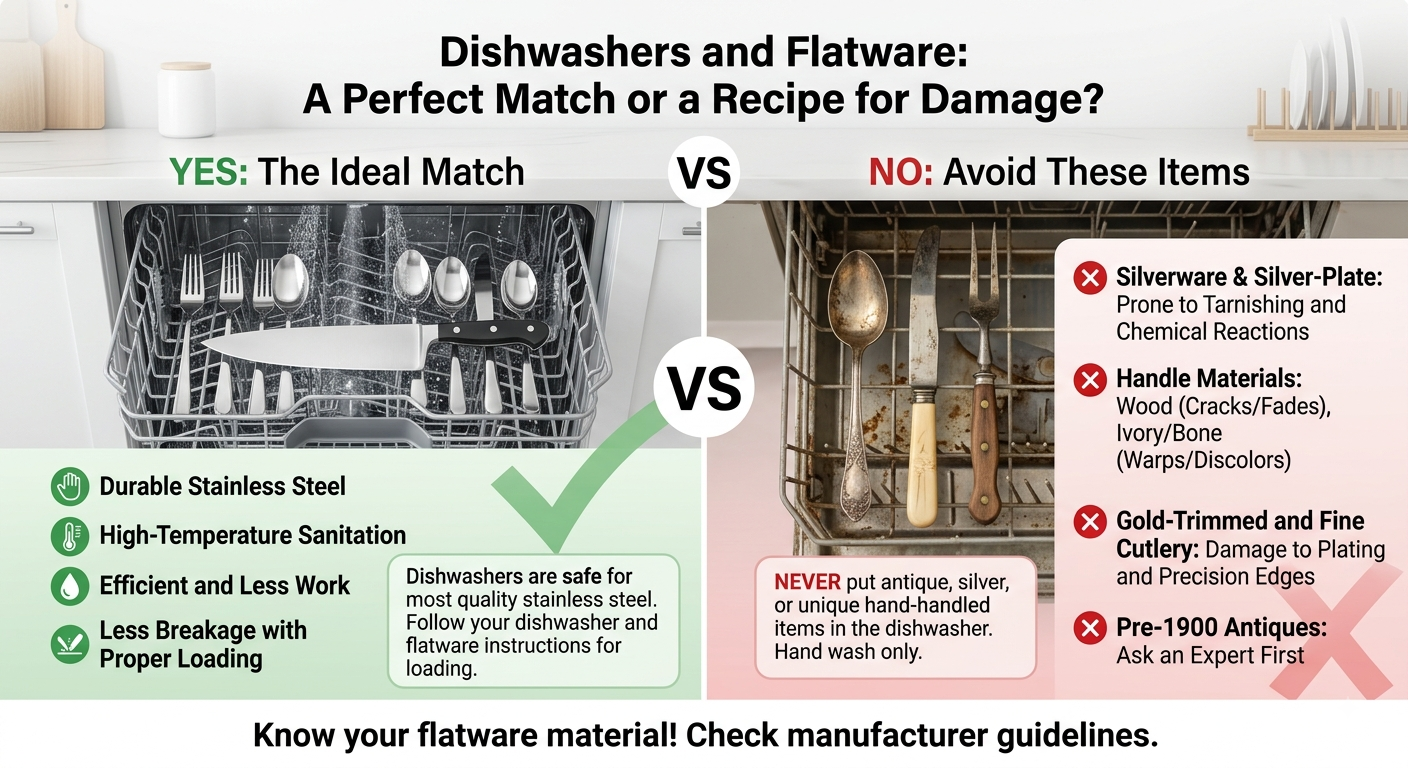
Yes, for the flatware most people own. Everyday stainless steel flatware is fully dishwasher-safe and designed for it. Sterling silver and silver-plated flatware can also go in the dishwasher, but with real restrictions — they must never touch stainless steel or any other metal, should run on a normal or delicate cycle (not high-heat sanitizing), and need a detergent without citrus, lemon, or phosphates. Hollow-handled knives, pearl or bone-handled pieces, and glued or weighted items should always be hand-washed.
The rest of this guide breaks down exactly which flatware works, which needs precautions, and why mixing metals causes the dark marks people usually blame on “bad detergent.”
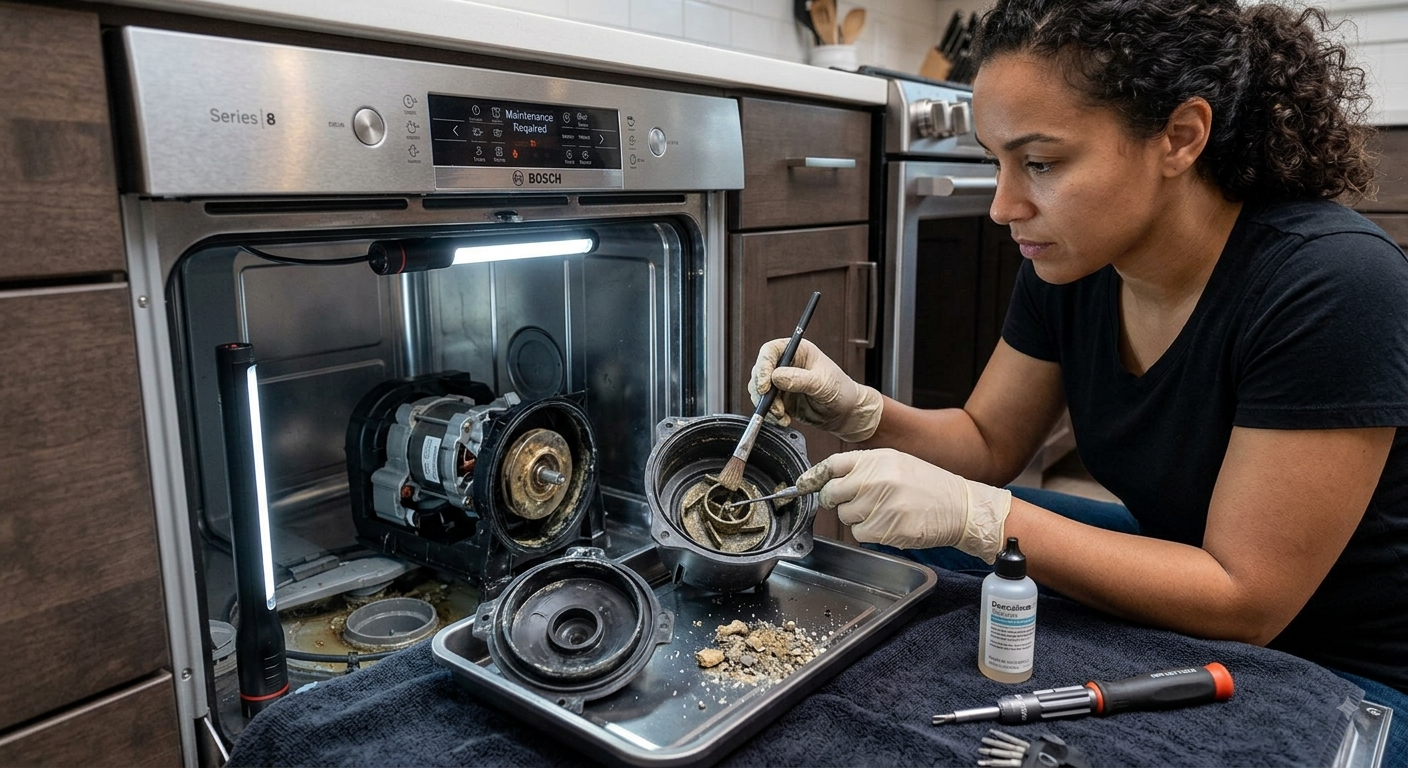
Read More: How to Clean and Fix Your Bosch Dishwasher Pump Easily
Is Stainless Steel Flatware Dishwasher-Safe?
Yes — this is the easy case. Standard stainless steel flatware (the kind most households use daily) is built to withstand dishwasher heat, detergent, and cycles with no special handling. It resists rust and doesn’t react with the other metal components of the machine or with mixed loads.
A few small habits still help it last and look better longer:
- Rinse off acidic foods (salad dressing, tomato sauce, citrus) if it’ll sit in the dishwasher for a day or more before running
- Avoid leaving flatware wet in the closed dishwasher for long periods, which can eventually cause pitting or spotting on lower-quality stainless
- Don’t overload the utensil basket — pieces packed too tightly won’t get properly cleaned or rinsed
Can You Put Silver or Silver-Plated Flatware in the Dishwasher?
Yes, but with more care than stainless steel. Sterling silver and silver-plated flatware can go through the dishwasher safely as long as you follow a few non-negotiable rules:
- Never let silver touch another metal. This is the single most important rule. When silver and stainless steel touch during a wash cycle, an electrolytic reaction occurs and leaves dark, blotchy marks on the silver. These marks are not tarnish and can’t be removed with silver polish — professional refinishing is often the only fix.
- Use a separate compartment. You can wash silver in the same load as stainless steel, just never in the same section of the utensil basket, and make sure pieces can’t shift and touch during the cycle.
- Rinse food off immediately. Don’t let food sit on silver before washing — it can cause pitting or corrosion over time.
- Skip high-heat and sanitizing cycles. Use the normal or delicate setting instead.
- Choose the right detergent. Avoid anything containing citrus, lemon, or phosphates, which can dull or damage silver’s finish. A phosphate-free, citrus-free formula is the safer choice.
Silverware vs. Sterling Silver: They’re Not the Same Thing
“Silverware” is often used loosely, but there’s a real difference:
- Sterling silver is a solid precious-metal flatware — more delicate and more expensive to replace.
- Silver-plated flatware is typically brass, nickel, or stainless steel with a thin silver coating — the plating can wear thin over repeated washes.
Both need the same core precaution: keep them away from contact with other metals in the dishwasher.
What Flatware Should Never Go in the Dishwasher?
A few categories should always be hand-washed, regardless of the metal:
- Hollow-handled knives (common in older or antique sets) — the handle is often filled with resin or cement that can soften or melt under dishwasher heat
- Pearl, bone, wood, or other decorative handles — these materials can crack, discolor, or come loose from heat and moisture
- Glued or weighted pieces — the adhesive can fail in the dishwasher, separating the handle from the blade or bowl
- Very old or antique silver you want to preserve long-term, even if technically dishwasher-safe, since gentle hand care lowers the risk of wear over decades of use
Why Does Mixing Metals Cause Discoloration?
This is the part most people get wrong — they assume tarnish is caused by detergent, when it’s usually a metal-on-metal reaction. Tarnish, technically, happens when sulfur in the air reacts with silver over time and produces a dull, yellowish, or grey coating. The dark spotting people see after a dishwasher cycle is a different, faster reaction: when silver and another metal like stainless steel physically touch in the presence of water and electrolytes (detergent, minerals), it triggers an electrolytic reaction that leaves marks silver polish can’t fully remove.
The fix isn’t skipping the dishwasher — it’s keeping the metals separated in different compartments or baskets during the wash.
How to Load Flatware Correctly
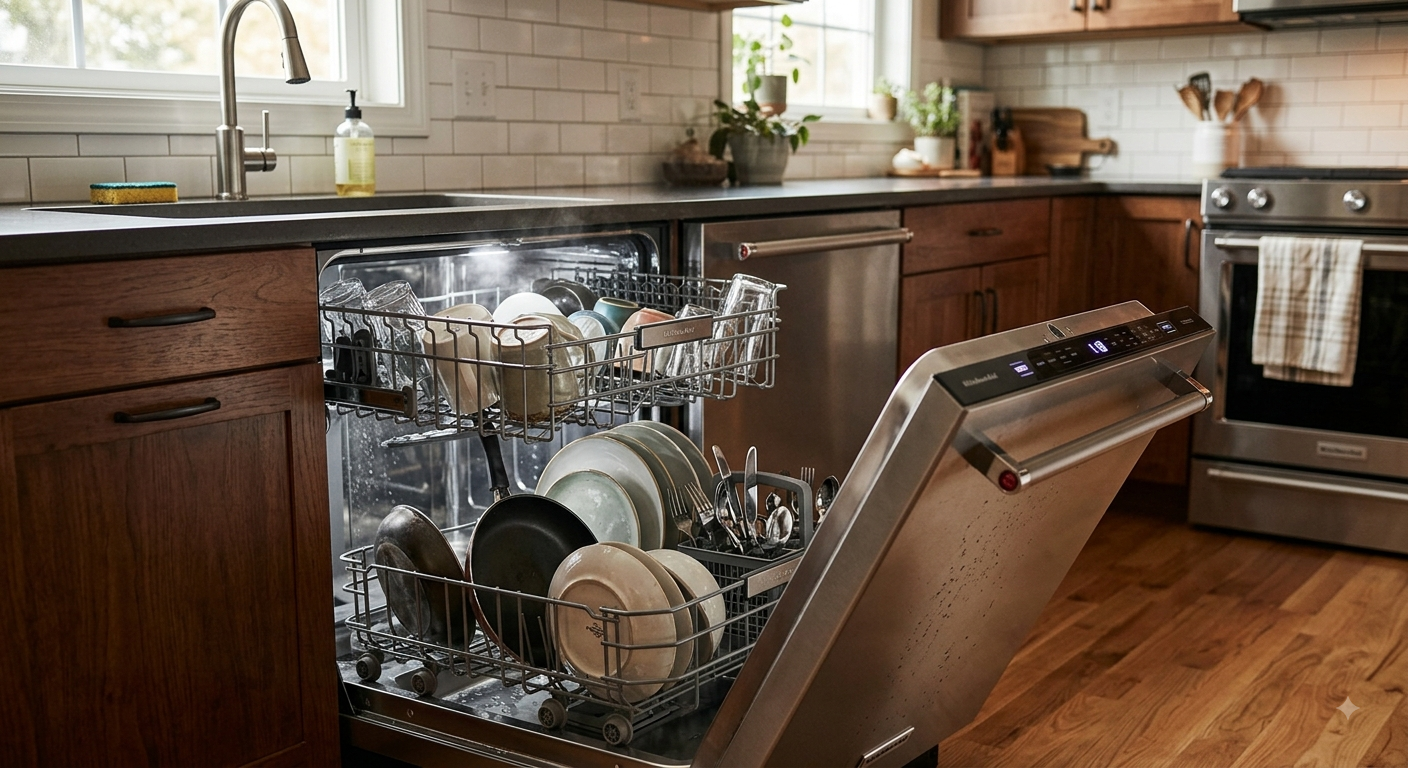
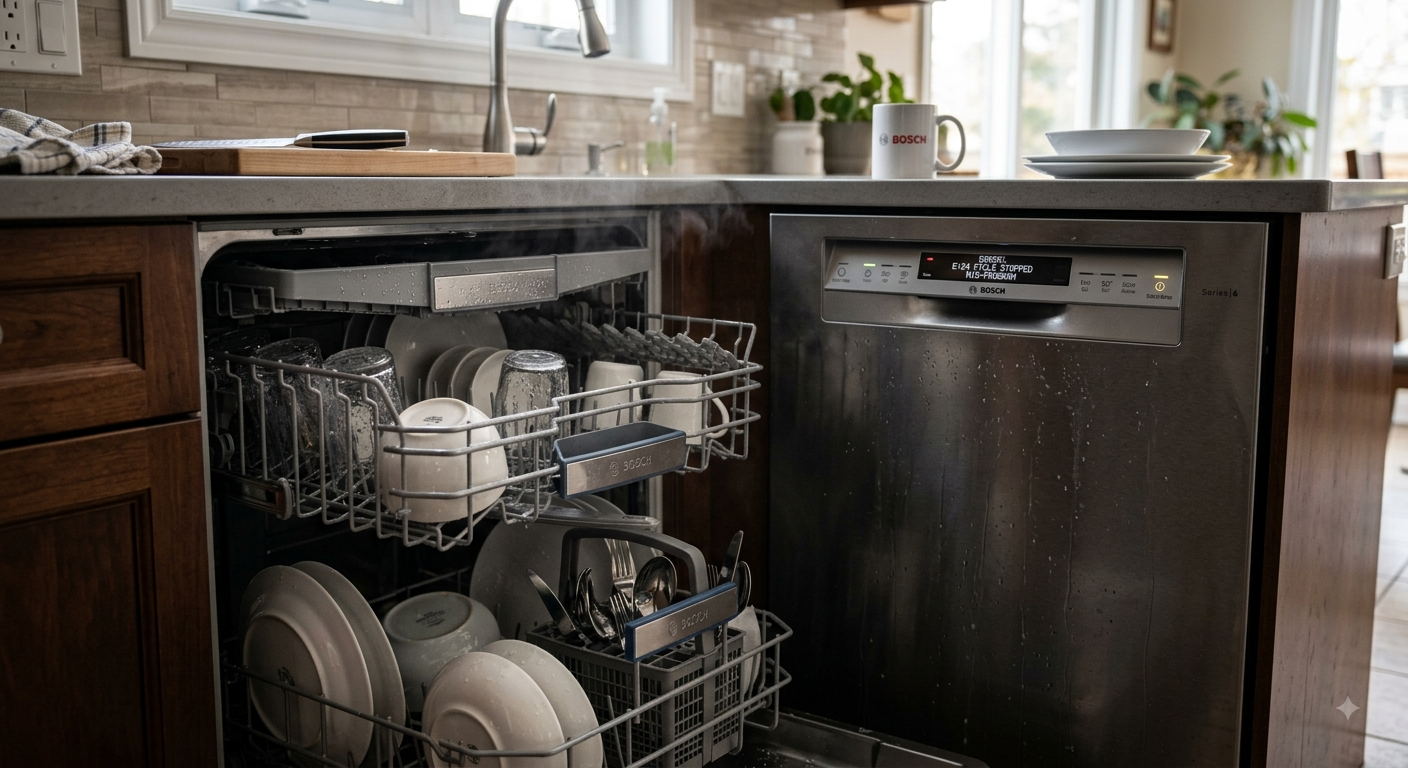
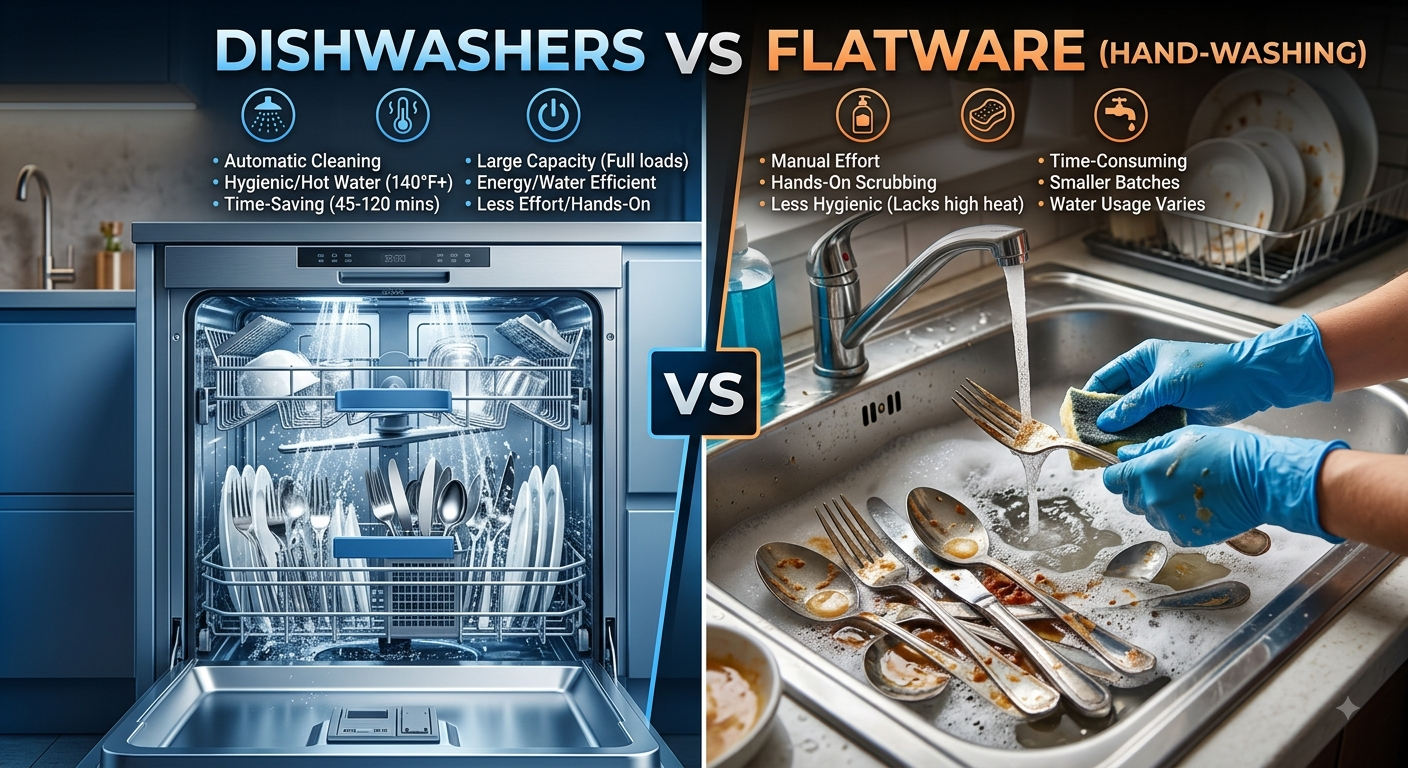
Good loading habits protect both your flatware and your dishwasher’s spray arms:
- Sharp end down. Knives and forks should point downward in the basket to prevent injury when unloading — spoons are often loaded handle-down instead so the bowls face up and rinse clean.
- Mix orientation within each slot. Alternating some handles up and some down (where your basket design allows) prevents pieces from “nesting” together and blocking water from reaching all surfaces.
- Don’t overcrowd. Utensils packed too tightly shield each other from spray and often come out with film or residue.
- Keep silver isolated. If you’re washing silver alongside stainless, use a separate basket compartment or a dedicated silverware caddy so nothing touches.
Frequently Asked Questions
Can you put silverware and stainless steel in the dishwasher together?
Yes, but only if they’re kept in separate compartments and never allowed to touch. Direct contact between silver and stainless steel causes an electrolytic reaction that leaves permanent dark marks.
Does the dishwasher ruin silver flatware?
Not on its own. Damage typically comes from letting silver touch other metals, using high-heat sanitizing cycles, or using a citrus-based detergent — not from the dishwasher itself.
Is stainless steel flatware always dishwasher-safe?
Yes, everyday stainless steel flatware is designed to handle regular dishwasher use without special precautions.
Why did my flatware come out with black or grey spots?
This is almost always caused by silver contacting another metal during the wash — commonly stainless steel — rather than a detergent problem.
Can you wash antique silverware in the dishwasher?
Generally yes, as long as it’s solid silver (not hollow-handled) and kept separated from other metals. Many owners still choose to hand-wash antique pieces to minimize long-term wear.
What detergent is safe for silver flatware?
Look for a phosphate-free formula without citrus or lemon additives, and pair it with a normal or delicate cycle rather than a high-heat setting.
The Bottom Line
Dishwashers and flatware absolutely go together — the real question is which flatware and under what conditions. Stainless steel needs no special treatment. Silver and silver-plated pieces are dishwasher-safe too, but only if you keep them from touching other metals, skip high-heat cycles, and use a citrus-free detergent. Hollow-handled, decorative, or glued pieces are the only real exceptions — those still belong at the sink.