Table of contents
Frying Pan vs Sauté Pan
If you’re deciding between a frying pan and a sauté pan, the best choice depends on how you cook. A frying pan is ideal for quick, high-heat cooking, while a sauté pan is better for recipes that need more liquid, stirring, or one-pan meals.
Read More: Copper vs Carbon Steel: Key Differences Explained
Frying Pan vs Sauté Pan: Quick Comparison
| Feature | Frying Pan | Sauté Pan |
| Side Shape | Sloped | Straight |
| Depth | Shallow | Deep |
| Cooking Style | Frying, searing | Sautéing, simmering, braising |
| Liquid Capacity | Low | High |
| Flipping Food | Excellent | Moderate |
| Prevents Spills | Fair | Excellent |
| Best For | Eggs, pancakes, steaks | Pasta dishes, chicken, and sauces |
| Weight | Lighter | Heavier |
| Lid | Sometimes included | Usually included |
| Versatility | Everyday frying | One-pan meals |
What Is a Frying Pan?
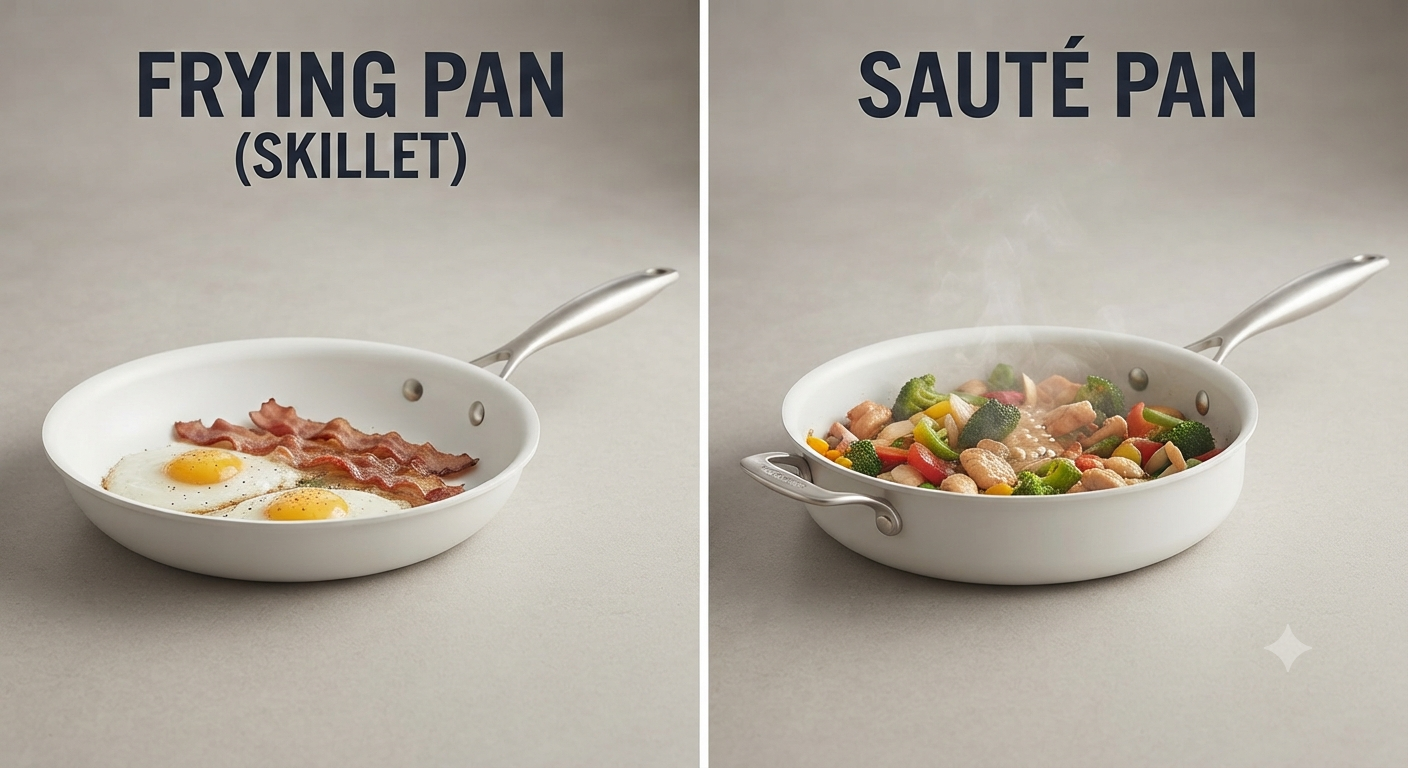
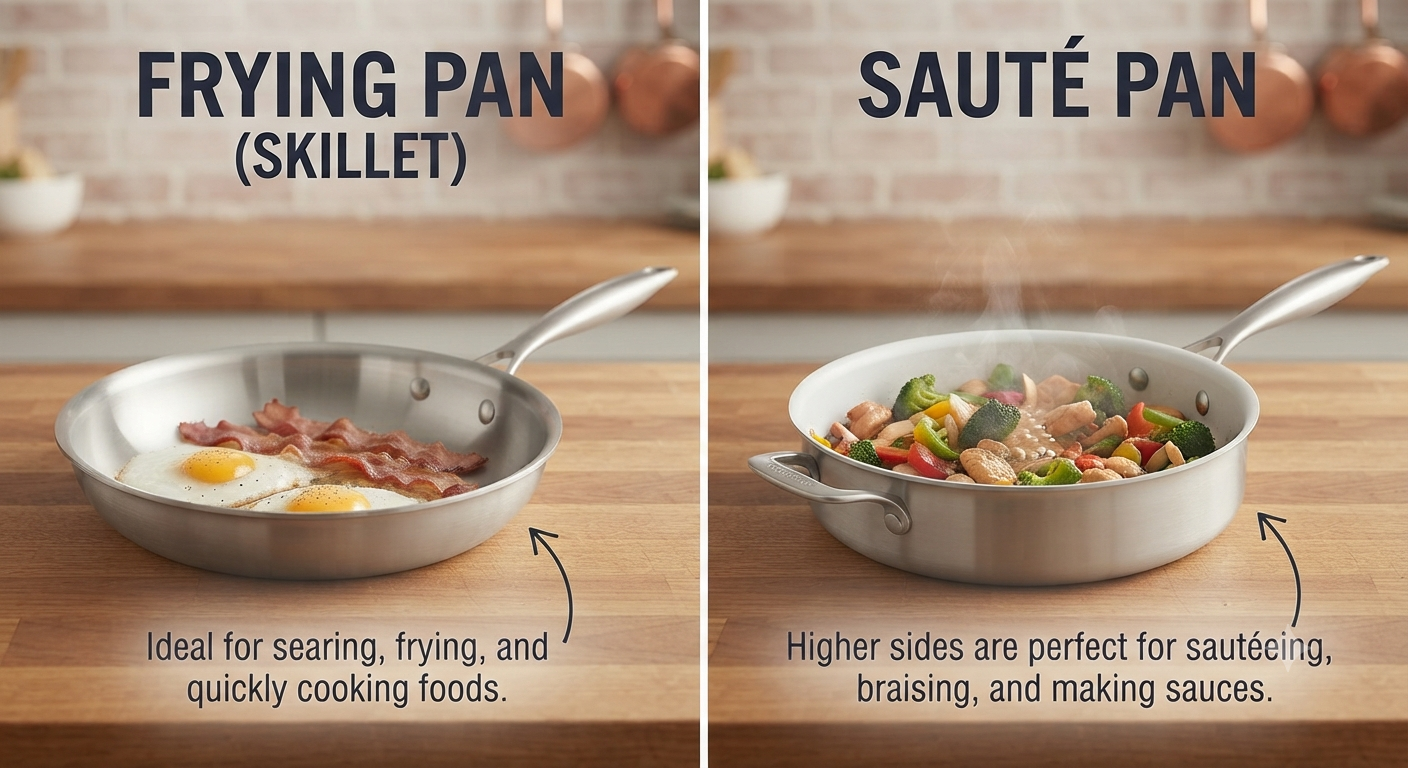
A frying pan, also called a skillet, has a wide cooking space with gently sloping sides.
It is designed for:
- Frying eggs
- Searing steaks
- Pancakes
- Stir-frying
- Crispy vegetables
- Burgers
The sloped edges allow moisture to escape quickly, helping food brown better.
Best Advantages
- Easy flipping
- Excellent browning
- Lightweight
- Fast heating
- Great for everyday cooking
Limitations
- Holds less liquid
- Easier to spill sauces
- Smaller cooking capacity
What Is a Sauté Pan?
A sauté pan has straight vertical sides and a larger cooking volume.
It is designed for:
- Sautéing vegetables
- Braising meat
- Cooking sauces
- Pasta dishes
- Risotto
- One-pan dinners
Straight sides reduce splashing and make stirring easier.
Best Advantages
- Holds more liquid
- Better for sauces
- Larger capacity
- Less mess
- More versatile for family meals
Limitations
- Heavier
- Harder to flip food
- Takes more storage space
Key Differences Between a Frying Pan and a Sauté Pan
| Difference | Frying Pan | Sauté Pan |
| Side Angle | Sloped | Straight |
| Food Capacity | Medium | High |
| Liquid Cooking | Limited | Excellent |
| Flipping | Easy | Less convenient |
| Heat Distribution | Excellent | Excellent |
| Sauce Making | Basic | Excellent |
| One-Pan Meals | Good | Outstanding |
| Weight | Light | Heavy |
Which Pan Is Better for Different Foods?
| Food | Best Pan |
| Eggs | Frying Pan |
| Pancakes | Frying Pan |
| Steak | Frying Pan |
| Fish | Frying Pan |
| Stir Fry | Frying Pan |
| Chicken with Sauce | Sauté Pan |
| Pasta | Sauté Pan |
| Risotto | Sauté Pan |
| Curry | Sauté Pan |
| Braised Meat | Sauté Pan |
When Should You Choose a Frying Pan?
Choose a frying pan if you:
- Cook breakfast daily
- Like crispy foods
- Flip food frequently
- Cook for one or two people
- Need a lightweight pan
It is the best all-purpose pan for fast cooking.
When Should You Choose a Sauté Pan?
Choose a sauté pan if you:
- Cook family meals
- Make sauces often
- Braise meats
- Prepare pasta dishes
- Prefer one-pan recipes
Its deeper design offers greater versatility for liquid-based cooking.
Pros and Cons
| Frying Pan Pros | Frying Pan Cons |
| Better browning | Less liquid capacity |
| Easy flipping | More splatter |
| Lightweight | Smaller cooking surface for large meals |
| Quick heating | Not ideal for braising |
| Sauté Pan Pros | Sauté Pan Cons |
| Large capacity | Heavier |
| Excellent for sauces | Harder to toss food |
| Less splashing | Requires more storage |
| Great for one-pan meals | Can take longer to heat |
Which Pan Is More Versatile?
For everyday frying, a frying pan is usually the better choice.
For recipes involving sauces, grains, pasta, or braising, a sauté pan is more versatile because it combines frying, simmering, and finishing in one piece of cookware.
If you can own only one pan and frequently cook complete meals, a sauté pan often offers greater flexibility.
Is a Sauté Pan the Same as a Frying Pan?
No.
Although both are used on the stovetop, their sidewalls make them perform differently.
A frying pan is optimized for high-heat cooking and flipping food, while a sauté pan is designed to hold ingredients and liquids without overflowing.
Can You Replace One with the Other?
Yes, for many recipes.
A frying pan can handle basic sautéing, while a sauté pan can fry foods effectively. However, each performs best for the tasks it was specifically designed to do.
Which Pan Should You Buy?
Choose a frying pan if you mostly cook:
- Eggs
- Burgers
- Fish
- Pancakes
- Steaks
- Vegetables
Choose a sauté pan if you often prepare:
- Pasta
- Sauces
- Braised meats
- Rice dishes
- Family meals
- One-pan dinners
Many home cooks benefit from owning both, as they complement each other rather than compete.
Frequently Asked Questions
Is a sauté pan better than a frying pan?
Not necessarily. A sauté pan is better for cooking with liquids and larger meals, while a frying pan is better for searing, browning, and flipping foods.
Choose a sauté pan for sauces and one-pan meals. Choose a frying pan for fast, high-heat cooking.
Can I fry food in a sauté pan?
Yes. A sauté pan can fry foods effectively, although its straight sides make flipping slightly less convenient than a frying pan.
Yes. A sauté pan works well for frying but is heavier and less suited to tossing food.
Why do sauté pans have straight sides?
Straight sides increase capacity, reduce splashing, and allow cooking with sauces and liquids without spilling.
Straight sides help contain food and liquids, making sauté pans ideal for simmering and braising.
Which pan is best for steak?
A frying pan is generally the better option because its sloped sides promote evaporation, helping develop a flavorful crust.
A frying pan is best for steak because it delivers excellent browning and easy turning.
Can a sauté pan replace a skillet?
For most recipes, yes. However, if you frequently cook foods that require flipping or fast evaporation, a skillet remains the better tool.
Yes, but a skillet performs better for high-heat searing and flipping.
Final Tip
The best choice isn’t about which pan is “better”—it’s about matching the pan to your cooking style. A frying pan excels at quick, dry-heat cooking, while a sauté pan shines in recipes that involve liquids, larger portions, or one-pan meals. If your budget allows, owning both provides the greatest flexibility and covers nearly every everyday cooking task.