Hard-Anodized vs Stainless Steel
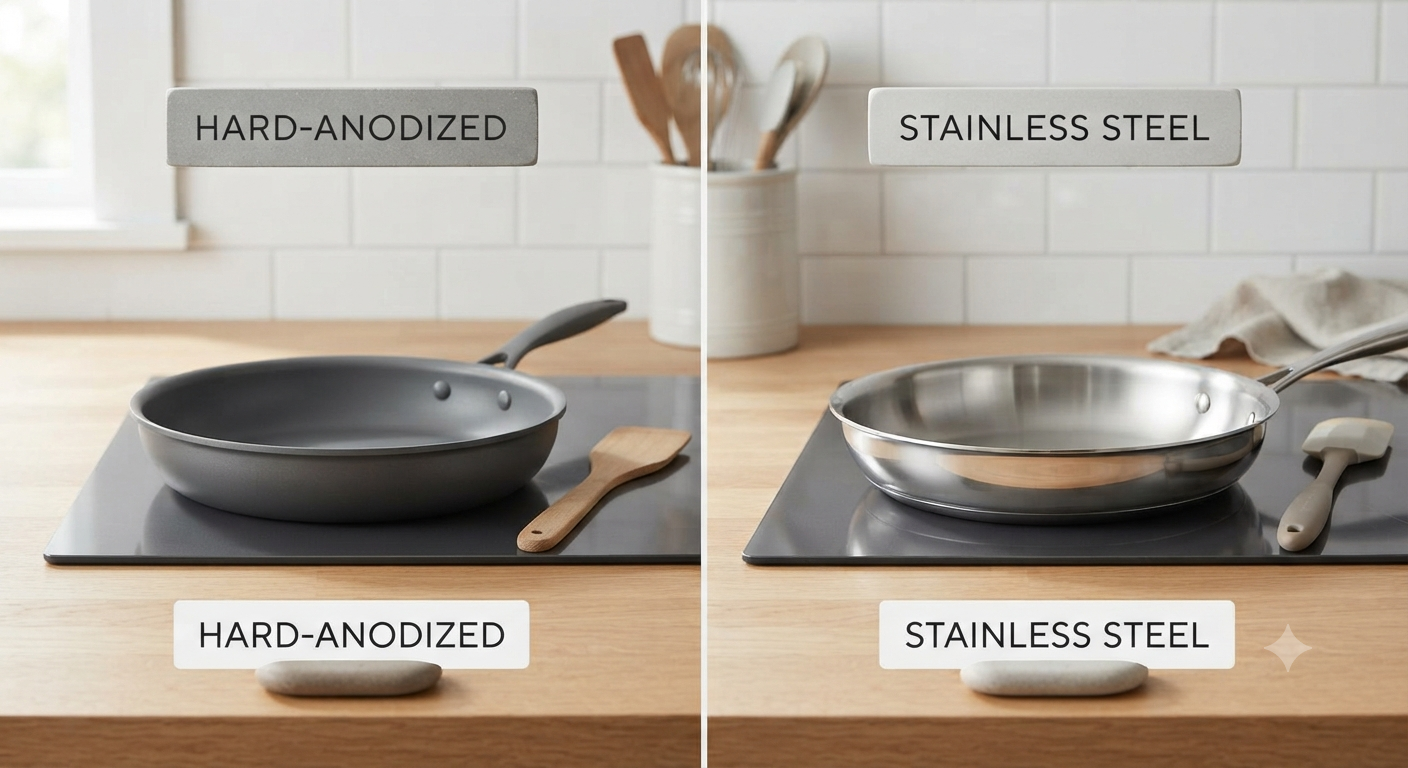
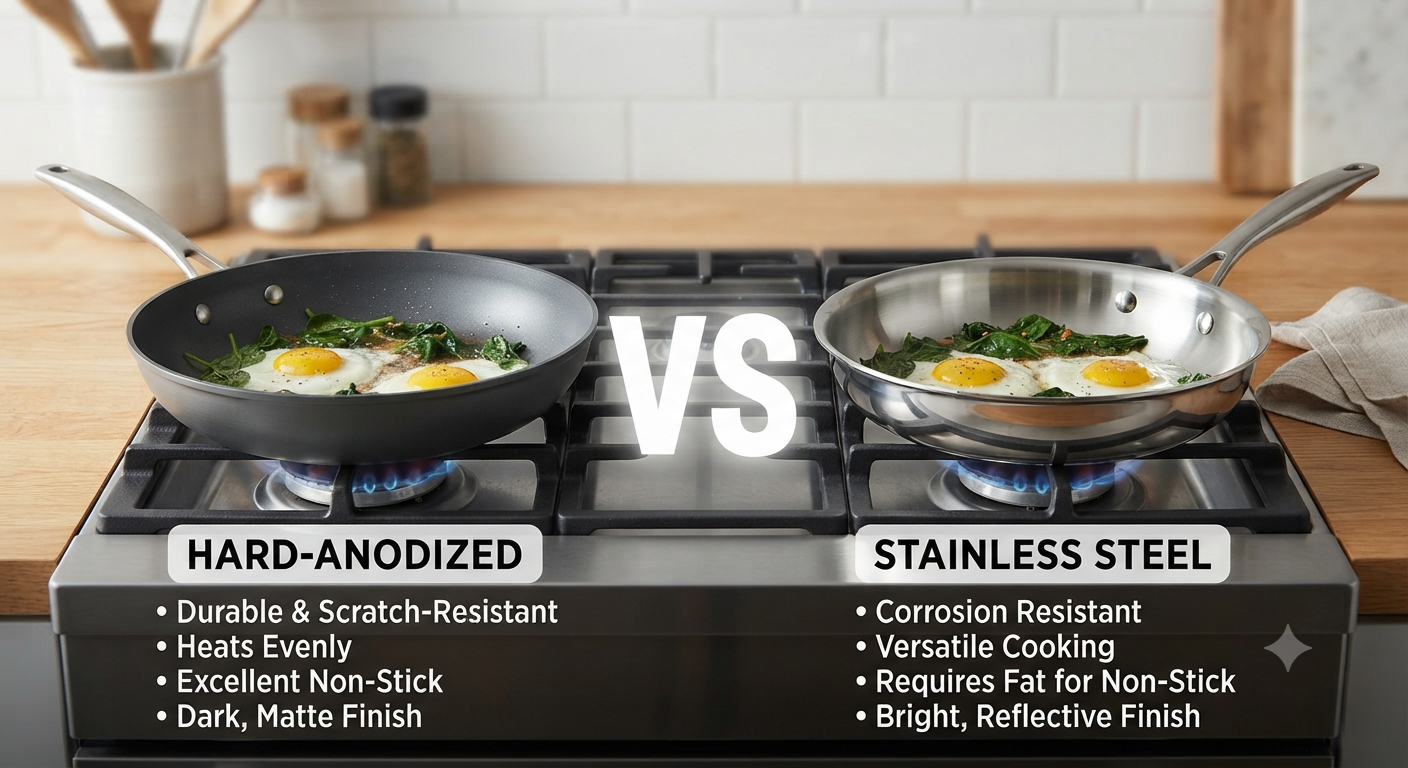
If you’re choosing between hard-anodized and stainless steel cookware, the right choice depends on your cooking style, maintenance preferences, and budget. Hard-anodized pans are non-stick and easy to use, while stainless steel offers superior durability and excellent browning for professional-style cooking.
Read More: Hard-Anodized vs Ceramic: Which Is Better?
Hard-Anodized vs Stainless Steel: Quick Comparison
| Feature | Hard-Anodized | Stainless Steel |
| Best For | Everyday cooking | Searing, browning, and professional cooking |
| Non-Stick | Yes (usually coated) | No |
| Durability | High | Excellent |
| Scratch Resistance | Good | Excellent |
| Metal Utensils | Usually not recommended | Safe |
| Oven Safe | Depends on the coating | Usually higher temperatures |
| Dishwasher Safe | Often not recommended | Usually yes |
| Maintenance | Easy | Moderate |
| Lifespan | 5–10 years | 20+ years |
| Price | Mid-range | Mid to premium |
What Is Hard-Anodized Cookware?
Hard-anodized cookware is made from aluminium that has undergone an electrochemical process, making it harder, more durable, and more resistant to corrosion. Most hard-anodized cookware also includes a non-stick coating for easier cooking and cleaning.
Best for:
- Low-oil cooking
- Beginners
- Everyday meals
- Easy cleanup
Hard-anodized cookware is lightweight, heats evenly, and is ideal for convenient everyday cooking.
What Is Stainless Steel Cookware?
Stainless steel cookware is made from iron, chromium, and nickel. High-quality versions often feature aluminium or copper cores for better heat distribution.
Best for:
- High-heat cooking
- Browning meat
- Deglazing sauces
- Long-term durability
Stainless steel cookware is extremely durable and ideal for high-heat cooking techniques.
Hard-Anodized vs Stainless Steel: Core Differences
| Category | Winner | Why |
| Ease of Use | Hard-Anodized | Naturally non-stick |
| Durability | Stainless Steel | Can last decades |
| High Heat | Stainless Steel | Handles very high temperatures |
| Cleaning | Hard-Anodized | Food releases easily |
| Professional Cooking | Stainless Steel | Better for searing |
| Weight | Hard-Anodized | Lighter |
| Longevity | Stainless Steel | Longer lifespan |
| Everyday Convenience | Hard-Anodized | Less maintenance |
Cooking Performance
Heat Distribution
Both materials perform well when built with quality construction.
- Hard-anodized heats quickly.
- Stainless steel retains heat better with a multi-ply base.
Both cook evenly, but premium stainless steel generally offers better heat retention.
Searing Performance
Stainless steel excels at creating a golden crust on meat.
Hard-anodized cookware is designed to reduce sticking rather than maximise browning.
Choose stainless steel for restaurant-quality searing.
Non-Stick Performance
Hard-anodized cookware usually includes a non-stick coating.
Stainless steel requires proper preheating and oil to minimise sticking.
Hard-anodized cookware is the better choice for non-stick cooking.
Durability Comparison
| Feature | Hard-Anodized | Stainless Steel |
| Rust Resistance | Excellent | Excellent |
| Warp Resistance | Good | Excellent |
| Dent Resistance | Good | Excellent |
| Scratch Resistance | Moderate | Excellent |
| Lifespan | 5–10 years | 20+ years |
Stainless steel is the most durable cookware material overall.
Which Is Easier to Clean?
Hard-anodized cookware requires gentle cleaning to protect the non-stick surface.
Stainless steel can handle scrubbing and tougher cleaning methods.
Hard-anodized is easier for daily cleaning, while stainless steel tolerates heavy-duty cleaning.
Is Hard-Anodized Cookware Safe?
Yes.
Modern hard-anodized cookware is considered safe when used according to the manufacturer’s instructions. The anodised surface is stable, and quality non-stick coatings are designed for normal cooking temperatures.
Yes, hard-anodized cookware is safe for everyday cooking.
Is Stainless Steel Safe?
Yes.
Food-grade stainless steel is one of the safest cookware materials available and contains no non-stick coating.
Yes, stainless steel is highly safe and widely used in home and professional kitchens.
Which Lasts Longer?
Stainless steel has the advantage.
Quality stainless steel cookware can last for decades with proper care, while non-stick coatings on hard-anodized cookware naturally wear over time.
Stainless steel typically lasts much longer.
Which Is Better for Beginners?
Hard-anodized cookware is easier to learn because food sticks less and cleanup is quicker.
Beginners usually find hard-anodized cookware easier to use.
Which Is Better for Professional Cooking?
Professional chefs often prefer stainless steel because it performs well at high temperatures and creates better browning.
Stainless steel is the preferred choice for professional cooking.
Pros and Cons
| Hard-Anodized Pros | Hard-Anodized Cons |
| Non-stick | Coating wears over time |
| Easy cleaning | Not ideal for very high heat |
| Lightweight | Metal utensils may damage coating |
| Even heating | Shorter lifespan |
| Stainless Steel Pros | Stainless Steel Cons |
| Extremely durable | Food may stick |
| Excellent for searing | Learning curve |
| High oven temperatures | More effort to clean |
| Long lifespan | Often more expensive |
Which Should You Buy?
Choose hard-anodized cookware if you:
- Want easy, everyday cooking.
- Prefer non-stick performance.
- Cook eggs, pancakes, or delicate foods.
- Want faster cleanup.
Choose stainless steel cookware if you:
- Want cookware that lasts for decades.
- Frequently sear meat.
- Cook at high temperatures.
- Prefer professional-level cooking performance.
Choose hard-anodized for convenience and stainless steel for durability and high-performance cooking.
Frequently Asked Questions
Which is better: hard-anodized or stainless steel?
Hard-anodized is better for everyday convenience, while stainless steel is better for durability and high-heat cooking.
Does hard-anodized cookware last longer than stainless steel?
No. Stainless steel generally lasts much longer.
Is stainless steel healthier than hard-anodized?
Both are considered safe when used correctly and purchased from reputable manufacturers.
Which is easier to clean?
Hard-anodized cookware is easier to clean because of its non-stick surface.
Can hard-anodized cookware go in the oven?
Many models are oven-safe, but always check the manufacturer’s temperature limits.
Which cookware is better for searing steak?
Stainless steel delivers superior browning and searing.
Is hard-anodized cookware worth buying?
Yes, especially if you prioritise easy cooking, non-stick performance, and simple maintenance.
Final Verdict
There is no single winner in the hard-anodized vs stainless steel debate.
- Choose hard-anodized for effortless everyday cooking, easy cleaning, and reliable non-stick performance.
- Choose stainless steel if you value long-term durability, high-heat performance, and restaurant-quality results.
Your best option depends on how you cook, how much maintenance you’re comfortable with, and how long you expect your cookware to last.