When choosing versatile cookware for your kitchen, one common question is whether to buy a Dutch oven or a stock pot. Both are excellent for preparing soups, stews, stocks, broths, pasta, beans, and other large-batch meals, but they are designed for different cooking styles.
While many people assume the only difference is the material, factors like shape, heat retention, weight, and cooking performance also play an important role. Understanding these differences will help you choose the right cookware—or decide whether both deserve a place in your kitchen.
Read More: Roasting Pan vs Dutch Oven: Key Differences Guide
Table of contents
What Is a Stock Pot?
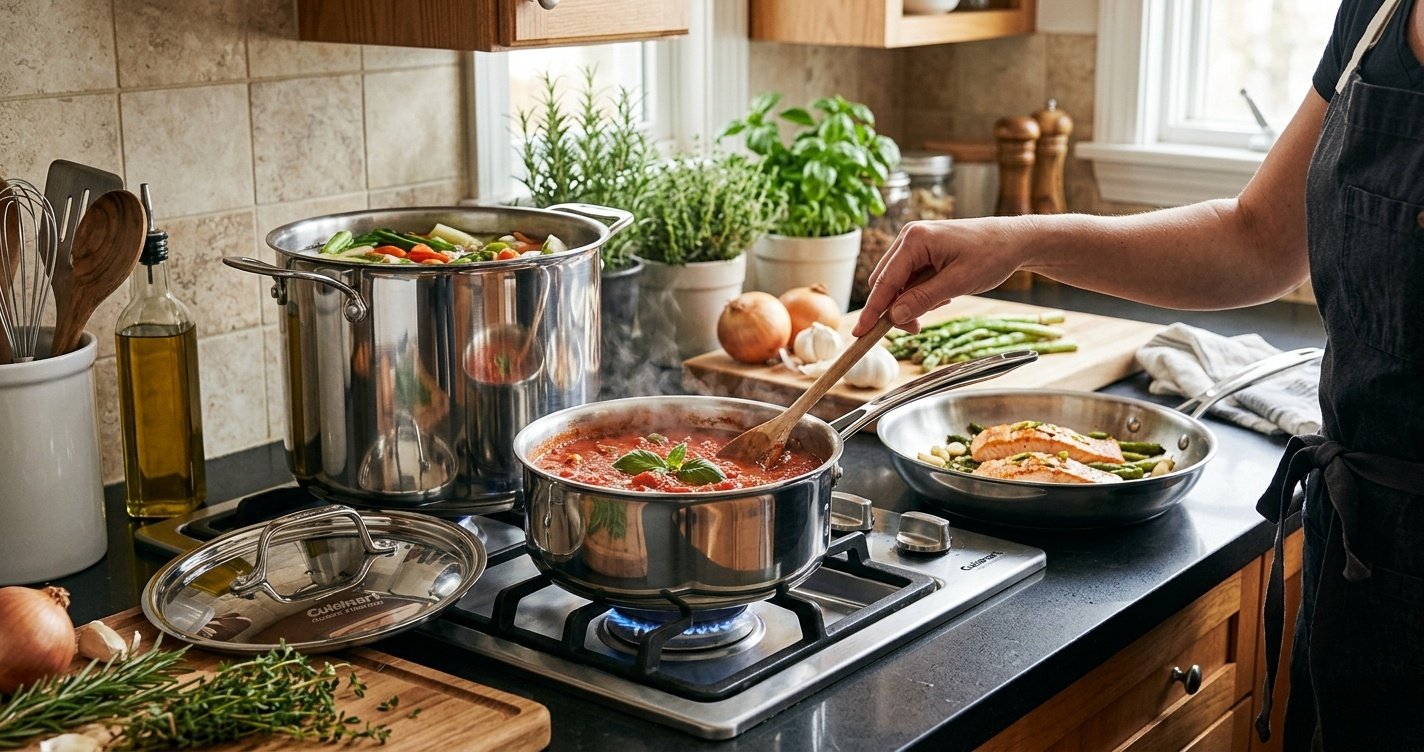
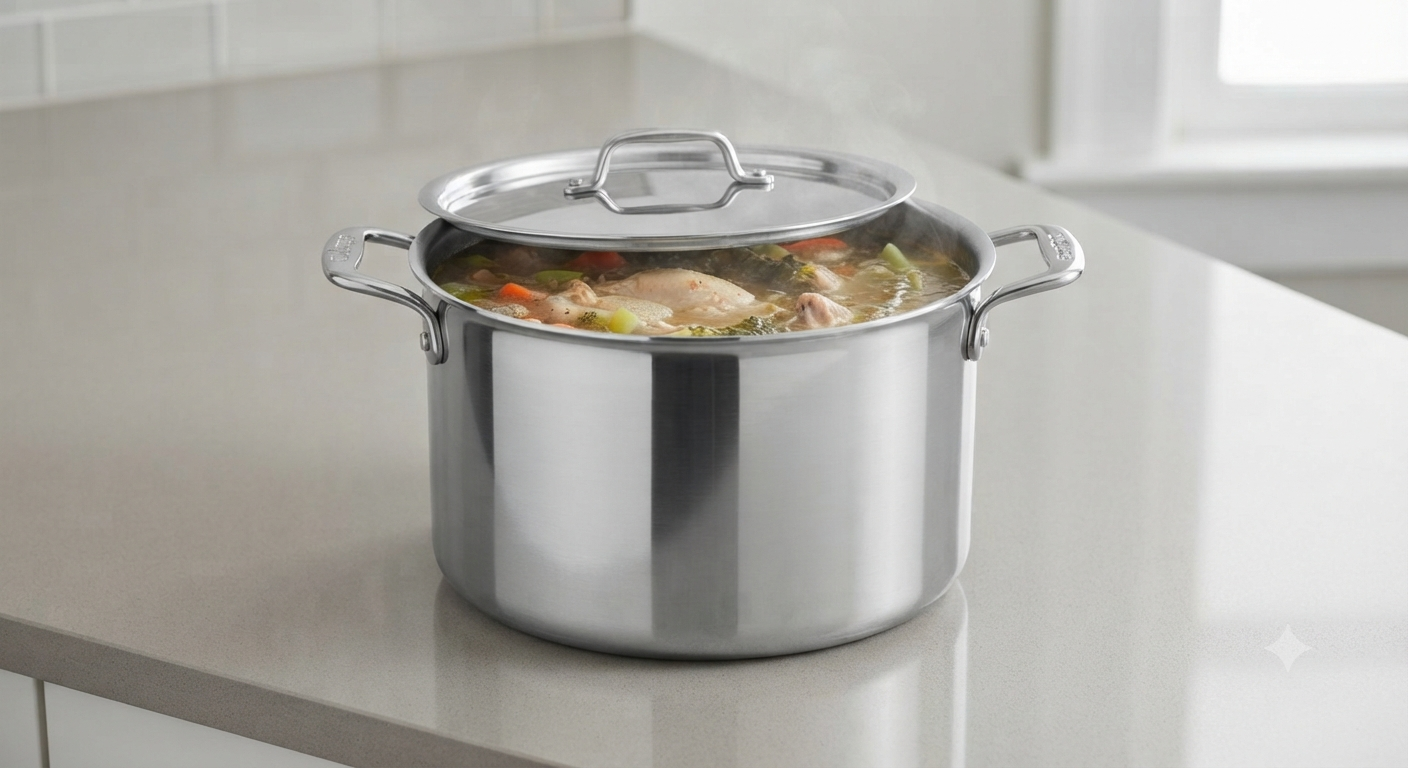
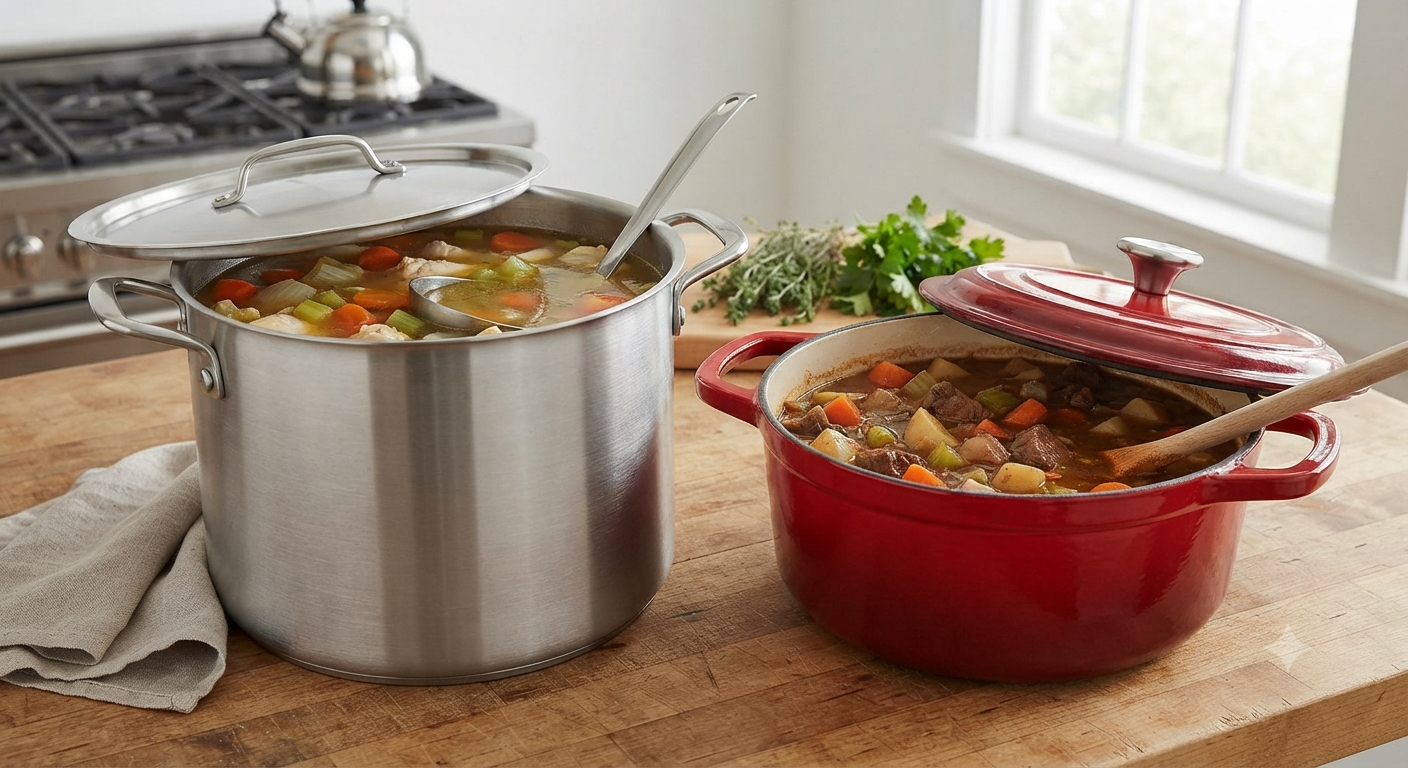
A stock pot is a tall, straight-sided cooking pot designed to hold large volumes of liquid. Most stock pots are made from stainless steel or multi-ply clad stainless steel, making them lightweight, durable, and quick to heat.
Their large capacity makes them ideal for:
- Homemade stocks and broths
- Soups and chili
- Pasta and noodles
- Boiling potatoes and corn
- Seafood boils
- Cooking beans and grains
- Large family meals and batch cooking
The tall sides help reduce evaporation, making stock pots especially effective for long-simmering liquids.
What Is a Dutch Oven?
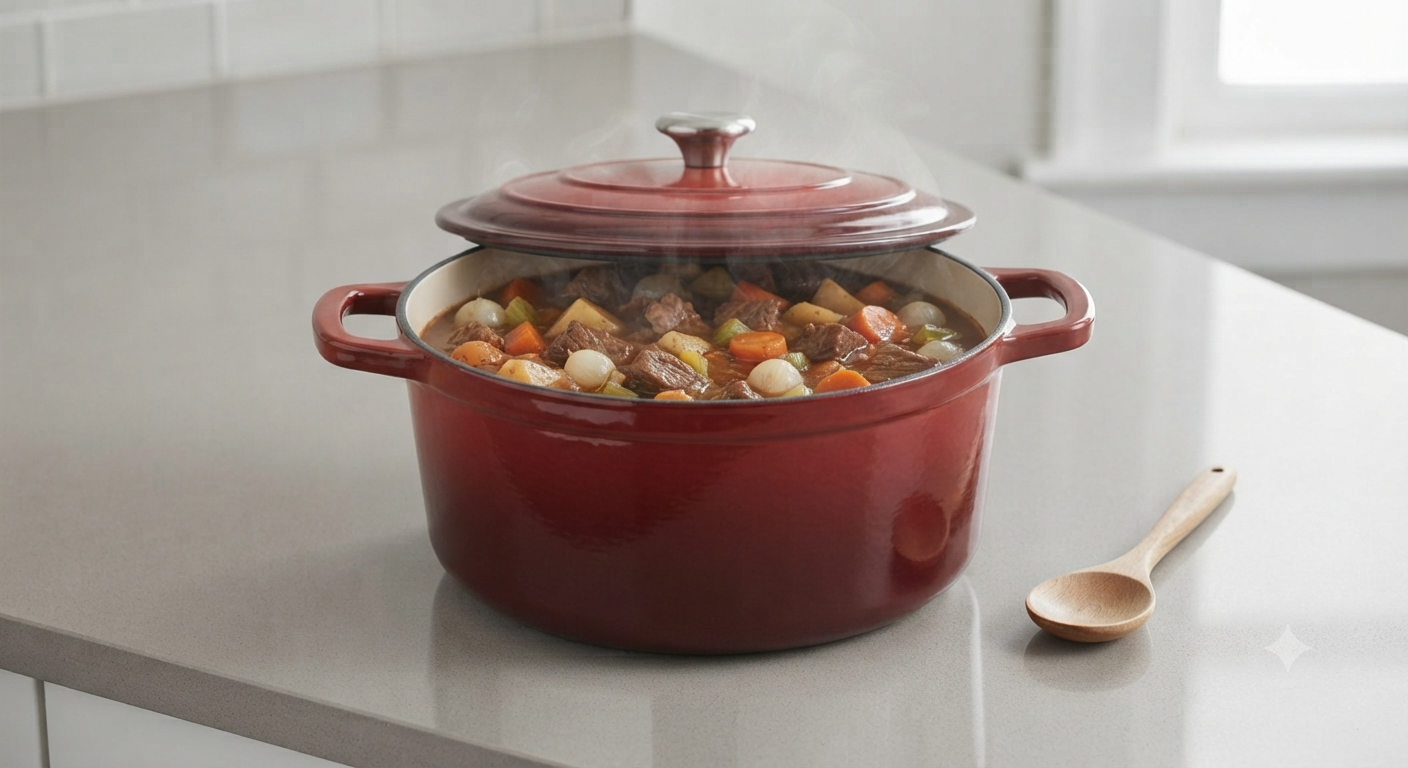
A Dutch oven is a thick, heavy pot traditionally made from cast iron and often finished with a protective enamel coating. It is designed to retain heat exceptionally well, making it perfect for slow cooking and one-pot meals.
Dutch ovens are ideal for:
- Braising meat
- Slow-cooked stews
- Roasting chicken
- Baking artisan bread
- Curries
- Casseroles
- Rice and one-pot recipes
The heavy lid traps steam and moisture, helping create tender, flavorful dishes while maintaining even temperatures throughout cooking.
Stock Pot vs Dutch Oven: Side-by-Side Comparison
| Category | Winner | Why |
| Soup | Stock Pot | Larger capacity |
| Stew | Dutch Oven | Better heat retention |
| Pasta | Stock Pot | More water capacity |
| Bread | Dutch Oven | Crispy crust |
| Braising | Dutch Oven | Even cooking |
| Batch Cooking | Stock Pot | Holds more food |
| Frying | Dutch Oven | Stable oil temperature |
| Stock Making | Stock Pot | Tall design reduces evaporation |
Dutch Oven vs Stock Pot: Key Differences
Although these pots can prepare many of the same dishes, their design makes each one better suited for specific cooking tasks.
1. Material
The biggest difference is the material.
Stock Pots
- Usually made from stainless steel or stainless-clad construction
- Heat up quickly
- Respond rapidly to temperature changes
- Lightweight and easy to lift
Dutch Ovens
- Made from cast iron, often with enamel coating
- Retain heat for long periods
- Heat more slowly but evenly
- Excellent for slow cooking
If you frequently boil water or prepare large quantities of liquid, stainless steel performs better. For recipes requiring consistent heat over several hours, cast iron is the better choice.
2. Shape and Design
Shape affects how each pot cooks.
A stock pot features:
- Tall, narrow sides
- Large liquid capacity
- Two side handles
- Tight-fitting lid
A Dutch oven typically has:
- Wide cooking surface
- Lower sides
- Heavy lid
- Round or oval design
When choosing a lightweight option, focus less on whether it’s labeled a Dutch oven or stock pot and more on the cooking surface. A wider base with sides between 4 and 6 inches provides enough room to brown ingredients and stir comfortably.
3. Weight
Weight is another major difference.
Stock pots are significantly lighter, making them easier to:
- Lift when full
- Drain pasta
- Carry large quantities of soup
- Wash and store
Dutch ovens are much heavier due to their cast iron construction. While the extra weight improves heat retention and cooking performance, moving a full Dutch oven can be challenging.
If portability and convenience are priorities, a stock pot is usually the better choice.
4. Heat Performance
Both cookware types distribute heat differently.
Stock Pot
- Heats quickly
- Brings water to a boil faster
- Better for boiling and simmering
- Excellent for high-volume cooking
Dutch Oven
- Stores heat exceptionally well
- Maintains steady cooking temperatures
- Ideal for low-and-slow recipes
- Perfect for stovetop-to-oven cooking
Because cast iron retains heat so effectively, food continues cooking evenly even after the heat source is reduced.
5. Best Cooking Applications
Choose a Stock Pot for:
- Stocks
- Broths
- Pasta
- Seafood boils
- Beans
- Large batches of soup
- Corn on the cob
- Potatoes
- Meal prep
Choose a Dutch Oven for:
- Braised beef
- Short ribs
- Roast chicken
- Slow-cooked curries
- Chili
- Bread baking
- Casseroles
- Stews
- One-pot dinners
Although you can technically braise in a stock pot or boil pasta in a Dutch oven, each performs best when used for the cooking methods it was designed for.
6. Size and Capacity
Choosing the right size depends on your household and cooking habits.
Stock Pot Sizes
- 6 Quart: Ideal for 1–2 people
- 8 Quart: Best all-purpose size for most families
- 12 Quart: Perfect for entertaining, meal prep, and large batches
An 8-quart stock pot is large enough to prepare soup for several people, boil multiple servings of pasta, or make homemade stock.
Dutch Oven Sizes
- 1–3.5 Quart: Small households and side dishes
- 5–6 Quart: The most versatile size for everyday cooking
- 7 Quart and Larger: Large families, entertaining, and whole roasts
If you’re buying your first Dutch oven, a 5.5- to 6-quart model offers the best balance between capacity and versatility.
Which One Is Better?
Neither cookware is universally better—they simply excel at different tasks.
Choose a stock pot if you regularly:
- Cook pasta
- Make soups or broths
- Prepare seafood boils
- Need lightweight cookware
- Cook in large quantities
Choose a Dutch oven if you enjoy:
- Slow cooking
- Braising meats
- Baking bread
- Oven-to-table meals
- Rich, deeply flavored stews
Do You Need Both?
If your kitchen space or budget is limited, you can certainly start with one. Both can handle many everyday recipes, but each has strengths that the other cannot fully replace.
A stock pot makes boiling and batch cooking faster and more efficient, while a Dutch oven delivers unmatched heat retention for braises, roasts, and slow-cooked meals.
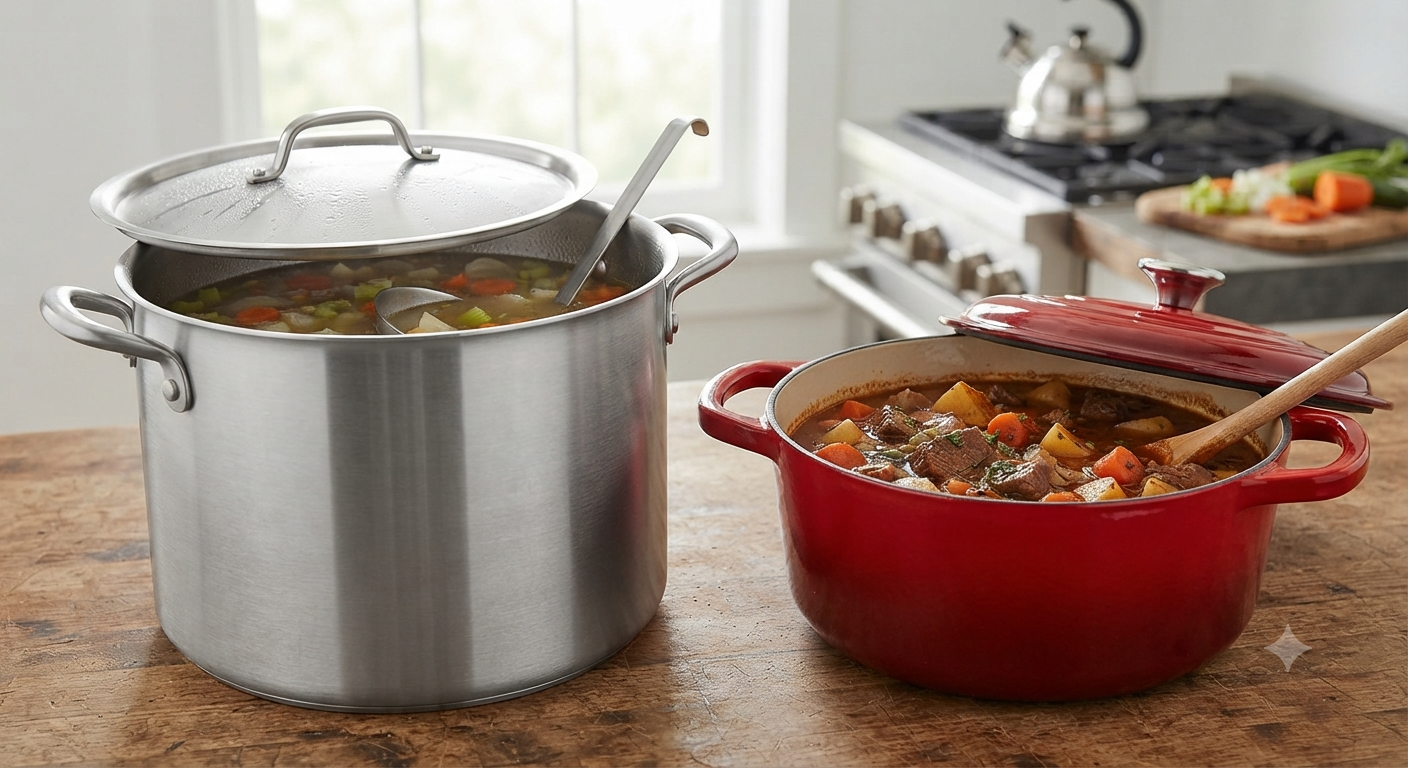
For cooks who enjoy a variety of recipes, having both provides maximum versatility. You’ll naturally reach for the stock pot when preparing large quantities of liquid-based dishes and the Dutch oven when creating hearty, slow-cooked meals with rich flavor and tender textures.
Final Thoughts
The choice between a Dutch oven and a stock pot comes down to how you cook. If quick boiling, large-capacity cooking, and lightweight handling matter most, a stock pot is the practical option. If you value even heating, moisture retention, and slow cooking, a Dutch oven is worth the investment.
With Cookware, you can choose the cookware that matches your cooking style—or build a collection that includes both for complete kitchen versatility.
Frequently Asked Questions (PAA-Friendly)
Is a Dutch oven better than a stock pot?
Not always. A Dutch oven is more versatile, while a stock pot is better for large-volume liquid cooking.
Can I make soup in a Dutch oven?
Yes. A Dutch oven makes flavorful soups thanks to excellent heat retention.
Can I boil pasta in a Dutch oven?
Yes, but a stock pot is more efficient because it holds more water.
Can a stockpot replace a Dutch oven?
No. A stock pot cannot match the Dutch oven’s heat retention or baking performance.
Is a Dutch oven worth buying?
Yes, especially if you enjoy slow cooking, bread baking, roasting, or one-pot meals.
Which lasts longer?
A quality Dutch oven can last for decades, while a stainless steel stock pot also offers a long lifespan with proper care.