Your dishwasher cleans your dishes every day, but who cleans the dishwasher? Over time, food particles, grease, soap residue, and mineral deposits can build up inside the appliance. This buildup may cause unpleasant odors, leave residue on dishes, and reduce cleaning performance.
Learning how to clean your dishwasher is easier than you might think. With a few basic supplies and a little time, you can clean the filter, spray arms, door seal, and interior and help keep your dishwasher running smoothly.
Read More: How to Clean a Smelly Dishwasher
Table of contents
Why Does Your Dishwasher Need Cleaning?
Although dishwashers regularly use hot water and detergent, they can still accumulate dirt and residue. Food particles can become trapped in the filter, while grease and mineral deposits may collect around the interior and spray arms.
Regular dishwasher cleaning can help:
- Reduce unpleasant odors
- Remove food and grease buildup
- Prevent blocked spray holes
- Improve washing performance
- Keep the interior cleaner
- Reduce residue left on dishes
How Often Should You Clean Your Dishwasher?
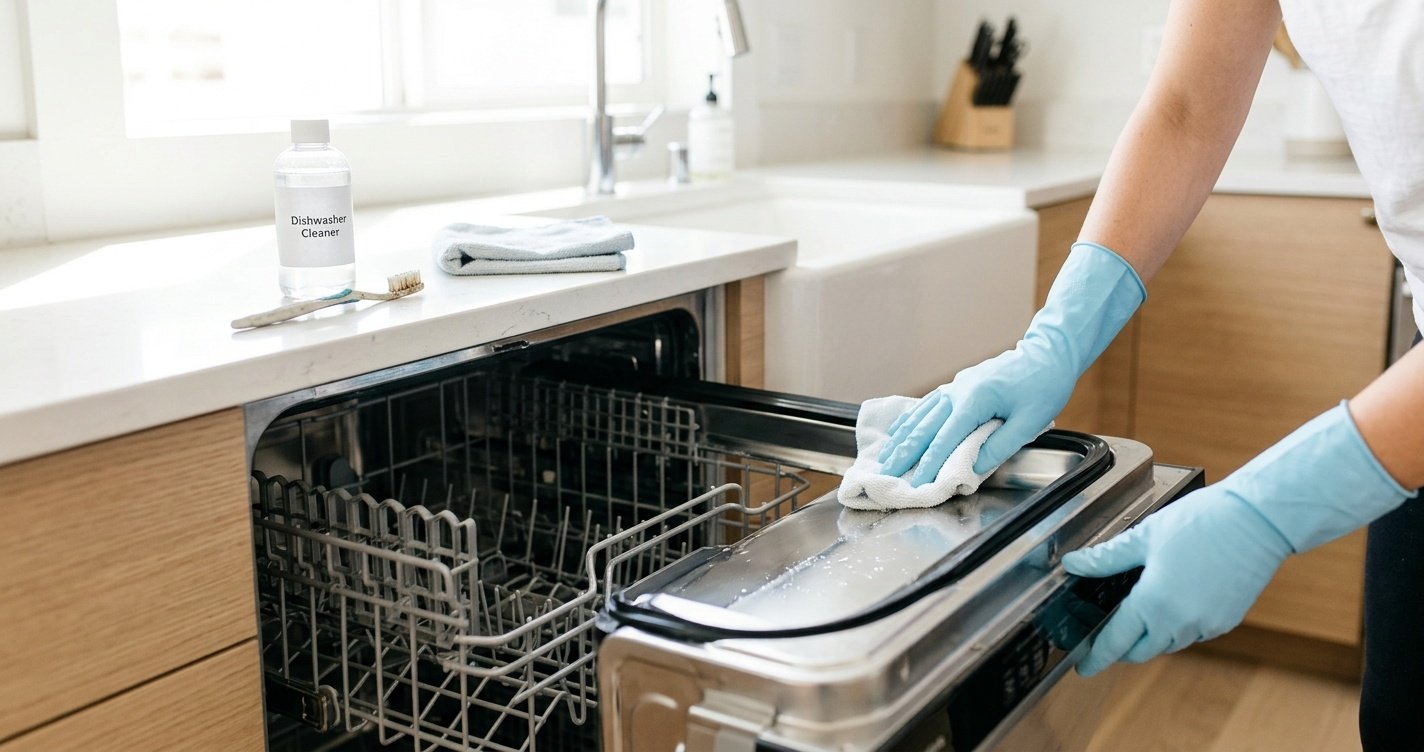
How often you need to clean your dishwasher depends on how frequently you use it and how dirty the dishes are. As a general maintenance routine, check the filter regularly and clean it whenever you notice visible debris or buildup. Wipe the door seal and edges as needed, and periodically inspect the spray arms for blocked holes. A deeper cleaning can be done when you notice odors, residue, or reduced cleaning performance. Always follow the maintenance recommendations in your dishwasher’s owner’s manual.
What You Need to Clean a Dishwasher
Before you begin, gather:
- A soft cloth or microfiber cloth
- A soft sponge
- An old toothbrush or soft cleaning brush
- Warm water
- Mild dish soap
- An approved dishwasher cleaner, if recommended by the manufacturer
Some cleaning guides recommend household ingredients such as vinegar or baking soda. However, these aren’t appropriate for every dishwasher, so check the manufacturer’s instructions before using them.
Step 1: Empty the Dishwasher
Start by removing all dishes, glasses, utensils, and other items from the dishwasher. Remove the lower and upper racks if your model allows you to do so. This gives you more room to reach the bottom and interior surfaces. Look around the bottom of the dishwasher for loose food particles, broken pieces, labels, or other debris and remove them.
Step 2: Clean the Dishwasher Filter
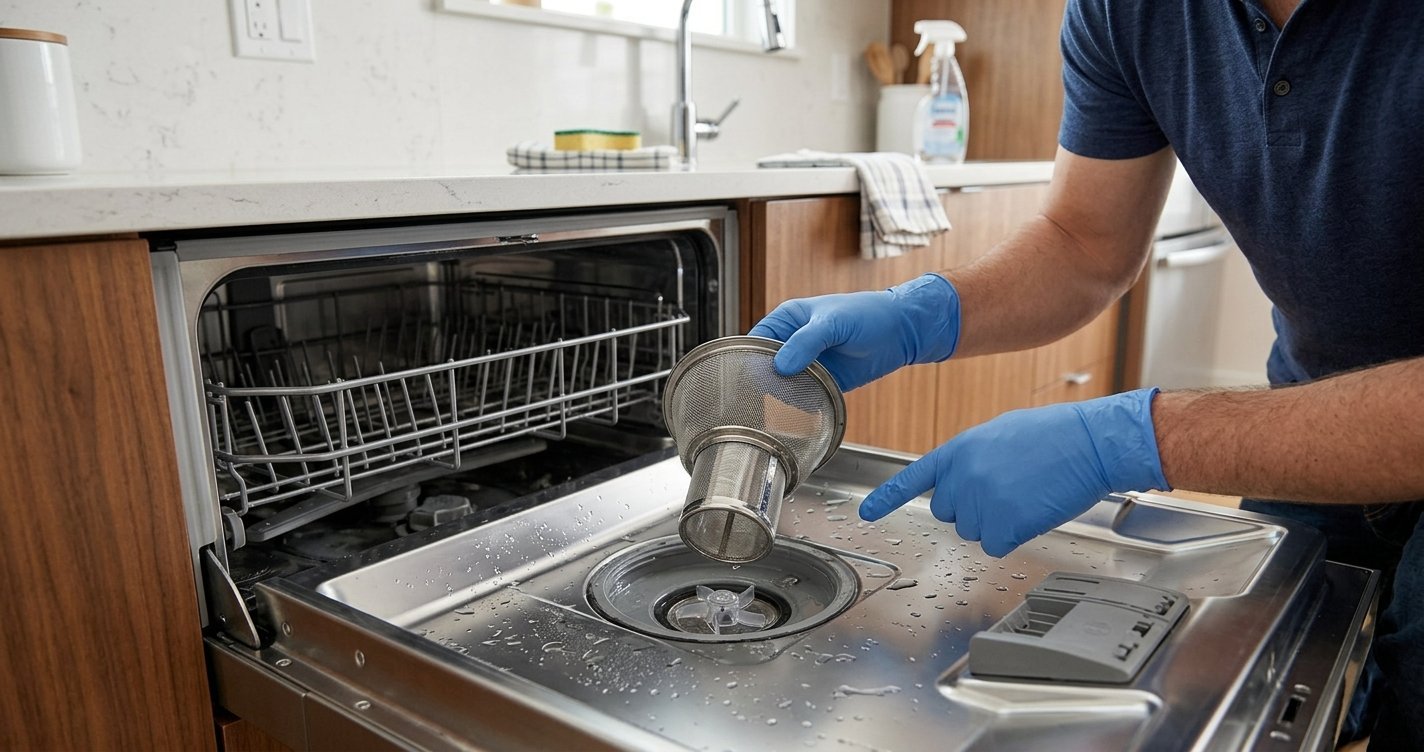
The filter is one of the most important parts to clean because it catches food particles during wash cycles. Locate the filter at the bottom of the dishwasher and remove it according to the manufacturer’s instructions. Rinse it under warm running water to loosen food and other debris. Use a soft brush or toothbrush to gently remove stubborn residue. Avoid harsh scrubbing or abrasive tools that could damage the filter. Once it is clean, reinstall it securely. Make sure it is properly positioned before using the dishwasher again.
Step 3: Clean the Spray Arms
The spray arms distribute water throughout the dishwasher. Small food particles or mineral deposits can block their openings and interfere with water flow. Inspect the holes in each spray arm. If you see visible debris, gently clean the area with a soft brush. If the spray arms are removable, you can rinse them according to the instructions for your dishwasher model. Don’t force objects into the spray holes because this could damage the components.
Step 4: Wipe the Dishwasher Interior
Use a soft cloth or sponge dampened with warm water to wipe the dishwasher’s interior.
Clean the:
- Bottom surface
- Side walls
- Back wall
- Corners
- Areas around the rack supports
- Interior edges
For greasy or stubborn residue, use a small amount of mild dish soap and wipe the area thoroughly afterward. Avoid using harsh chemicals or abrasive cleaners unless they are specifically approved for your appliance.
Step 5: Clean the Door and Door Seal
The dishwasher door and rubber seal can collect food particles, grease, and detergent residue. Wipe the seal carefully with a damp cloth. Use a soft toothbrush to reach small grooves and corners. Clean both the inside and outside edges of the dishwasher door. Pay particular attention to the bottom edge, where residue can easily accumulate.
Step 6: Clean the Detergent Dispenser
Check the detergent dispenser for leftover detergent or hardened residue. Use a damp cloth or soft brush to remove buildup. If necessary, use warm water to loosen dried detergent. Make sure the dispenser can open and close properly after cleaning.
Step 7: Clean the Drain Area
Inspect the bottom of the dishwasher around the drain for visible food particles and debris. Remove loose debris carefully, but don’t disassemble parts unless your dishwasher’s instructions specifically tell you to do so. If water is not draining properly, persistent standing water remains, or there is a recurring drainage problem, consult the manufacturer’s troubleshooting instructions or a qualified appliance professional.
Step 8: Run an Empty Cleaning Cycle
Once you’ve cleaned the removable parts and wiped the interior, you can run an empty cycle if your dishwasher’s instructions permit it. Some models have a dedicated cleaning or maintenance cycle. If yours does, follow the manufacturer’s instructions and use an approved dishwasher cleaner if recommended. Don’t automatically add household cleaning products to the dishwasher. Products that aren’t designed or approved for the appliance may cause problems or excessive sudsing.
Step 9: Let the Dishwasher Dry
After cleaning, leave the dishwasher door slightly open when it is safe and practical to do so. This allows moisture to escape and helps the interior dry. A dry interior can also help reduce musty smells between cycles.
How to Keep Your Dishwasher Clean
Once you’ve given your dishwasher a thorough cleaning, a few simple habits can help keep it cleaner.
Remove Large Food Particles
Scrape large pieces of food from dishes before placing them in the dishwasher. You generally don’t need to pre-wash dishes unless your dishwasher’s instructions recommend it, but removing large debris can help prevent unnecessary buildup.
Don’t Overload the Dishwasher
Overloading can prevent water from reaching dishes properly. Follow the loading instructions for your model and make sure the spray arms can rotate freely.
Check the Filter Regularly
A dirty filter can collect food particles and contribute to odors. Make checking the filter part of your normal appliance-maintenance routine.
Use the Recommended Detergent
Use the detergent type and amount recommended for your dishwasher. Too much detergent can leave residue, while the wrong product may cause excessive suds or other problems.
Wipe Up Visible Buildup
If you notice food, grease, or detergent residue around the door or seal, clean it rather than allowing it to accumulate.
Common Dishwasher Cleaning Mistakes to Avoid
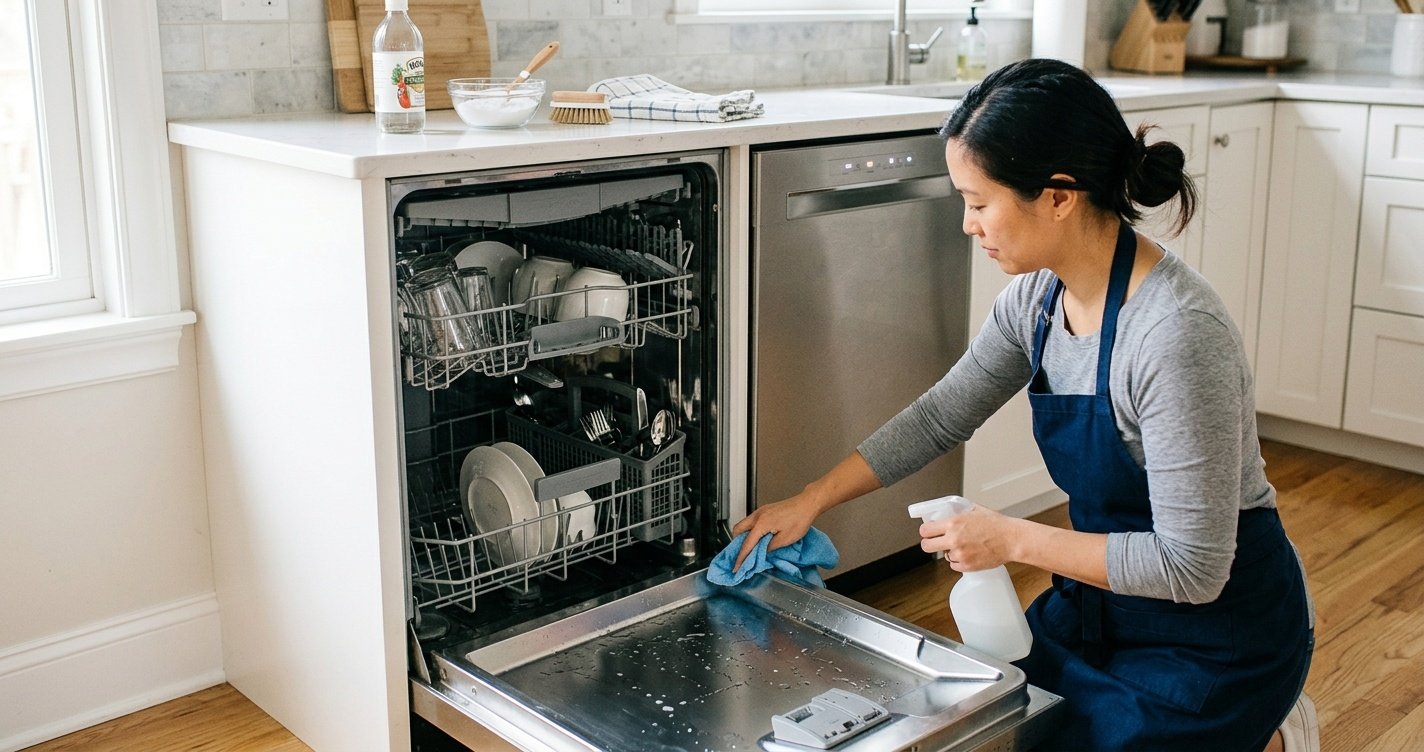
Cleaning your dishwasher incorrectly can cause more problems than it solves. Avoid these common mistakes:
- Using abrasive scrubbers that can scratch surfaces
- Using unapproved cleaning chemicals
- Pouring regular dish soap into the dishwasher
- Forcing objects into spray-arm holes
- Removing components without checking the instructions
- Ignoring a filter that is visibly clogged
- Assuming a dishwasher never needs maintenance because it cleans dishes
What If Your Dishwasher Still Smells After Cleaning?
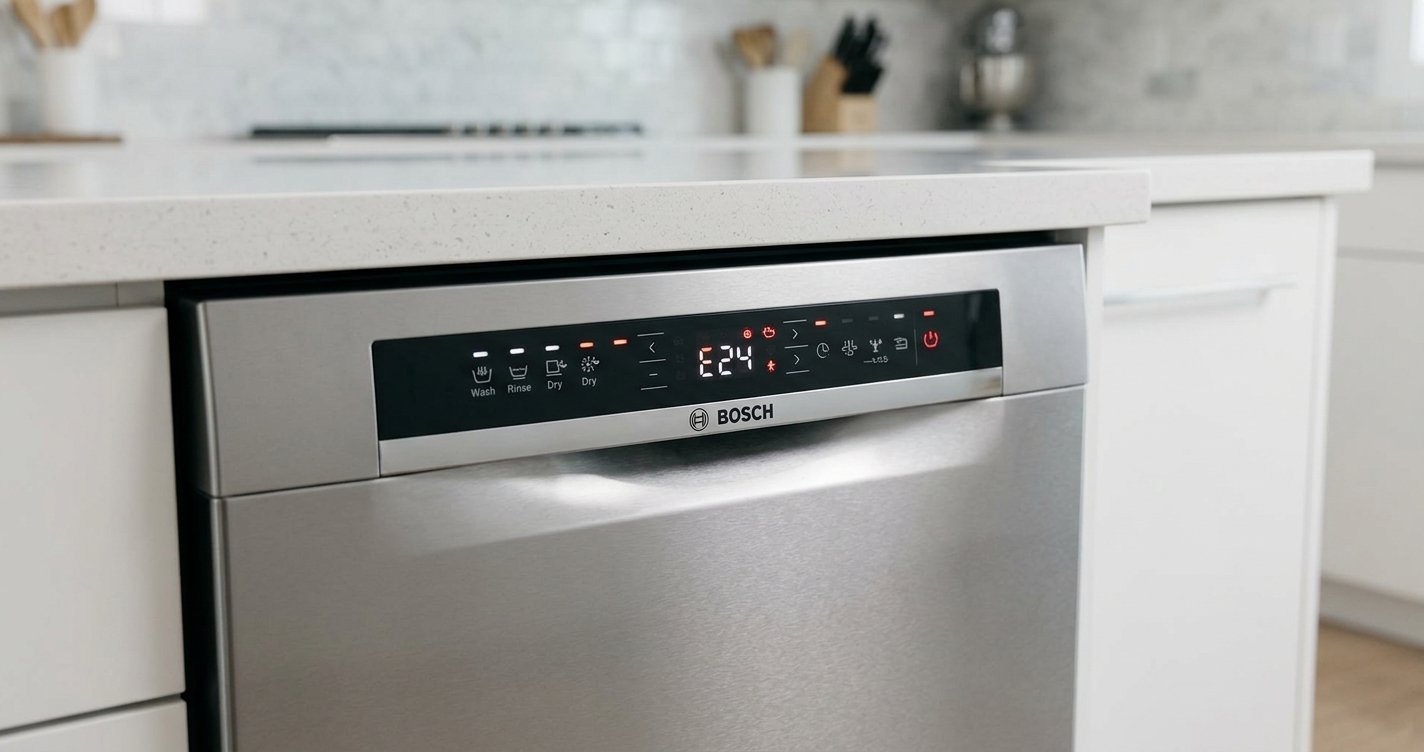
If your dishwasher continues to smell after cleaning, inspect the filter, drain area, door seal, and spray arms for remaining debris. Also check whether water is draining properly. Persistent odors accompanied by standing water, drainage problems, leaks, or unusual noises may indicate an issue that requires professional attention. If cleaning doesn’t solve the problem, consult your dishwasher’s troubleshooting guide or contact the manufacturer.
Frequently Asked Questions
Can I clean my dishwasher with vinegar?
Vinegar is sometimes recommended as a household dishwasher cleaner, but it isn’t suitable for every appliance. Check your dishwasher manufacturer’s instructions before using vinegar or any other household cleaning ingredient.
Can I put baking soda in my dishwasher?
Baking soda is commonly suggested for removing odors, but manufacturer recommendations vary. Check the owner’s manual before using it.
Should I clean the dishwasher filter?
Yes. The filter collects food particles and should be checked and cleaned according to the dishwasher manufacturer’s maintenance instructions.
Why does my dishwasher smell bad?
Food debris, grease, residue, and buildup in areas such as the filter or drain can contribute to unpleasant odors. Cleaning these areas regularly can help.
How long does it take to clean a dishwasher?
A basic manual cleaning can often be completed in around 15–30 minutes, depending on how dirty the dishwasher is and how easy its components are to remove.
Final Thoughts
Knowing how to clean your dishwasher can help you maintain a cleaner appliance and support good washing performance. Start by emptying the dishwasher, cleaning the filter, checking the spray arms, wiping the interior and door seal, and inspecting the drain area.
For any cleaning products or maintenance procedures, follow your dishwasher manufacturer’s recommendations. With regular care, your dishwasher can stay fresher and continue doing its job effectively.