Yes. According to KitchenAid’s own product guides, all KitchenAid stand mixer bowls are dishwasher safe with a single exception: the hammered copper bowl included with the 2022 Design Series Blossom mixer, which is hand-wash only. Stainless steel, glass, and ceramic bowls — the three most common materials — are all safe to run through a normal dishwasher cycle.
Read More: Ceramic vs Steel Knives: Which One Should You Buy?
Table of contents
Which KitchenAid Mixer Bowls Are Dishwasher Safe?
KitchenAid stand mixers come with bowls in three main materials, plus a specialty copper option. Here’s how each one holds up.
Stainless Steel Bowls
The original and most common KitchenAid bowl material, stainless steel is dishwasher safe, scratch-resistant, and doesn’t retain odors, rust, or dent under normal use. It’s also the most durable option of the group, which is why it remains the standard bowl included with most KitchenAid stand mixers.
Glass Bowls
Glass mixing bowls are dishwasher-safe, microwave-safe, and freezer-safe, which makes them useful for tasks like melting butter or chilling ingredients in the same bowl you’ll mix in. One exception worth noting: some bowl-lift glass bowls have a metal trim band, which makes them unsafe for the microwave even though they remain dishwasher safe.
Ceramic Bowls
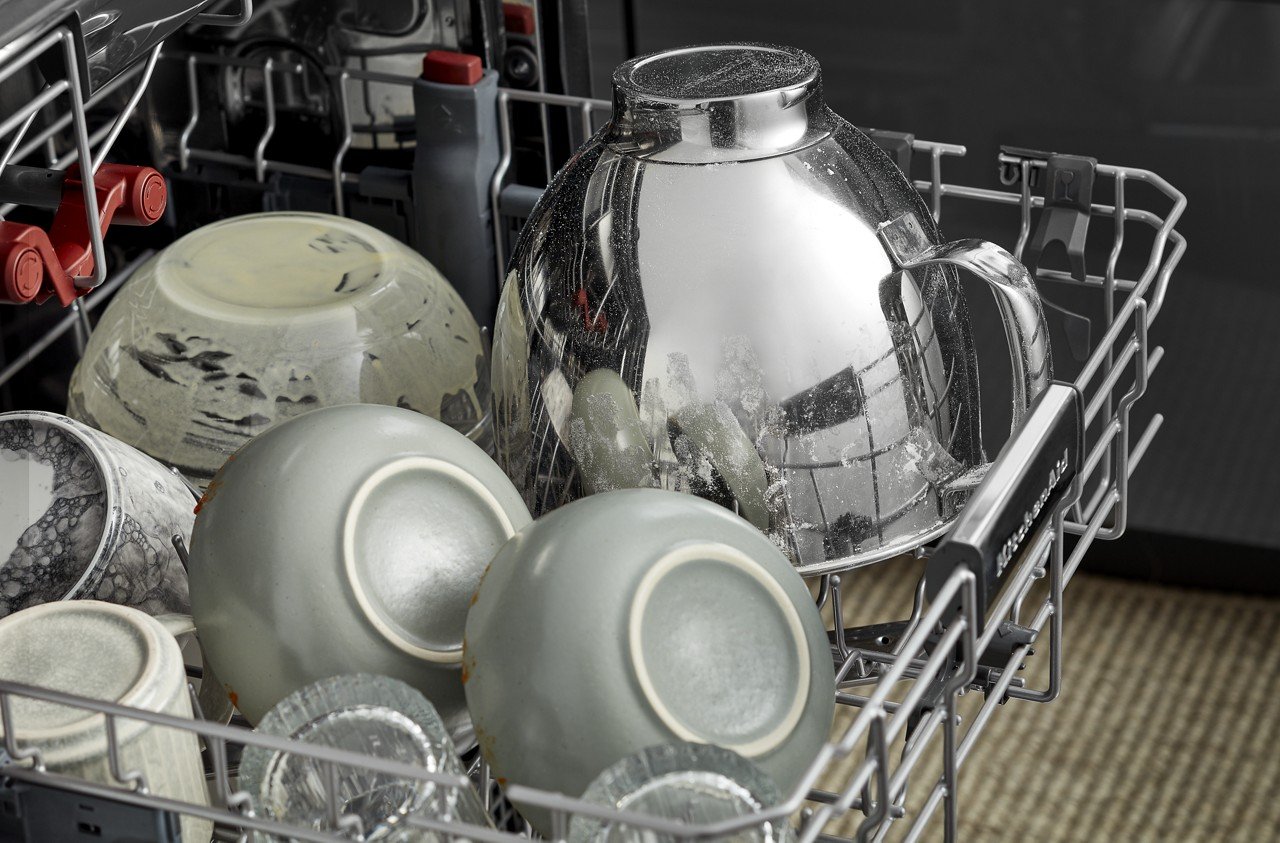
Ceramic mixer bowls are dishwasher safe, along with being microwave, freezer, and oven safe up to 450–475°F depending on the model. KitchenAid specifically notes that if a ceramic bowl has baked-on food, it’s best to soak it in soapy water for 15–20 minutes before placing it on either the top or bottom rack of the dishwasher.
Copper Bowls — The One Exception
KitchenAid makes two types of copper bowls, and they’re treated very differently:
- Copper-colored stainless steel bowls (fit standard 4.5 or 5-quart tilt-head mixers) are dishwasher safe — the copper finish is just a coating over standard stainless steel.
- The hammered copper bowl included with the 2022 Design Series Blossom mixer is true copper, develops its own patina over time, and is hand wash only.
If you own a Blossom-series mixer, check which bowl you actually have before running it through a cycle.
What About the Beaters and Other Attachments?
Bowls aren’t the only part of a stand mixer people wonder about. Attachment care varies more than bowl care does:
- Coated beaters (white or subtle silver polyester-coated) are generally dishwasher safe.
- Burnished beaters (polished aluminum) are not dishwasher safe and should be hand-washed to avoid dulling the finish.
- Stainless steel whisks and dough hooks are typically dishwasher safe, usually recommended for the top rack.
- Pouring shields are generally dishwasher safe as well.
When in doubt on an attachment, KitchenAid’s general guidance is to hand-wash in hot, soapy water and dry thoroughly rather than risk it in a cycle.
How to Dishwasher-Wash Your KitchenAid Bowl Properly
- Scrape off excess batter or dough immediately after use so it doesn’t harden and stick.
- Soak stubborn residue in warm, soapy water for a few minutes (or 15–20 minutes for baked-on ceramic residue) before loading it in.
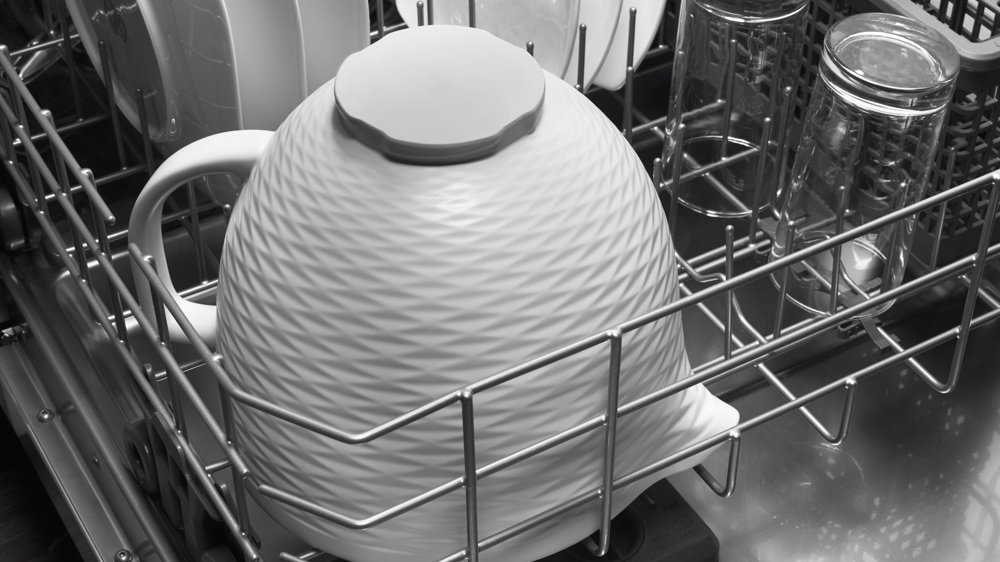
- Place the bowl on the top rack when possible — it sits farther from the heating element, reducing heat exposure and thermal stress, especially useful for glass and ceramic.
- Skip abrasive scrubbers and steel wool, particularly on ceramic and glass, since they can scratch or dull the finish.
- Air dry rather than using a heated dry cycle if you want to further protect the bowl’s finish over time, especially on decorative or printed bowls.
Frequently Asked Questions
Are all KitchenAid mixer bowls dishwasher safe?
Almost all of them — stainless steel, glass, and ceramic bowls are dishwasher safe. The one exception is the hammered copper bowl from the Design Series Blossom mixer, which is hand-wash only.
Can I put my KitchenAid stainless steel bowl in the dishwasher?
Yes. Stainless steel bowls are dishwasher safe and among the most durable KitchenAid bowl materials, resisting rust, staining, and odor retention.
Is the KitchenAid ceramic bowl dishwasher and oven safe?
Yes to both. Ceramic bowls are dishwasher, microwave, freezer, and oven safe up to 450–475°F depending on the specific bowl.
Can I put a KitchenAid glass bowl in the microwave?
Most glass bowls are microwave safe, but some bowl-lift glass bowls have a metal trim band that makes them microwave-unsafe even though they remain dishwasher safe. Check your specific bowl before microwaving.
Are KitchenAid mixer beaters dishwasher safe?
It depends on the finish. Coated (white or silver) beaters are generally dishwasher safe, while burnished (polished aluminum) beaters should be hand-washed to prevent dulling.
Which KitchenAid bowl should I hand wash instead of using the dishwasher?
Only the hammered copper Design Series Blossom bowl needs hand washing among mixer bowls. Burnished aluminum beaters and any decorative or printed bowls you want to preserve long-term are also safer washed by hand.
Conclusion
If you own a KitchenAid stand mixer, the dishwasher question has a simple answer for almost everyone: your bowl is safe to wash there, regardless of whether it’s stainless steel, glass, or ceramic. The only real exception is the true hammered copper bowl on the Design Series Blossom mixer, which needs hand washing to preserve its patina. Beyond that one case, the bigger consideration isn’t if you can dishwasher your bowl, but how — soaking off baked-on residue, using the top rack for glass and ceramic, and skipping abrasive scrubbers will keep any KitchenAid bowl looking new for years of regular use.