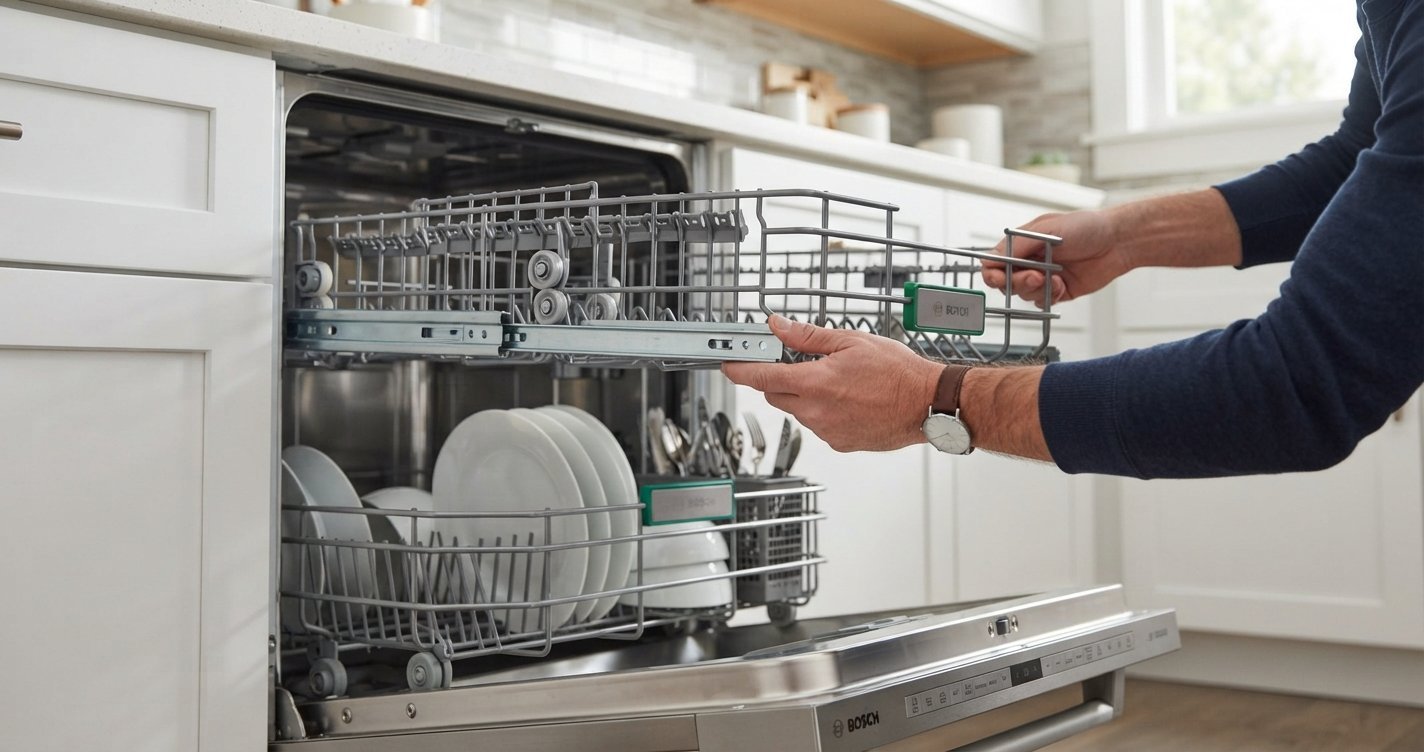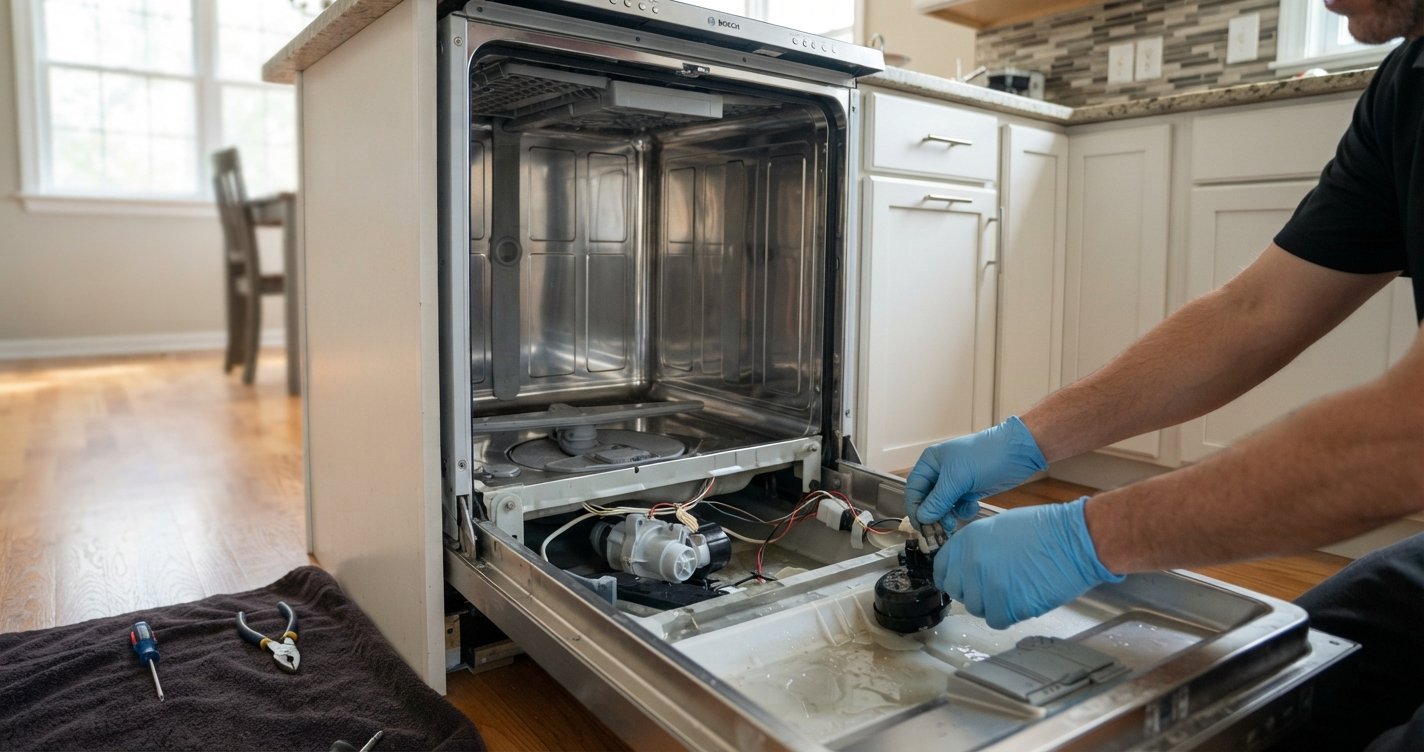
Stainless steel tubs win on nearly every performance metric — they’re quieter (often 10 decibels less noise than plastic), dry dishes faster through heat conduction, resist stains and odors better, and last longer under heavy use. Plastic tubs win on price, offering the same basic cleaning performance at a meaningfully lower cost. For most households with light-to-moderate daily use, plastic is perfectly adequate; for larger households, heavy pot-and-pan washing, or anyone prioritizing quiet operation and longevity, stainless steel is worth the extra cost.
Read More: Bosch Dishwashers 800 vs 900: Which to Buy?
Table of contents
What Is a Dishwasher Tub, and Why Does the Material Matter?
The tub is the interior cavity of the dishwasher — the walls, ceiling, and floor that hold the racks and contain the wash. It’s not visible once the door is closed, which is part of why it’s easy to overlook when shopping, but the tub material actually affects several things you’ll notice constantly: how loud the dishwasher is, how well dishes dry, how long the appliance lasts, and how much it costs upfront.
Plastic vs Stainless Steel Dishwasher Tub: Full Comparison
| Category | Plastic Tub | Stainless Steel Tub |
| Upfront Cost | Lower | Higher |
| Noise Level | Louder — transmits more operational noise | Quieter — up to 10 dB less than plastic |
| Drying Performance | Slower, more prone to water spots and puddling | Faster, via heat conduction and condensation drying |
| Stain & Odor Resistance | More porous, more prone to staining and lingering odors | Less porous, resists stains and odors better |
| Heat Retention | Lower — takes longer to reach and hold wash temperature | Higher — reaches and holds temperature more efficiently |
| Durability | Can scratch, wear, or crack over time | Resists cracks, chips, and stains; withstands higher heat |
| Best For | Budget-conscious buyers, light daily use | Heavy use, larger households, quiet-kitchen priorities |
| Common In | Entry-level and mid-range models (including some Bosch, GE, and Café models) | Premium lines (Monogram, Thermador, higher-end GE Profile and Bosch models) |
Why Stainless Steel Performs Better
Quieter Operation
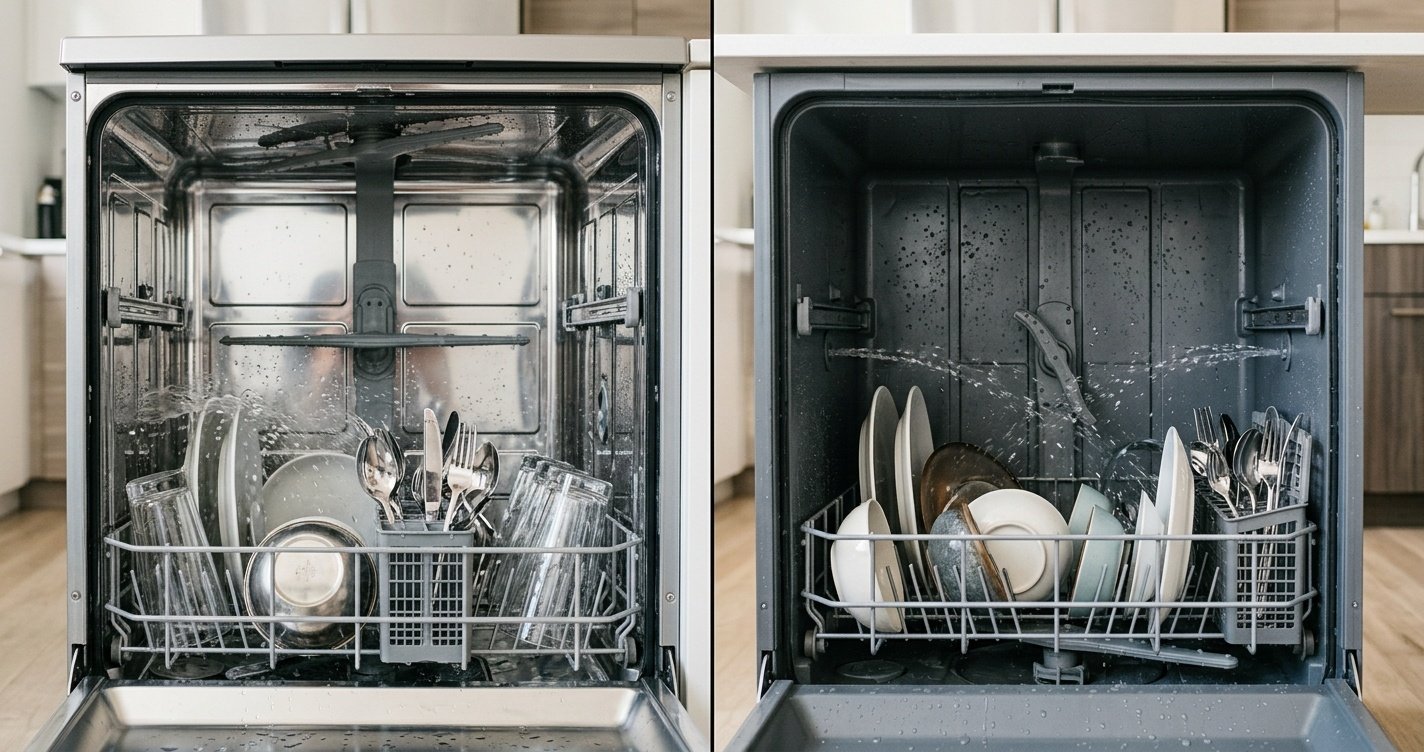
Stainless steel is denser and better insulated than plastic, which naturally reduces vibration and motor noise. Most ultra-quiet dishwashers — the ones rated below 45 dB — use stainless steel interiors specifically to achieve that noise level, and stainless tubs can run as much as 10 decibels quieter than a comparable plastic tub.
Faster, More Effective Drying
Stainless steel’s superior heat retention is a major advantage during the drying phase. Metal tubs use conduction: the tub pulls in heat and turns residual moisture into condensation, which then drops to the bottom of the dishwasher instead of pooling on your plates. This means dishes come out drier and with fewer water spots, without needing extra drying time or additional energy.
Better Stain and Odor Resistance
Plastic is more porous than stainless steel, which makes it more likely to stain from colorful foods (think tomato sauce or turmeric) and more prone to retaining minor odors over repeated cycles. Stainless steel’s smooth, non-porous surface resists both far more effectively and requires less deliberate maintenance to stay looking and smelling clean.
Greater Long-Term Durability
Stainless steel tubs resist cracks, chips, and staining over years of use, and hold up better under heavy loads and long, hot cycles. Plastic tubs are generally durable enough for regular use, but they’re more prone to scratches and wear over time, especially in households that run heavily soiled pots and pans through the dishwasher regularly.
Where Plastic Still Makes Sense
Stainless steel wins on performance, but that doesn’t make plastic a bad choice — it makes it a different choice for a different kind of household.
- Budget is the primary concern. Plastic-tub dishwashers cost meaningfully less upfront, which matters if you’re outfitting a kitchen on a tighter budget or don’t want to pay a premium for features you may not need.
- You have lighter dishwashing needs. If you’re not regularly washing heavily soiled pots and pans, or you run the dishwasher once a day or less, plastic tubs handle lighter cleaning tasks adequately without the added cost of stainless.
- Wet dishes aren’t a dealbreaker. If a slightly damp plastic item after a cycle isn’t a real inconvenience for your household, the drying-performance gap between plastic and stainless matters less in practice than it does on a spec sheet.
How to Maintain Each Tub Type
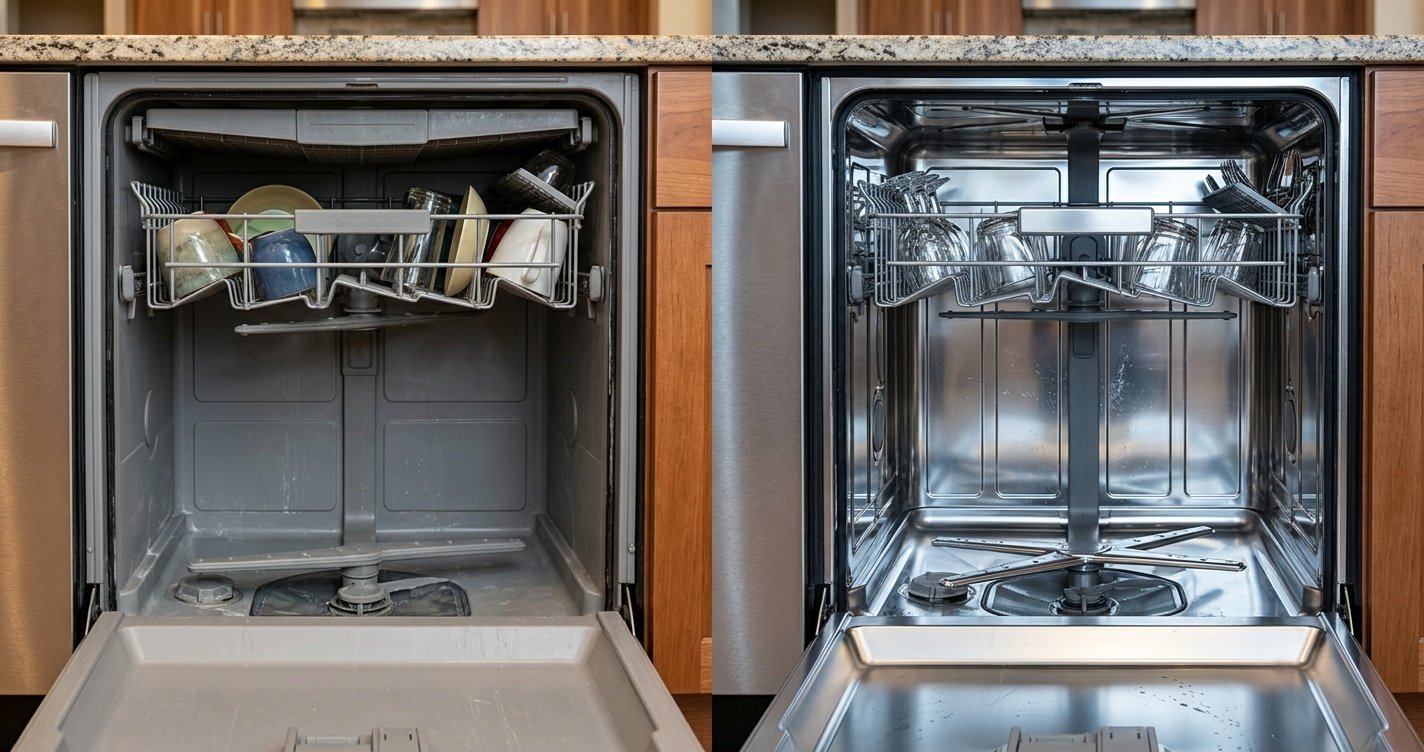
Stainless steel tubs are lower-maintenance but not maintenance-free:
- Wipe down with a soft cloth and mild detergent every few weeks to remove hard water spots and detergent film.
- Use a dedicated dishwasher cleaner (like Affresh or Cascade) once a month to flush away mineral deposits and food residue — both are formulated to work safely on stainless steel interiors.
Plastic tubs benefit from similar habits, with a bit more attention to staining:
- Wipe down regularly to prevent color staining from foods like tomato sauce, turmeric, or berries.
- Run a monthly cleaning cycle to help control the odors plastic is more prone to retaining.
- Avoid abrasive scrubbing tools, which can scratch the surface more easily than on stainless steel.
Frequently Asked Questions
Is a stainless steel dishwasher tub really worth the extra cost?
For most households, yes, if quiet operation, faster drying, and long-term durability matter to you. For lighter, budget-conscious use, a plastic tub delivers dependable everyday cleaning at a lower price.
Are stainless steel tubs really quieter than plastic ones?
Yes. Stainless steel is denser and better insulated, which reduces vibration and motor noise — some stainless tubs run up to 10 decibels quieter than a comparable plastic model.
Do plastic dishwasher tubs stain or smell more than stainless steel?
Yes, generally. Plastic is more porous, making it more likely to stain from colorful foods and retain minor odors over time compared to the smoother, less porous surface of stainless steel.
Which tub material dries dishes better?
Stainless steel, due to its superior heat retention. It uses conduction to turn residual moisture into condensation that drips to the bottom of the tub, rather than pooling on your dishes the way it can in a plastic tub.
Do all premium dishwasher brands use stainless steel tubs?
Most do, but not universally — some models from brands like Bosch, GE, and Café use plastic tubs even in otherwise well-reviewed lineups, so it’s worth checking the specific model’s tub material rather than assuming based on brand alone.
Does tub material affect how long a dishwasher lasts overall?
It’s a meaningful factor, but not the only one. Rack design, wash cycle technology, sensors, and overall brand reliability all contribute to a dishwasher’s lifespan alongside tub material.
Conclusion
Plastic vs. stainless steel isn’t really a question of which tub is “better” in the abstract — it’s a question of which trade-offs match your household. Stainless steel wins clearly on noise, drying performance, stain resistance, and long-term durability, which makes it the stronger choice for larger households, heavy daily use, or anyone who values a quiet kitchen. Plastic remains a perfectly reasonable choice if your dishwashing needs are lighter and the price difference matters more to you than shaving a few minutes off drying time or a few decibels off the noise level. Either way, the tub is only one part of the full picture — rack design, wash technology, and brand reliability all deserve equal weight in the decision.