The right dishwasher depends on your household size, kitchen layout, and region. In the US, Bosch’s 500 Series is widely rated the best overall pick, with Whirlpool offering the strongest budget option. In the UK, Which? s 2026 testing points to Bosch and Miele as consistent top performers among both freestanding and integrated models. Across both markets, prioritize an energy-efficient rating (Energy Star in the US, the UK’s energy label), a noise level under 45 dB, and a flexible rack system — brand name and price tag matter far less than whether those three boxes are checked.
Read More: Plastic vs Stainless Steel Dishwasher Tub: Which?
Table of contents
Dishwasher Sizes and Types: US vs. UK
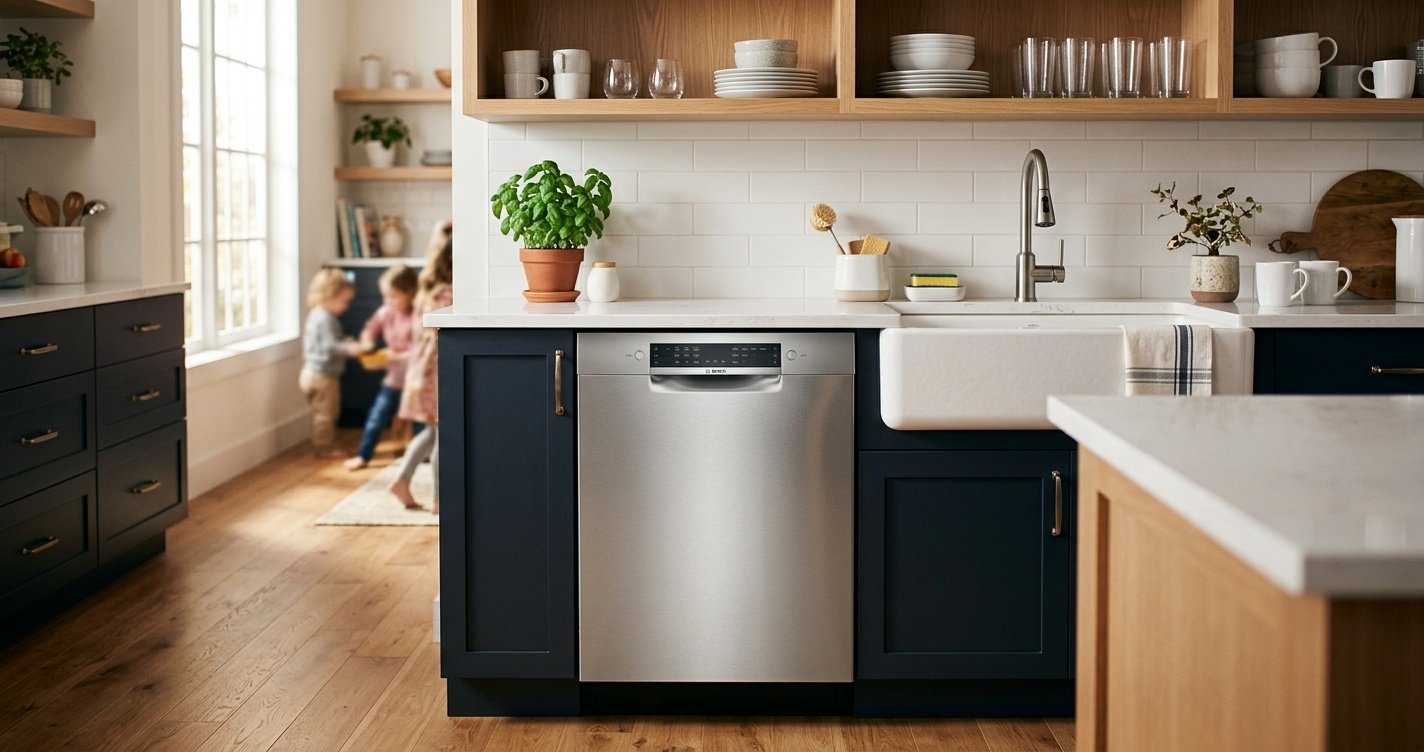
Sizing conventions and common formats differ noticeably between the two markets, which matters more than almost any other spec when narrowing down your options.
In the US:
- Standard built-in: typically 24 inches wide, holding 12–16 place settings depending on the model.
- Portable/countertop: popular for apartments or homes without built-in plumbing connections, typically around 22 inches wide, 17 inches tall, and holding 4–6 place settings.
- Drawer-style: increasingly common for smaller households or supplementing a main dishwasher.
In the UK:
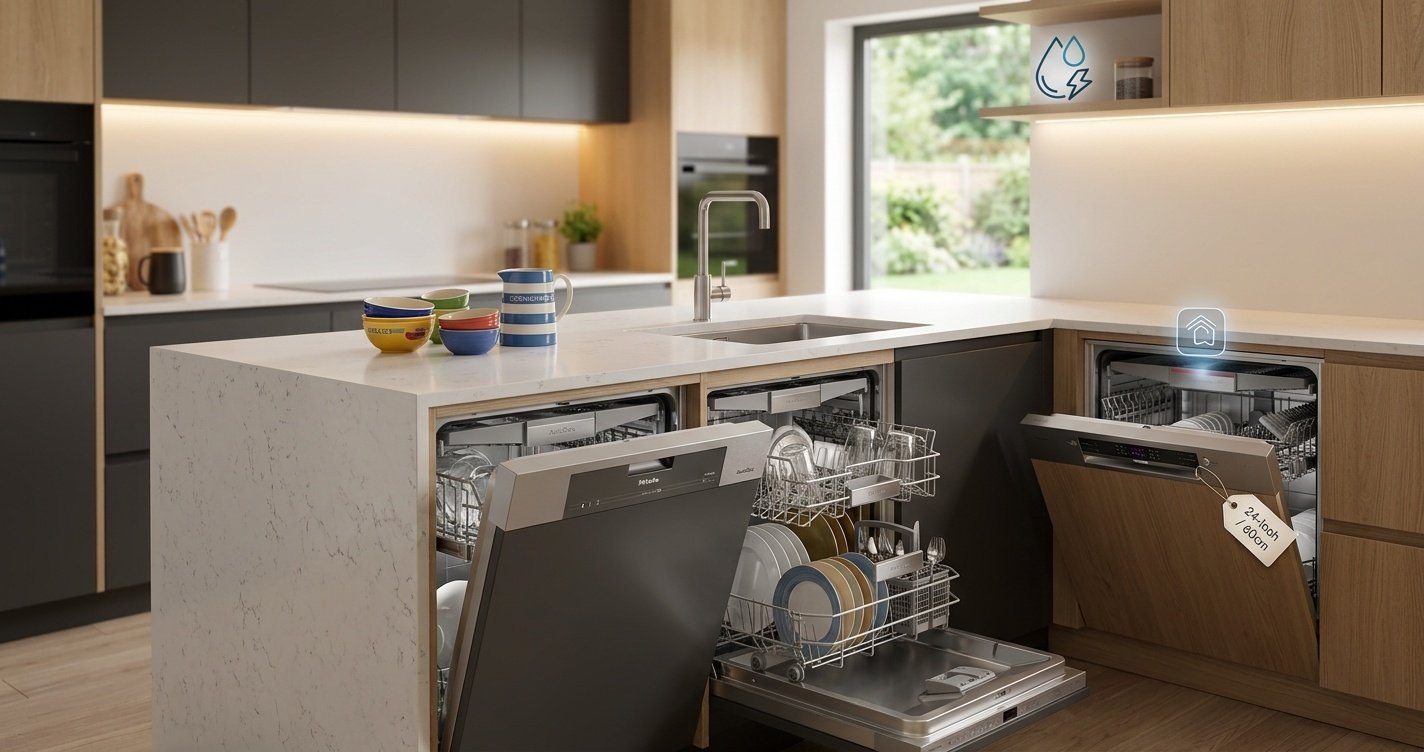
- Standard (full-size): typically 60cm wide, whether freestanding or fully integrated behind cabinetry.
- Slimline: narrower models that use less water per cycle in absolute terms, though Which? testing notes they tend to be less water-efficient per place setting than full-size machines.
- Integrated/built-under: designed to sit flush behind kitchen cabinetry, a very common configuration in UK kitchens compared to the US.
Energy Efficiency: What to Actually Look For
US: Energy Star Certification
Look for the Energy Star label specifically — it’s not the same as a brand simply claiming “energy efficient” on the box. Energy Star certification means the dishwasher meets strict efficiency criteria set by the US Environmental Protection Agency or Department of Energy, translating to real savings on both water and electricity bills over the appliance’s lifetime.
UK: The Energy Label and Real-World Testing
UK dishwashers carry an official energy efficiency rating, but Which?’s testing has found that the label alone doesn’t guarantee you’re getting the most efficient machine in practice — their lab tests based on the programs people actually use most often reveal meaningful differences in real running costs between machines with similar official ratings. As of Which?’s 2026 testing, annual cost estimates are based on running five normal washes per week at the UK’s October 2026 energy price cap of 26.32p per kWh.
Water Use
Full-size dishwashers in the UK use roughly half a litre of water per place setting, according to Which? testing — notably less per setting than most slimline models, even though slimline machines use less total water per cycle. In the US, most Energy Star-certified countertop and standard dishwashers use around 3.1 gallons of water per normal cycle.
Noise Level: A Bigger Deal Than It Sounds
Noise ratings matter more in 2026 than in past years, largely because open-plan kitchens have become the norm in both markets, and running a dishwasher overnight is increasingly common.
- Under 45 dBA: quiet enough for most open-plan kitchens.
- 39–42 dBA: especially unobtrusive, essentially inaudible over normal conversation.
- Above 50 dBA: noticeable and potentially disruptive, more common in older or budget models.
If quiet operation matters to you, check the specific decibel rating rather than assuming “quiet” as a marketing term means much on its own — some budget models still run as loud as 54–55 dB.
Features Worth Paying For (and Ones You Can Skip)
Worth prioritizing:
- Flexible or adjustable racks — fold-down tines and a third rack that can accommodate cutlery, small bowls, and oddly shaped items add genuine everyday convenience.
- Leak detection and filter alerts — practical smart features that prevent costly water damage or performance loss, more valuable day-to-day than flashier connected features.
- A half-load or zone-wash option — useful if you frequently run smaller loads and don’t want to waste water and energy on a full cycle.
- A genuinely quiet motor — as covered above, this affects your daily experience more than almost any other spec.
Worth deprioritizing:
- Full app control and remote start — convenient, but not essential; several well-reviewed models in both markets skip it entirely without hurting overall performance ratings.
- Brand name alone — testing from Which? and Tom’s Guide both show that mid-tier models from trusted brands often outperform flashier, more expensive options on actual cleaning and drying results.
Top Picks by Category (US)
- Best overall: Bosch 500 Series — stainless steel tub, three racks, 16 place settings, 44 dB, Energy Star certified with strong all-around cleaning performance.
- Best budget: Whirlpool WDP540HAMZ — hybrid stainless steel tub, spacious lower rack for taller items, and Energy Star certified, though it runs louder (around 55 dB) and offers fewer place settings than premium models.
- Best for small spaces: A compact countertop or portable dishwasher, typically holding 4–6 place settings, ideal for apartments or homes without dedicated plumbing.
Top Picks by Category (UK)
- Best overall performers: Which?’s 2026 testing consistently places Bosch and Miele among the top-rated brands across both freestanding and integrated categories, based on real-world cleaning and drying results rather than official energy labels alone.
- Best space-saving option: A fully integrated Bosch Series model is frequently recommended for kitchens that want the appliance to sit flush behind cabinetry while still running quietly.
- Best for smaller households: A slimline model, keeping in mind the water-efficiency trade-off per place setting compared to full-size machines.
US vs. UK: Key Differences at a Glance
| Factor | US | UK |
| Standard width | 24 inches | 60cm |
| Efficiency label | Energy Star | Official EU-style energy rating |
| Common built-in style | Freestanding or built-in | Integrated behind cabinetry very common |
| Typical place settings | 12–16 | Similar, though often described differently by brand |
| Popular compact option | Countertop/portable | Slimline |
| Independent testing reference | Tom’s Guide, Consumer Reports | Which? |
Frequently Asked Questions
What size dishwasher should I buy?
In the US, a standard 24-inch built-in dishwasher suits most households; in the UK, the equivalent is a 60cm standard model. Choose a portable/countertop (US) or slimline (UK) option if you have limited space or a smaller household.
Is Energy Star certification worth prioritizing?
Yes, in the US — it’s a strict, third-party certification rather than a general marketing claim, and it reliably indicates lower water and electricity use over the dishwasher’s lifetime.
Does the UK’s energy label guarantee the most efficient dishwasher?
Not entirely. Which?’s independent lab testing has found real-world efficiency differences between machines with similar official ratings, so it’s worth checking independent test results in addition to the label itself.
What noise level should I look for in a new dishwasher?
Under 45 dBA is quiet enough for most open-plan kitchens; models in the 39–42 dBA range are especially unobtrusive if noise is a top priority.
Are integrated dishwashers more common in the UK than the US?
Yes. Fully integrated, built-under dishwashers that sit flush behind cabinetry are a standard configuration in UK kitchens, while freestanding and built-in (visible-front) models are more typical in the US.
Do I need app control and smart features on a dishwasher?
Not necessarily. Several top-performing models in both the US and UK skip advanced app control entirely without any drop in cleaning or drying performance — prioritize practical features like leak detection and filter alerts instead.
Conclusion
A dishwasher bought in 2026 should genuinely make your daily routine easier, not just look impressive on a spec sheet — and getting there means looking past brand name and price tag to the details that actually affect daily use: size and configuration that fits your kitchen, a real efficiency certification rather than a marketing claim, a noise rating you can live with, and a rack system flexible enough for how you actually cook. Whether you’re shopping in the US or the UK, those fundamentals stay the same even as the specific models, labels, and common configurations differ between markets. Get those right, and the dishwasher you buy will serve you well for years, regardless of which country’s aisle you’re standing in.