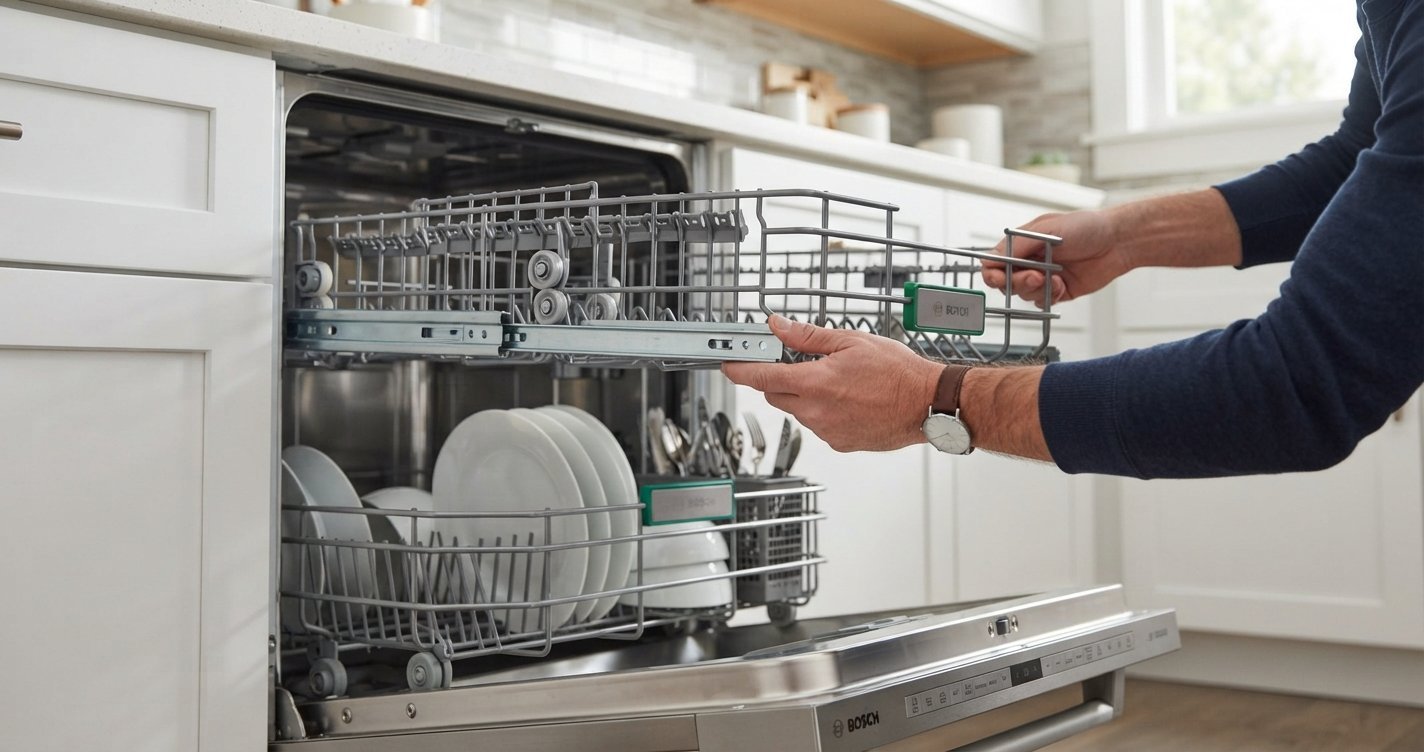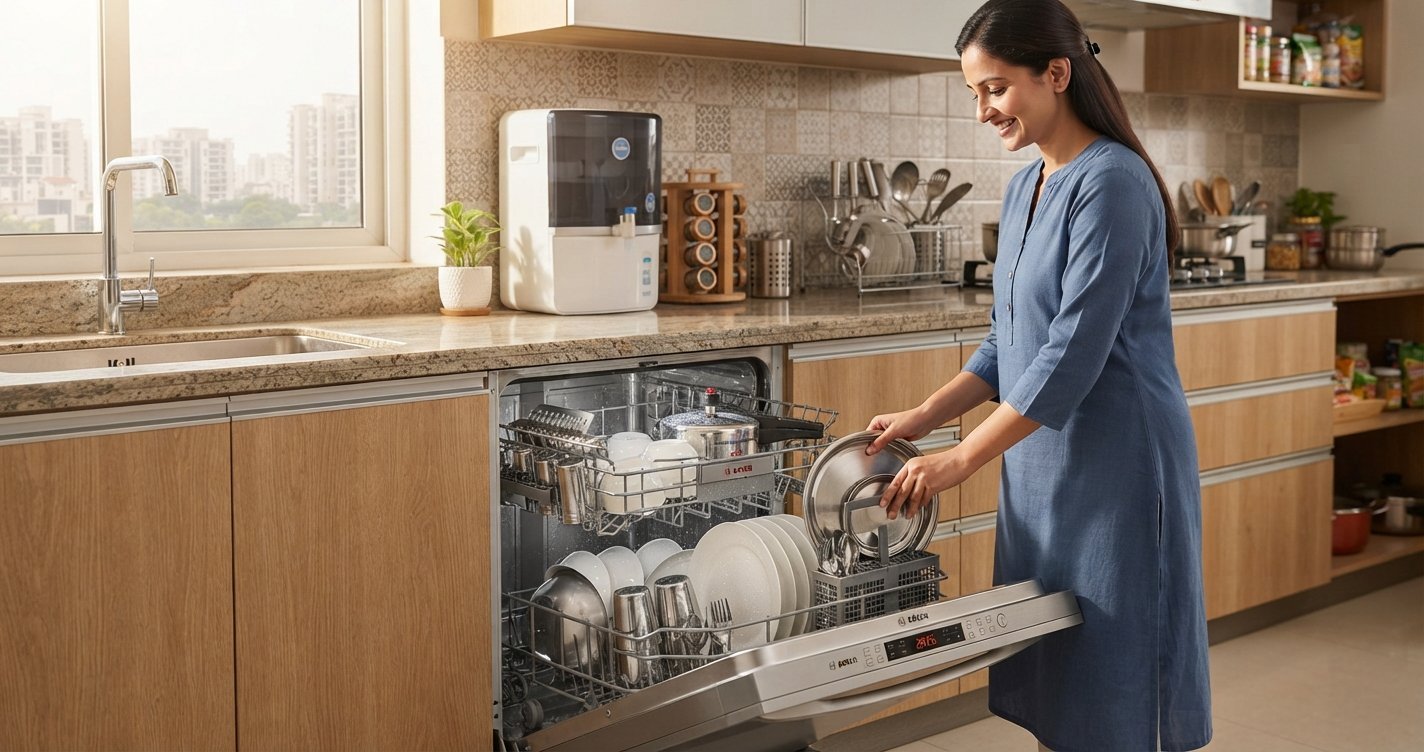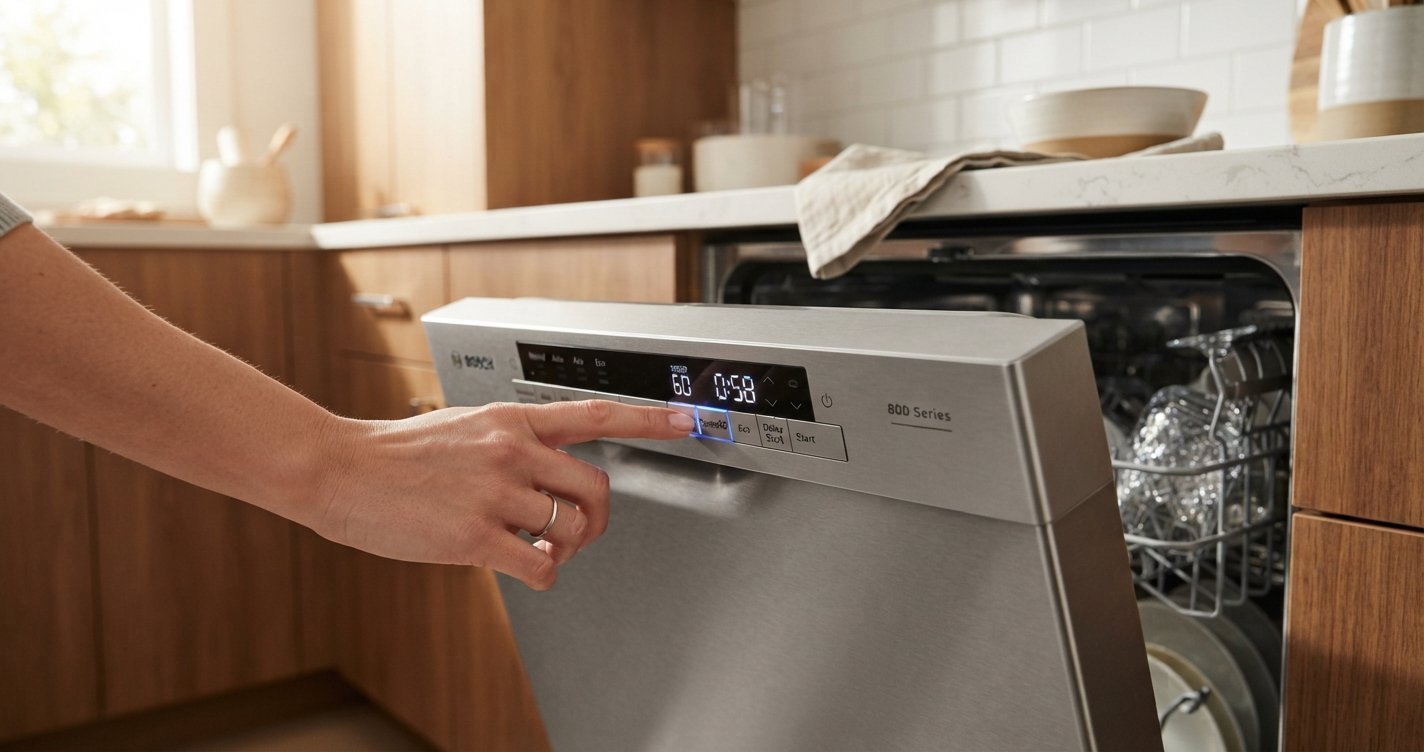
Load large, heavily soiled items like pots, pans, and plates on the bottom rack, facing inward toward the spray arms. Put glasses, mugs, and bowls on the middle rack, angled face-down so water drains properly. Use the third rack (if your model has one) or the silverware basket for utensils, placing one piece per slot with knives handle-up for safety. Never overlap or nest items, and use Bosch’s RackMatic feature to adjust the middle rack up or down depending on what you’re washing.
Read More: Third Rack Dishwasher: What It Is & Is It Worth It?
Table of contents
Before You Start Loading
A few quick habits make a bigger difference to your results than most people expect:
- Scrape, don’t rinse. Removing large food particles helps, but a full pre-rinse isn’t necessary — most dishwasher detergents are formulated to work with some grease and grime already on the dish, not against a spotless one.
- Check dishwasher safety first. Materials like aluminum, cast iron, pewter, brass, tin, and bronze are generally not suited for dishwashers, since they’re sensitive to high heat and can crack, warp, or discolor.
- Spin the spray arms by hand after loading. If a pot handle or oversized item blocks a spray arm from turning freely, water won’t reach parts of the load — rearrange anything that stops the arm from spinning.
How to Load the Bottom Rack
The bottom rack is built for your largest, most heavily soiled items — dinner plates, cookware, and serving platters — since it sits closest to the main spray arm and gets the most intensive wash.
- Place one dish per slot, facing inward toward the spray arms rather than stacking or leaning pieces together.
- Fold down flexible tines (a feature on Bosch’s 300 Series and up) to make room for large pots, mixing bowls, or baking sheets, and to help hold pots and pans upright.
- Position bowls and pots upside down so water can flow inside and drain out properly.
- Keep taller items and large platters around the perimeter or sides of the rack so they don’t block the spray arms or shadow smaller dishes from water and detergent.
- Never overlap or nest items — this is one of the most repeated pieces of advice across loading guides because nested dishes block water from reaching hidden surfaces.
How to Load the Middle Rack
The middle rack is designed for smaller, more delicate items — glasses, mugs, bowls, and cups — that benefit from a gentler wash and a dedicated space away from heavier cookware.
- Position wine glasses and coffee mugs face down, and at an angle, rather than perfectly upright, so water doesn’t pool inside the base.
- Arrange items between the tines, not resting on top of them, to keep glassware secure during the cycle.
- Use Bosch’s RackMatic feature, which adjusts the middle rack into nine different positions — raise it to fit taller pots on the bottom rack, or lower it to accommodate tall stemware.
- Keep glasses and cups spaced apart so they don’t knock against each other and chip or break during the wash.
How to Load the Third Rack (or Silverware Basket)
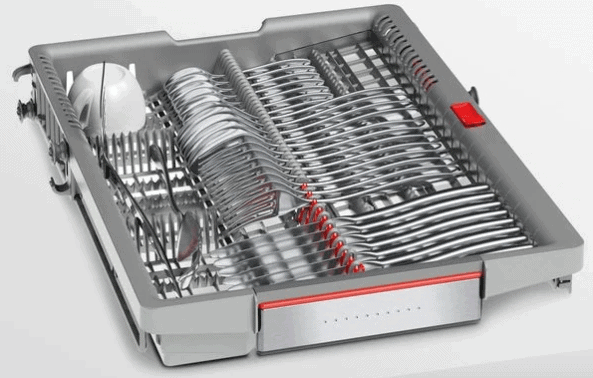
If your Bosch model has a third rack — Bosch’s version is called MyWay™ and offers the largest loading capacity of any third rack on the market — use it for silverware, large utensils, measuring cups, cereal bowls, and coffee mugs. If your model only has two racks, use the silverware basket in the bottom rack instead.
- One utensil per slot results in noticeably better cleaning, since nested spoons or forks block water from reaching the food-contact surfaces.
- Place knives handle-up for safety when unloading, while forks and spoons generally go handle-down so water reaches the parts that touched food.
- Mix different utensil types in the same section rather than grouping all spoons or all forks, which reduces nesting.
- If you don’t have a third rack, lay longer utensils flat across the bottom rack instead of standing them upright in a basket, so they don’t fall through and get caught in the spray arms.
Common Loading Mistakes to Avoid
- Overcrowding the dishwasher. More space between items means better water and detergent access — resist the urge to squeeze in one more bowl.
- Blocking the detergent dispenser. A poorly placed pan lid or platter can prevent the dispenser from opening mid-cycle properly.
- Nesting bowls or stacking plates directly on top of each other. Even briefly touching surfaces can trap food residue that the spray arms can’t reach.
- Loading tall items on the top rack. Anything too tall can stop the spray arm above it from spinning freely, leaving the rest of that load under-cleaned.
- Placing plastics on the bottom rack. Even dishwasher-safe plastic items are safer on the top rack, farther from the heating element, to avoid warping.
How to Unload a Bosch Dishwasher
Unload the bottom rack first. Since water can drip down from the middle and top racks as you remove dishes, unloading top to bottom risks dripping onto already-dry items below. Waiting about five minutes after the cycle ends before unloading also gives dishes a bit more time to finish air-drying, which can reduce spotting.
Frequently Asked Questions
What goes on the bottom rack of a Bosch dishwasher?
Large, heavily soiled items — dinner plates, pots, pans, mixing bowls, and serving platters — since the bottom rack sits closest to the main spray arm for the most intensive wash.
Can I put plastic containers in a Bosch dishwasher?
Yes, as long as the item is labeled dishwasher safe, but it’s best placed on the top rack, farther from the heating element, to reduce the risk of warping.
Do I need to rinse dishes before loading them into a Bosch dishwasher?
No — scraping off large food particles is enough. A full pre-rinse isn’t necessary and can actually reduce how well some detergents perform, since many formulas are designed to bind with some remaining grease and grime.
How should I load knives in a Bosch dishwasher?
Place knives with the handle facing up for safety when unloading. Forks and spoons are generally loaded handle-down so water reaches the food-contact surfaces.
What is RackMatic on a Bosch dishwasher?
It’s Bosch’s adjustable middle-rack system, which moves into nine different height positions — letting you fit taller pots on the bottom rack or taller wine glasses on the middle rack as needed.
Why are my dishes coming out with spots or leftover food after a cycle?
The most common cause is improper loading — overcrowding, nesting, or blocking a spray arm — rather than a problem with the detergent or cycle setting. Reviewing your loading pattern against rack-by-rack guidance is usually the fastest fix.
Conclusion
Loading a Bosch dishwasher correctly comes down to matching each rack to what it’s actually built for: heavy, soiled items on the bottom near the strongest spray, delicate glassware angled on the middle rack, and utensils spread out individually rather than clustered together. Small habits — scraping instead of rinsing, spinning the spray arms by hand after loading, and using RackMatic to adjust for taller items — often make a bigger difference to your results than the detergent or cycle you choose. Get the loading pattern right, and most “my dishwasher isn’t cleaning properly” complaints solve themselves without any repair or troubleshooting needed.