A dishwasher that won’t drain is almost always caused by a clogged filter, a blocked or kinked drain hose, a clogged garbage disposal or air gap, or — on a newly installed disposal — a knockout plug that was never removed. Cleaning the filter alone resolves roughly 40% of cases and takes about two minutes. Running the garbage disposal and checking the drain hose for kinks solve most of what’s left. If none of that works, the drain pump itself may have failed, which generally requires a technician.
Read more: Third Rack Dishwasher: What It Is & Is It Worth It?
Table of contents
Why Dishwashers Stop Draining
Water leaves your dishwasher through a specific path: it passes through the filter at the bottom of the tub, gets pushed by the drain pump through the drain hose, and exits either into a garbage disposal or directly into your sink’s drain line. A blockage anywhere along that path — even a partial one — can leave standing water in the tub after a cycle finishes. That’s why troubleshooting works best in order, starting with the most common and easiest-to-check cause first.
Step-by-Step: How to Fix a Dishwasher That Won’t Drain
1. Clean the Filter (Start Here)
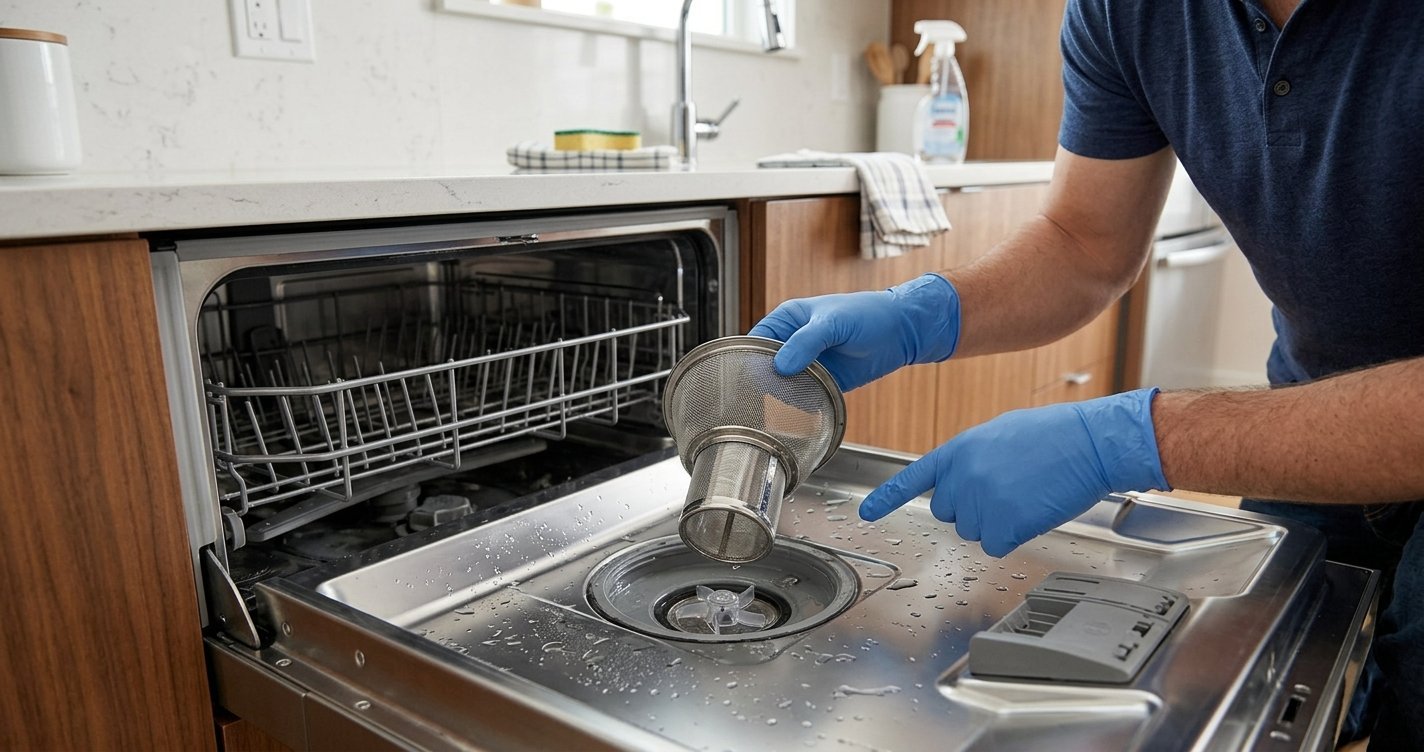
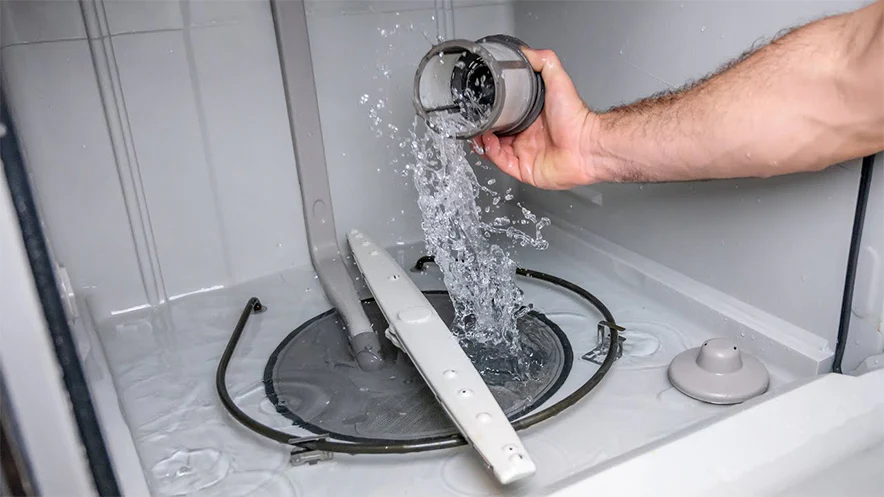
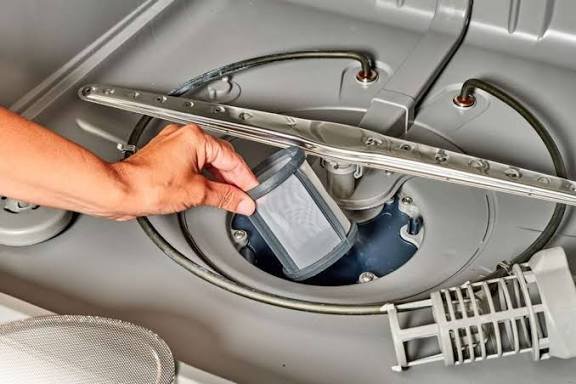
This is the single most common cause of a non-draining dishwasher, and the easiest to fix. Most modern dishwashers have a removable filter at the bottom of the tub, usually beneath the lower spray arm. Twist it counterclockwise to unlock, lift it out, and rinse thoroughly under warm water. Use a soft brush (an old toothbrush works well) to remove built-up food, grease, or mineral buildup — never a wire brush or scouring pad, which can damage it. Reinstall the filter flat and locked, then run a rinse cycle to check whether draining has improved.
2. Run the Garbage Disposal
If your dishwasher drains through a garbage disposal, a full or clogged disposal can block the entire drain path even if the dishwasher itself is working fine. Run the disposal with cold water for about 30 seconds before starting the dishwasher to clear any leftover food from the shared line.
3. Check for a Garbage Disposal Knockout Plug
This is a surprisingly common and often-overlooked cause, especially after a new disposal installation. Inside the disposal’s dishwasher inlet port sits a plastic knockout plug that must be punched out before the dishwasher can drain through it. If a disposal was installed or replaced recently and drainage issues started right after, disconnect the drain hose from the disposal inlet and look inside. If you see a solid plastic disc blocking the opening, use a screwdriver and hammer to knock it inward, then remove the loose plug from inside the disposal.
4. Inspect the Drain Hose for Kinks or Clogs
The hose that carries water from the dishwasher to the disposal or sink drain can develop a kink from being pushed too far back, or an internal clog from accumulated grease and food debris. Pull the dishwasher out slightly to access the hose, check its full length for sharp bends, and straighten any kinks you find. For a suspected clog, disconnect both ends of the hose (with a bucket ready), flush it with water, and use a bottle brush or straightened wire to clear any blockage before reconnecting.
5. Check the Drain Hose’s High Loop
The drain hose should loop up high before connecting to the drain or disposal. Without this high loop, water can siphon back into the dishwasher instead of draining out completely, which can look like a drainage failure even when nothing is actually clogged.
6. Clean the Air Gap
If your sink has an air gap (a small cylindrical fitting on the countertop near the faucet), it can become clogged with debris and prevent proper drainage. Remove the air gap cap, clean out any buildup with a small brush and warm water, and reinstall it securely.
7. Rule Out an Interrupted Cycle
If the dishwasher was stopped mid-cycle, it may not have completed its draining step, leaving standing water that isn’t actually caused by a clog. Try resetting the dishwasher and running a new full cycle uninterrupted to see if the water clears on its own.
8. Listen for the Drain Pump
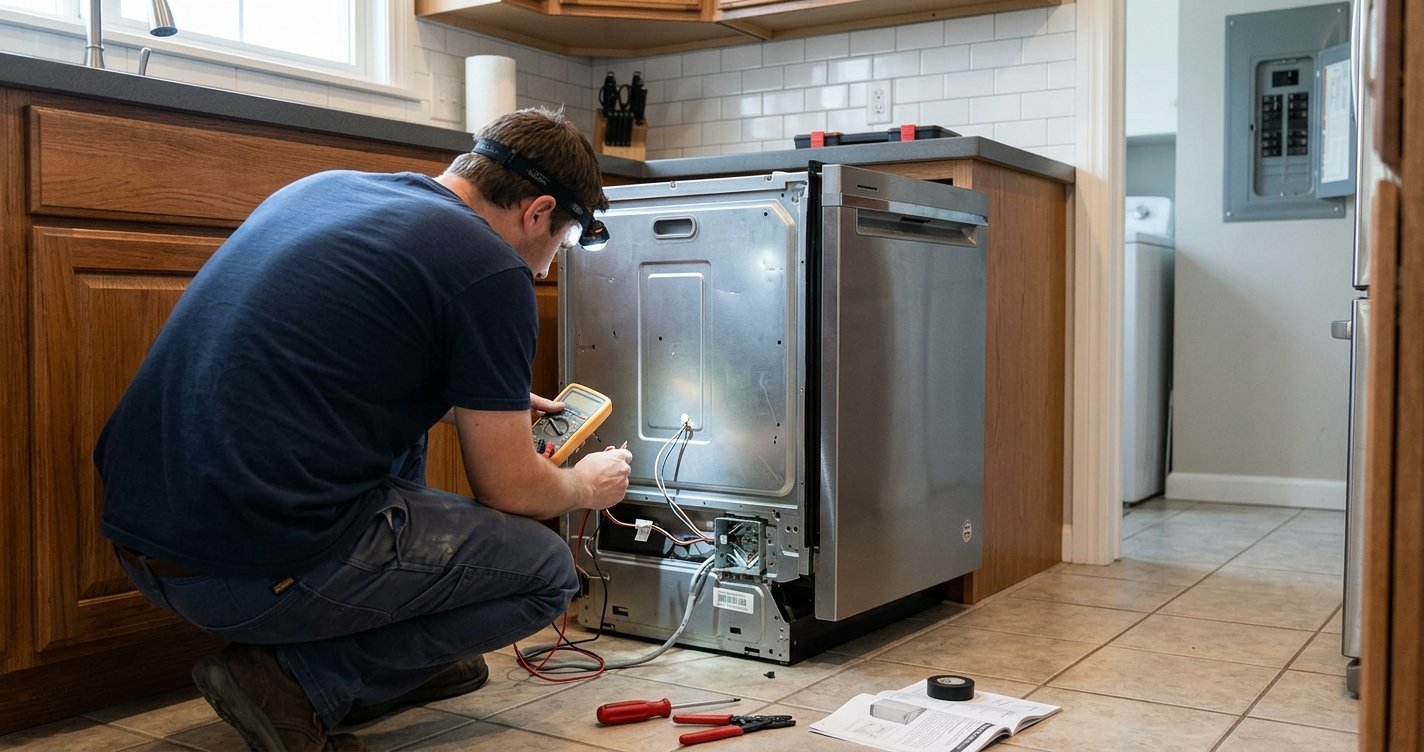
Once you’ve ruled out a filter, hose, or disposal blockage, listen during the drain cycle. A healthy drain pump makes a distinct humming sound. Silence during the drain cycle usually points to pump failure, while a loud grinding sound can indicate something jamming the impeller — both are signs you’ll likely need a technician.
A Note on Chemical Drain Cleaners
Never use Drano, Liquid-Plumr, or similar chemical drain cleaners in a dishwasher. These products can damage the rubber seals, gaskets, and plastic components inside the pump and drain path, and they can leave chemical residue that contaminates future wash cycles. If you want a cleaning product specifically for the dishwasher itself, use a dedicated dishwasher cleaning tablet instead.
When to Call a Technician
Most drainage problems are solvable with the DIY steps above, but call a professional if:
- You’ve cleaned the filter, checked the hose, and cleared the disposal, and water is still standing in the tub.
- The drain pump is silent or grinding during the drain cycle, suggesting a failed motor or jammed impeller.
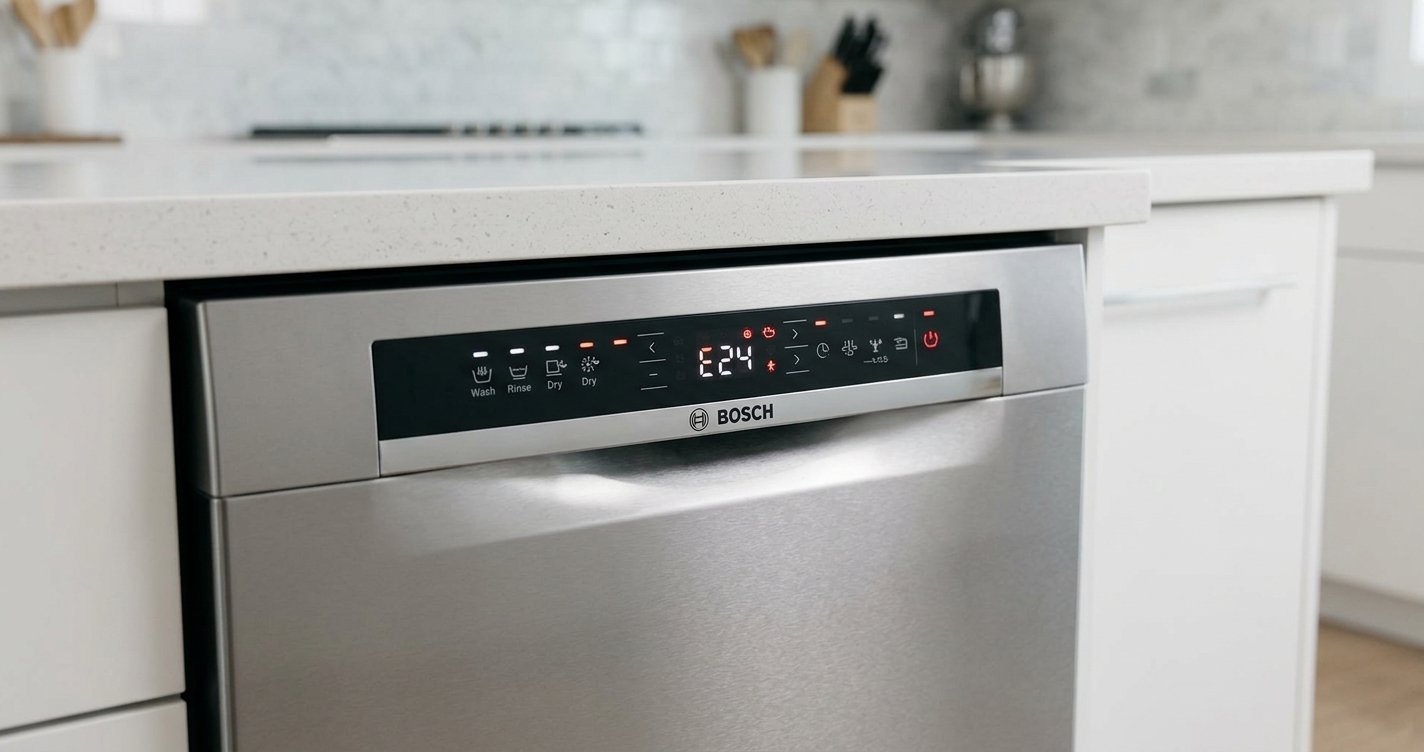
- Your dishwasher displays a specific drain-related error code (for example, F8 E1 or F9 E1 on some Whirlpool models, or E24/E25 on some Bosch models) that persists after basic troubleshooting.
- You notice water backing up into your sink as well, which may point to a clog further down the shared drain line rather than the dishwasher itself.
How Much Standing Water Is Normal?
A small amount of water remaining in the filter area after a cycle is normal — it helps keep the seals in that area from drying out. The concern is excessive standing water covering the bottom of the tub after a complete cycle, which almost always points to one of the blockages above rather than being a normal part of operation.
Frequently Asked Questions
Why is my dishwasher not draining?
The most common cause is a clogged filter, followed by a blocked drain hose, a full garbage disposal, or (on a new installation) a knockout plug that was never removed from the disposal inlet.
How do I know if it’s my dishwasher or my sink that’s clogged?
Run your garbage disposal while the dishwasher is off. If water still backs up into the sink, the clog is likely in your sink’s plumbing rather than the dishwasher itself.
Can I use Drano to unclog my dishwasher?
No. Chemical drain cleaners can damage the dishwasher’s internal seals, gaskets, and plastic components, and can leave residue that affects future wash cycles.
How often should I clean my dishwasher filter?
Roughly once a month under normal use, though homes with hard water may need to clean it more frequently due to faster mineral buildup.
Is standing water in my dishwasher always a problem?
A small amount around the filter area is normal and helps prevent seals from drying out. Excessive standing water covering the bottom of the tub after a full cycle indicates a genuine drainage issue.
Why did my dishwasher stop draining right after I installed a new garbage disposal?
This is a very common and specific cause: a plastic knockout plug inside the disposal’s dishwasher inlet often isn’t removed during installation, which completely blocks the drain path until it’s knocked out.
Conclusion
A dishwasher that won’t drain is one of the more frustrating appliance problems to face, but it’s also one of the most fixable without professional help. Start with the filter — it resolves the largest share of cases in about two minutes — then work through the garbage disposal, knockout plug, and drain hose before assuming anything is seriously broken. These checks cover the vast majority of drainage complaints. If you’ve gone through all of them and water is still sitting in the tub, a failed drain pump is the most likely remaining cause, and that’s the point where calling a technician makes more sense than continuing to troubleshoot on your own.