According to Owala’s own official FAQ, all Owala lids are top-rack dishwasher safe, and straws can go straight into the silverware bin. The bottle body depends on material: Eastman Tritan™ plastic bottles are fully top-rack dishwasher safe, but stainless steel bottle bodies, while technically dishwasher safe, are strongly recommended for hand washing to preserve their finish and insulation. In short — always dishwasher-safe: lids and straws. Top-rack safe: Tritan plastic bodies. Hand wash recommended: stainless steel bodies.
Read More: Dishwasher Won’t Start but Has Power: Fixes
Table of contents
Which Owala Parts Are Actually Dishwasher Safe?
Owala bottles come apart into a few distinct pieces, and dishwasher safety varies by part rather than being one blanket answer for the whole bottle.
Lids — Always Top-Rack Dishwasher Safe
Owala states directly that all lids, across every bottle line, are top-rack dishwasher safe and designed for easy cleaning. This includes the FreeSip lid’s push-button mechanism and hinged carry loop. For the most thorough clean, remove the spout gasket first using its built-in pull tab and wash it separately — leaving it in place traps moisture and residue underneath, creating an environment where mold can develop.
Straws — Dishwasher Safe, Silverware Bin
The straw simply pulls out and can go directly into your dishwasher’s silverware basket alongside your regular utensils.
Tritan Plastic Bottle Bodies — Fully Top-Rack Dishwasher Safe
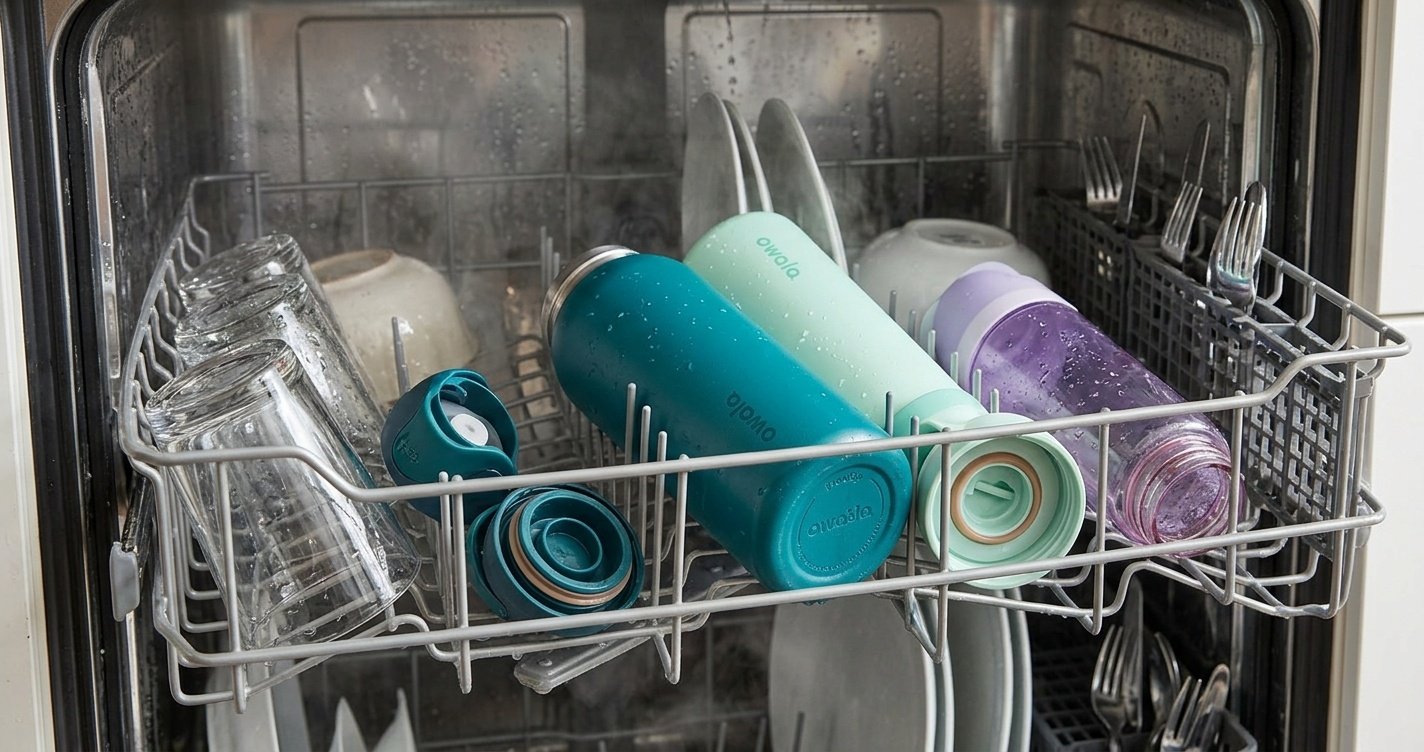
If your Owala bottle (commonly a FreeSip or Flip model) is made of Eastman Tritan plastic, Owala’s official guidance is that all parts, including the cup body itself, are top-rack dishwasher safe. This is the one bottle type where you can wash the entire thing — lid, straw, and body — in a single dishwasher load without hand washing being necessary.
Stainless Steel Bottle Bodies — Technically Safe, Hand Wash Recommended
Stainless steel Owala bodies are technically dishwasher safe, but Owala explicitly recommends hand washing them to maintain their finish. The concern isn’t just cosmetic: the high heat and water pressure inside a dishwasher can potentially affect the double-wall vacuum insulation that keeps drinks cold or hot, and metal items jostling around during a cycle can scratch the exterior finish over time.
How to Clean an Owala Bottle in the Dishwasher
- Disassemble the bottle fully — remove the lid from the body, pull out the straw, and detach the spout gasket using its pull tab.
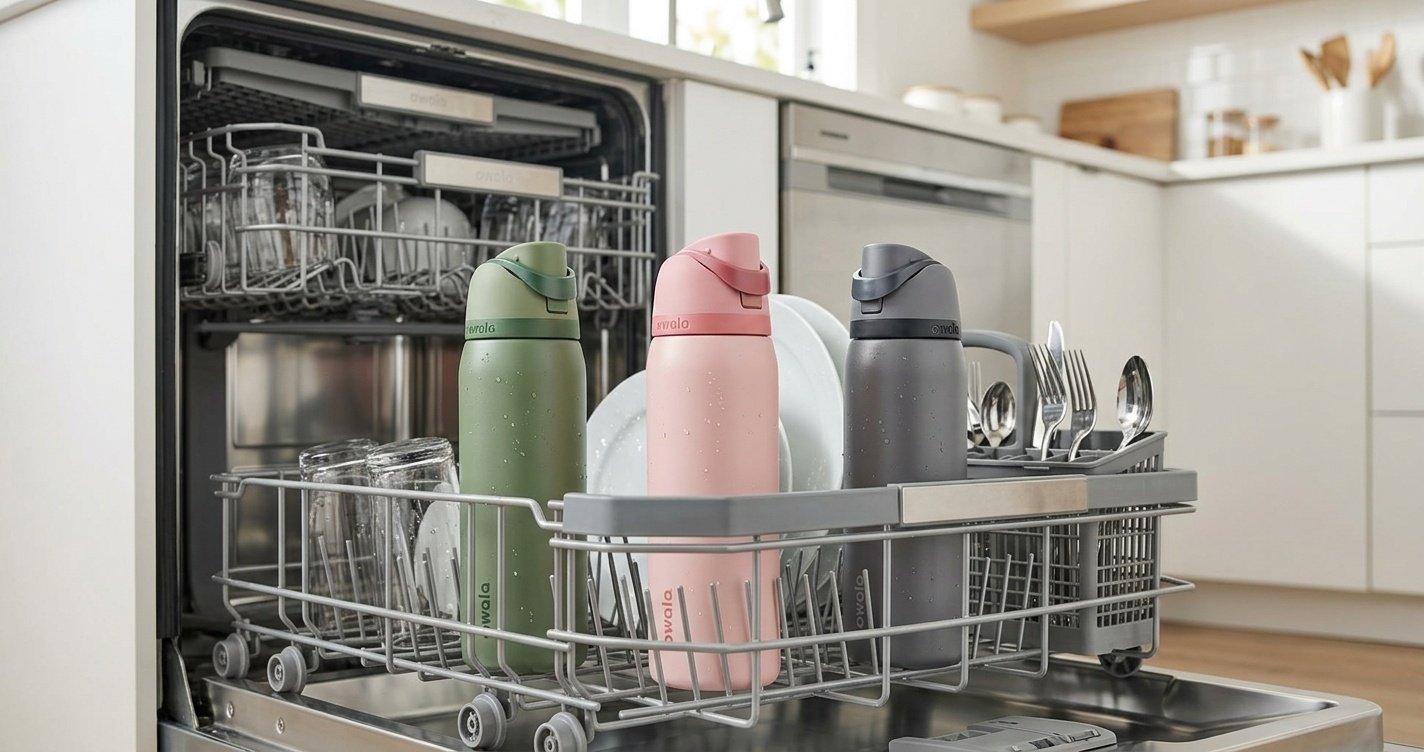
- Place the lid on the top rack, away from the heating element.
- Put the straw in the silverware basket.
- For Tritan plastic bodies, place the bottle securely upright on the top rack or in the silverware bin so it doesn’t tip over or knock against metal items during the cycle.
- Skip harsh chemicals. Owala’s own care instructions specifically advise against bleach and abrasive cleaners on any part of the bottle.
- Avoid the heated dry cycle if possible, since repeated heat exposure can gradually stiffen or wear down silicone gaskets faster.
How to Hand Wash a Stainless Steel Owala Bottle
Since Owala recommends hand washing stainless steel bodies, here’s the routine that keeps them looking newest longest:
- Rinse the bottle with warm water after each use.
- Wash with warm, soapy water and a bottle brush to reach the bottom thoroughly.
- Soak lid components in distilled white vinegar beforehand if there’s stubborn buildup in the smaller crevices — it helps break down residue before rinsing.
- Rinse thoroughly and let the bottle air dry completely to prevent mold, especially around the lid area.
Common Owala Cleaning Mistakes to Avoid
- Leaving the spout gasket in place during a wash. It traps moisture and becomes a common source of mold and lingering odor if not removed and cleaned separately.
- Using bleach or abrasive scrubbers. Owala’s own instructions warn against harsh chemicals, which can degrade plastic and silicone components faster than normal wear.
- Washing the stainless steel body in the dishwasher out of convenience. It’s technically allowed, but repeated dishwasher cycles are more likely to affect the finish and insulation performance than hand washing would.
- Forcing a stiff gasket pull tab. If the tab doesn’t lift cleanly after repeated washes, work a fingernail gently under the opposite edge instead of yanking on the tab, which can tear or stretch the silicone.
- Microwaving any Owala bottle. Regardless of dishwasher safety, Owala strongly discourages microwaving any of its bottles, since pressure buildup can cause the lid to pop open unexpectedly.
Frequently Asked Questions
Are Owala water bottles dishwasher safe?
Yes, with some nuance: lids and straws are always dishwasher safe (top rack for lids), Tritan plastic bottle bodies are fully top-rack dishwasher safe, and stainless steel bodies are technically dishwasher safe but recommended for hand washing instead.
Can I put the Owala FreeSip lid in the dishwasher?
Yes. Owala states all lids are top-rack dishwasher safe. For best results, remove the spout gasket first and clean it separately.
Should I hand wash my stainless steel Owala bottle?
Owala recommends it, yes. While technically dishwasher safe, hand washing better preserves the finish and helps protect the bottle’s double-wall vacuum insulation over time.
Can I put the Owala straw in the dishwasher?
Yes, the straw can go directly into the silverware bin of your dishwasher.
Why is my Owala bottle leaking after I put it in the dishwasher?
This is often traced back to the spout gasket, which can stiffen or deform after repeated dishwasher cycles. Once the gasket loses its shape, it won’t reseat correctly, which is the most common cause of an Owala that suddenly starts leaking.
Can I microwave my Owala bottle since it’s dishwasher safe?
No. Dishwasher safety and microwave safety are unrelated for Owala products — the brand strongly discourages microwaving any of its bottles due to pressure buildup risks.
Conclusion
Owala designed its bottles to be genuinely low-maintenance, and the dishwasher-safety answer reflects that: lids and straws can go in every time without a second thought. Where it gets more nuanced is the bottle body itself — Tritan plastic bottles get the same easy top-rack treatment, but stainless steel bodies are the one component Owala specifically asks you to hand wash to protect the finish and insulation. Follow that simple split, remove the spout gasket before washing, and skip harsh chemicals, and an Owala bottle will hold up to daily use for a long time without leaks or premature wear.