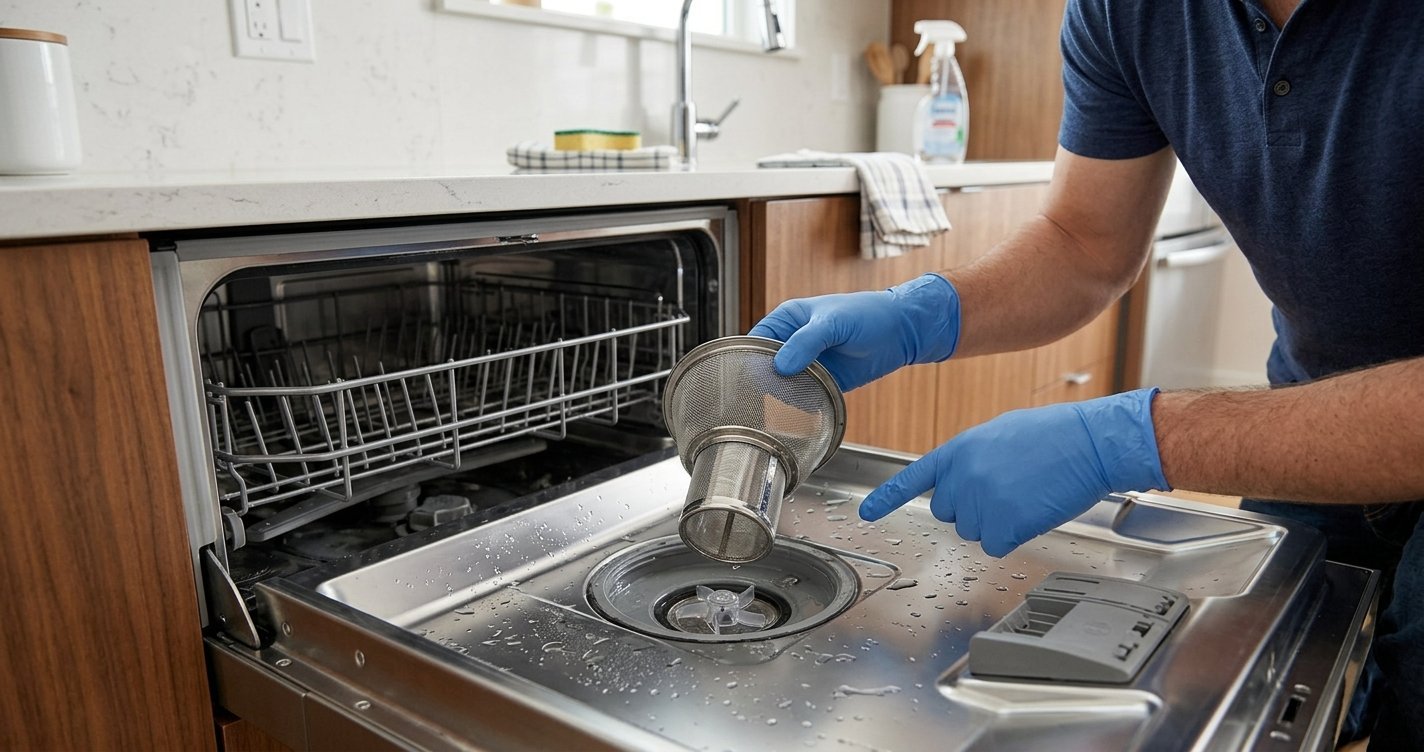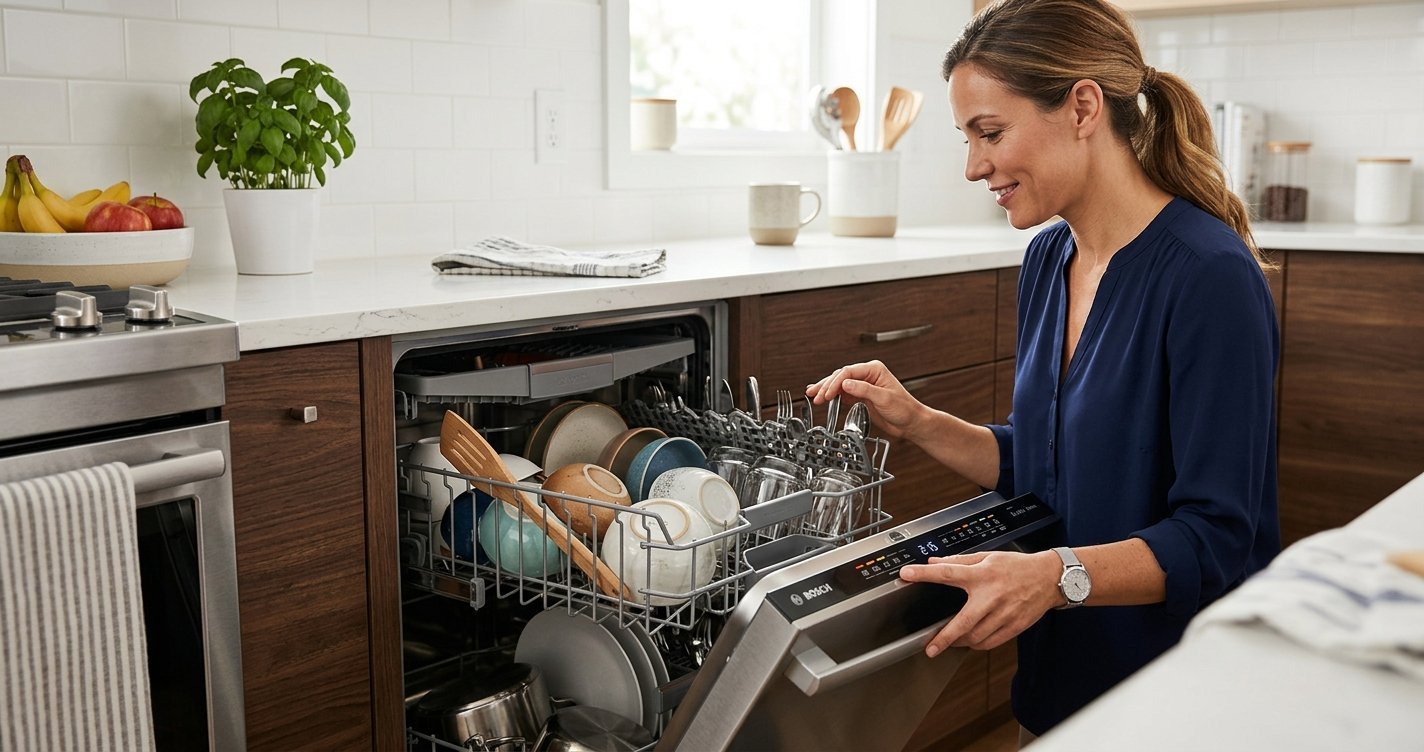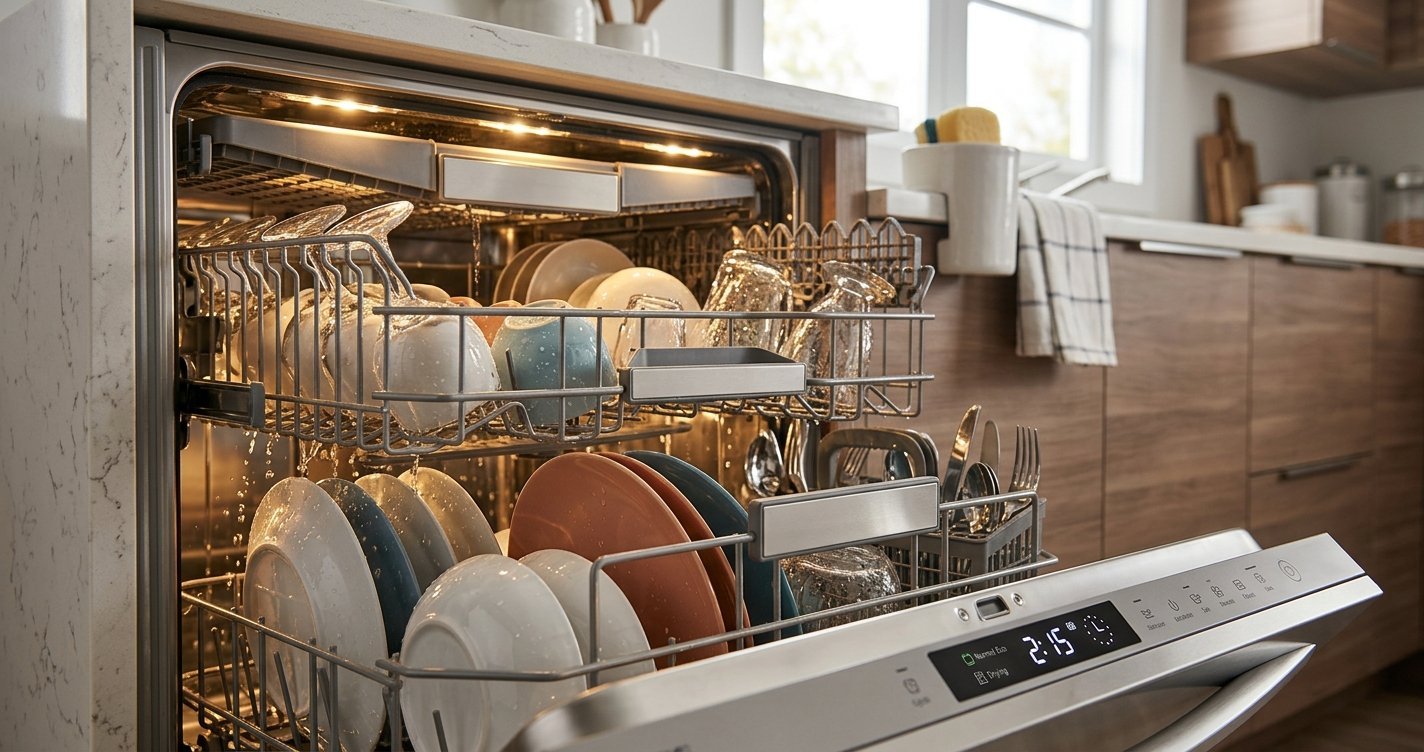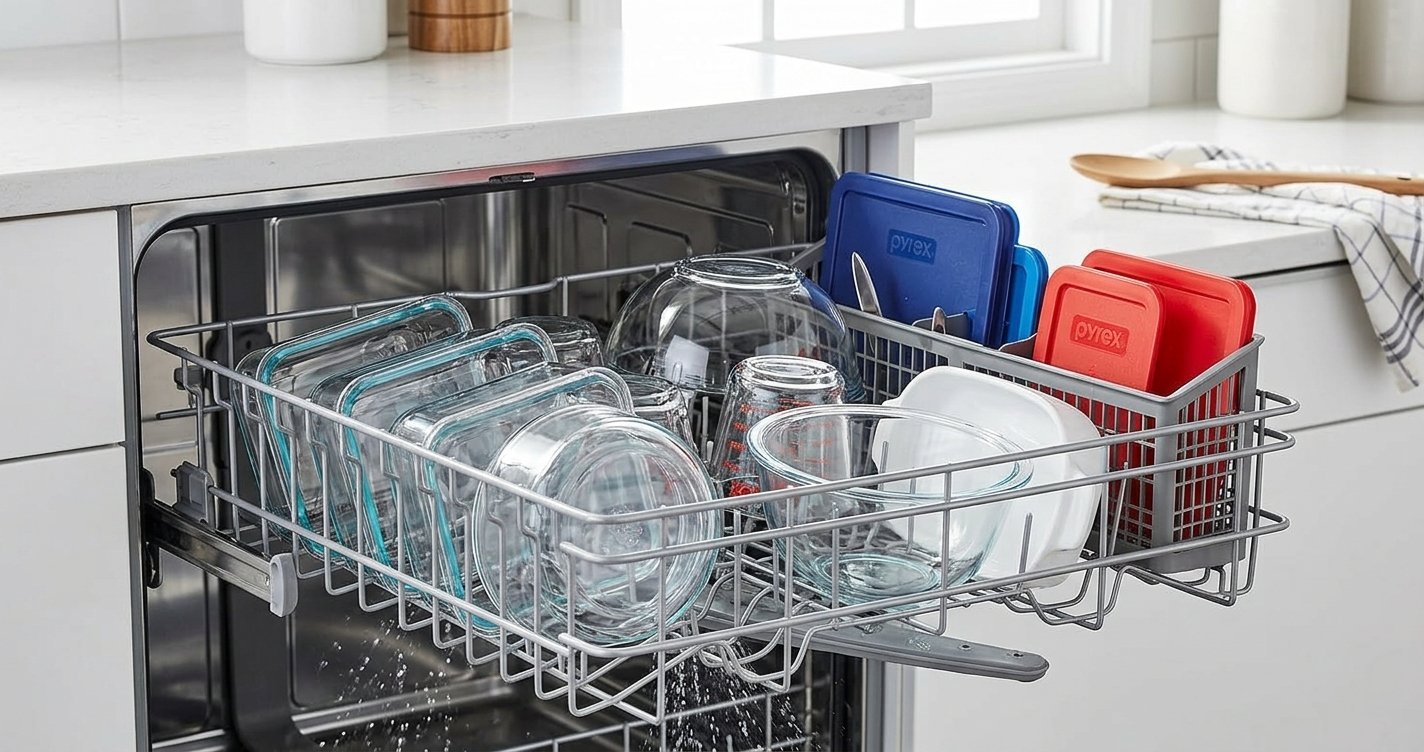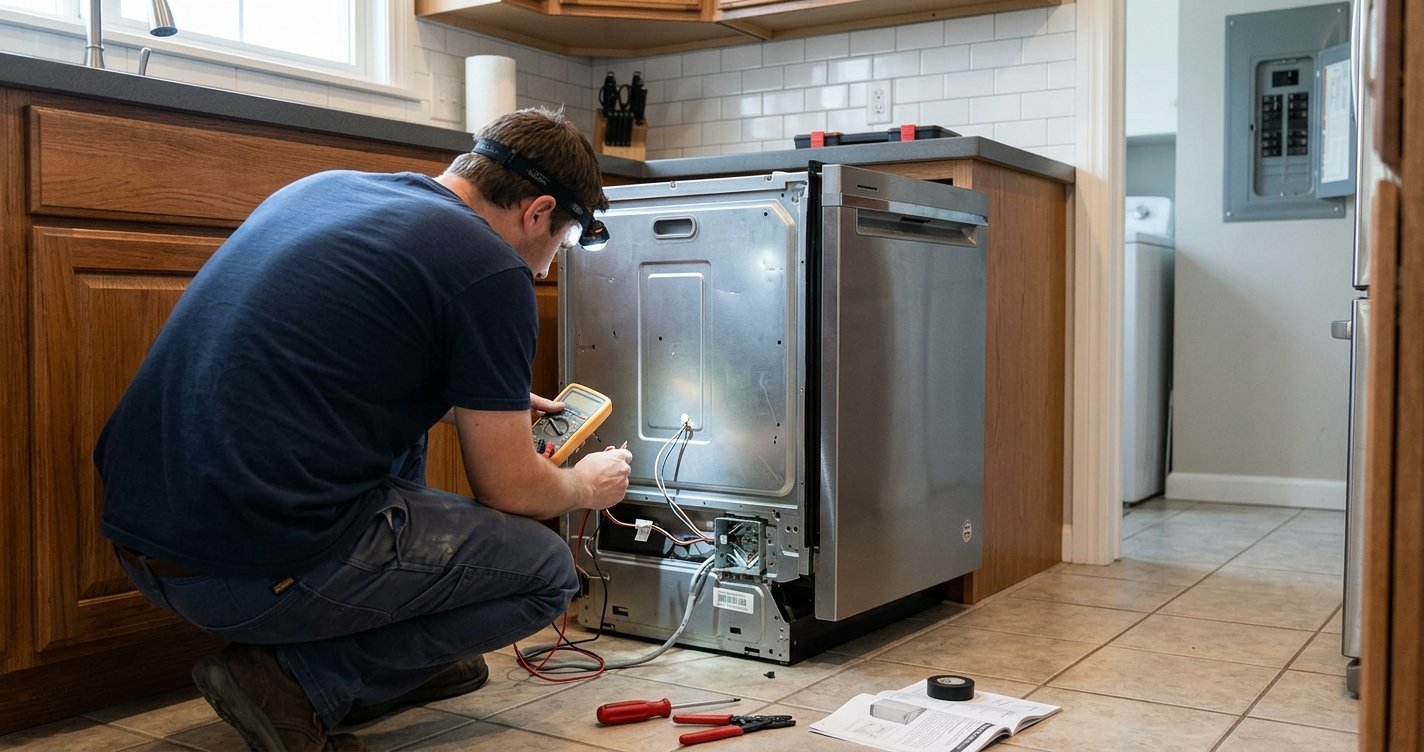
To clean a Bosch dishwasher drain, switch off the dishwasher’s power, remove the bottom rack, take out the drain filter, and wash it with warm water, mild dish soap, and a soft brush. Carefully remove standing water and inspect the drain pump beneath the filter for food particles or other obstructions. Reinstall all components securely and run a short cycle to check drainage.
Always consult your specific Bosch dishwasher manual before removing the pump cover because the design and removal procedure can vary by model.
Read More: How to Operate a Bosch Dishwasher: A Complete Guide
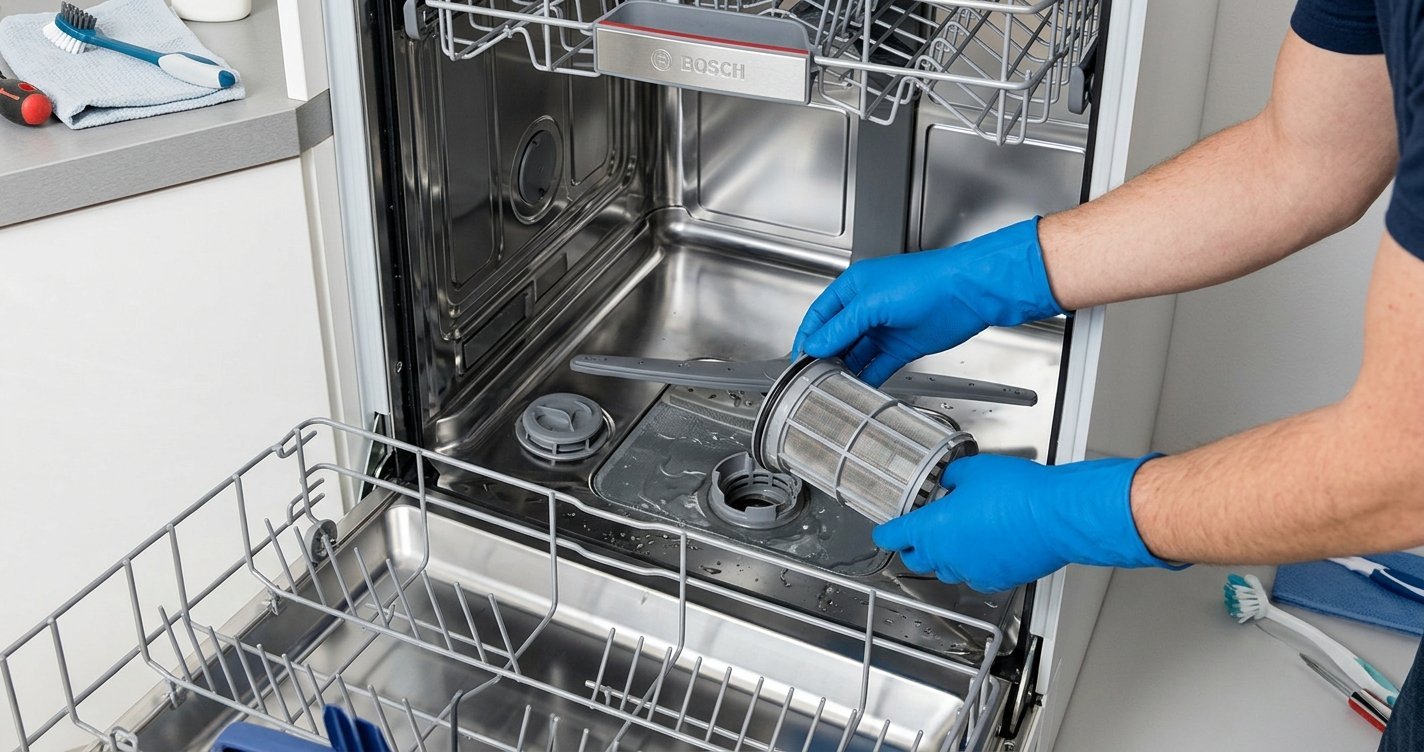
Table of contents
Why Is Your Bosch Dishwasher Not Draining?
Before cleaning the drain, it helps to understand what might be causing the problem.
Common causes include:
- Clogged drain filter: Food scraps, grease, and other debris accumulate in the filter and restrict water flow.
- Blocked drain pump: Small objects, food particles, or broken glass can obstruct the pump.
- Kinked drain hose: A bent or twisted hose can prevent wastewater from flowing out.
- Blocked sink drain or garbage disposal: A blockage in the connected plumbing can interfere with dishwasher drainage.
- Loose or incorrectly installed pump cover: The pump cover must be properly secured for the pump to function as intended.
- Faulty drain pump: If cleaning does not resolve the problem, the pump or another component may need professional attention.
Bosch identifies food debris in the filter or pump as a common reason for drainage problems. Source: Bosch dishwasher troubleshooting.
What You Need to Clean a Bosch Dishwasher Drain
Gather the following supplies before starting:
- Soft cleaning brush or old toothbrush
- Microfiber cloth
- Sponge or small cup for removing standing water
- Warm water
- Mild dish soap
- Protective gloves
- Flashlight, if needed
You generally do not need specialized tools to clean the filter. Some Bosch models require a suitable utensil, such as a spoon, to release the drain pump cover according to the owner’s manual.
Important safety tip: Disconnect the dishwasher from its power supply before accessing the drain pump. Water may conceal sharp glass fragments or other debris, so wear protective gloves and never reach blindly into the pump opening.
Step-by-Step: How to Clean Bosch Dishwasher Drain
Follow these steps to clean the filter and inspect the drain pump safely.
Step 1: Turn Off the Dishwasher
Switch off the dishwasher and disconnect it from the electrical supply before beginning work.
If the appliance is hardwired or you cannot safely access the plug, switch off the appropriate circuit breaker. Confirm that the appliance is no longer powered.
Allow hot water inside the dishwasher to cool before handling it.
Step 2: Remove the Bottom Dish Rack
Open the dishwasher door and slide out the lower rack.
Set it aside so you can access the filter assembly at the bottom of the dishwasher tub.
Remove any large pieces of food or other loose debris you can see without reaching into the pump opening.
Step 3: Remove the Drain Filter
Locate the filter assembly at the bottom of the dishwasher, usually near the center of the tub.
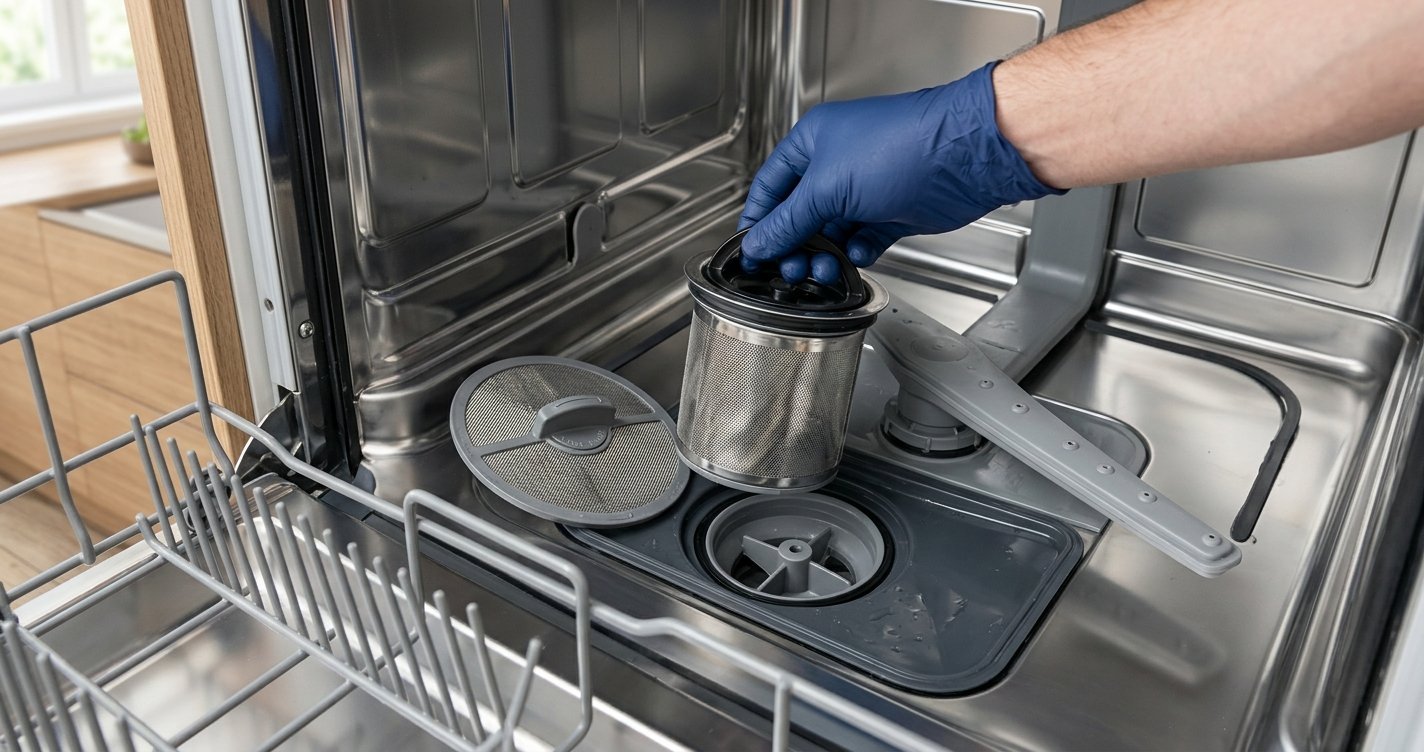
On many Bosch models, the filter can be removed by turning its locking mechanism counterclockwise and lifting it out. However, the exact design may differ.
Carefully remove the filter without forcing it. If it does not release easily, check your model’s owner’s manual for the correct removal procedure.
Step 4: Clean the Filter Thoroughly
Rinse the filter under warm running water to remove loose food particles and residue.
Use a soft brush and a small amount of mild dish soap to clean the mesh and other filter surfaces. Pay particular attention to greasy buildup and debris trapped in the filter openings.
If your model has a multi-part filter assembly, separate the components only as instructed in the manual and clean each removable piece.
Avoid abrasive scouring pads, harsh chemicals, or tools that could damage the filter mesh.
Rinse all components thoroughly before reinstalling them.
Step 5: Remove Standing Water From the Dishwasher
If water remains at the bottom of the dishwasher, remove it with a sponge, small cup, or absorbent cloth.
Continue until the area around the filter and drain pump is visible.
A small amount of water in the sump may be normal on some models. However, water that covers the dishwasher floor or remains after a completed cycle can indicate a drainage problem.
Step 6: Inspect and Clean the Drain Pump
With the filter removed, inspect the area beneath it for food scraps, labels, seeds, broken pieces of plastic, or other visible debris.
If the drain pump needs cleaning, follow your Bosch model’s manual to access it.
On models with a removable pump cover, the procedure generally involves releasing the cover as directed, lifting it out carefully, and checking the impeller area for obstructions.
Use protective gloves and adequate lighting. Remove accessible debris carefully, but do not force the impeller or insert sharp objects into the pump.
If you discover broken glass, proceed cautiously. If you cannot remove the obstruction safely, contact a qualified technician.
After cleaning, reinstall the pump cover exactly as instructed. Make sure it is fully seated and securely locked into position.
Why this matters: Cleaning the filter alone may not resolve a drainage problem if food particles or foreign objects are blocking the drain pump.
For model-specific guidance, consult the official Bosch dishwasher drain troubleshooting guide.
Step 7: Check the Drain Hose
If the dishwasher still does not drain properly, inspect the visible drain hose beneath the sink or behind accessible cabinetry.
Look for:
- Sharp bends or kinks
- Crushed sections
- Visible leaks
- Signs of an obstruction near the sink connection
Straighten any accessible kink without stretching or damaging the hose.
If your dishwasher drains through a garbage disposal, check whether the sink or disposal is clogged. If the disposal was recently installed or replaced, its dishwasher inlet connection may also need to be checked by a qualified person.
Do not disconnect plumbing connections while the appliance is powered. If clearing the hose requires removing connections or moving the dishwasher, follow the manufacturer’s instructions or arrange professional service.
Step 8: Reinstall the Filter and Bottom Rack
Once the filter and pump area are clean, reinstall the filter assembly according to the manufacturer’s instructions.
On models with alignment marks, make sure the marks line up and the filter locks into place.
Confirm that the pump cover is secure and that no cleaning materials or loose components remain inside the dishwasher.
Slide the lower rack back into position.
Step 9: Test the Dishwasher
Reconnect the dishwasher to its power supply and run an appropriate short or rinse cycle, following the owner’s manual.
Listen for normal draining sounds and check whether the water disappears during the drain portion of the cycle.
When the cycle finishes, inspect the bottom of the dishwasher for unusual standing water or leaks.
If the dishwasher drains normally, the blockage may have been successfully removed. If the problem persists, continue with the troubleshooting steps below.
How to Fix a Bosch Dishwasher That Still Won’t Drain
Cleaning the drain does not resolve every drainage problem. Use the following checks to narrow down the cause.
1. Check Whether the Sink Is Draining Properly
If the dishwasher shares a drain connection with your kitchen sink, a blocked sink drain or garbage disposal can affect wastewater flow.
Run the sink briefly and check whether water drains normally. If it backs up or drains slowly, address the plumbing issue before testing the dishwasher again.
2. Check the Pump Cover
A pump cover that is loose, incorrectly installed, or not fully engaged may prevent proper operation.
Switch off the power and inspect the cover only if your model’s manual permits access. Refit it according to the instructions.
Never operate the dishwasher with an incorrectly fitted pump cover.
3. Look for a Kinked Drain Hose
A restricted hose can prevent wastewater from leaving the dishwasher even when the filter is clean.
Check accessible sections for bends or crushing. Avoid pulling the appliance out of its cabinet unless you know how to do so safely.
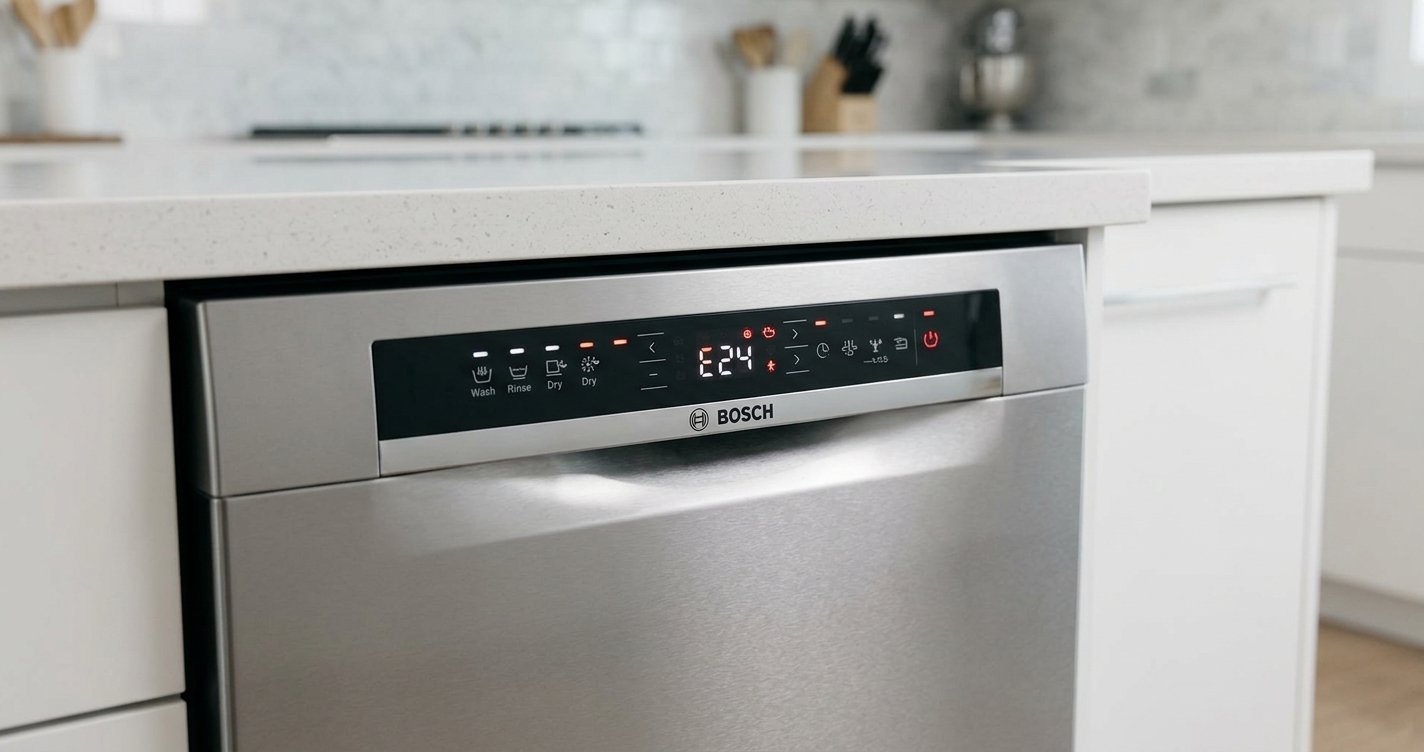
4. Check the Display for an Error Code
Some Bosch dishwashers display error codes when drainage is obstructed or a component is malfunctioning.
Depending on the model, codes such as E24 or E25 may indicate a drainage-related problem, while E23 can indicate a drain-pump fault.
The meaning and troubleshooting procedure can vary by model, so verify the code in your owner’s manual or Bosch’s official dishwasher error-code guide.
Do not assume that every error code can be fixed by cleaning the filter.
5. Determine Whether the Drain Pump Needs Repair
If the filter and pump area are clean, the drain hose is unobstructed, and the dishwasher still fails to drain, the pump may be faulty or another component may require diagnosis.
Contact Bosch customer support or a qualified appliance technician rather than attempting electrical repairs yourself.
Frequently Asked Questions
How often should you clean a Bosch dishwasher drain?
Inspect the filter regularly and clean it whenever food debris or residue accumulates. Bosch recommends periodic filter cleaning; the appropriate interval depends on usage and the model. Cleaning every few weeks is a practical starting point for a frequently used dishwasher, with more frequent cleaning if necessary.
Why is there standing water at the bottom of my Bosch dishwasher?
Standing water may result from a clogged filter, blocked drain pump, kinked hose, or obstruction in the connected sink plumbing. Switch off the power, inspect the filter, and check the pump according to your model’s instructions. If the problem continues, arrange professional diagnosis.
Can I clean a Bosch dishwasher drain without removing the dishwasher?
Yes. In most cases, you can clean the accessible filter and inspect the pump from inside the dishwasher without removing the appliance from its cabinet. A blocked or damaged hose may require additional access.
Can I use vinegar or baking soda to unclog a Bosch dishwasher drain?
Neither vinegar nor baking soda is a reliable substitute for removing a physical blockage. For a clogged filter or pump, manual removal of debris is generally the more effective approach. Follow Bosch’s cleaning instructions and avoid mixing cleaning chemicals.
Is it safe to reach into the Bosch dishwasher drain pump?
Only after disconnecting the power and following your model’s instructions. The pump area may contain broken glass or other sharp debris. Wear protective gloves, use adequate lighting, and never reach blindly into the opening.
Why does my Bosch dishwasher smell bad even after cleaning the drain?
Food residue may remain in the filter, spray arms, door seals, or other areas of the dishwasher. Clean accessible components according to the owner’s manual and use a dishwasher-cleaning product approved for your appliance if needed.
If the odor resembles sewage, check for plumbing or drain-connection problems rather than assuming the filter is responsible.
Do I need a technician to clean my Bosch dishwasher drain?
Not usually. Cleaning an accessible filter and removing loose debris from the pump area are common maintenance tasks. However, persistent drainage problems, electrical faults, pump damage, or inaccessible obstructions may require professional service.
What should I do if my Bosch dishwasher displays E24 or E25?
Check the owner’s manual for your specific model. These codes can be associated with drainage restrictions, a blocked pump, or a pump cover that is not properly secured. Switch off the appliance before inspecting accessible components. Contact Bosch support if the error persists after the recommended checks.
How to Prevent Future Bosch Dishwasher Drain Problems
Regular maintenance helps reduce the likelihood of blockages and unpleasant odors.
- Clean the filter regularly. Remove accumulated food particles before they restrict water flow.
- Scrape off large food scraps. This reduces the amount of debris entering the filter and pump.
- Inspect the drain area. Check for visible debris whenever you clean the filter.
- Keep the drain hose unobstructed. Avoid sharp bends, crushing, or other restrictions.
- Maintain the sink drain and garbage disposal. A shared drain connection can affect dishwasher drainage.
- Use dishwasher-safe cleaning products. Follow the instructions for your appliance and cleaning product.
- Respond to drainage problems early. Investigate slow draining, unusual odors, and recurring error codes before the problem worsens.
For additional maintenance instructions, visit Bosch dishwasher owner support.
Conclusion
Learning how to clean a Bosch dishwasher drain can help you resolve many common drainage problems without immediately paying for a service visit.
Start by switching off the power, removing the bottom rack, and cleaning the filter. If water still remains, inspect the drain pump and accessible hose connections according to your model’s instructions. Reassemble everything correctly before running a test cycle.
If the dishwasher continues to retain water, displays a persistent error code, or makes unusual pump noises, the problem may require professional diagnosis.
The key takeaway: Regular filter maintenance, careful inspection of the drain pump, and prompt attention to blockages can help your Bosch dishwasher drain properly and operate reliably for longer.
For the safest and most accurate instructions, always use the owner’s manual for your exact Bosch dishwasher model.