- Scrape off leftover food. Remove large food scraps, but you usually don’t need to pre-rinse dishes.
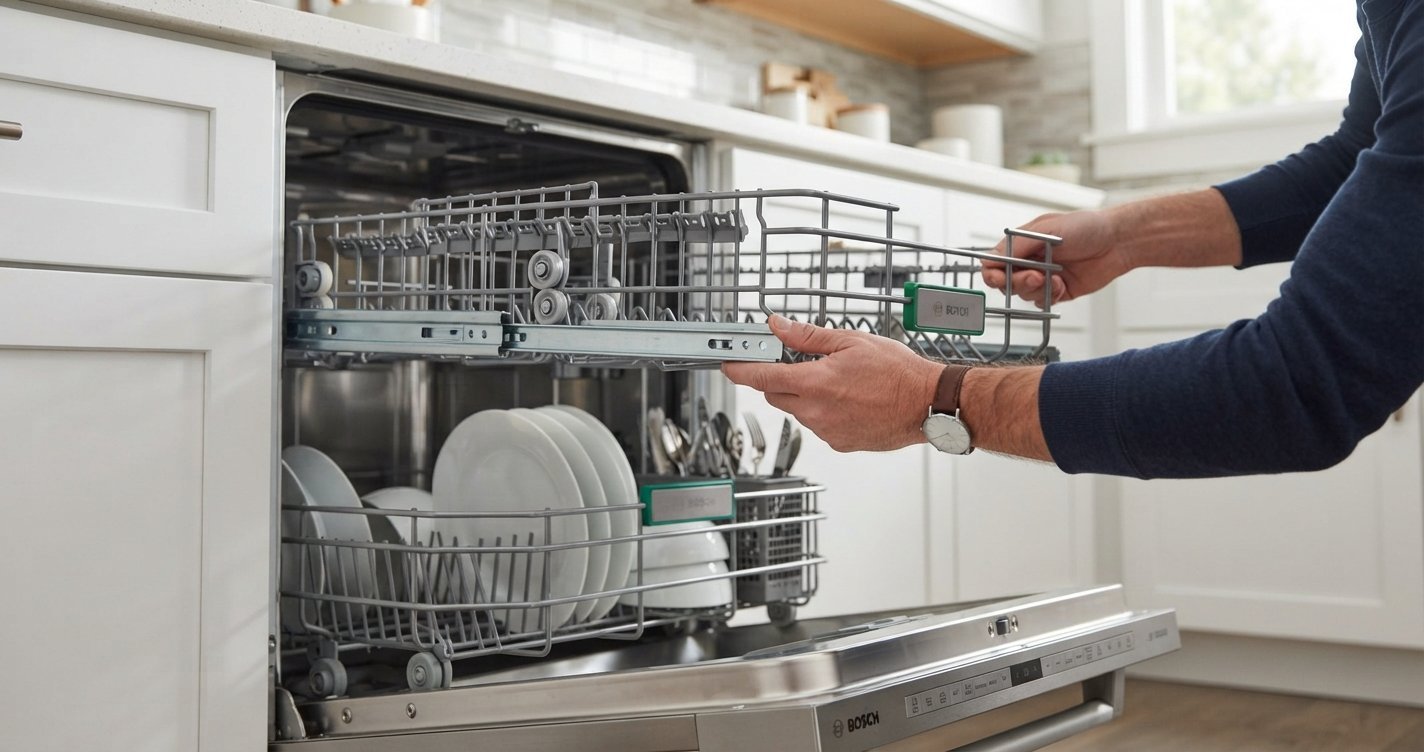
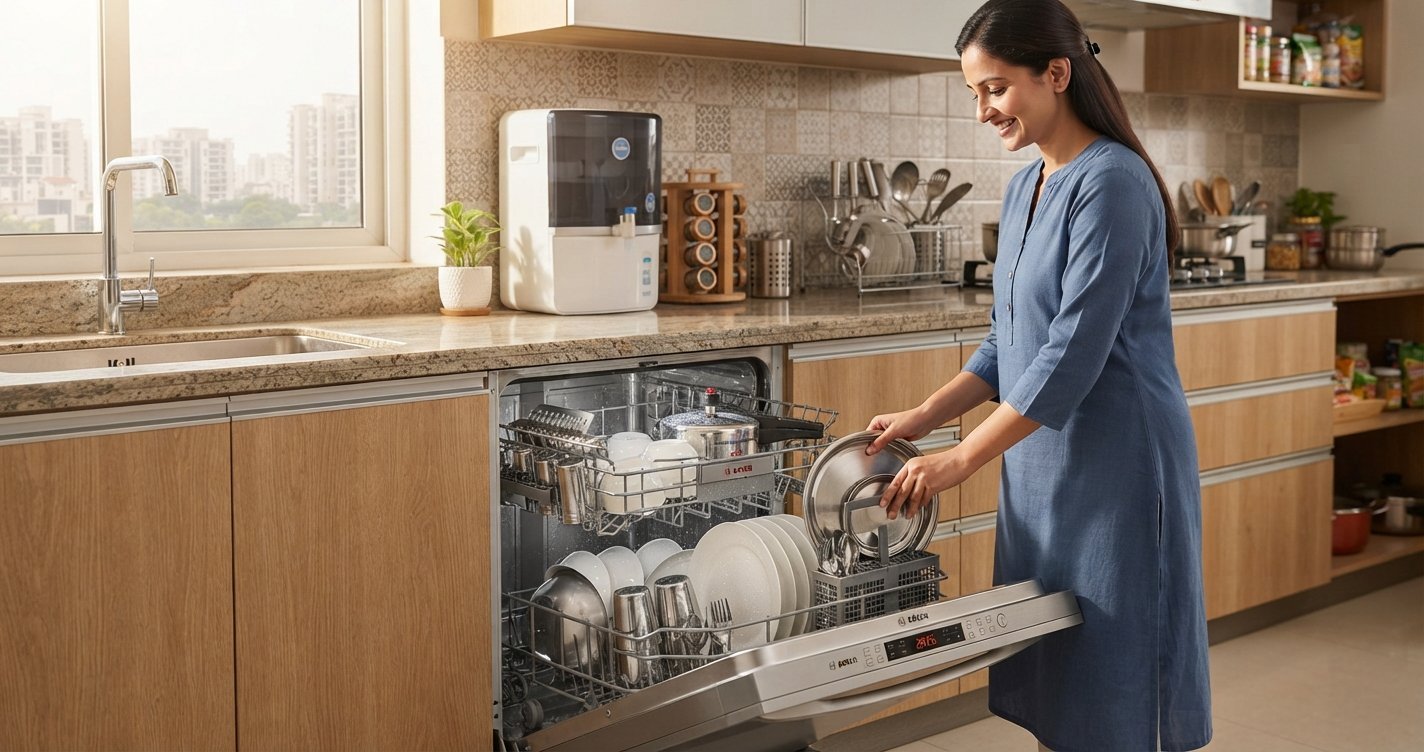
- Load plates vertically in the lower rack, facing the center so the spray reaches them.
- Put pots and pans in the lower rack, making sure they don’t block the spray arms.
- Place bowls at an angle so water can drain rather than collect inside them.
- Load cups and glasses upside down on the upper rack. Keep them separated to prevent breakage.
- Place utensils in the utensil basket, mixing forks, spoons, and knives so they don’t nest together. Put sharp knives with the blade facing down when appropriate for your dishwasher.
- Check the spray arms. Spin them by hand to make sure nothing is blocking them.
- Add dishwasher detergent according to the detergent and dishwasher instructions.
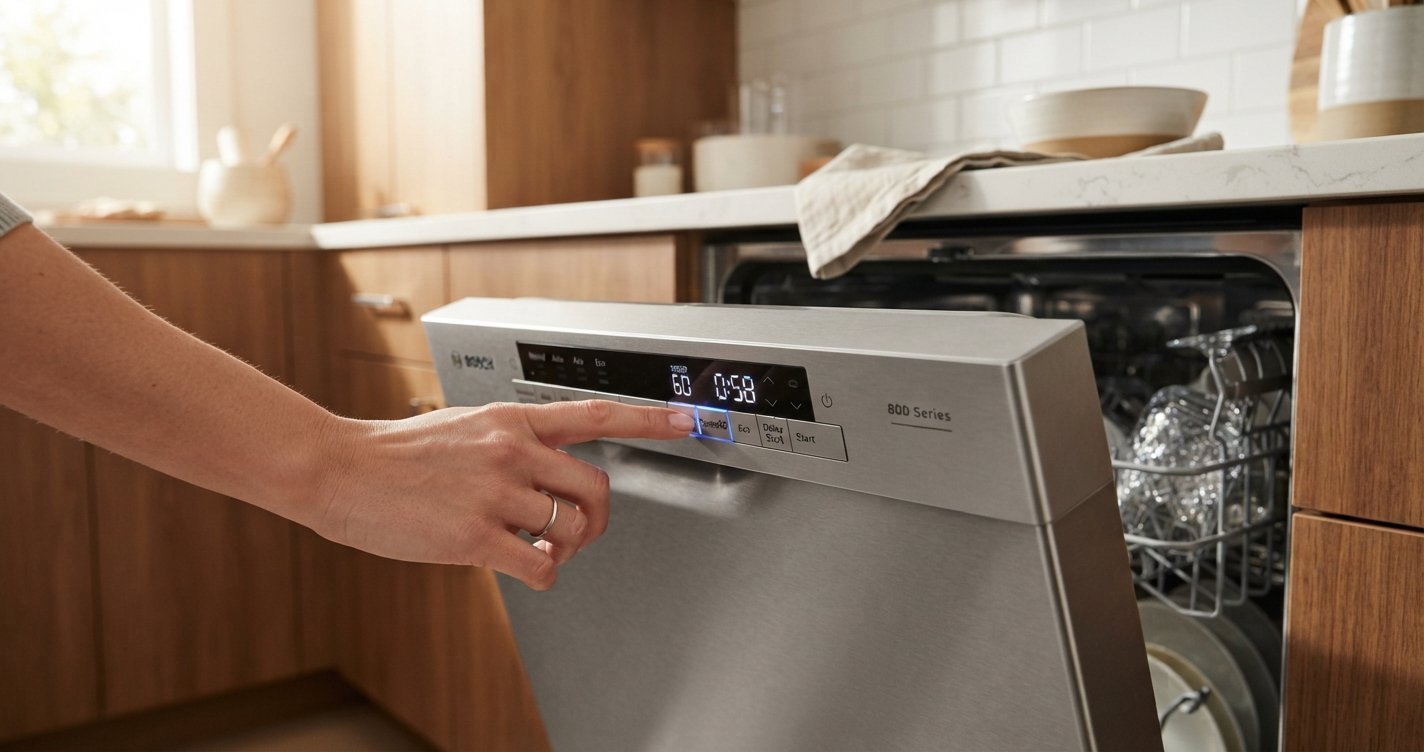
- Choose the appropriate cycle and start the dishwasher.
Common mistakes to avoid
- Don’t overcrowd the racks.
- Don’t stack dishes directly on top of each other.
- Don’t block the detergent dispenser.
- Don’t put items in the dishwasher unless they’re labeled dishwasher-safe.
- Keep plastics that aren’t heat-safe away from the heating element.
Simple rule: Dirty surfaces should face the water jets, and every item should have enough space for water and detergent to reach it.