Table of contents
What Is Finish Dishwasher Cleaner?
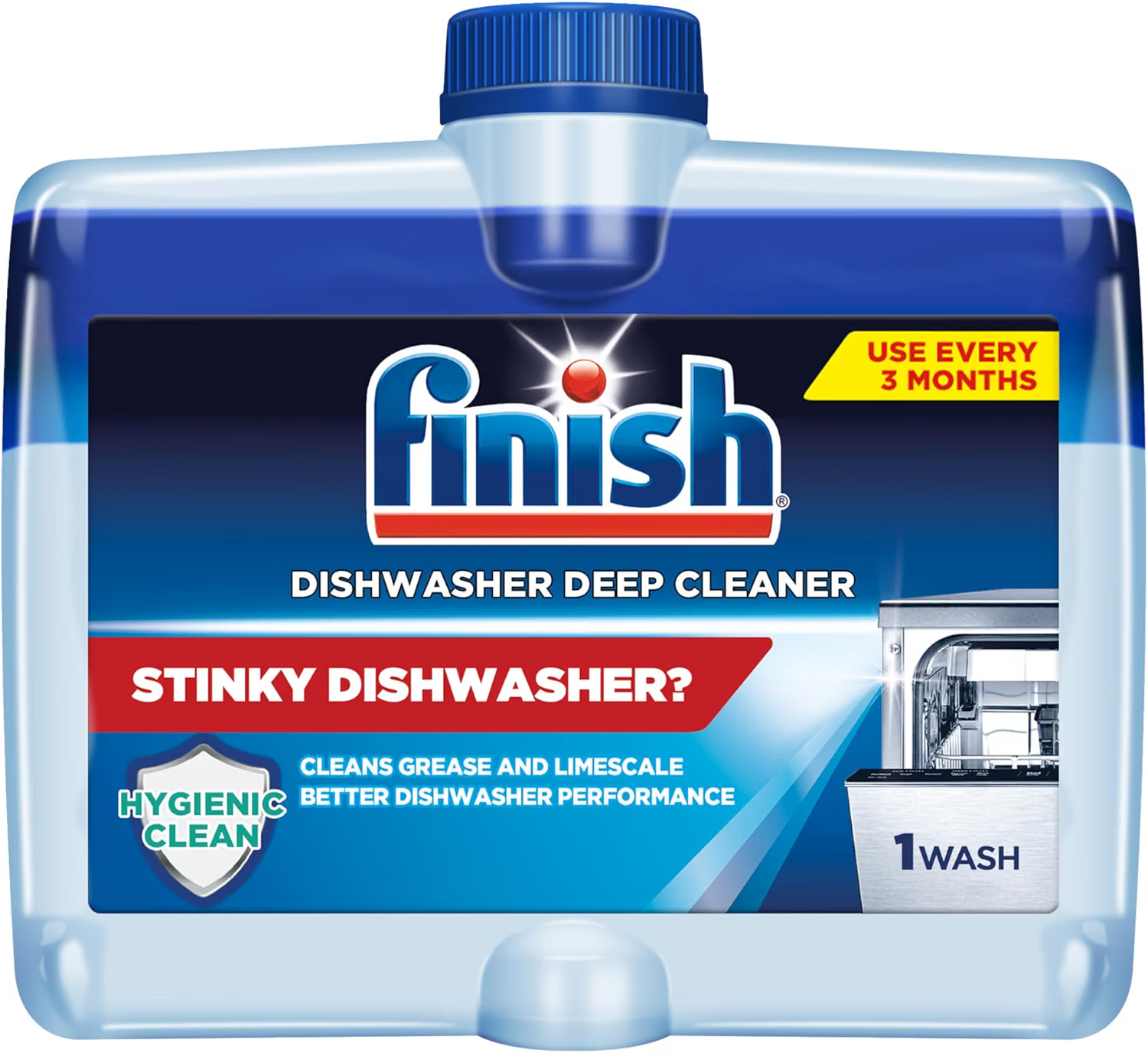
Finish Dishwasher Cleaner is a maintenance product designed to clean the inside of your dishwasher — not your dishes. Over time, dishwashers accumulate grease, limescale, food residue, and hard-water buildup inside the pump, spray arms, filter, and hidden pipework. This buildup isn’t visible during a normal cycle, but it can cause bad odors, cloudy glassware, and reduced cleaning performance.
Finish Dishwasher Cleaner is run on an empty machine, on a hot cycle, to dissolve this residue and leave the internal components clean.
It’s a machine-cleaning product, not a dish detergent — it should never be used alongside a normal load of dishes.
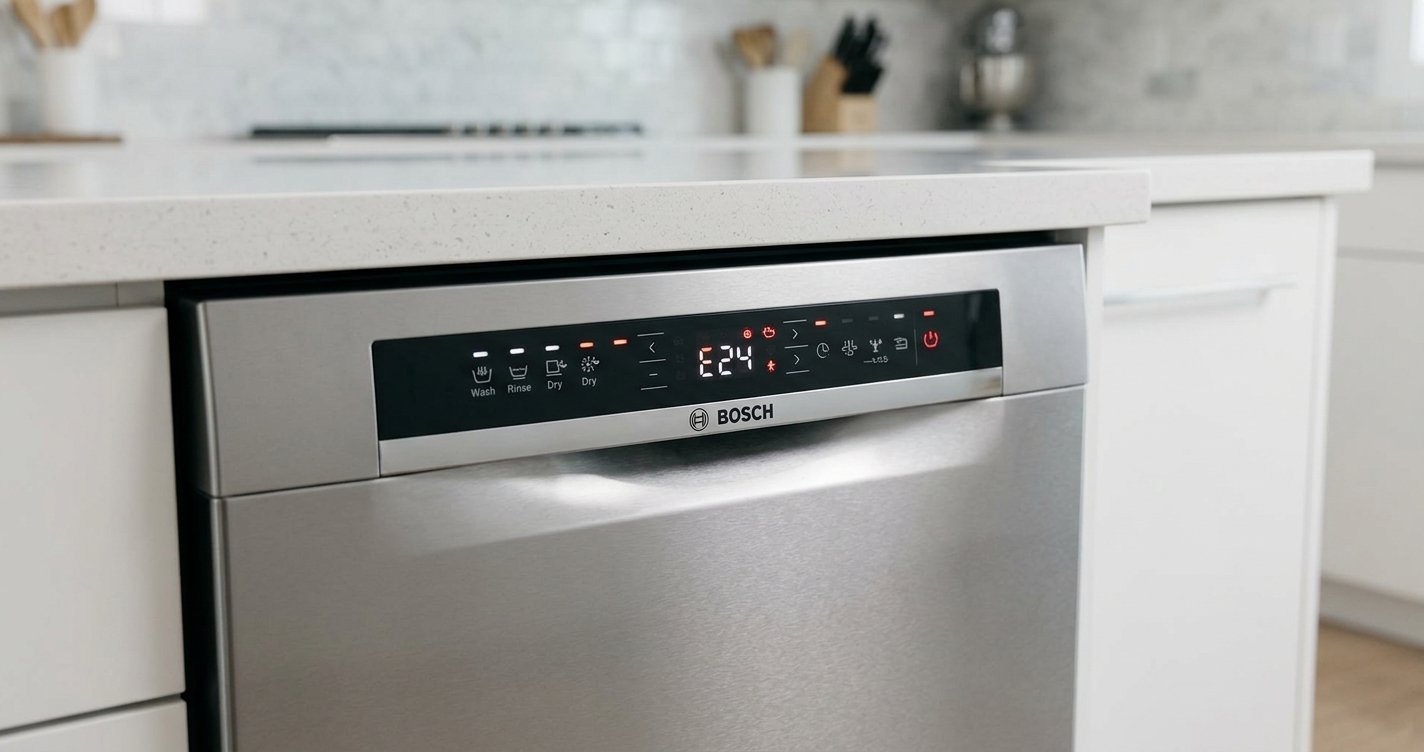
Read More: Bosch Dishwasher Error Codes (2026 Guide)
Why Does a Dishwasher Need a Separate Cleaner?
Regular detergent tablets are formulated to clean dishes, not the machine itself. Because dishwashers constantly run hot, soapy, greasy water through the same internal channels, three things build up over time:
- Limescale from hard water, which coats heating elements and pipes
- Grease film from food residue, which traps odors
- Mineral deposits that reduce spray-arm pressure and water flow
Detergent cleans dishes; dishwasher cleaner cleans the machine that cleans your dishes.
How to Use Finish Dishwasher Cleaner (Step-by-Step)
- Empty the dishwasher. No dishes, cutlery, or racks should be removed — just make sure the machine is empty of dishes.
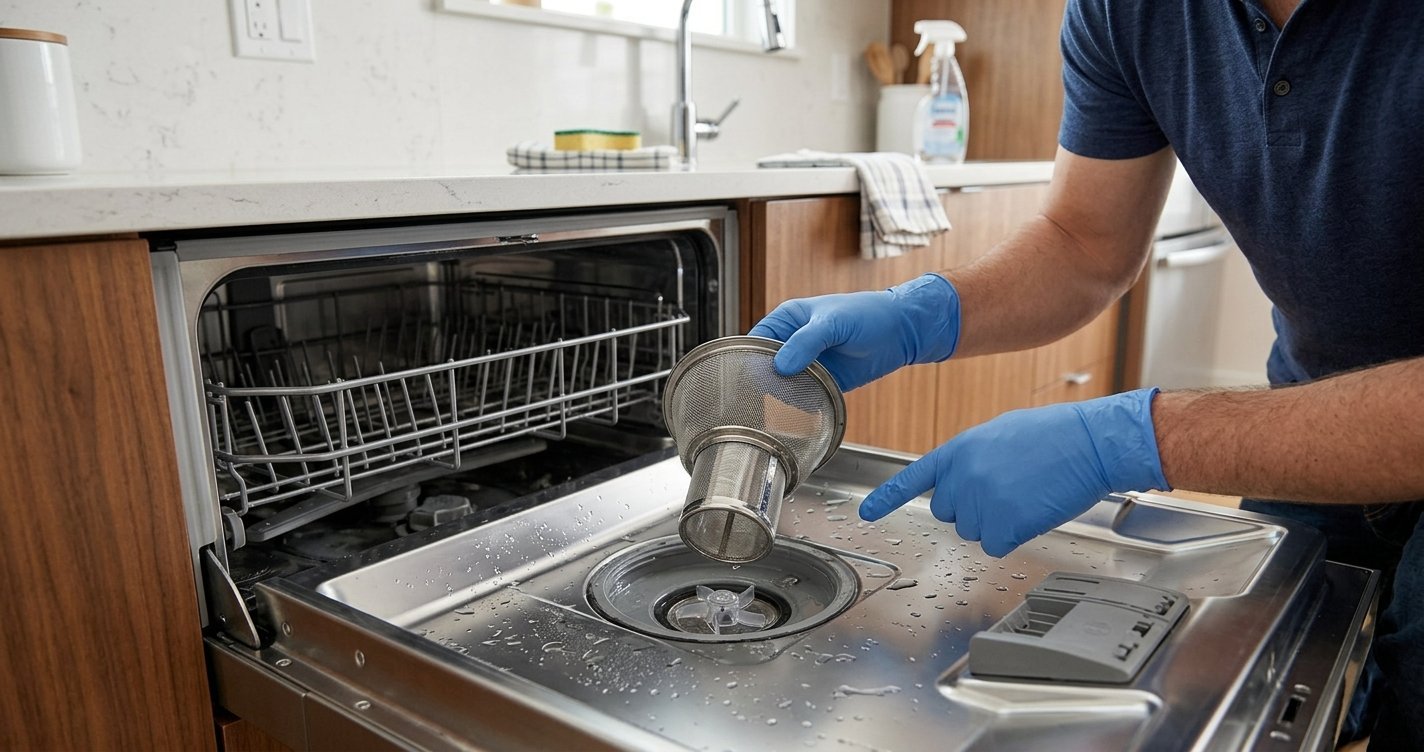
- Remove any large food debris from the filter first, if visible.
- Place the bottle or capsule upright in the bottom rack (bottle formats) or in the cutlery basket (capsule formats), following the product’s specific placement instructions.
- Run the hottest, longest cycle your machine has — typically a “normal” or “heavy” cycle, not an eco or quick cycle.
- Let the cycle finish before opening the door.
- Wipe the door seal and detergent drawer afterward with a damp cloth for best results.
Empty the machine, hottest cycle, once a month — that’s the core routine.
How Often Should You Clean Your Dishwasher?
For most households, once a month is the standard recommendation. However, this can shift based on real usage:
| Household Situation | Recommended Frequency |
| Hard water area | Every 2–3 weeks |
| Daily heavy use (family of 4+) | Every 3–4 weeks |
| Light use (1–2 people) | Every 6–8 weeks |
| Noticeable odor or cloudy glasses | Run immediately, then monthly |
Monthly is the general rule, but hard-water homes and heavy-use households should clean more often.
Finish Dishwasher Cleaner Formats: Which One Should You Choose?
| Format | Best For | Pros | Cons |
| Liquid/Bottle Cleaner | Deep monthly clean | Reaches pipes and spray arms thoroughly | Single-use, slightly messier to place |
| Tablet/Capsule Cleaner | Convenience-focused users | No measuring, easy to store | Sometimes dissolves less evenly in short cycles |
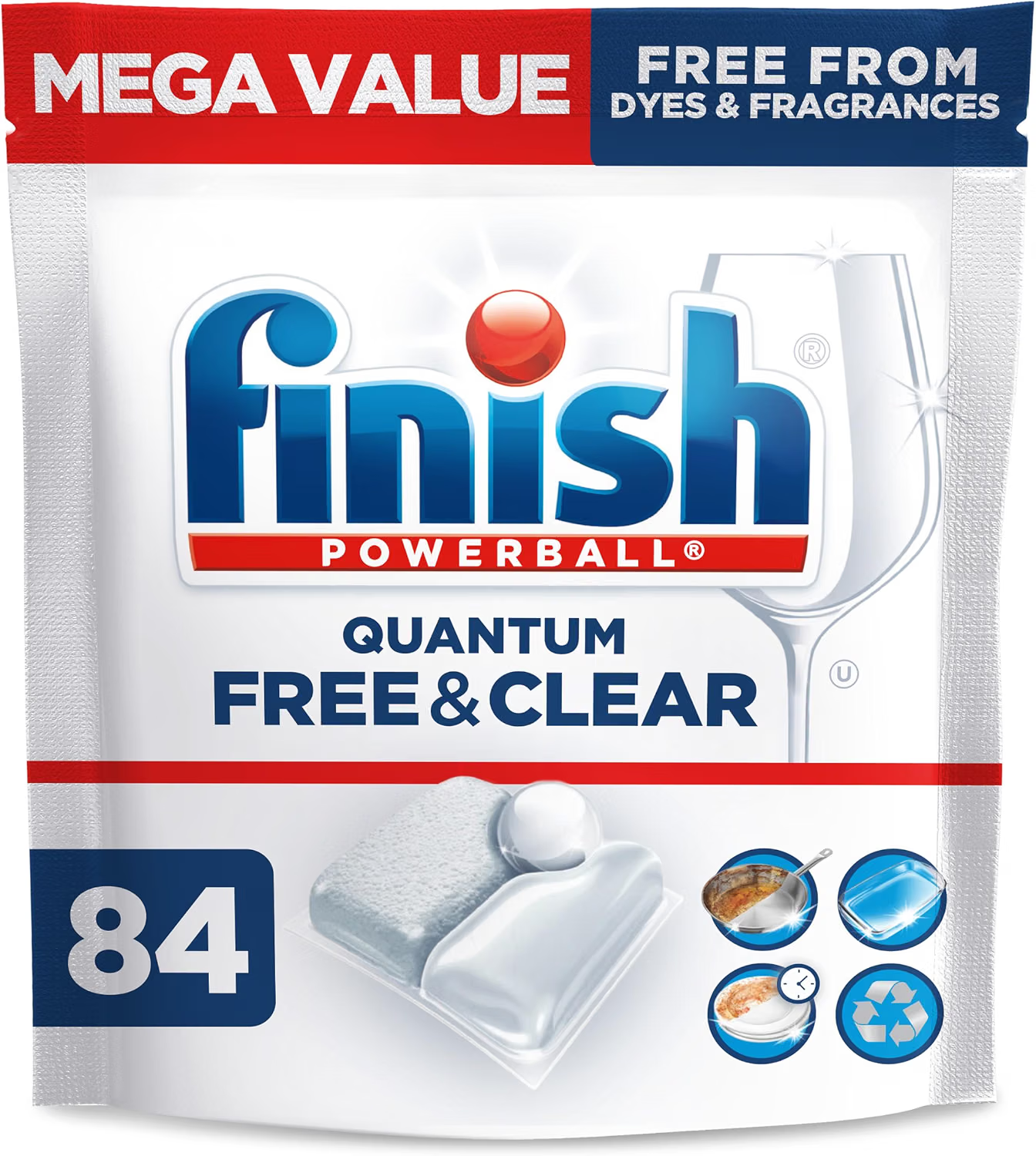
| In-Wash Cleaning Tablets (combined with detergent) | Preventing buildup between deep cleans | No extra cycle needed | Not a substitute for a dedicated cleaning cycle |
Liquid formats generally clean more thoroughly; tablets are more convenient for regular upkeep.
Signs Your Dishwasher Needs Cleaning
You likely need to run a cleaning cycle if you notice:
- A musty or sour smell when you open the door
- Cloudy or spotty glassware even with detergent
- Food residue left on “clean” dishes
- Water pooling at the bottom after a cycle
- Visible limescale around the door seal or spray arms
Bad smell, cloudy dishes, and leftover residue are the three biggest warning signs.
Can You Use Vinegar Instead of Finish Dishwasher Cleaner?
White vinegar can help with mild odor and light limescale, but it’s not a full substitute. Finish’s formula is specifically designed to break down grease and mineral deposits together, while vinegar mainly addresses limescale and doesn’t cut through grease film as effectively. Vinegar can also degrade rubber seals over time with frequent use.
Vinegar is a decent quick fix, but a dedicated dishwasher cleaner does a more complete job and is gentler on machine parts long-term.
Does Finish Dishwasher Cleaner Remove Limescale?
Yes. Limescale removal is one of its primary functions, particularly in hard-water regions. The cleaner targets mineral buildup on heating elements, spray arm nozzles, and interior walls, which — left untreated — can reduce heating efficiency and water pressure over time.
Yes, it’s specifically formulated to dissolve and prevent limescale buildup.
Is Finish Dishwasher Cleaner Safe for All Dishwasher Brands?
Generally, yes. It’s formulated to be safe across major dishwasher brands and models, including stainless steel interiors. That said, always check your dishwasher’s manual for any manufacturer-specific cleaning restrictions, especially for machines still under warranty.
It’s safe for most brands, but check your manual if your machine is under warranty.
Finish Dishwasher Cleaner vs. Rinse Aid: What’s the Difference?
These two products are often confused but serve different purposes:
- Dishwasher Cleaner — cleans the machine’s internal components (run empty, monthly)
- Rinse Aid — improves drying and prevents spotting on dishes during every normal cycle
Cleaner maintains the machine; rinse aid improves the results of everyday washes. Most households benefit from using both.
Common Mistakes to Avoid
- Running it with a full load of dishes — it needs an empty machine to work properly
- Using a quick or eco cycle — these don’t reach the temperature needed to dissolve buildup
- Skipping the filter check — cleaner won’t remove large trapped food debris
- Using it too infrequently — waiting until odor appears means buildup has already affected performance
Frequently Asked Questions
Does Finish Dishwasher Cleaner work in one cycle?
Yes, one full hot cycle is generally enough to clean the interior, though heavily neglected machines may need a second run.
Can I use dishwasher cleaner and detergent at the same time?
No — dishwasher cleaner is designed to run on its own, empty cycle for maximum effectiveness.
Will Finish Dishwasher Cleaner remove bad smells?
Yes, it targets the grease and food residue that typically cause odors, resolving most smell issues within one cycle.
Is it safe to use if I have a septic system?
Most dishwasher cleaners, including Finish, are safe for septic systems when used as directed, but check the product label to confirm.
Do I still need to clean the filter manually?
Yes — dishwasher cleaner cleans internal pipework and components, but the removable filter should still be rinsed by hand periodically.
Final Takeaway
A monthly cleaning cycle with a dedicated product like Finish Dishwasher Cleaner is one of the simplest ways to extend your dishwasher’s lifespan, prevent odors, and keep dishes genuinely spotless — not just rinsed. Pair it with regular filter checks and rinse aid for the best all-around results.