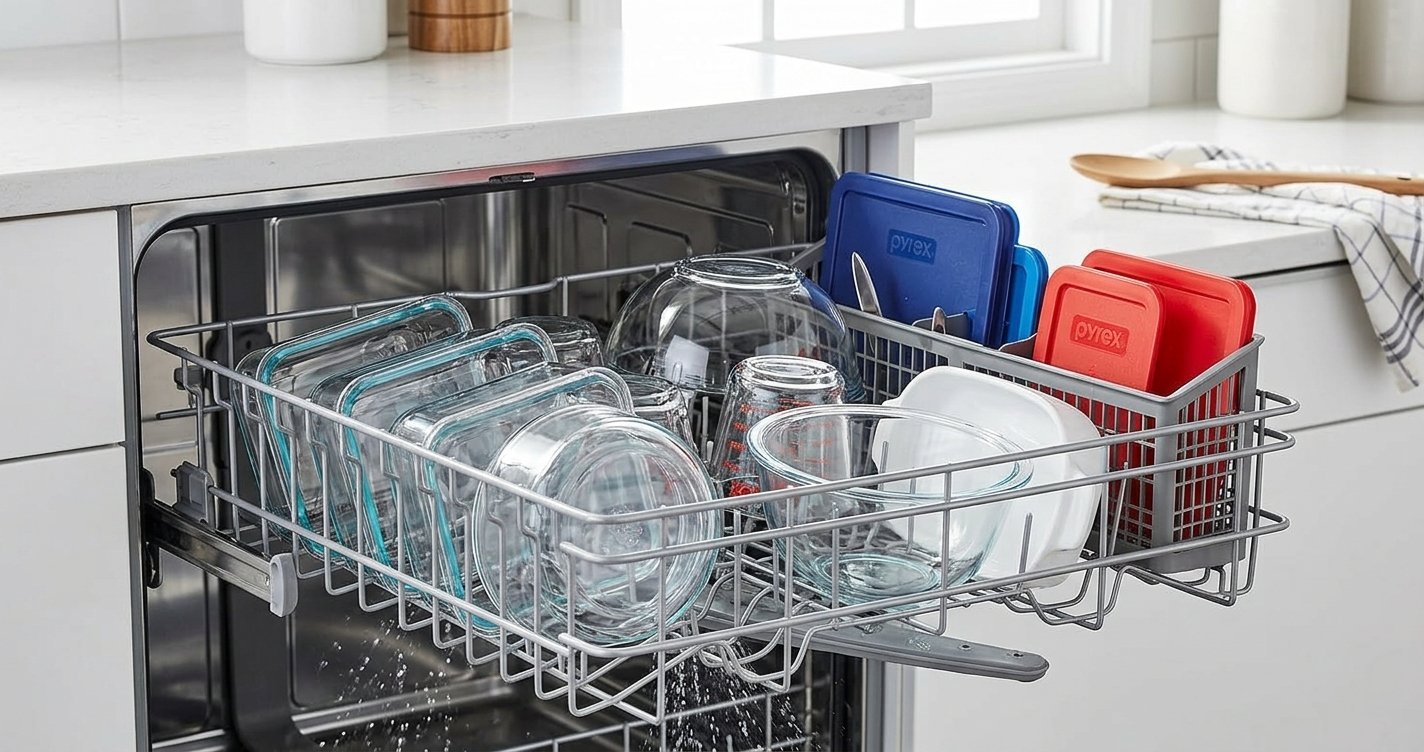
To operate a Bosch dishwasher, scrape food scraps from your dishes, load the racks without blocking the spray arms, add dishwasher detergent, and check the rinse aid level. Turn on the dishwasher, select a suitable wash cycle, choose any additional options, and press Start. Close the door as directed by your model’s instructions and allow the cycle to finish.
Read More: How Long Does a Dishwasher Take? Cycle Times Explained
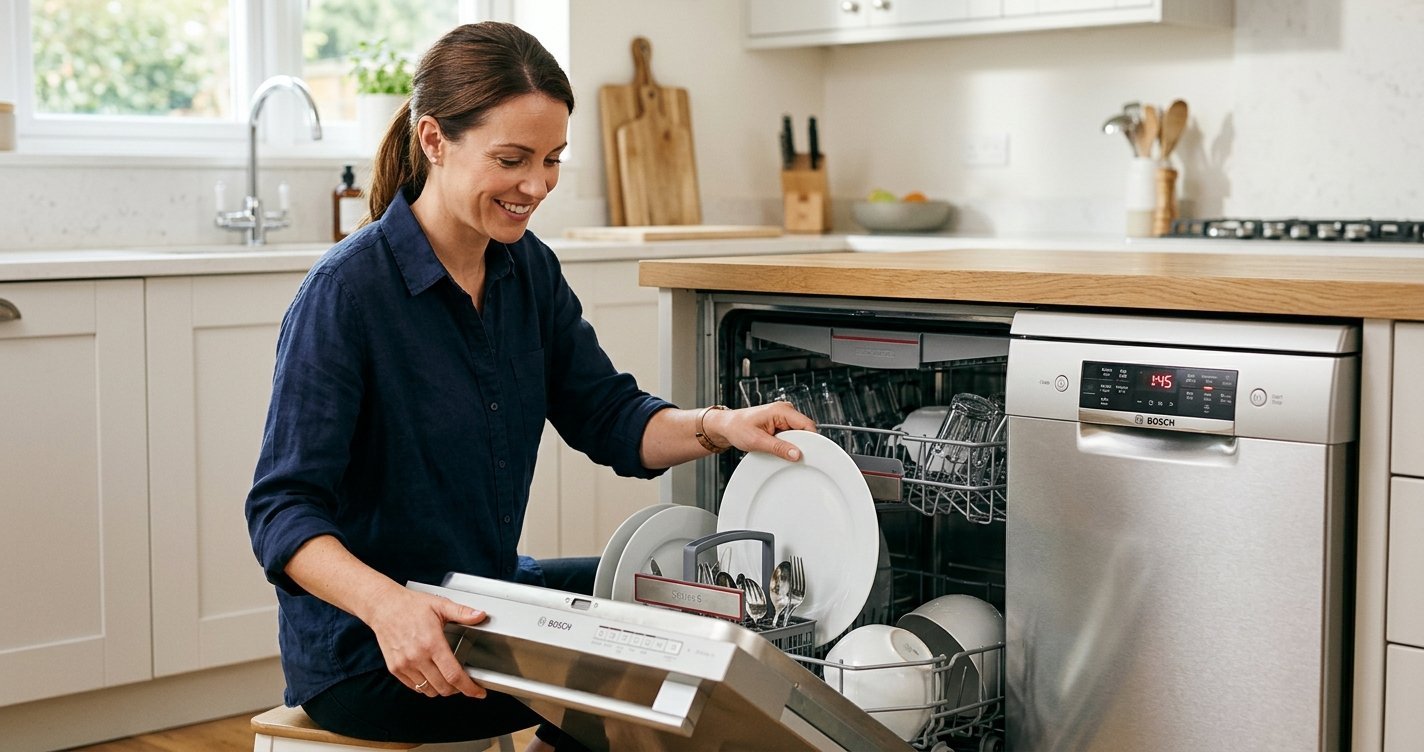
Table of contents
Step-by-Step Guide to Using a Bosch Dishwasher
Step 1: Prepare Your Dishes
Before loading your Bosch dishwasher, remove large food scraps from plates, bowls, and cookware.
You generally do not need to pre-rinse dishes under running water. Modern Bosch dishwashers are designed to clean normally soiled dishes when food particles are scraped off first.
Follow these preparation tips:
- Scrape leftover food into the trash or compost.
- Remove large bones, seeds, and other solid debris.
- Check cookware for burnt-on food that may require a more intensive cycle.
- Confirm that each item is dishwasher-safe.
Avoid placing delicate items, wooden utensils, or other materials that are not rated for dishwasher use inside the machine.
Step 2: Load the Dishwasher Correctly
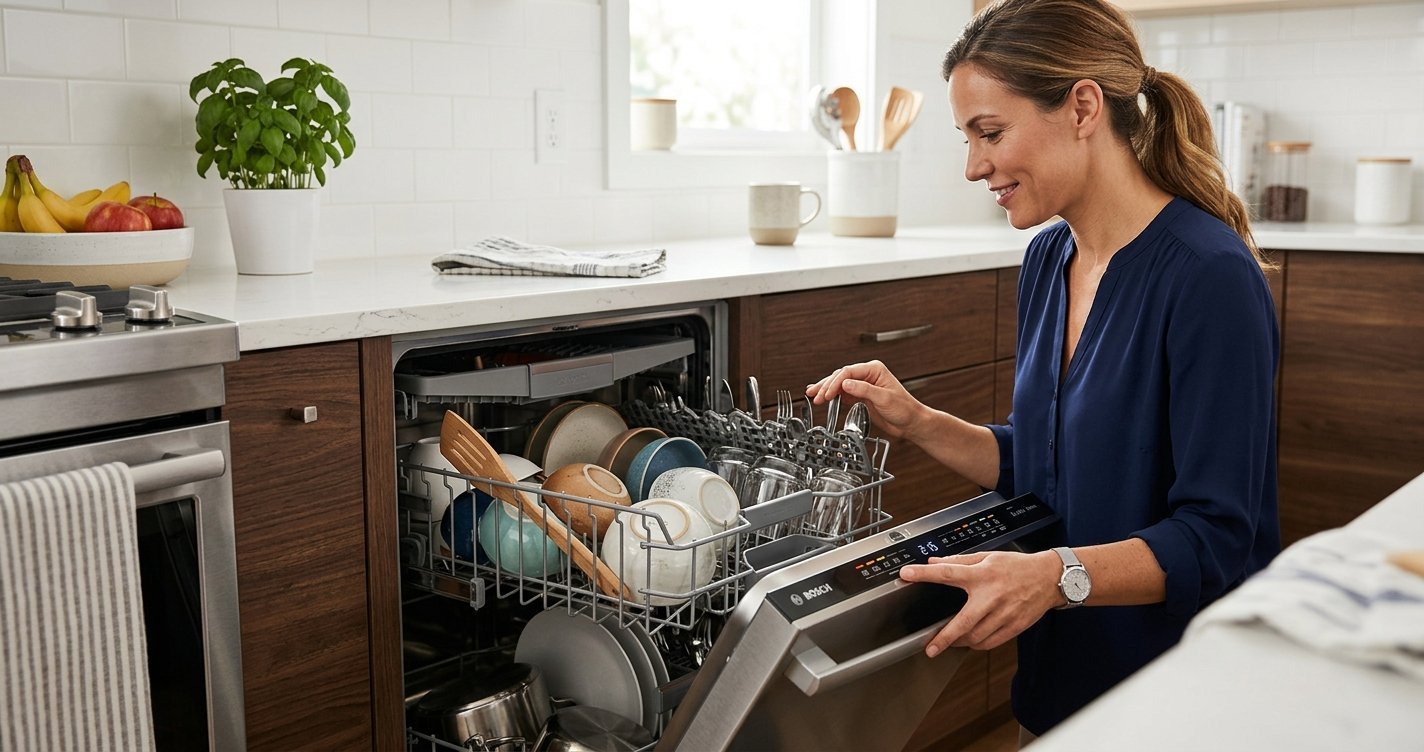
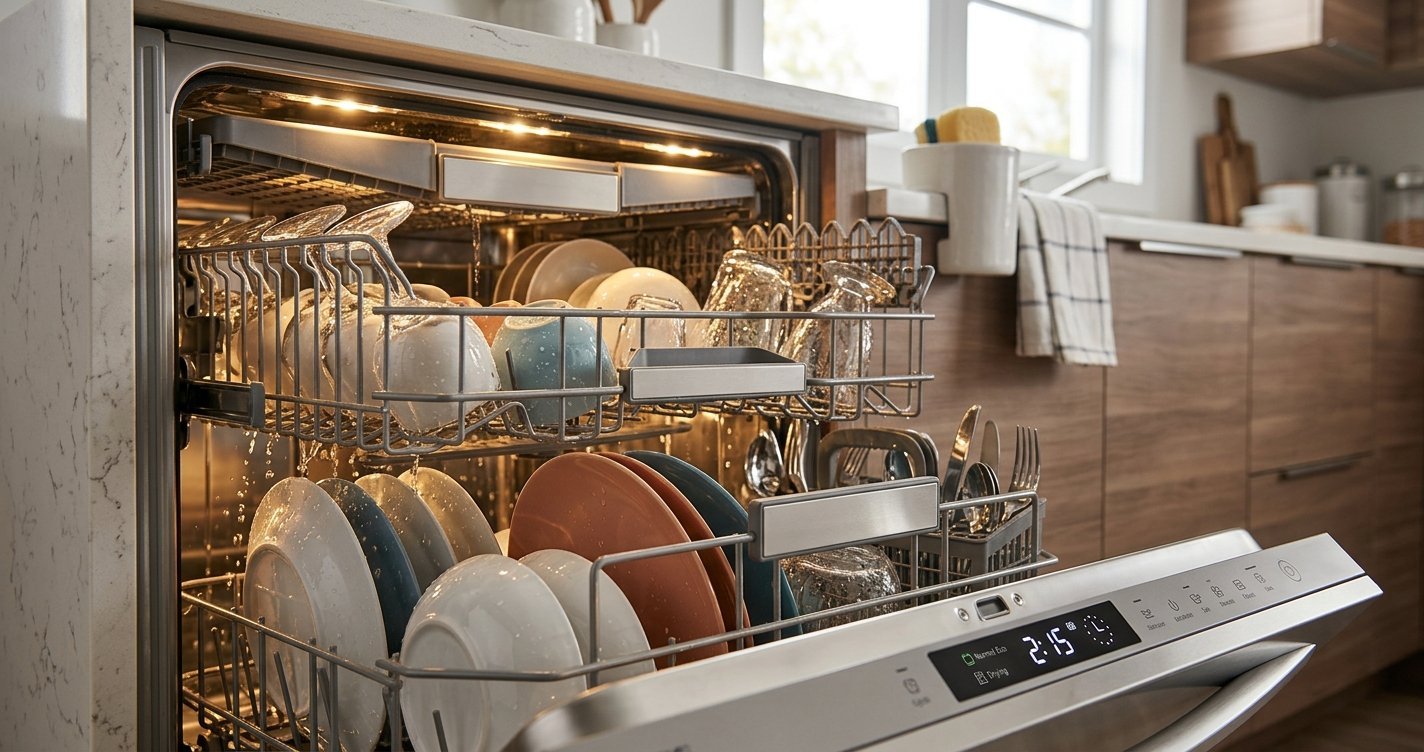
Proper loading allows water and detergent to reach every item.
Lower rack: Place dinner plates, larger bowls, pots, and dishwasher-safe pans here. Face heavily soiled surfaces toward the spray arms where possible.
Upper rack: Load cups, glasses, small bowls, and dishwasher-safe containers. Keep items stable and avoid nesting them together.
Cutlery basket or tray: Arrange utensils according to your model’s instructions. Mix spoons, forks, and other utensils where appropriate to prevent them from nesting together.
Before starting the cycle, check the following:
- The spray arms can rotate freely.
- Tall plates and cookware do not obstruct the upper rack.
- Cups and bowls are positioned so water can drain.
- Lightweight plastic items are secure and placed in a suitable rack.
Overloading the dishwasher can prevent proper cleaning, even when you select the correct wash cycle.
Step 3: Add Dishwasher Detergent
Open the detergent dispenser, usually located on the inside of the dishwasher door.
Add a dishwasher detergent tablet, powder, or liquid detergent according to the product instructions and your Bosch owner’s manual.
If you use a tablet, place it in the designated detergent compartment and ensure the dispenser lid closes properly. Do not put ordinary hand dishwashing liquid in the detergent compartment because it can create excessive suds.
Should you use a detergent tablet or powder?
Both can work well. Tablets are convenient for everyday washing, while powder allows you to adjust the amount according to the load and water conditions.
Use the recommended amount rather than automatically adding extra detergent. Too much detergent can contribute to residue or spotting.
Step 4: Add Rinse Aid
Rinse aid helps water drain off dishes more effectively, improving drying and reducing water spots on glassware.
To add rinse aid:
- Open the rinse aid dispenser beside the detergent compartment.
- Pour in liquid rinse aid up to the indicated maximum level.
- Avoid overfilling the dispenser.
- Wipe away any spilled liquid.
- Close the lid securely.
Refill the dispenser when the indicator shows that rinse aid is low.
Some Bosch dishwashers also use dishwasher salt to soften hard water. This feature is model- and region-dependent, so check your owner’s manual before adding salt.
Step 5: Turn On the Bosch Dishwasher
Press the On/Off or power button on the control panel.
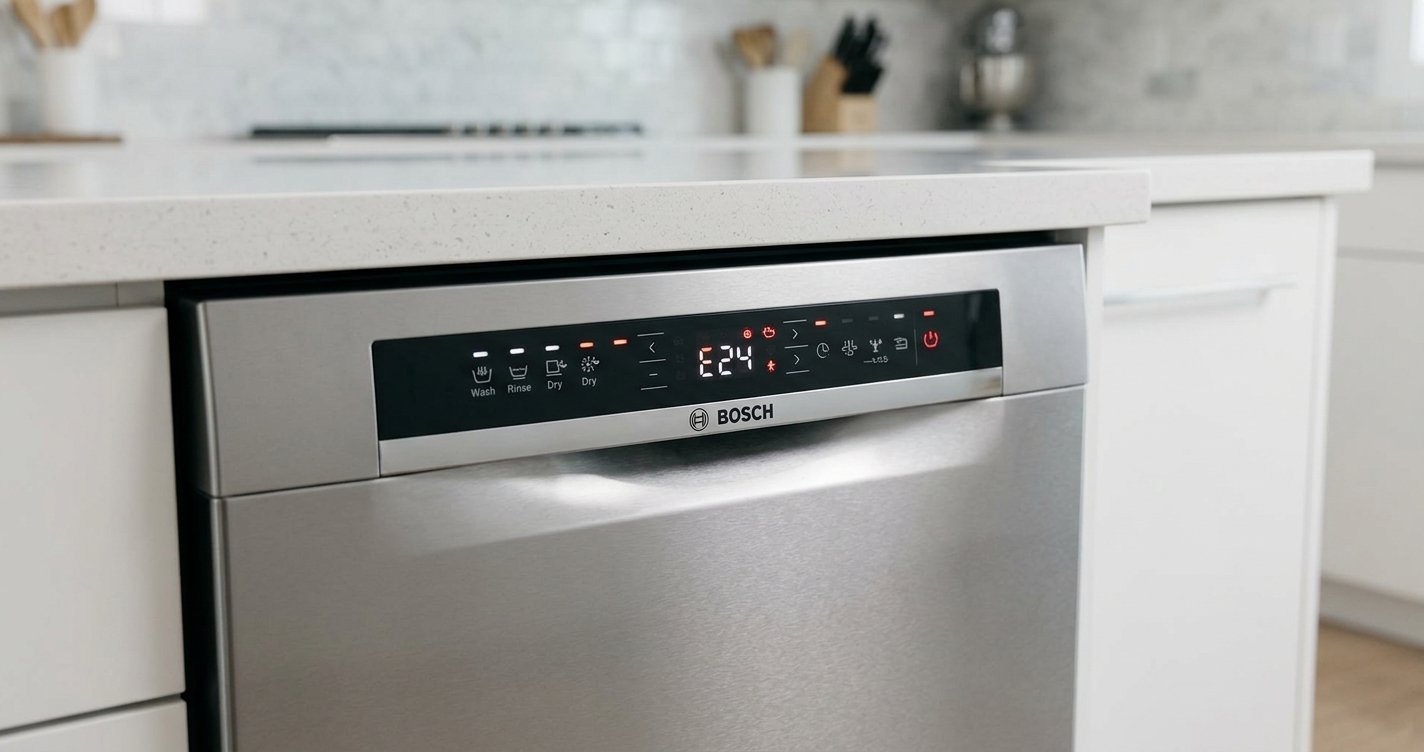
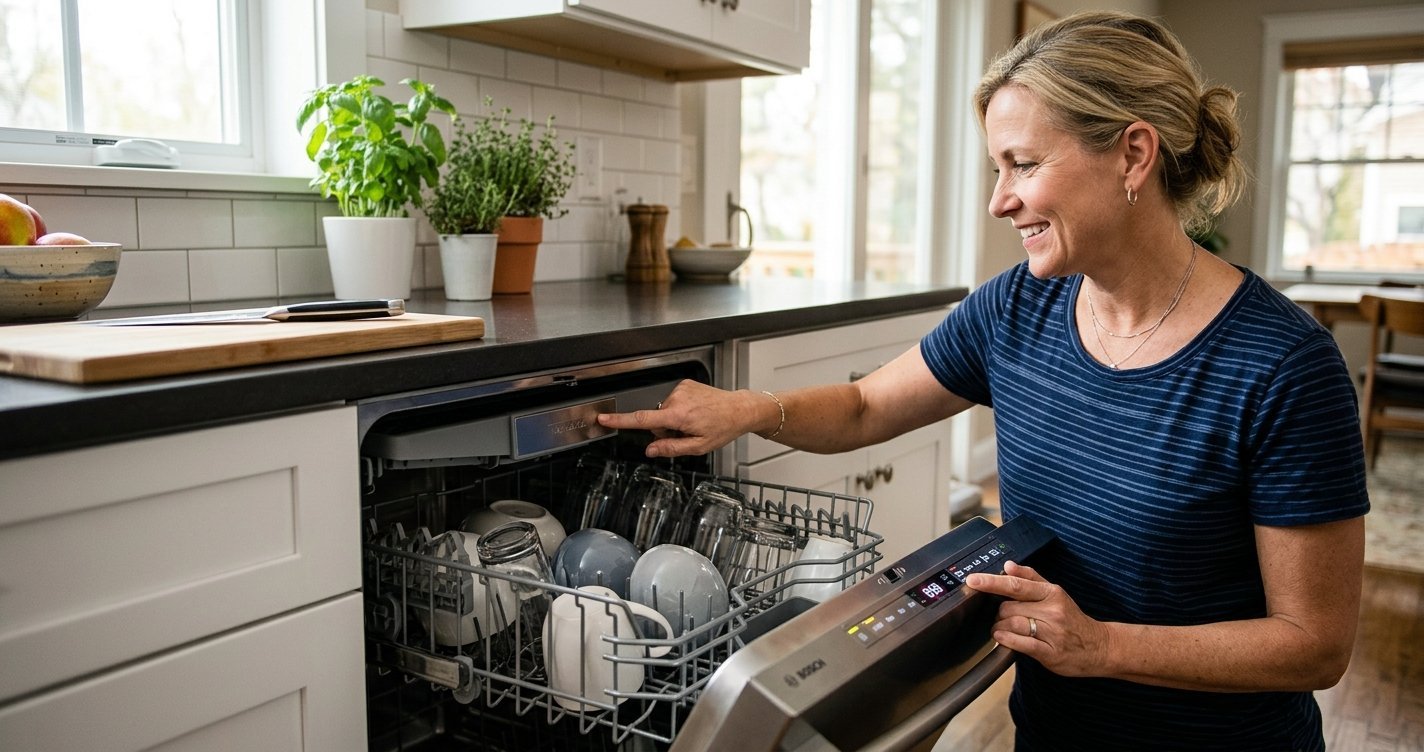
Depending on your model, the controls may be located on the front of the door or along the top edge of the door.
Once the dishwasher is switched on, the display or indicator lights should show that the appliance is ready for cycle selection.
If the dishwasher does not power on, check that the door is properly closed and that the appliance has an electrical supply.
Step 6: Select the Right Wash Cycle
Choose a wash program based on how dirty your dishes are and how much time you have.
The names and availability of programs vary by Bosch model, but common options include the following.
| Wash cycle | Best use |
| Auto | Mixed loads with different levels of food residue |
| Normal or Eco | Everyday dishes and routine washing |
| Heavy or Intensive | Pots, pans, and heavily soiled cookware |
| Quick or Express | Lightly soiled dishes when a shorter cycle is needed |
| Glass | Suitable dishwasher-safe glassware, where available |
| Rinse | A preliminary rinse when available; not a substitute for a full wash |
Which Bosch dishwasher cycle should you use most often?
The Auto cycle is a useful choice for mixed loads when your model offers it. Eco is a good option for routine washing when saving energy and water is a priority. Choose Heavy or Intensive for cookware with stubborn food residue.
Always consult your model’s manual for the recommended uses and limitations of each program.
Step 7: Choose Additional Wash Options
Some Bosch dishwashers offer extra settings that adjust the wash or drying process.
Common options include:
- Extra Dry: Helps improve drying performance when supported by your model.
- Sanitize: Uses a designated high-temperature process when available.
- Half Load: Available on some models for smaller loads.
- Delay Start: Schedules a wash to begin later.
- SpeedPerfect or similar speed options: May shorten the cycle or change its resource use, depending on the model.
You do not need to activate every option for every load. Choose settings according to your dishes, drying preferences, and the manufacturer’s instructions.
Step 8: Press Start and Close the Door
Once you have selected the wash cycle and any extra options, press the Start button.
Follow your model’s instructions for closing the door. On many Bosch dishwashers, the cycle begins after the door is closed, while the exact starting procedure varies by model.
Check that the display or indicator confirms the cycle has started.
Avoid opening the door unnecessarily during operation. If you need to interrupt the cycle, follow the manual’s instructions for pausing or cancelling a program.
Step 9: Wait for the Cycle to Finish
Allow the dishwasher to complete the selected program.
Cycle duration varies depending on the program, load conditions, water temperature, and additional options. Eco cycles may take longer than shorter programs because they are designed to use resources efficiently.
When the cycle ends, check the display or end-of-cycle indicator.
Open the door carefully because hot steam may escape. If your dishwasher has an automatic door-opening feature, follow its instructions and allow the dishes to cool before unloading.
Step 10: Unload the Dishes
For a more convenient unloading process, remove items from the lower rack after checking the upper rack. This helps prevent water collected on upper-rack items from dripping onto dishes below.
Check glasses, containers, and plastic items for trapped water. If dishes remain wet, using rinse aid, improving spacing, or selecting an available extra-drying option may help.
Your Bosch dishwasher is now ready for the next load.
Understanding Bosch Dishwasher Buttons and Symbols
Bosch dishwasher controls vary by model, but the following table explains common labels.
| Button or symbol | What it generally means |
| Power or On/Off | Switches the appliance on or off |
| Start | Starts or resumes the selected program |
| Auto | Automatically adjusts washing according to the program’s sensing system |
| Eco | Uses an energy-efficient wash program |
| Heavy or Intensive | Provides a more intensive wash |
| Quick or Express | Selects a shorter program |
| Extra Dry | Adds or adjusts a drying function |
| Clock or Delay | Schedules a delayed start |
| Tap symbol | May indicate a water supply or inlet issue |
| Rinse aid indicator | Signals that rinse aid may need replenishing |
A flashing light or symbol does not always mean the dishwasher is broken. Check your specific model’s manual to identify the exact meaning before attempting a reset or repair.
How to Operate a Bosch Dishwasher for the First Time
If you have just installed a Bosch dishwasher, take a few extra steps before its first regular wash.
- Read the installation and operating instructions supplied with the appliance.
- Confirm that the water supply and drain connections have been installed correctly.
- Check whether your model requires dishwasher salt or has water-softener settings.
- Fill the rinse aid dispenser as directed.
- Add the recommended detergent.
- Run the initial cycle or setup procedure specified in your owner’s manual.
Do not assume that every Bosch model requires the same first-use procedure. Installation checks, water-softener settings, and initial-cycle instructions may differ.
How Long Does a Bosch Dishwasher Take to Finish?
A Bosch dishwasher can take anywhere from a relatively short period on a quick program to several hours on an energy-efficient or intensive program.
The actual duration depends on the model, selected cycle, temperature, load, and optional settings. Some dishwashers also adjust cycle time automatically.
If the display shows a long remaining time, that does not necessarily indicate a fault. Check the selected program and consult the owner’s manual if the dishwasher appears stuck or runs substantially longer than expected.
How to Get the Best Cleaning Results
Correct operation is about more than pressing Start. A few everyday habits can improve washing performance.
Avoid overcrowding
Leave enough space between dishes for water to circulate. Do not stack plates tightly or place bowls where they block spray coverage.
Clean the filter regularly
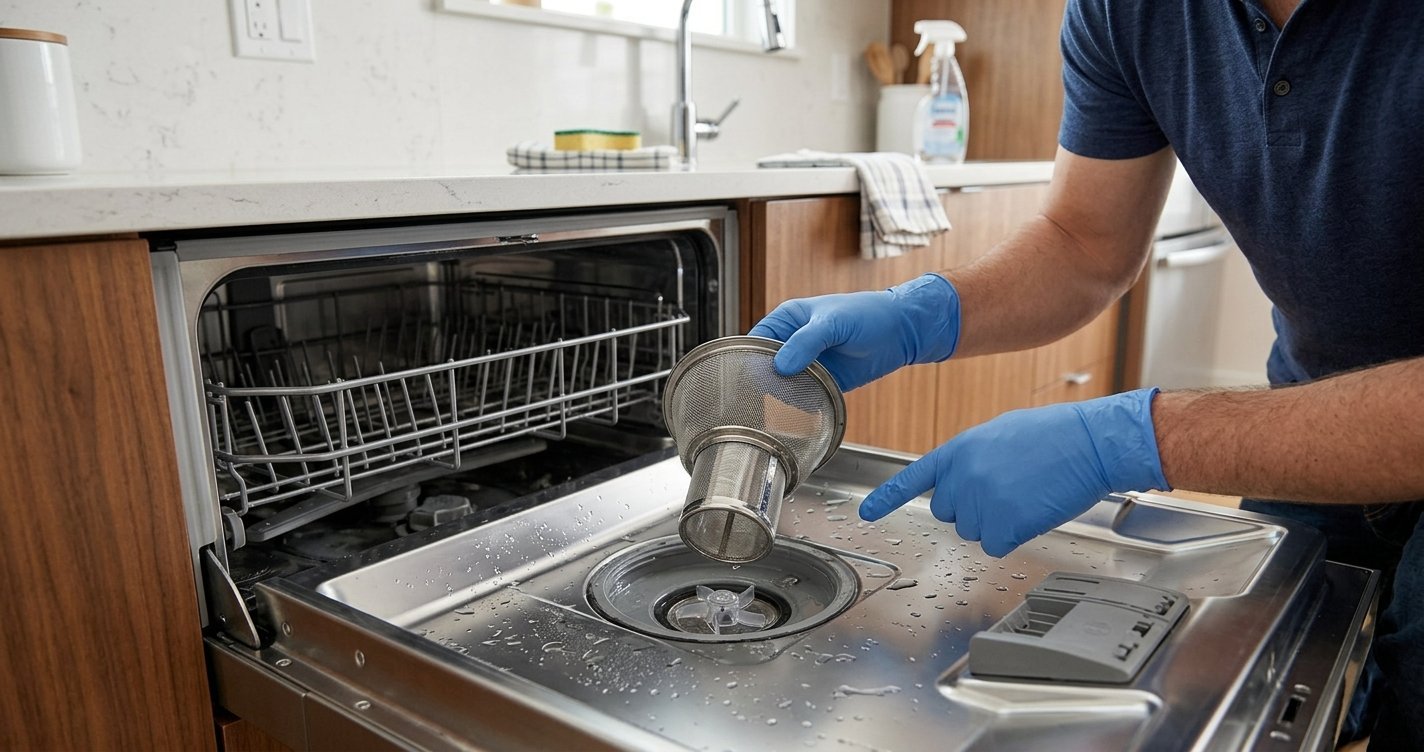
Food particles can collect in the filter at the bottom of the dishwasher. Remove and clean it according to your model’s instructions.
Check the spray arms
Inspect the spray arms periodically for food debris blocking their openings. Clean them using the method recommended by Bosch.
Use the right detergent
Choose a detergent designed specifically for automatic dishwashers. Store it properly and follow the recommended dosage.
Refill rinse aid when needed
Rinse aid can improve drying performance and help reduce water spots, particularly in hard-water areas.
Choose the correct cycle
Use an intensive program for heavily soiled cookware and a suitable everyday or Eco program for routine loads.
These simple habits can help your dishwasher deliver more consistent results and reduce avoidable cleaning problems.
Common Bosch Dishwasher Problems and Solutions
Even when operated correctly, a dishwasher may occasionally fail to start, leave dishes wet, or produce unsatisfactory cleaning results.
1. Bosch Dishwasher Is Not Starting
Possible causes: The door is not fully latched, the appliance has no power, or the selected program has not been started correctly.
What to do:
- Check that the door closes and latches properly.
- Verify the power supply.
- Check the control panel for error messages.
- Follow your model’s instructions to start or reset the program.
If the dishwasher still will not start, consult the manual or contact an authorized service provider.
2. Dishes Are Not Getting Clean
Possible causes: Overloading, blocked spray arms, a dirty filter, or an unsuitable wash cycle.
What to do:
- Rearrange dishes to improve water circulation.
- Check the spray arms for obstructions.
- Clean the filter.
- Use an appropriate amount of detergent.
- Select a cycle suited to the soil level.
3. Dishes Are Still Wet After Washing
Possible causes: Low rinse aid, poor loading, plastic items retaining water, or an unsuitable drying setting.
What to do:
- Refill rinse aid if necessary.
- Leave enough space between dishes.
- Use an Extra Dry option if your model offers one.
- Allow the dishes to cool before unloading.
Some condensation inside the dishwasher is normal. Plastic items may also retain more moisture than glass or ceramic.
4. Water Remains at the Bottom
Possible causes: A blocked filter, a drainage obstruction, or a problem with the drain system.
What to do:
- Check and clean the filter according to the manual.
- Inspect accessible drain areas for debris.
- Check the drain hose for visible kinks or obstructions if it is safe to do so.
Do not dismantle internal components or reach into the pump without following the manufacturer’s safety instructions. Contact a qualified technician if the drainage problem continues.
5. The Dishwasher Makes Unusual Noises
Possible causes: Items touching the spray arms, loose cutlery, or an installation or mechanical issue.
What to do:
- Check that the spray arms rotate freely.
- Secure lightweight dishes and utensils.
- Make sure cookware is not knocking against other items.
Stop using the dishwasher and seek professional assistance if you hear persistent grinding, detect a burning smell, or notice water leaking near electrical components.
For model-specific instructions and official troubleshooting resources, visit Bosch Dishwasher Owner Support.
Frequently Asked Questions About Operating a Bosch Dishwasher
How do you start a Bosch dishwasher?
Load the dishes, add detergent, select the desired wash cycle, and press Start. Close the door according to your model’s instructions to begin the wash.
Do you need to rinse dishes before putting them in a Bosch dishwasher?
No, ordinary pre-rinsing is generally unnecessary. Scrape off large food scraps and load the dishes properly before starting the cycle.
What is the best setting for a Bosch dishwasher?
Auto is a convenient choice for mixed loads when available. Eco is suitable for energy-conscious routine washing, while Heavy or Intensive is useful for heavily soiled cookware.
Can you open a Bosch dishwasher while it is running?
Some models allow you to pause or open the door during a cycle, but hot water and steam may escape. Follow the instructions for your model and open the door carefully.
Should you use rinse aid in a Bosch dishwasher?
Yes, rinse aid is generally recommended to improve drying and reduce water spots. Fill the designated dispenser according to the manufacturer’s instructions.
Why does my Bosch dishwasher take so long?
Energy-efficient programs may run for several hours. The duration also depends on the cycle, temperature, load, and optional features. A long cycle alone does not necessarily indicate a problem.
Can you use regular dish soap in a Bosch dishwasher?
No. Ordinary hand dishwashing liquid can create excessive suds and potentially cause leaks or poor operation. Use detergent specifically formulated for automatic dishwashers.
How often should you clean a Bosch dishwasher filter?
Inspect and clean the filter regularly, following the schedule in your owner’s manual. Frequency depends on usage and the amount of food residue in your loads.
Why are my Bosch dishwasher dishes still wet?
Common reasons include insufficient rinse aid, poor loading, trapped water, and the drying characteristics of plastic items. Check the rinse aid level and use an available extra-drying option if needed.
How do I reset a Bosch dishwasher?
The reset procedure varies by model. Many Bosch dishwashers have a Reset or Start-button reset procedure described in the owner’s manual. Follow the instructions for your exact model rather than assuming that all models reset the same way.
Conclusion
Operating a Bosch dishwasher is straightforward when you follow the correct sequence: prepare the dishes, load the racks properly, add detergent and rinse aid, select the right wash cycle, and press Start.
For the best results, avoid overcrowding, keep the filter and spray arms clean, and choose additional settings only when needed. If your dishwasher displays an error or does not perform as expected, check the model-specific manual before attempting a reset or repair.
By following these steps, you can use your Bosch dishwasher more confidently, improve everyday cleaning and drying results, and keep the appliance working effectively for years to come.
Final tip: For the most accurate instructions, find your dishwasher’s model number and use the matching guide on the official Bosch owner-support website. Model-specific guidance is more reliable than assuming every Bosch dishwasher uses identical controls or cycles.