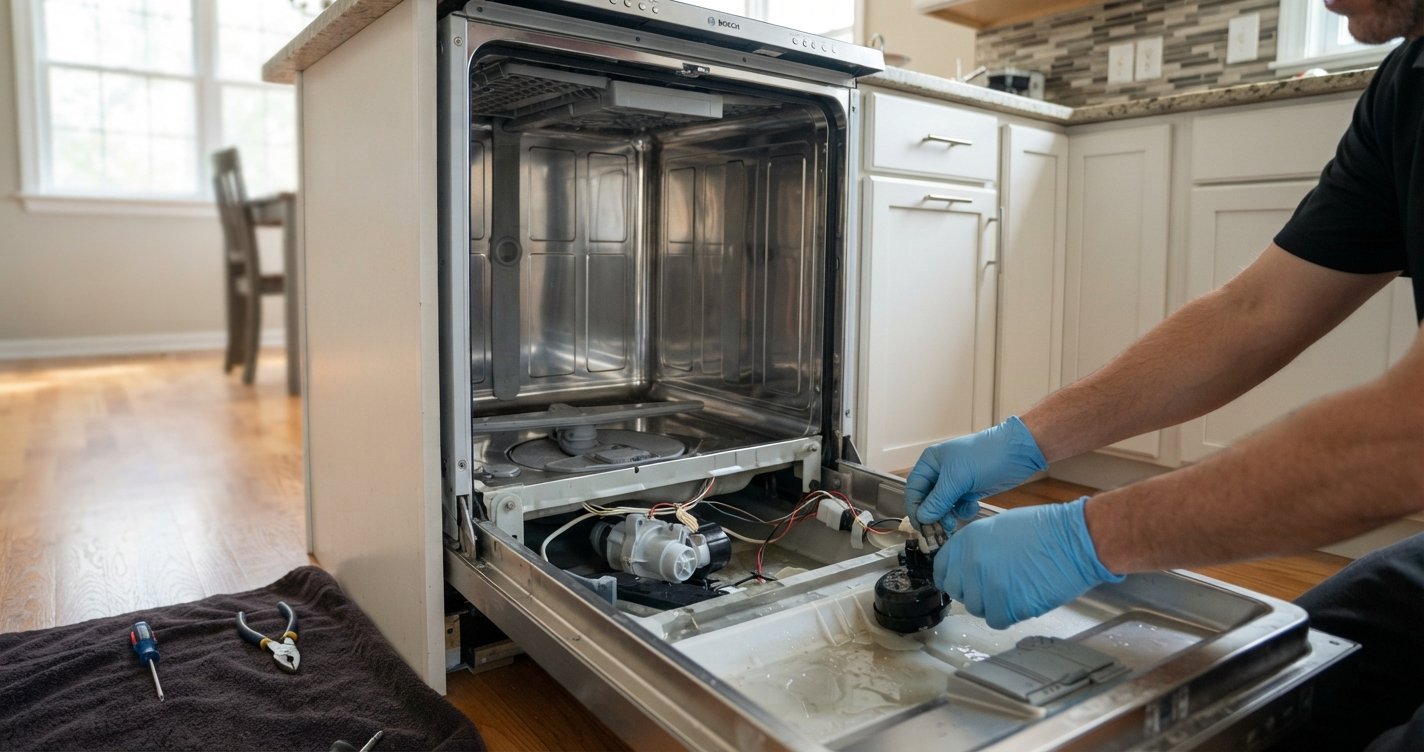
According to Whirlpool’s own care guide, cleaning a dishwasher with vinegar and baking soda takes two separate cycles: first, place 2 cups of white vinegar in a dishwasher-safe container on the top rack and run a hot cycle with the heat-dry option off; then, sprinkle 1 cup of baking soda across the bottom of the empty tub and run a second, short hot cycle. Never combine vinegar and baking soda in the same cycle — the reaction creates a foamy mess rather than a better clean. Repeat this roughly once a month, and clean the filter first for the best results.
Read More: Are Bosch Dishwashers Worth It in 2026?
Table of contents
Why Vinegar and Baking Soda Work
These two household staples target different kinds of buildup, which is why using them in sequence works better than using either alone. White vinegar is a mild acid that dissolves mineral deposits, cuts through grease, and has antibacterial properties that help eliminate odor-causing bacteria. Baking soda is a natural deodorizer and mildly abrasive cleaner that breaks down tough stains and absorbs lingering odors. Together, they handle the two main sources of dishwasher grime — the grease/mineral buildup vinegar dissolves, and the smell and residue baking soda lifts and neutralizes — without any harsh chemicals or synthetic fragrance.
Before You Start: Clean the Filter First
Skipping this step is the most common reason people don’t get the results they expect from a vinegar-and-baking-soda clean.
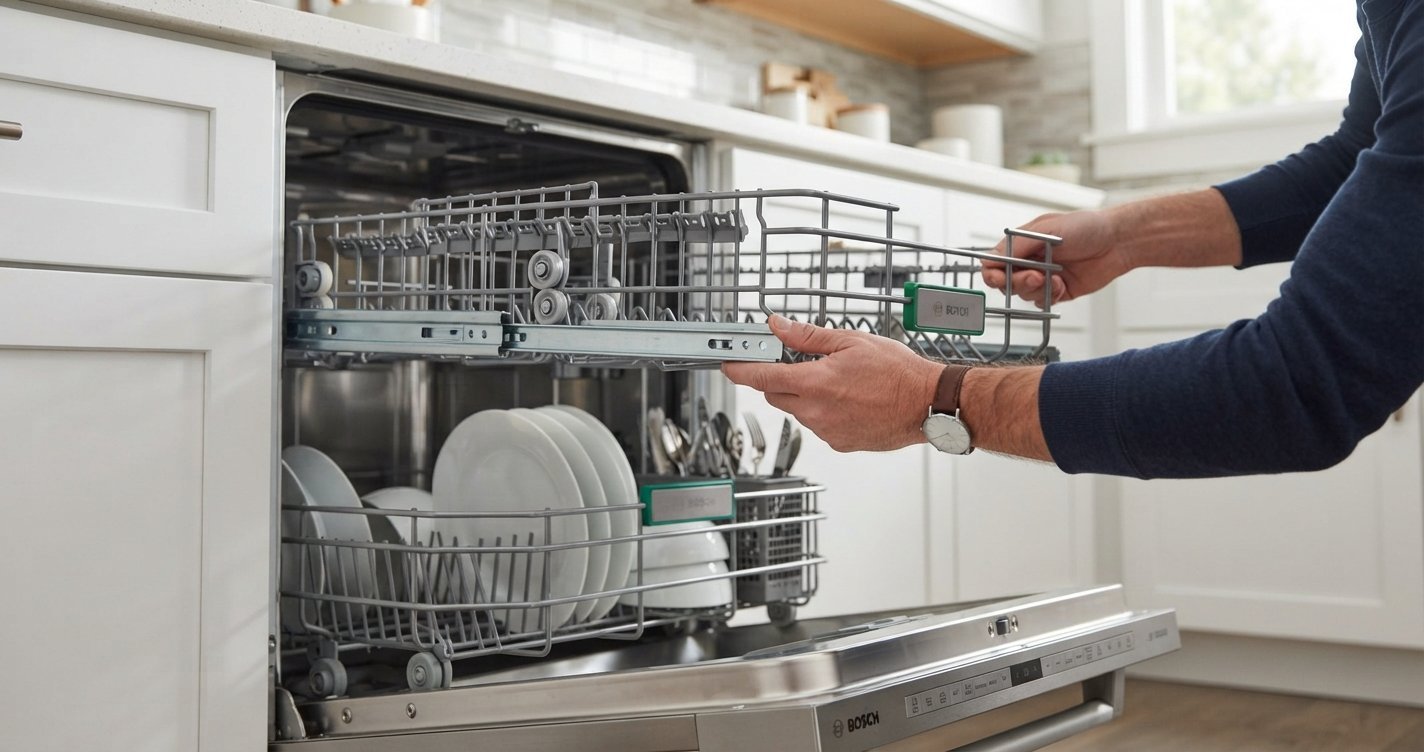
- Remove the bottom rack to access the tub floor.
- Locate and remove the filter, following your manufacturer’s instructions — most newer dishwashers have a removable filter, though some older models have a fixed one you can’t take out.
- Rinse the filter under warm water, using a soft brush to clear away trapped food particles, grease, and debris.
- Check around the drain for foreign material — bones, bits of plastic, or broken glass can collect there and should be cleared out before you start the vinegar cycle.
- Reinstall the filter and replace the bottom rack.
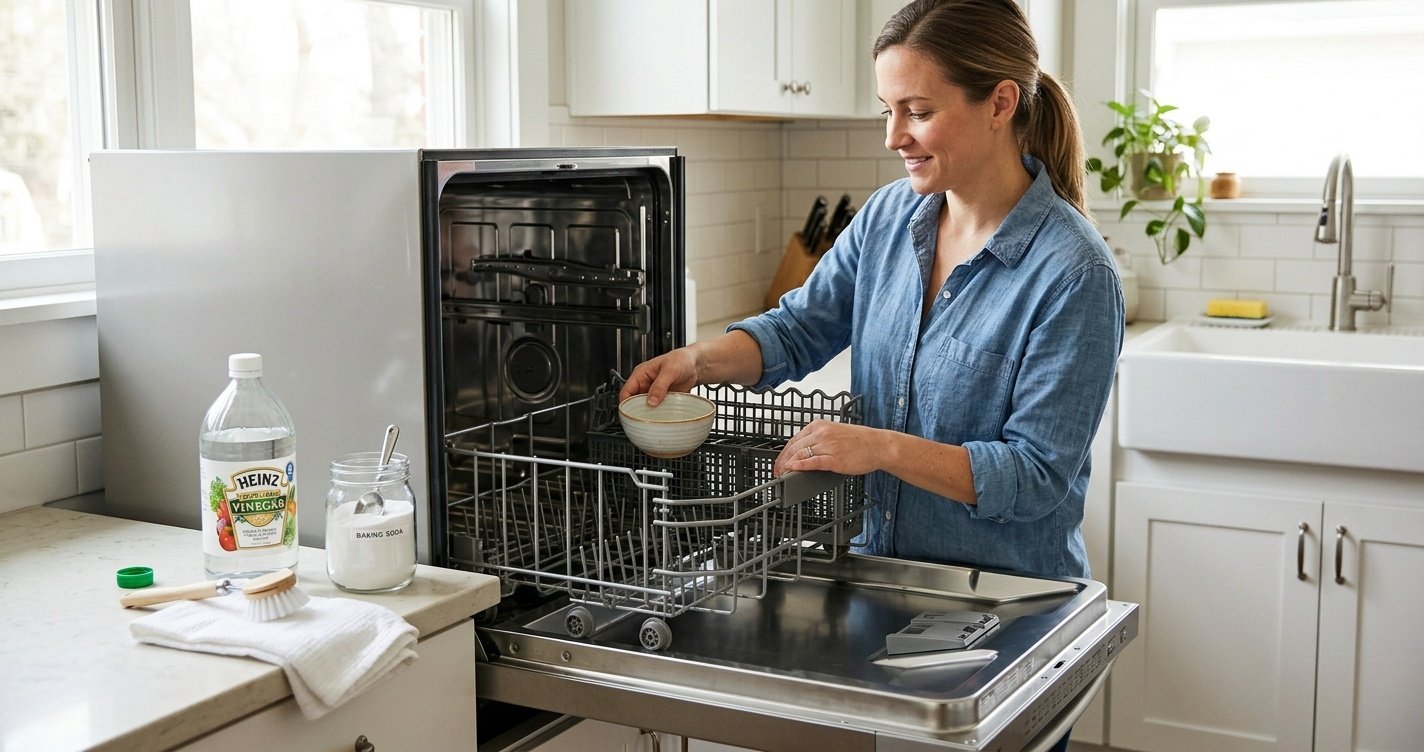
Step 1: Run the Vinegar Cycle
- Start with an empty dishwasher. Wipe away any large bits of food still clinging to the bottom of the tub.
- Fill a dishwasher-safe container — a glass measuring cup or bowl works well — with 1 to 2 cups of white vinegar.
- Place the container upright in the center of the top rack.
- Run a normal cycle on the hottest water setting available, with the heat-dry option turned off (this saves energy and speeds up the process, and a slightly damp interior actually helps the next step).
- Do not add any dish detergent to this cycle — the vinegar needs to work on its own.
If your dishwasher has a self-cleaning or sanitizing cycle, that’s the ideal setting to use for both the vinegar cycle and the baking soda cycle that follows.
Step 2: Run the Baking Soda Cycle
- Once the vinegar cycle finishes, open the dishwasher and remove the empty container.
- Sprinkle 1 cup of baking soda evenly across the bottom of the dishwasher tub — an even, generous dusting is enough; it doesn’t need to be precise.
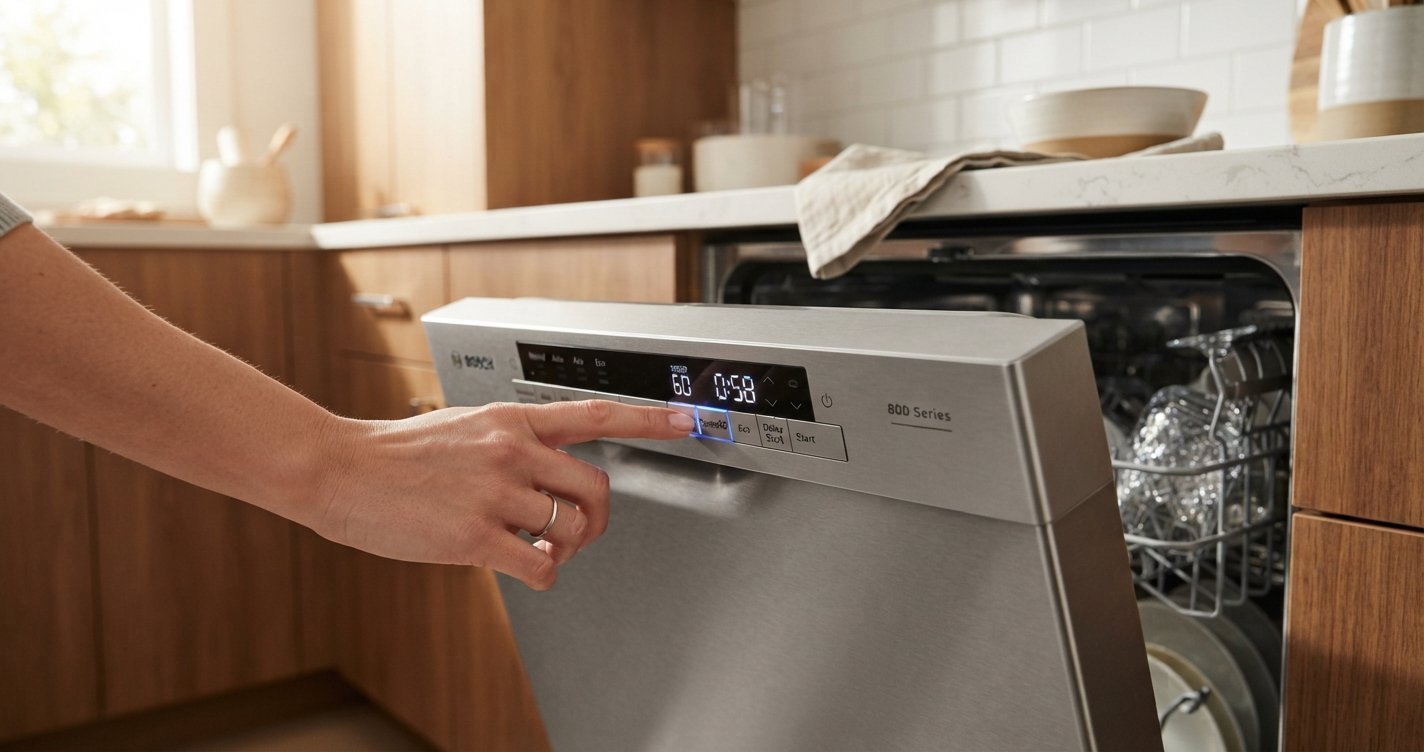
- Run a second, short cycle on the hottest setting, again without adding any detergent. A quick wash, express wash, or china/crystal setting works well here if your model has one.
- Skip the heat-dry option on this cycle as well.
Important: never add vinegar and baking soda to the same cycle. The chemical reaction between them creates a foaming, fizzing mess rather than a more effective clean — it won’t damage the dishwasher, but it will leave you with an unnecessary cleanup.
After the Cycles: Final Touches
- Air it out. Once the baking soda cycle finishes, open the door and let the dishwasher air out for a few minutes before closing it back up.
- Spot-clean stubborn areas. If grime remains around the door seals or edges, dip an old toothbrush in a paste of baking soda and a few drops of water, scrub gently, then wipe clean with a damp cloth.
- Run a quick rinse if you scrubbed anything. This clears away any leftover paste or residue from spot-cleaning.
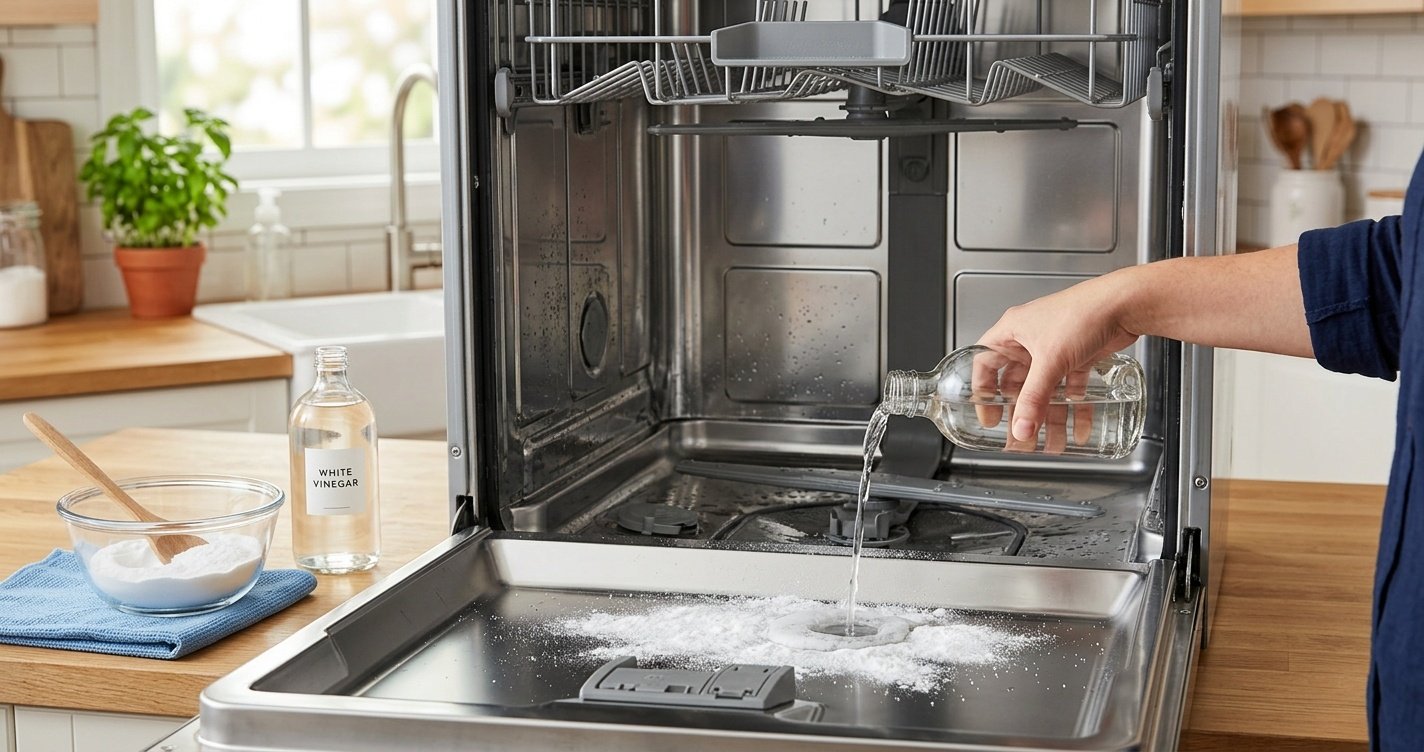
What If You Don’t Have White Vinegar?
Apple cider vinegar, lemon juice, or citric acid powder can all substitute for white vinegar in this process. If using citric acid specifically, use about 1/4 cup sprinkled in the bottom of the dishwasher before running the cycle, rather than mixing it into a container of liquid.
How Often Should You Do This?
Whirlpool recommends repeating the full vinegar-and-baking-soda process roughly every 30 days to keep the dishwasher running effectively and to prevent buildup that leads to odors or poor cleaning performance. Households with hard water may benefit from doing this more often, since mineral buildup accumulates faster. For a lighter, more frequent touch-up between full cleanings, some guides suggest a quicker vinegar-only cycle once or twice a month, reserving the full two-step process (with detailed filter cleaning) for once or twice a year, or whenever you notice strong odors, food residue reappearing on dishes, or slow draining.
Frequently Asked Questions
How do I clean my dishwasher with vinegar and baking soda?
Run one hot cycle with 1–2 cups of white vinegar in a container on the top rack of an empty dishwasher, then run a second, separate hot cycle with 1 cup of baking soda sprinkled across the bottom — never combine them in the same cycle.
Can I put vinegar and baking soda in the dishwasher at the same time?
No. Combining them in a single cycle triggers a foaming chemical reaction that creates a mess rather than a more effective clean. Always run them as two separate cycles.
How often should I clean my dishwasher with vinegar and baking soda?
Roughly once a month for routine maintenance, according to Whirlpool’s care guide, though homes with hard water or heavier daily use may benefit from doing it more frequently.
Does vinegar damage a dishwasher’s rubber seals or gaskets?
Occasional use as part of a monthly cleaning routine is generally fine. Still, excessive or overly frequent use can affect rubber components over time — stick to a normal cleaning schedule rather than running vinegar cycles constantly.
Why does my dishwasher still smell after a vinegar cycle?
The baking soda step is what finishes the job — vinegar alone breaks down grease and mineral buildup, but baking soda specifically targets and neutralizes lingering odors. If a smell persists after both cycles, check the filter and door gasket for trapped food debris.
Can I use apple cider vinegar instead of white vinegar?
Yes, apple cider vinegar, lemon juice, or citric acid powder can all substitute for white vinegar in this process. However, white vinegar remains the most commonly recommended option since it’s inexpensive and carries no risk of staining.
Conclusion
Cleaning a dishwasher with vinegar and baking soda is about as simple as home maintenance gets — two ingredients most people already have, run in two separate hot cycles, with no scrubbing and no specialty products required. Clean the filter first, run the vinegar cycle, then the baking soda cycle, and keep the two ingredients apart rather than combining them. Do this once a month, and the odors, cloudy glassware, and mild buildup that gradually creep into a dishwasher’s interior rarely get the chance to become a real problem.