Table of contents
When Should You Replace Nonstick Cookware?
Nonstick cookware makes cooking and cleaning easier, but it doesn’t last forever. Over time, the coating wears down, reducing performance and potentially raising safety concerns.
The good news is that replacing nonstick cookware is simple once you know the warning signs. This guide explains exactly when to replace your pans, how long they typically last, and how to extend their lifespan.
Read More: Cookware Without Toxic Coating: Complete Guide
How Long Does Nonstick Cookware Last?
Most nonstick cookware lasts:
- 3–5 years with normal household use
- 2–3 years if used daily
- 5+ years when carefully maintained
Premium cookware often lasts longer because it uses thicker construction and higher-quality coatings.
Signs You Should Replace Nonstick Cookware
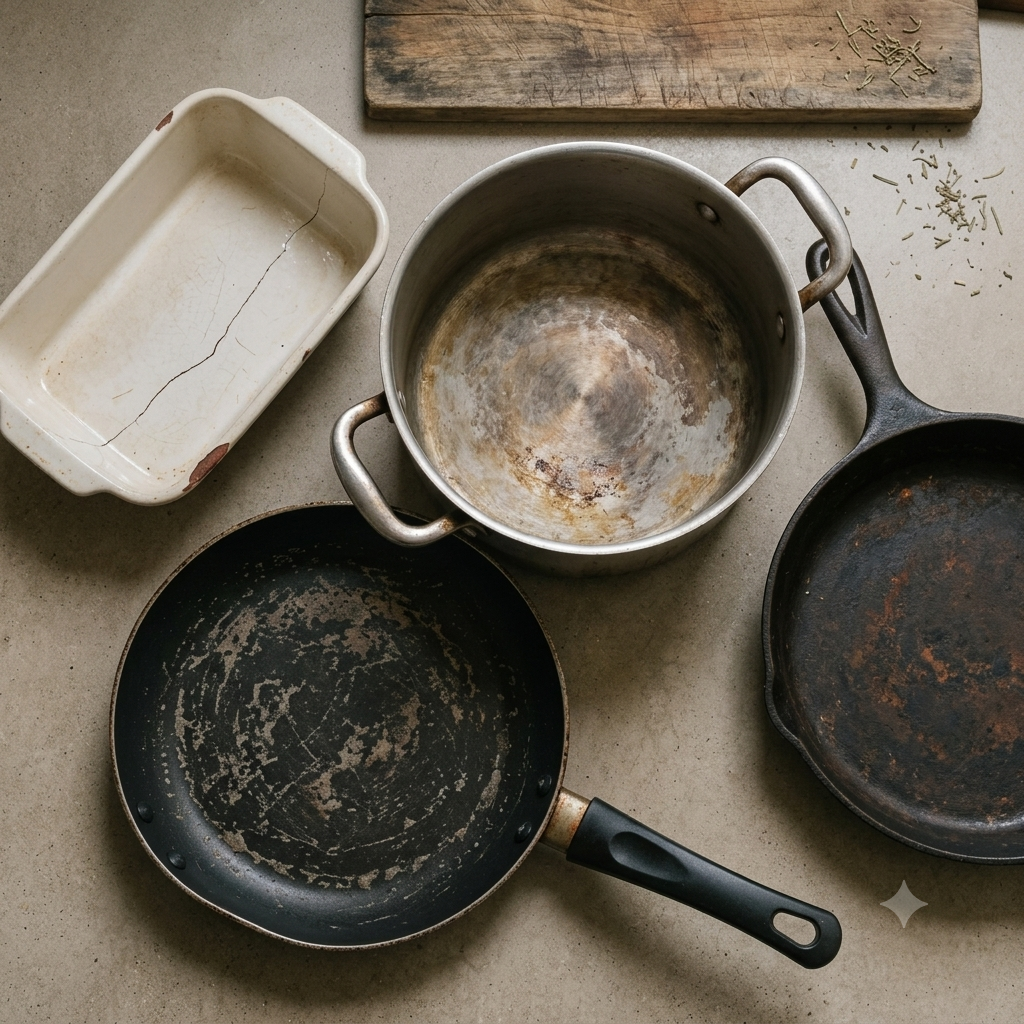
1. The Nonstick Coating Is Peeling
Peeling coating is the clearest sign that it’s time for a replacement.
Once the coating begins separating from the pan, cooking performance declines significantly.
👍If the nonstick coating peels or flakes, replace the cookware.
2. Deep Scratches Cover the Surface
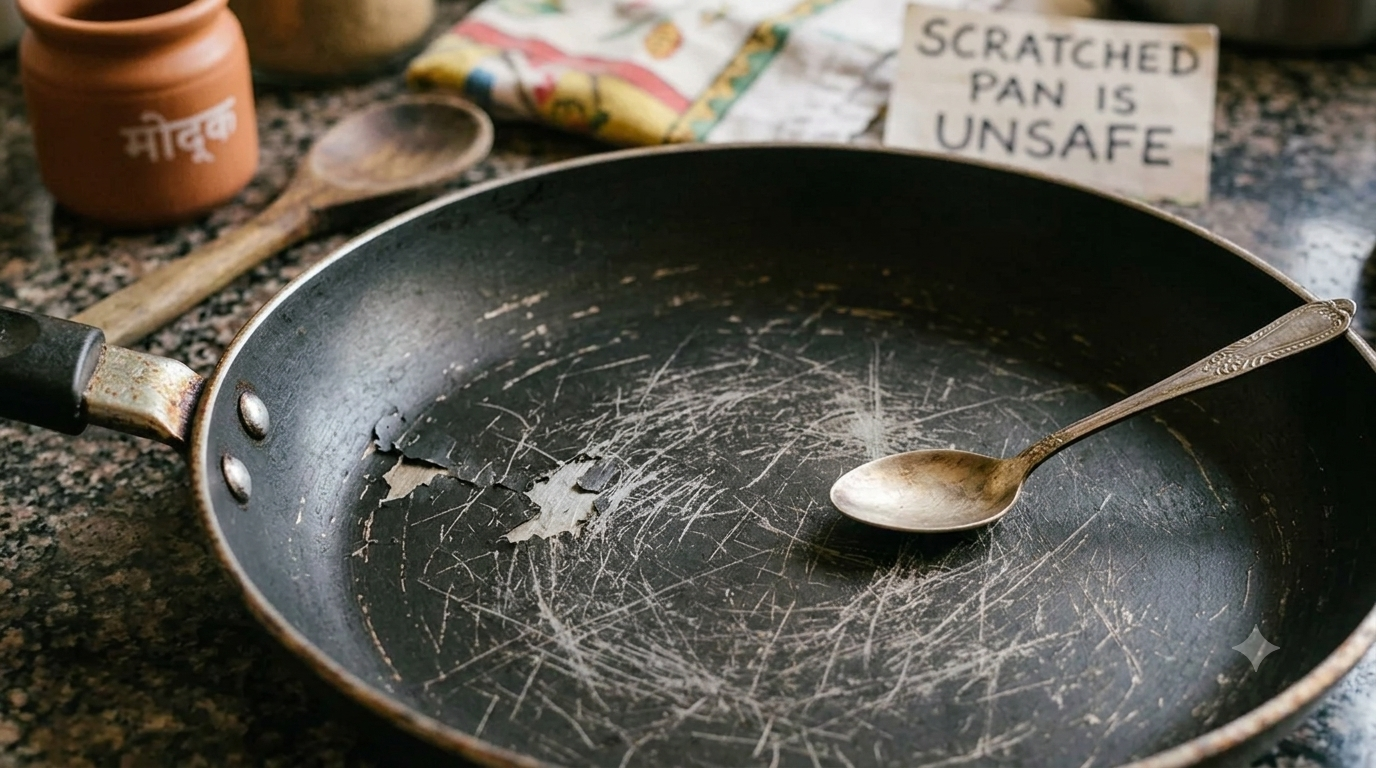
Small cosmetic marks are common, but deep scratches can damage the coating.
Scratches usually result from:
- Metal utensils
- Stacking pans without protection
- Abrasive cleaning pads
👍Deep scratches mean the coating is wearing out, and replacement is recommended.
3. Food Sticks More Than Before
A quality nonstick pan should release food easily.
If eggs, pancakes, or fish begin sticking despite proper cooking methods, the coating has likely deteriorated.
👍Persistent sticking is a common sign that the pan has reached the end of its useful life.
4. The Pan Is Warped
Warping causes uneven heating.
Signs include:
- Wobbling on the stovetop
- Oil pooling to one side
- Uneven cooking
👍Warped cookware should be replaced because it cooks less evenly and can become frustrating to use.
5. Discoloration or Burn Marks
Dark stains alone aren’t always dangerous.
However, severe discoloration combined with reduced performance often indicates the coating has degraded from repeated overheating.
👍Replace heavily discolored cookware if it also sticks, peels, or heats unevenly.
Is Scratched Nonstick Cookware Safe?
Minor surface scratches are generally not considered an immediate health hazard.
However, once the coating begins peeling, flaking, or deteriorating significantly, replacing the cookware is the safer and more practical choice.
Regardless of coating type:
- Avoid overheating empty pans.
- Never use metal utensils unless the manufacturer specifically allows them.
- Replace cookware showing significant wear.
What Causes Nonstick Cookware to Wear Out Faster?
Several habits shorten the lifespan of nonstick cookware.
Using Metal Utensils
Metal spatulas and forks can scratch protective coatings.
Choose:
- Silicone
- Wood
- Nylon utensils
Cooking on High Heat
High temperatures accelerate coating breakdown.
Most nonstick cookware performs best on:
- Low heat
- Medium heat
Dishwasher Cleaning
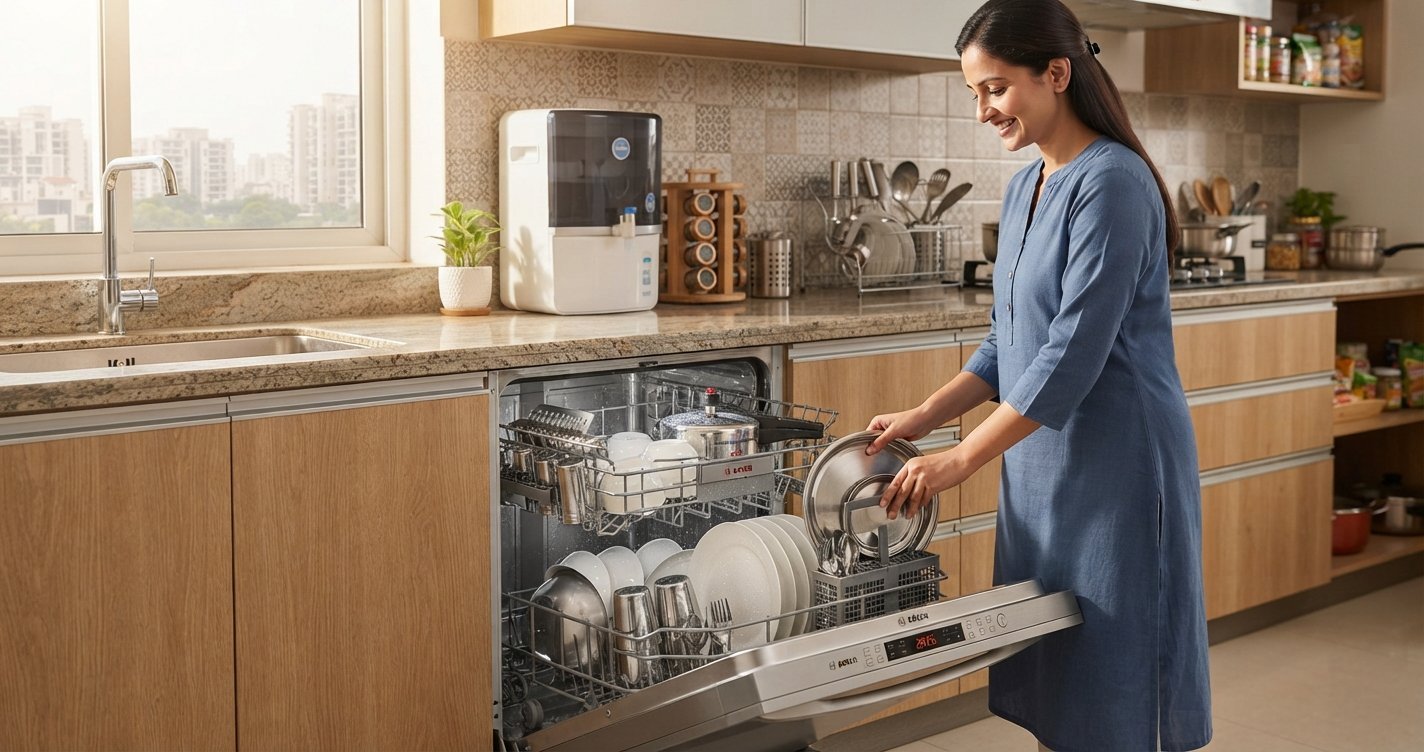
Although many pans are labeled dishwasher-safe, repeated dishwasher cycles may reduce the coating’s lifespan.
Hand washing with a soft sponge is usually the better option.
Stacking Without Protection
Stacking pans directly together creates scratches over time.
Place:
- Pan protectors
- Soft towels
- Paper towels
between cookware.
How Can You Make Nonstick Cookware Last Longer?
Follow these simple habits:
- Cook on low or medium heat.
- Wash gently with mild soap.
- Avoid metal utensils.
- Don’t preheat an empty pan for long periods.
- Store pans carefully.
- Allow cookware to cool before washing.
These small changes can significantly extend the life of your cookware.
Should You Replace Just One Pan or the Whole Set?
If only one pan is damaged, replacing that single piece is usually enough.
Replace the entire cookware set only if:
- Multiple pans are peeling
- Most pieces have lost their nonstick performance
- The cookware is reaching the end of its lifespan
Is It Worth Buying Expensive Nonstick Cookware?
Higher-priced cookware often offers:
- Better heat distribution
- Thicker construction
- Longer-lasting coatings
- More durable handles
- Improved cooking performance
While premium cookware may cost more initially, it can provide better long-term value when properly maintained.
Frequently Asked Questions
How often should you replace nonstick cookware?
Most nonstick cookware should be replaced every 3–5 years, or sooner if the coating peels, flakes, scratches deeply, or loses its nonstick performance.
Can you keep using scratched nonstick pans?
Light scratches may not require immediate replacement, but deep scratches, peeling, or flaking indicate it’s time for a new pan.
Why does my nonstick pan suddenly stick?
The coating gradually wears down with regular use, high heat, abrasive cleaning, or scratches, reducing its nonstick performance.
Can overheating ruin a nonstick pan?
Yes. Repeated overheating can damage the coating, reduce its lifespan, and lead to uneven cooking performance.
What’s the best way to extend the life of nonstick cookware?
Use low to medium heat, hand-wash with a soft sponge, avoid metal utensils, and store pans carefully to prevent scratches.
Final Tip
Nonstick cookware isn’t designed to last forever. Inspect your pans regularly for peeling, deep scratches, warping, or declining performance. Replacing worn cookware at the right time helps maintain consistent cooking results and protects your investment. With proper care, a quality nonstick pan can provide several years of reliable everyday use.