A dishwasher makes everyday kitchen cleaning easier, but over time, food particles, grease, soap residue, and mineral deposits can build up inside it. These deposits can cause unpleasant smells, cloudy dishes, and poor cleaning performance.
Fortunately, you don’t always need expensive commercial cleaners to maintain your dishwasher. Vinegar and baking soda are two common household ingredients that can help freshen and clean different parts of your appliance.
In this guide, you’ll learn how to clean a dishwasher with vinegar and baking soda, the correct order to use them, which dishwasher parts need attention, and how to keep your appliance fresh and clean.
Read More: Clean Stainless Steel in the Dishwasher
Table of contents
Why Should You Clean Your Dishwasher Regularly?
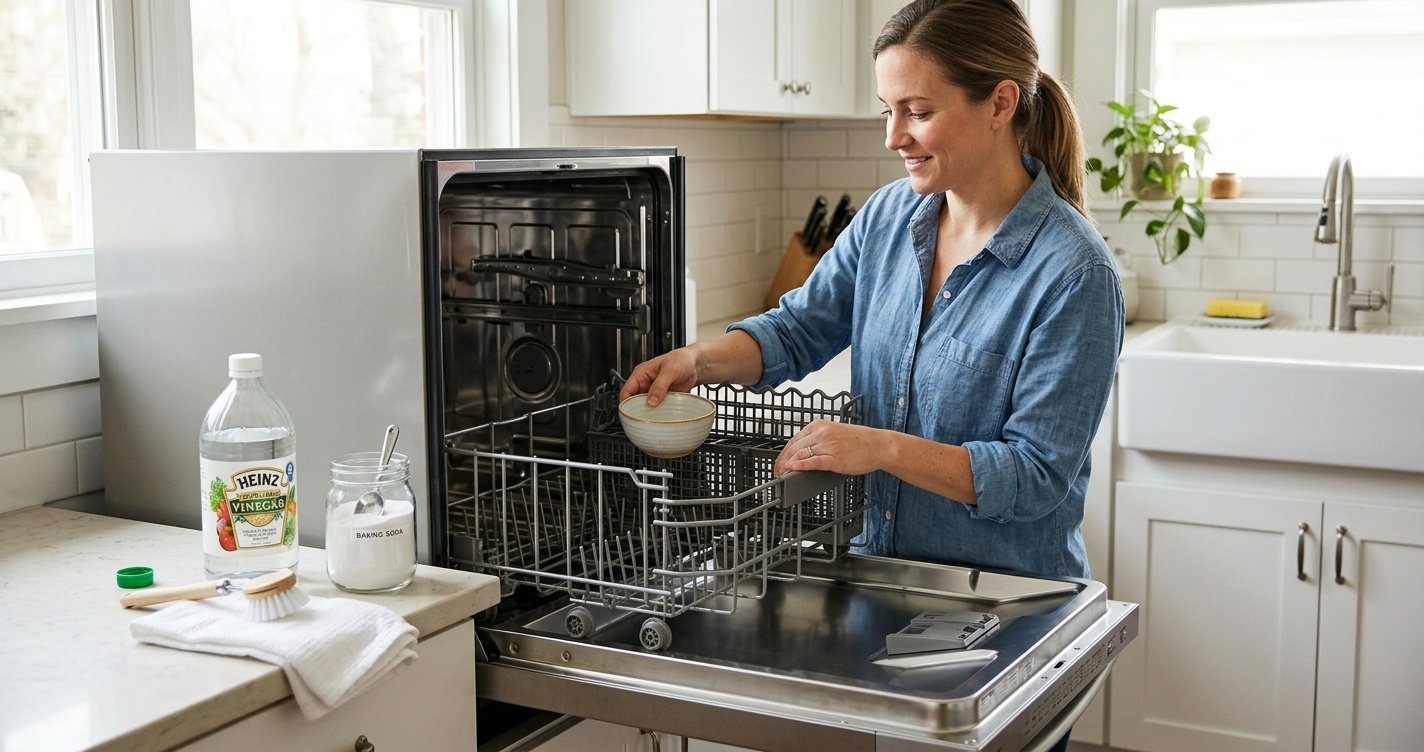
Although dishwashers clean dishes every day, they don’t automatically clean themselves.
Food scraps, grease, detergent residue, and hard-water deposits can accumulate inside the appliance. If you ignore these deposits, they may contribute to unpleasant odours and reduced cleaning performance.
Regular dishwasher cleaning offers several benefits:
- Removes unpleasant smells: Food particles and grease trapped inside the dishwasher can produce bad odours.
- Reduces residue buildup: Cleaning helps remove accumulated detergent and grease deposits.
- Improves cleaning performance: A clean filter and spray arms allow water to circulate more effectively.
- Maintains dishwasher hygiene: Removing trapped food debris helps keep the interior clean.
- Supports appliance maintenance: Regular care helps prevent avoidable buildup that can affect dishwasher operation.
What You Need to Clean a Dishwasher with Vinegar and Baking Soda
Before starting, gather the following household supplies:
- 1 cup of white distilled vinegar
- 2–3 tablespoons of baking soda
- A dishwasher-safe cup or bowl
- A soft microfiber cloth
- An old toothbrush or small cleaning brush
- Warm water
- Dishwashing gloves (optional)
Important: Check your dishwasher manufacturer’s cleaning instructions before using vinegar. Frequent exposure to acidic cleaners may damage certain rubber seals, metal finishes, or other components. Do not use vinegar if your manufacturer advises against it.
How to Clean Dishwasher with Vinegar and Baking Soda: Step-by-Step Instructions
The best approach is to use vinegar and baking soda in separate cleaning cycles rather than mixing them together.
When combined directly, vinegar and baking soda react and neutralize much of each other’s cleaning action. Using them separately allows you to benefit from their different cleaning properties.
Step 1: Empty Your Dishwasher
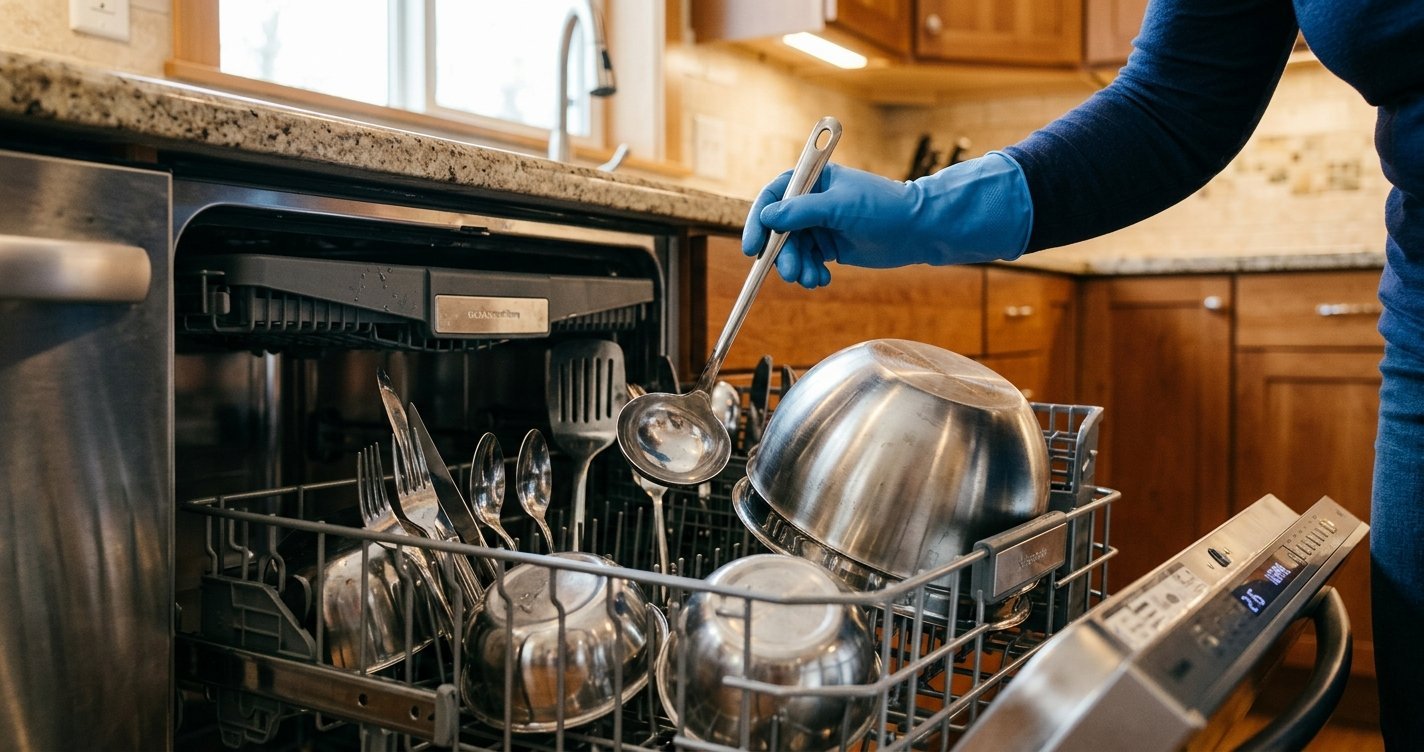
Start by removing all dishes, glasses, cutlery, and other items from your dishwasher.
Check the racks for leftover food particles, crumbs, or other debris. Remove anything you find.
An empty dishwasher allows the cleaning ingredients to reach the interior surfaces more effectively.
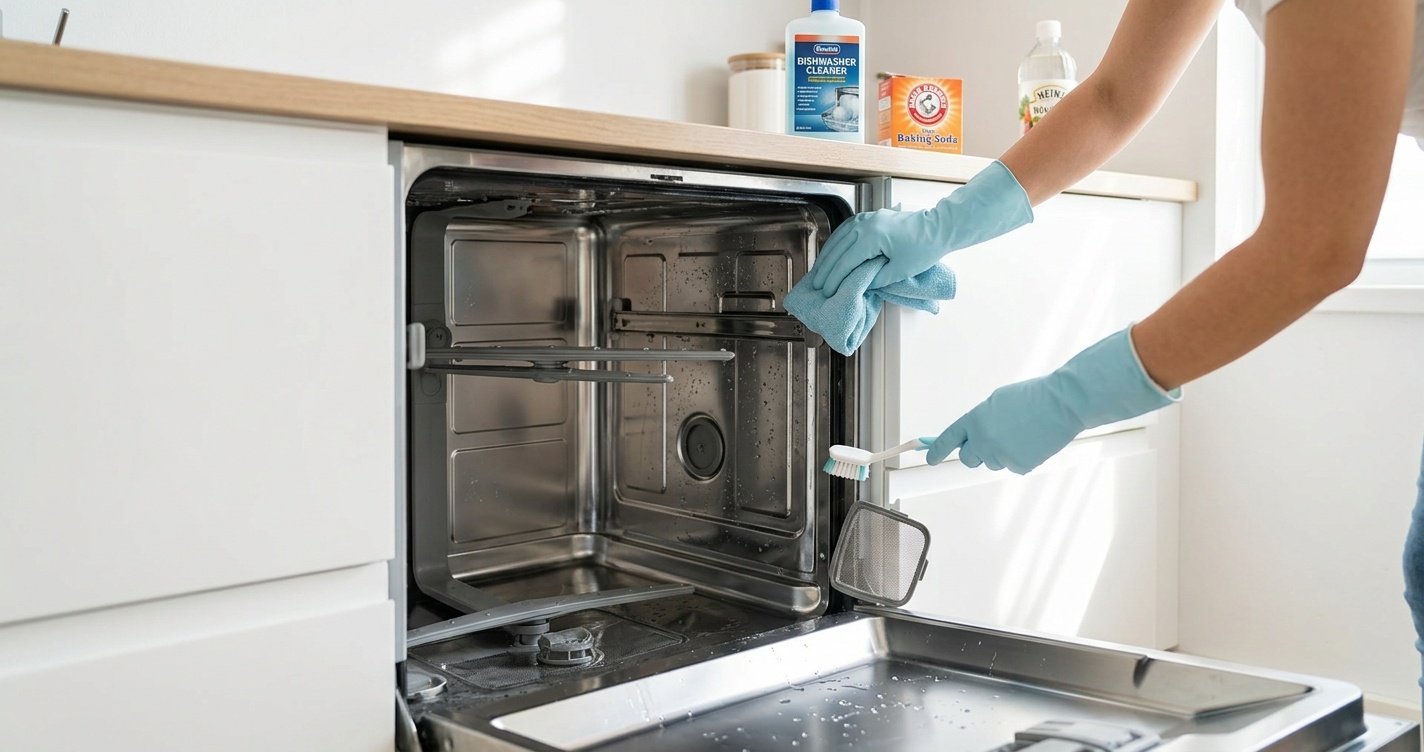
Step 2: Clean the Dishwasher Filter
The dishwasher filter collects food particles and debris during washing. If it becomes clogged, it can contribute to unpleasant smells and poor cleaning performance.
Follow these steps:
- Remove the bottom dishwasher rack.
- Locate the filter, usually near the bottom of the appliance.
- Unlock and remove it according to the manufacturer’s instructions.
- Rinse it under warm running water.
- Use a soft brush to remove stuck food particles.
- Rinse thoroughly and reinstall the filter securely.
Avoid using abrasive brushes or harsh chemicals that could damage the filter.
Step 3: Wipe the Dishwasher Door and Interior
Food residue and grease can collect around the dishwasher door, edges, and rubber gasket.
Dampen a microfiber cloth with warm water and gently wipe:
- The inside of the dishwasher door.
- Door edges and corners.
- Rubber seals and gaskets.
- Detergent dispenser.
- Areas around the bottom of the appliance.
For stubborn debris, use a soft toothbrush and warm water.
Avoid pouring vinegar directly onto rubber seals or soaking them in acidic solutions.
Step 4: Clean the Dishwasher with White Vinegar
Once the filter and interior surfaces are clean, you can use white vinegar to help remove grease, light mineral deposits, and unpleasant smells.
Follow these instructions:
- Pour one cup of white distilled vinegar into a dishwasher-safe bowl or cup.
- Place the container upright on the top rack.
- Make sure the dishwasher is otherwise empty.
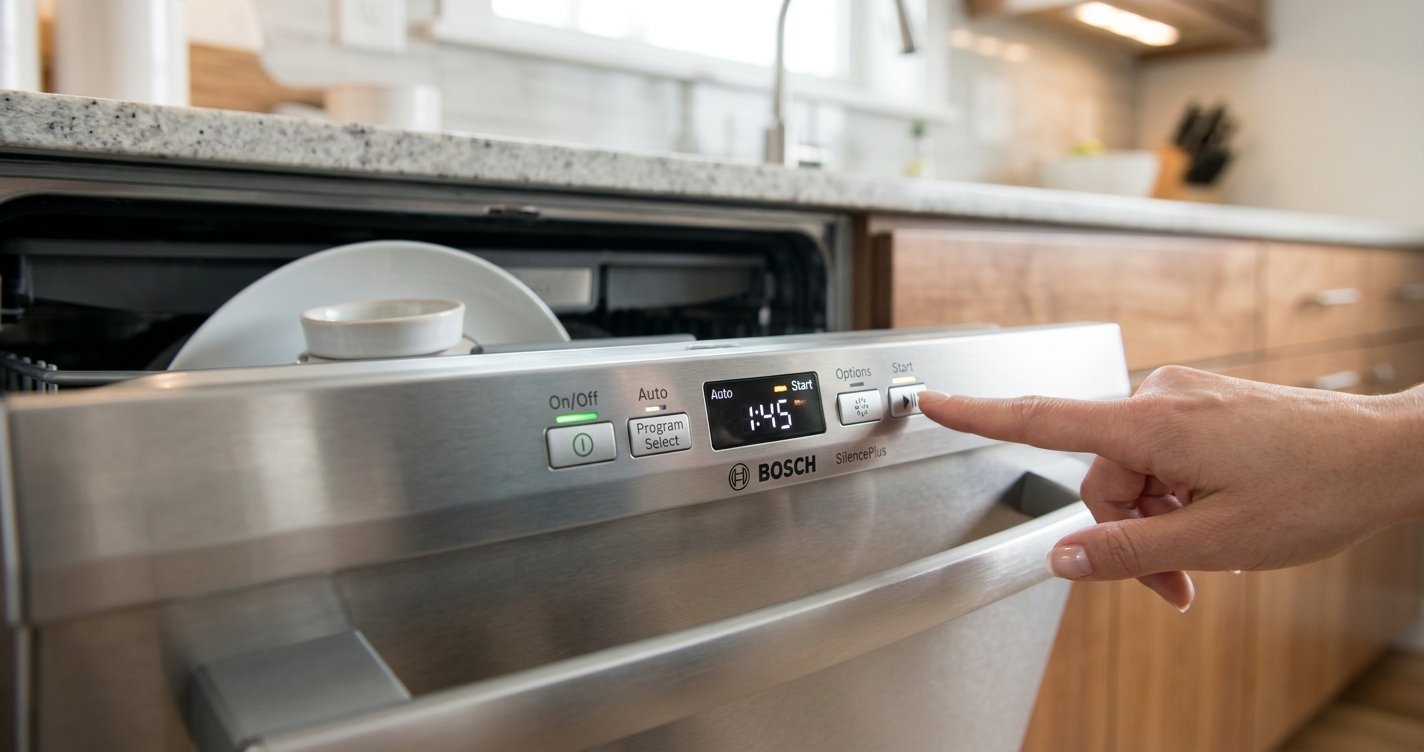
- Select a hot-water cycle suitable for the appliance.
- Start the dishwasher and allow the cycle to finish.
The vinegar will disperse through the dishwasher during the wash cycle.
Important: Only use this method if your dishwasher manufacturer permits vinegar cleaning. Avoid adding vinegar directly to the detergent dispenser.
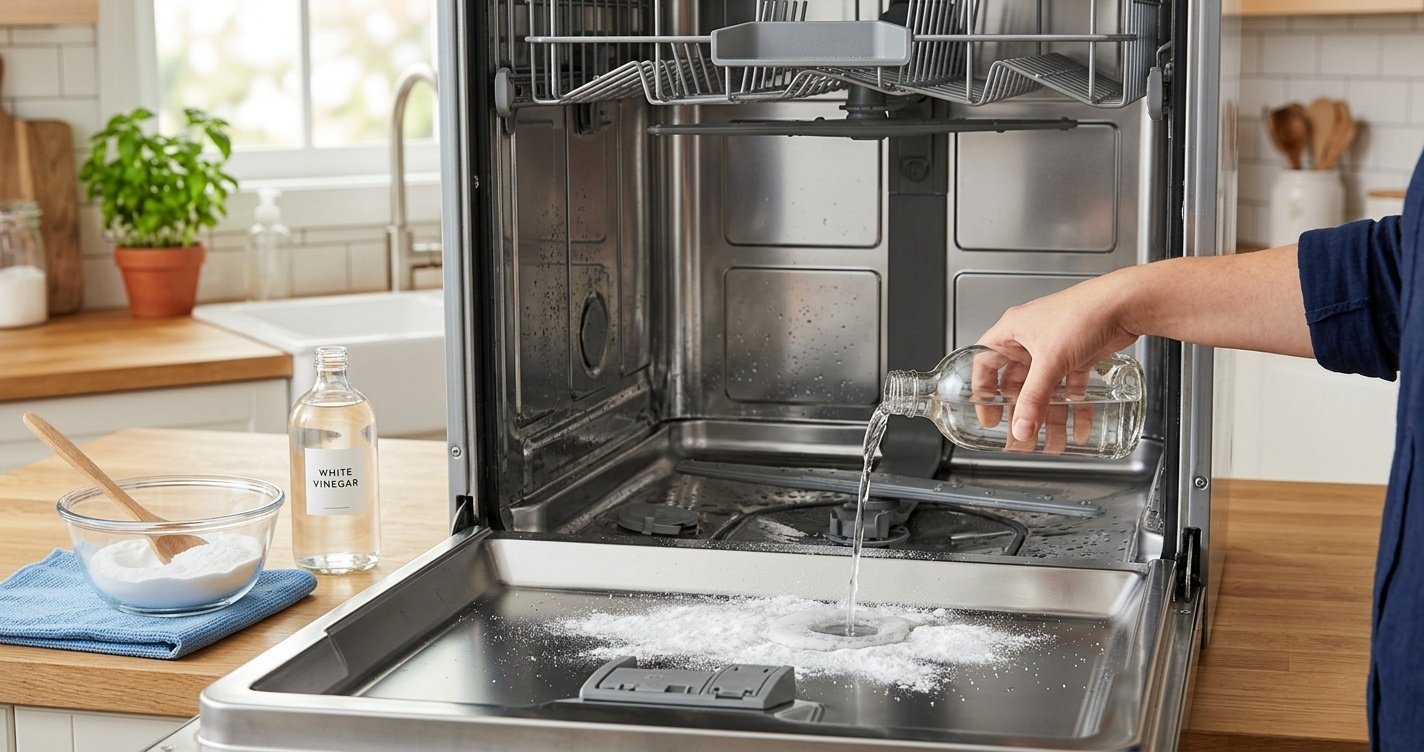
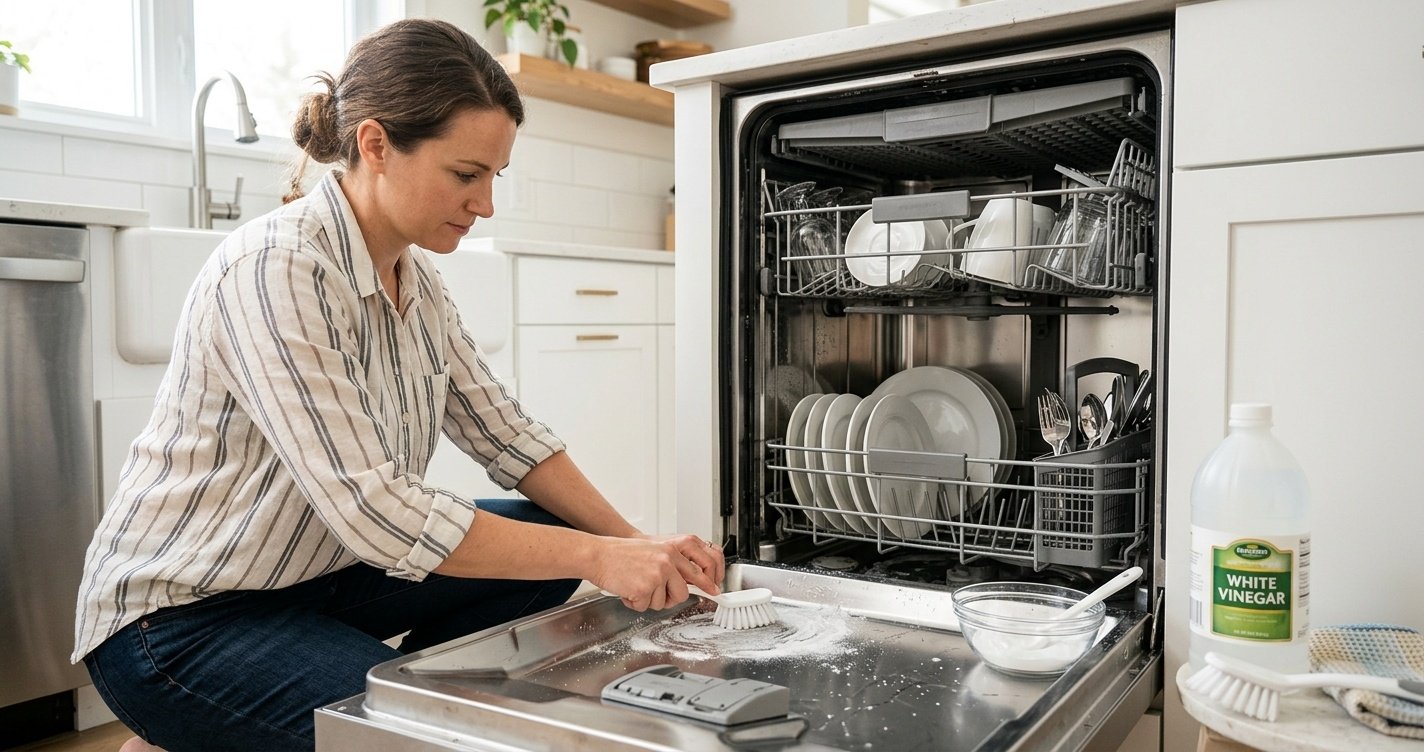
Step 5: Use Baking Soda to Freshen the Dishwasher
After the vinegar cycle has finished, you can use baking soda as a separate cleaning step.
Here’s what to do:
- Make sure the dishwasher is empty.
- Sprinkle approximately 2–3 tablespoons of baking soda across the bottom of the dishwasher.
- Select a short hot-water cycle, if recommended by your manufacturer.
- Run the dishwasher.
- Allow the cycle to finish.
Baking soda is mildly alkaline and can help neutralize some acidic odours. Its mild abrasive properties can also help with gentle surface cleaning.
Avoid using excessive amounts because undissolved powder may leave residue.
Step 6: Inspect and Dry the Dishwasher
Once both cleaning cycles are complete, open the dishwasher door.
Check the interior for remaining food particles, residue, or unpleasant smells.
Use a clean microfiber cloth to wipe away excess moisture around the door and edges.
You can also leave the door slightly open for a while to allow the interior to air-dry, provided it is safe to do so in your household.
How Do Vinegar and Baking Soda Clean a Dishwasher?
Vinegar and baking soda have different chemical properties, which is why using them separately can be more useful than mixing them together.
How Vinegar Works
White distilled vinegar contains acetic acid. Its acidic properties can help dissolve certain mineral deposits and loosen some types of residue.
It may help with:
- Light mineral buildup.
- Some grease and soap residue.
- Unpleasant smells associated with residue.
However, vinegar is not a universal dishwasher cleaner. It does not reliably remove every type of buildup, and it should not replace proper filter cleaning.
How Baking Soda Works
Baking soda, also known as sodium bicarbonate, is a mild alkaline compound.
It can help with:
- Neutralizing certain unpleasant odours.
- Gentle cleaning of interior surfaces.
- Loosening some light residue.
It is not a disinfectant or a substitute for a dishwasher cleaning product when deeper cleaning is required.
Why Should You Use Them Separately?
When vinegar and baking soda are mixed, they produce carbon dioxide bubbles, water, and sodium acetate.
Although the fizzing reaction looks powerful, much of the acid and alkaline material is neutralized.
For this reason, using vinegar in one cleaning cycle and baking soda in a separate cycle is a more practical approach.
Which Dishwasher Parts Should You Clean?
Cleaning the interior alone may not be enough. Several dishwasher components need regular attention.
1. Dishwasher Filter
The filter traps food particles and debris. Remove and rinse it regularly according to the manufacturer’s instructions.
2. Spray Arms
Spray arms distribute water throughout the dishwasher. Food particles and mineral deposits can block their small openings.
Check the spray-arm holes and remove visible debris using a soft brush. Remove the spray arms only if the manufacturer permits it.
3. Rubber Door Seals
Rubber seals can collect grease, moisture, and food residue.
Wipe them gently with a damp microfiber cloth. Avoid harsh chemicals and prolonged exposure to vinegar.
4. Detergent Dispenser
Detergent residue can accumulate around the dispenser.
Wipe the compartment with a damp cloth and remove any hardened detergent according to the manufacturer’s instructions.
5. Dishwasher Door and Edges
The door edges and corners may not receive enough water during normal washing.
Clean these areas manually with warm water and a soft cloth.
Common Mistakes to Avoid When Cleaning a Dishwasher
Even simple cleaning methods can cause problems if used incorrectly.
Avoid these common mistakes:
1. Mixing vinegar and baking soda together
Combining them directly causes a chemical reaction that neutralizes much of their cleaning ability. Use them separately instead.
2. Using too much vinegar
Excessive or frequent vinegar exposure can damage certain dishwasher components, particularly rubber seals and some finishes.
3. Ignoring the dishwasher filter
Running cleaning cycles without removing trapped food debris may not solve persistent odour problems.
4. Using bleach and vinegar together
Never combine vinegar with chlorine bleach or products containing chlorine bleach. This can release toxic chlorine gas.
5. Using abrasive cleaning tools
Steel wool, rough scouring pads, and abrasive cleaners can scratch stainless steel and damage interior surfaces.
6. Cleaning without checking the manual
Different dishwasher models have different cleaning requirements. Always follow the manufacturer’s instructions.
How Often Should You Clean Your Dishwasher?
The ideal cleaning schedule depends on how frequently you use your dishwasher and how much food residue enters the appliance.
Here is a practical maintenance schedule:
| Cleaning task | Recommended frequency |
|---|---|
| Check for food debris | After loading |
| Wipe door edges and seals | Weekly |
| Clean the filter | Weekly or as recommended by the manufacturer |
| Inspect spray arms | Monthly |
| Clean the dishwasher interior | Monthly or as needed |
| Check for mineral buildup | Periodically |
If you use your dishwasher frequently or have hard water, you may need to inspect and clean certain components more often.
Alternative Ways to Clean a Dishwasher
Vinegar and baking soda are not the only options for dishwasher maintenance.
Depending on the problem, you may benefit from other cleaning methods.
Use a Commercial Dishwasher Cleaner
A dishwasher cleaner formulated for your appliance can help remove grease, mineral deposits, and other buildup.
Follow the product label and dishwasher manufacturer’s recommendations.
Use a Soft Brush and Warm Water
For everyday cleaning, warm water and a soft brush can remove food particles from filters, corners, and other accessible areas.
This is particularly useful for cleaning components that should not be exposed to vinegar.
Use a Manufacturer-Approved Descaler
Hard water can leave mineral deposits inside your dishwasher.
If mineral buildup is a problem, choose a dishwasher descaler approved by the manufacturer and follow its instructions.
Frequently Asked Questions
1. Can I put vinegar and baking soda in my dishwasher at the same time?
It is better to use them separately. Mixing vinegar and baking soda causes a neutralization reaction that reduces the cleaning benefits of both ingredients.
2. How much vinegar should I use to clean my dishwasher?
A commonly suggested household method uses one cup of white distilled vinegar in a dishwasher-safe container placed on the top rack. However, check your appliance manual first because some manufacturers advise against vinegar.
3. Should I use vinegar or baking soda first?
If your manufacturer permits both methods, use vinegar first in a separate cleaning cycle. Follow it with baking soda in another cycle.
4. Can baking soda remove bad smells from a dishwasher?
Baking soda can help neutralize certain unpleasant odours. However, persistent smells may indicate trapped food particles, a dirty filter, a drainage issue, or another problem that requires attention.
5. Is vinegar safe for stainless steel dishwashers?
Vinegar can affect some metal finishes and dishwasher components, especially with repeated exposure. Check the manufacturer’s recommendations before using it.
6. Can I clean my dishwasher with vinegar every week?
Weekly vinegar cleaning is generally unnecessary and may expose seals and other components to excessive acidity. Regularly cleaning the filter and wiping the interior is a better maintenance routine.
7. Why does my dishwasher still smell after cleaning?
Persistent odours may result from:
- Food particles trapped in the filter.
- Blocked spray-arm openings.
- Grease buildup around the door seals.
- Drainage or plumbing problems.
- Standing water inside the appliance.
Inspect these areas and consult a qualified technician if the smell persists or you notice drainage problems.
8. Can I use apple cider vinegar instead of white vinegar?
White distilled vinegar is generally preferred because it is clear and does not contain the colouring or additional organic compounds found in some other vinegars. However, check your dishwasher manufacturer’s cleaning guidance before using any vinegar.
9. Does vinegar remove hard-water stains from a dishwasher?
Vinegar can dissolve some mineral deposits because of its acidic properties. However, substantial hard-water buildup may require a manufacturer-approved dishwasher descaler.
10. Do I need to run an empty dishwasher when cleaning it?
Yes, the vinegar and baking soda cleaning methods described above should be performed in separate cycles with an empty dishwasher. This allows the cleaning ingredients to circulate without dishes or utensils inside.
Final Thoughts
Cleaning your dishwasher with vinegar and baking soda can be a simple way to freshen the appliance and deal with certain types of residue.
The key is to use the ingredients separately, clean the filter manually, wipe the door seals, and inspect the spray arms. Vinegar may help loosen mineral deposits, while baking soda can help neutralize some unpleasant odours.
Remember that natural cleaning ingredients are not suitable for every dishwasher. Always check your manufacturer’s instructions before using vinegar or other household cleaning products.
With regular maintenance and proper cleaning habits, you can keep your dishwasher fresher, cleaner, and ready for everyday use.