Table of contents
What Is Cookware Without Toxic Coating?
Cookware without toxic coatings is made from natural materials, such as stainless steel, cast iron, carbon steel, glass, or pure ceramic, and does not contain synthetic nonstick chemicals.
Unlike traditional nonstick pans, these materials do not rely on chemical coatings that may wear away over time.
Read More: Safest Cookware Materials for Everyday Cooking
Why Do People Want It?
People choose cookware without toxic coating because they want:
- Avoid peeling nonstick coatings
- Reduce exposure to PFAS chemicals
- Cook at higher temperatures safely
- Buy cookware that lasts decades
- Use more environmentally friendly products
Many modern kitchens are replacing disposable nonstick cookware with longer-lasting alternatives.
Best Materials
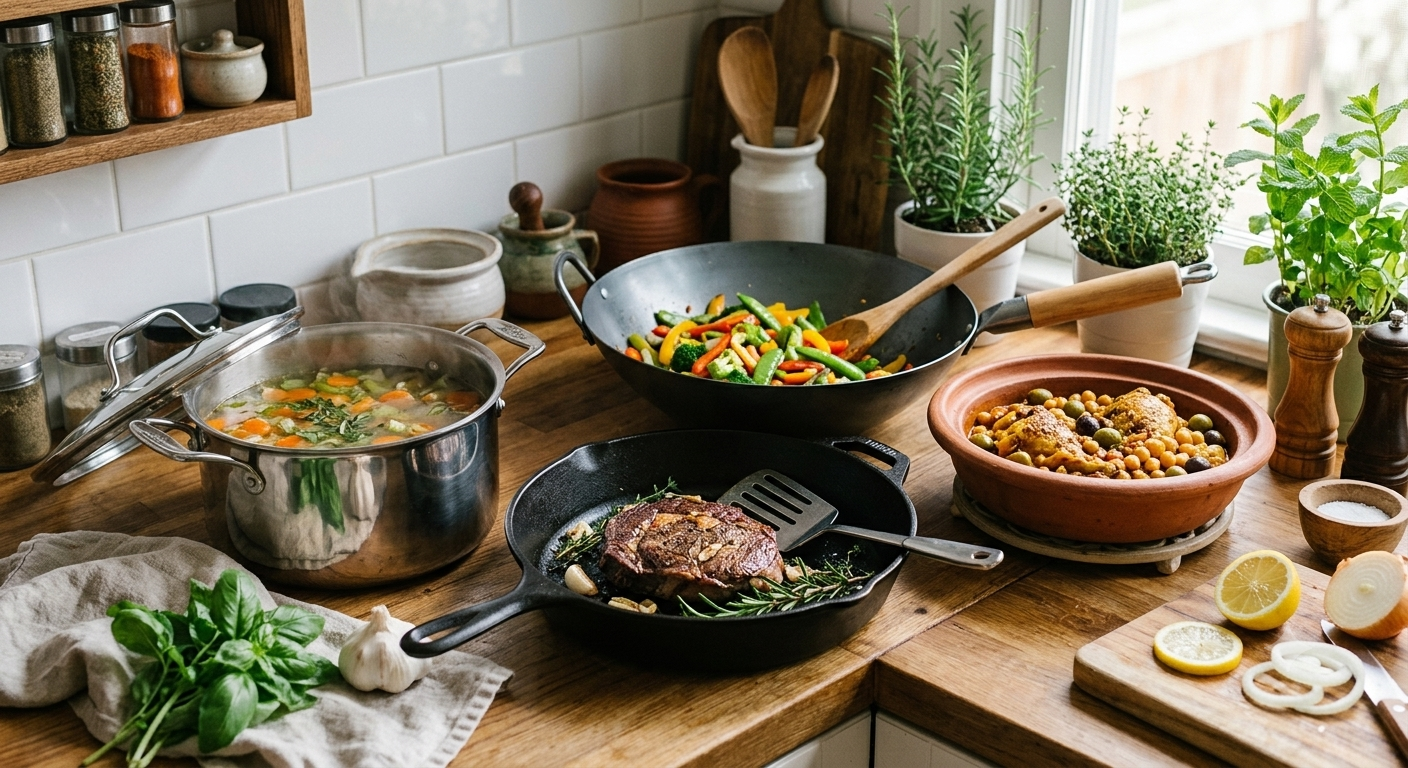
The safest cookware materials include stainless steel, cast iron, carbon steel, pure ceramic, and glass.
1. Stainless Steel
Best for:
- Everyday cooking
- Boiling
- Sauces
- Browning meat
Pros
- Extremely durable
- No chemical coating
- Rust resistant
- Dishwasher safe (most models)
- Long lifespan
Cons
- Food can stick without proper technique
2. Cast Iron
Best for:
- Steaks
- Baking
- Frying
- Roasting
Pros
- Naturally develops a nonstick surface
- Excellent heat retention
- Can last generations
- Works on nearly every cooktop
Cons
- Heavy
- Needs seasoning
- Can rust if neglected
3. Carbon Steel
Best for:
- Stir-frying
- Eggs
- Searing
- Professional cooking
Pros
- Lightweight compared to cast iron
- Naturally nonstick after seasoning
- Very durable
- High heat-resistant
Cons
- Requires maintenance
4. Pure Ceramic
Best for:
- Baking
- Slow cooking
- Low to medium heat cooking
Pros
- No synthetic coating
- Attractive appearance
- Doesn’t react with acidic foods
Cons
- Can chip if dropped
5. Glass Cookware
Best for:
- Baking
- Food storage
- Oven meals
Pros
- Completely non-reactive
- No coatings
- Easy to clean
- Doesn’t absorb flavors
Cons
- Not suitable for stovetop cooking (unless designed for it)
Which Coatings Should You Avoid?
Avoid cookware with damaged or peeling synthetic nonstick coatings, especially if the manufacturer does not clearly disclose the coating materials.
Watch for products that provide little information about:
- Coating composition
- Manufacturing standards
- Temperature limits
- Warranty
Transparent manufacturers usually provide detailed material specifications.
Is Stainless Steel the Safest?
For most households, stainless steel is one of the safest and most versatile cookware choices because it contains no synthetic cooking surface and is highly durable.
It performs well for:
- Daily meals
- Soups
- Pasta
- Vegetables
- Meat
- Sauces
Many professional kitchens rely heavily on stainless steel because of its durability and consistent performance.
Is Cast Iron Safe?
Yes. Properly seasoned cast iron is widely considered one of the safest cookware options.
The cooking surface is created through the polymerization of cooking oil, rather than a factory-applied synthetic nonstick coating.
With proper care, a cast-iron pan can last for decades.
Does Ceramic Mean Chemical-Free?
Not always.
Some products marketed as “ceramic” are actually metal pans with a ceramic-based nonstick coating.
If you want cookware without synthetic coatings, look for:
- 100% ceramic cookware
- Clearly labeled material information
- Manufacturer transparency
Reading product specifications is essential before purchasing.
Is Nonstick Always Unsafe?
No.
Modern nonstick cookware has improved significantly, but many consumers still prefer cookware without synthetic coatings because it offers greater longevity and fewer concerns about surface wear.
If using nonstick cookware:
- Avoid overheating
- Replace damaged pans
- Never cook with peeling surfaces
Which Material Lasts the Longest?
Cast iron and stainless steel generally offer the longest lifespan.
Approximate durability:
| Material | Expected Lifespan |
| Cast Iron | 50+ years |
| Stainless Steel | 20–40+ years |
| Carbon Steel | 20–40+ years |
| Pure Ceramic | 10–20 years |
| Glass | 10–20 years |
With proper maintenance, many pieces last much longer.
How to Choose the Best Option
Choose cookware based on your cooking habits rather than trends.
Consider:
- Type of cooking
- Heat source
- Weight preference
- Maintenance requirements
- Budget
- Oven compatibility
Many kitchens benefit from owning more than one material instead of relying on a single type.
Common Buying Mistakes
Avoid these common mistakes:
- Choosing cookware based only on price
- Ignoring material specifications
- Confusing ceramic-coated with pure ceramic
- Buying sets with pieces you’ll never use
- Overlooking compatibility with your cooktop
- Failing to consider maintenance needs
Making an informed choice can save money and improve your cooking experience.
Frequently Asked Questions
What is the safest cookware?
Stainless steel, cast iron, carbon steel, glass, and pure ceramic are commonly considered among the safest cookware materials.
Can stainless steel replace nonstick?
Yes. With proper preheating and enough cooking oil or butter, stainless steel can handle most everyday cooking tasks.
Is cast iron naturally nonstick?
Yes. After repeated seasoning and use, cast iron develops a naturally slick cooking surface.
Does cookware without toxic coating last longer?
Generally yes. Stainless steel and cast iron often outlast coated cookware by many years.
Is ceramic better than nonstick?
It depends. Pure ceramic offers a coating-free cooking surface, while ceramic-coated cookware may wear over time.
Can I use metal utensils?
Yes, with stainless steel, cast iron, and carbon steel. Always follow the manufacturer’s recommendations for ceramic or glass cookware.
Final Thoughts
Choosing cookware without toxic coating is a practical investment in durability, cooking performance, and long-term value. Stainless steel, cast iron, carbon steel, pure ceramic, and glass each offer unique advantages, making them excellent alternatives to traditional coated cookware. The best choice depends on your cooking style, maintenance preferences, and budget.