Table of contents
Safest Cookware Materials for Everyday Cooking
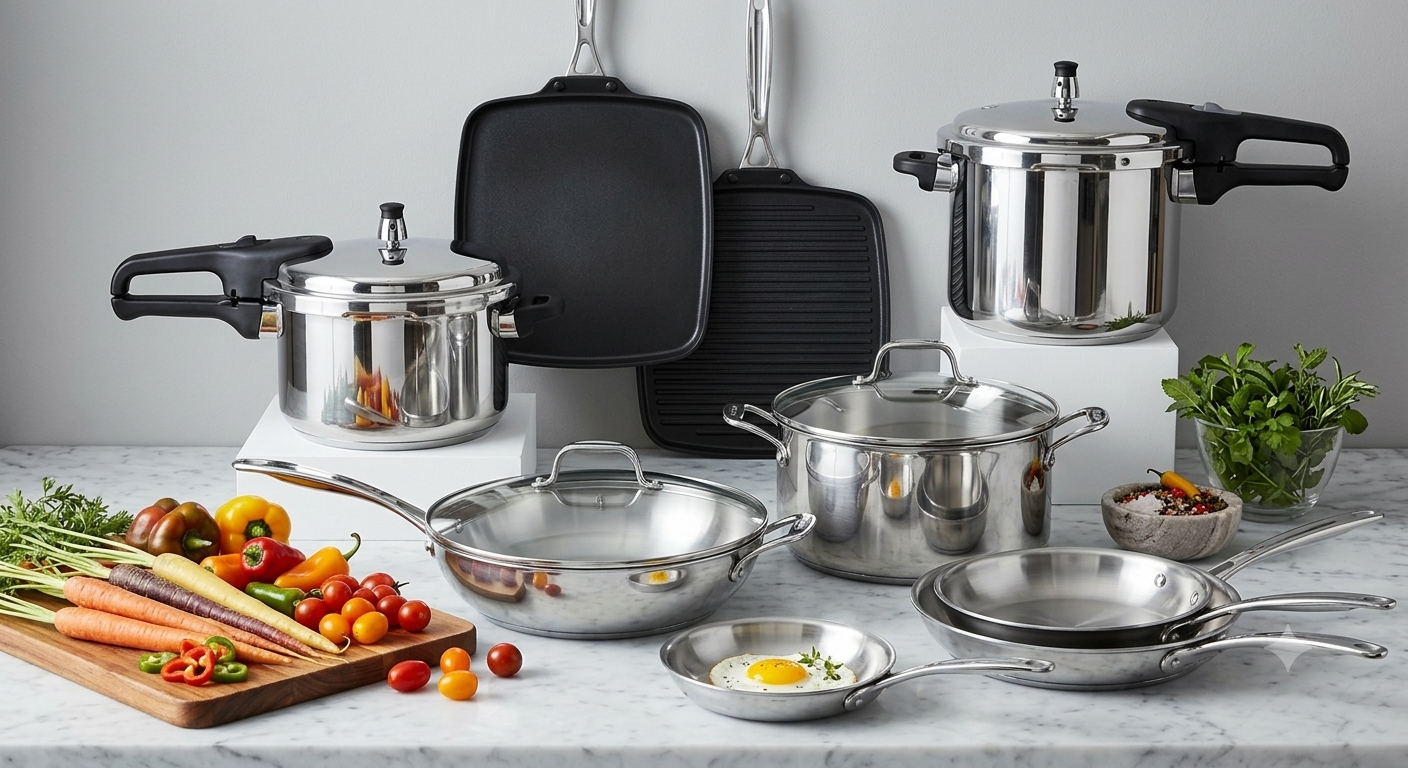
Choosing the safest cookware materials for everyday cooking can help reduce exposure to unwanted chemicals while improving your cooking experience. The best cookware is durable, non-reactive, easy to maintain, and suitable for the foods you prepare most often.
Whether you’re replacing old pans or building a healthier kitchen, this guide explains the safest cookware materials for everyday cooking, their advantages, drawbacks, and how to choose the right option.
Read More: Yum Asia vs Cuckoo Rice Cooker: Complete Comparison Guide 2026
Why It Matters
Cookware comes into direct contact with your food every day. Some materials can react with acidic ingredients or release unwanted substances when overheated or damaged.
Choosing safer cookware helps:
- Reduce chemical exposure
- Improve cooking performance
- Increase cookware lifespan
- Support healthier meal preparation
- Save money through long-lasting products
Stainless Steel
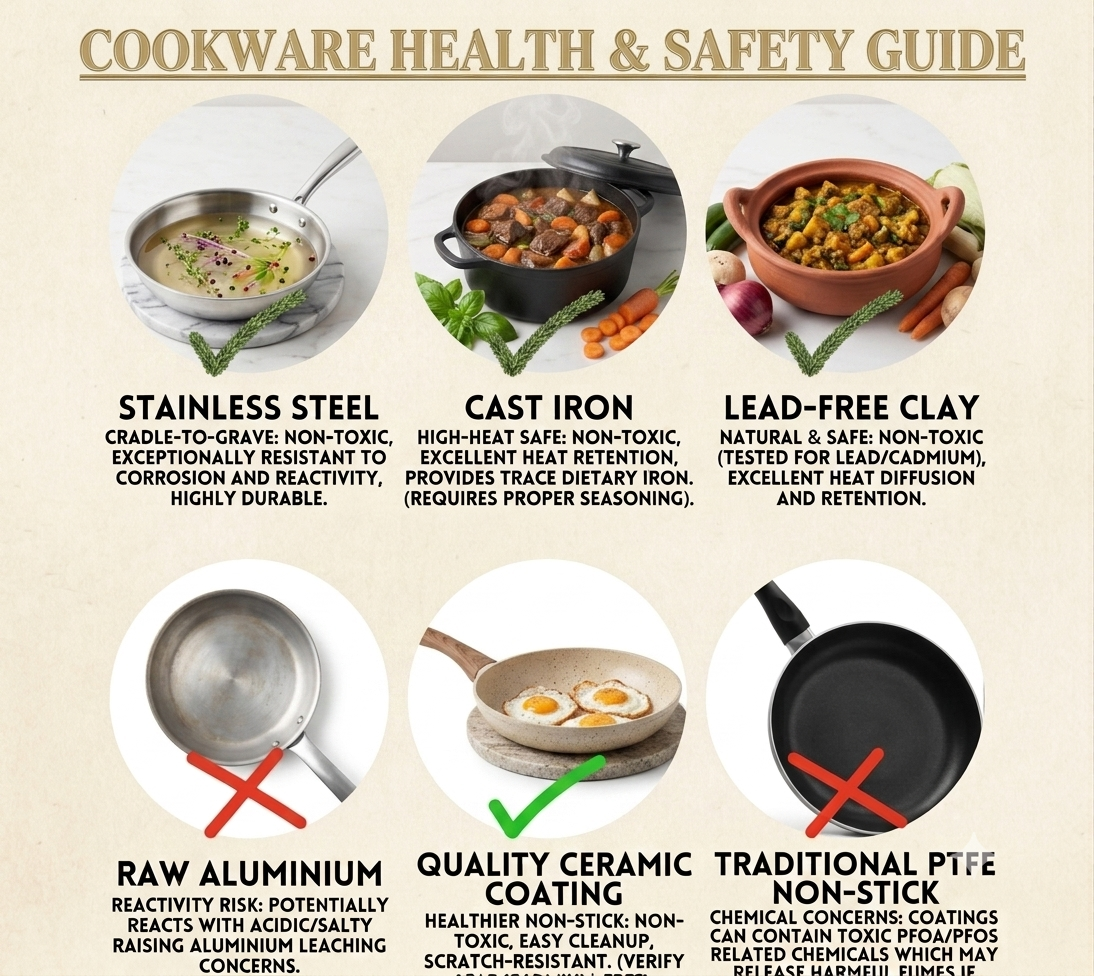
Stainless steel is one of the safest cookware materials for everyday cooking because it is durable, non-reactive, and resistant to rust.
Pros
- Doesn’t react with most foods
- Extremely durable
- Dishwasher safe
- Scratch resistant
- Excellent for daily cooking
Cons
- Food may stick without proper heating
- Lower-quality cookware may heat unevenly
Best for:
- Vegetables
- Pasta
- Soups
- Sauces
- Everyday frying
Cast Iron
Cast iron is a safe cookware option that naturally develops a non-stick surface through seasoning.
Pros
- Lasts decades
- Excellent heat retention
- Naturally non-stick when seasoned
- No synthetic coatings
Cons
- Heavy
- Requires maintenance
- Can rust if neglected
Best for:
- Steaks
- Roasting
- Searing
- Cornbread
- Skillet meals
Enameled Cast Iron
Enameled cast iron combines the heat retention of cast iron with an easy-to-clean enamel coating.
Pros
- No seasoning required
- Doesn’t react with acidic foods
- Excellent heat retention
- Attractive design
Cons
- Heavy
- More expensive
- Enamel may chip if dropped
Best for:
- Soups
- Stews
- Braising
- Slow cooking
Ceramic Cookware
Pure ceramic cookware is one of the safest cookware materials for everyday cooking because it contains no traditional non-stick coatings.
Pros
- Free from PFAS and PTFE
- Non-reactive
- Good heat distribution
- Attractive appearance
Cons
- Can crack if dropped
- Usually more expensive
- Requires careful handling
Best for:
- Baking
- Slow cooking
- Gentle stovetop cooking
Ceramic-Coated Cookware
Ceramic-coated cookware offers a non-stick surface without traditional PFAS-based coatings, but the coating may wear over time.
Pros
- Easy food release
- Less oil needed
- Lightweight
- Easy cleaning
Cons
- Shorter lifespan
- The coating eventually wears
- Sensitive to high heat
Best for:
- Eggs
- Pancakes
- Fish
- Low-fat cooking
Glass Cookware
Glass cookware is non-reactive and does not transfer flavors or chemicals into food.
Pros
- Completely non-reactive
- Easy to monitor food
- Great for baking
- Doesn’t stain easily
Cons
- Can break
- Not ideal for stovetop use
- Sensitive to sudden temperature changes
Best for:
- Baking
- Food storage
- Casseroles
Materials to Use Carefully
Some cookware materials can still be useful but require proper care.
Aluminum
- Excellent heat conductor
- Lightweight
- Better when anodized or coated
- Avoid cooking highly acidic foods in bare aluminum
Copper
- Excellent temperature control
- Often lined with stainless steel
- Requires regular maintenance
Traditional Non-Stick Cookware
Modern non-stick cookware is generally safe when used according to the manufacturer’s instructions. Avoid overheating empty pans or using cookware with damaged coatings.
Safest Cookware Materials for Everyday Cooking: Comparison Table
| Material | Safety | Durability | Maintenance | Best Uses |
| Stainless Steel | Excellent | Excellent | Low | Daily cooking |
| Cast Iron | Excellent | Excellent | Medium | Searing |
| Enameled Cast Iron | Excellent | Excellent | Low | Braising |
| Pure Ceramic | Excellent | Good | Medium | Baking |
| Ceramic-Coated | Very Good | Moderate | Low | Eggs & delicate foods |
| Glass | Excellent | Moderate | Low | Baking |
How to Choose
When selecting cookware, consider:
- Your cooking style
- Heat source
- Ease of cleaning
- Weight
- Budget
- Durability
- Oven compatibility
For most households, combining several cookware materials provides the greatest flexibility.
Example kitchen setup:
- Stainless steel saucepan
- Cast iron skillet
- Ceramic-coated frying pan
- Enameled Dutch oven
- Glass baking dish
Safest Cookware Materials for Everyday Cooking: Key Takeaways
- Stainless steel remains the best all-purpose cookware for most kitchens.
- Cast iron offers exceptional durability and natural non-stick performance when seasoned.
- Enameled cast iron is ideal for soups, stews, and acidic recipes.
- Pure ceramic and glass are excellent non-reactive options.
- Ceramic-coated cookware works well for low-fat cooking but has a shorter lifespan.
- Replacing damaged cookware helps maintain safe and
- reliable cooking performance.
Best Choice by Cooking Style
| Cooking Style | Recommended Material |
| Everyday meals | Stainless Steel |
| High heat | Cast Iron |
| Slow cooking | Enameled Cast Iron |
| Stir-frying | Carbon Steel |
| Baking | Glass |
| Low-oil cooking | Ceramic |
| Outdoor cooking | Titanium |
Frequently Asked Questions
What is the safest cookware material for everyday cooking?
Stainless steel is widely considered one of the safest all-around choices because it is durable, non-reactive, and suitable for most cooking tasks.
Is ceramic cookware safer than non-stick?
Pure ceramic cookware does not use traditional non-stick coatings. Ceramic-coated cookware also avoids traditional PFAS-based coatings but can wear over time.
Is cast iron healthy?
Yes. Cast iron is considered safe for everyday cooking and may contribute small amounts of iron to food.
Is stainless steel better than ceramic cookware?
Stainless steel is generally more durable for everyday use, while ceramic offers naturally non-reactive cooking and excellent baking performance.
What cookware should I avoid replacing immediately?
Cookware that is badly scratched, chipped, warped, or has damaged coatings should be replaced, as damaged surfaces can reduce cooking performance and may no longer function as intended.
Final Tip
The safest cookware materials for everyday cooking are the ones that match your cooking habits, are well-maintained, and are used according to the manufacturer’s instructions. A balanced collection that includes stainless steel, cast iron, ceramic, and glass gives you versatility, durability, and confidence in the kitchen.