Table of contents
Roasting Pan vs Dutch Oven
If you’re deciding between a roasting pan and a Dutch oven, the right choice depends on what you cook most often. A roasting pan is ideal for large cuts of meat and vegetables, while a Dutch oven excels at braising, baking bread, soups, stews, and one-pot meals.
| Feature | Roasting Pan | Dutch Oven |
| Best For | Roasting meat and vegetables | Braising, stews, soups, bread |
| Heat Retention | Moderate | Excellent |
| Lid | Usually optional | Heavy tight-fitting lid |
| Oven Use | Yes | Yes |
| Stovetop Use | Limited | Yes |
| Moisture Control | Dry cooking | Moist cooking |
| Capacity | Large | Medium to Large |
| Everyday Cooking | Moderate | Excellent |
Winner: Choose a roasting pan for crispy roasting and a Dutch oven for versatile everyday cooking.
Read More: Braiser vs Dutch Oven: Essential Differences
What Is a Roasting Pan?
A roasting pan is a wide, shallow pan designed to cook food using dry oven heat. It often includes a rack that elevates meat, allowing hot air to circulate evenly.
Best Uses
- Roast turkey
- Whole chicken
- Prime rib
- Pork loin
- Roasted vegetables
- Making gravy from drippings
Pros
- Large cooking surface
- Encourages crispy browning
- Fits large cuts of meat
- Easy to baste food
Cons
- Not ideal for soups or stews
- Poor moisture retention
- Limited stovetop use
What Is a Dutch Oven?
A Dutch oven is a heavy pot, usually cast iron, with thick walls and a tight-fitting lid. It retains heat exceptionally well and works on both the stovetop and in the oven.
Best Uses
- Beef stew
- Chili
- Braised short ribs
- Artisan bread
- Pasta sauces
- Soups
- Curries
Pros
- Excellent heat retention
- Extremely versatile
- Great for slow cooking
- Ideal for one-pot meals
Cons
- Heavy
- More expensive
- Smaller cooking surface than a roasting pan
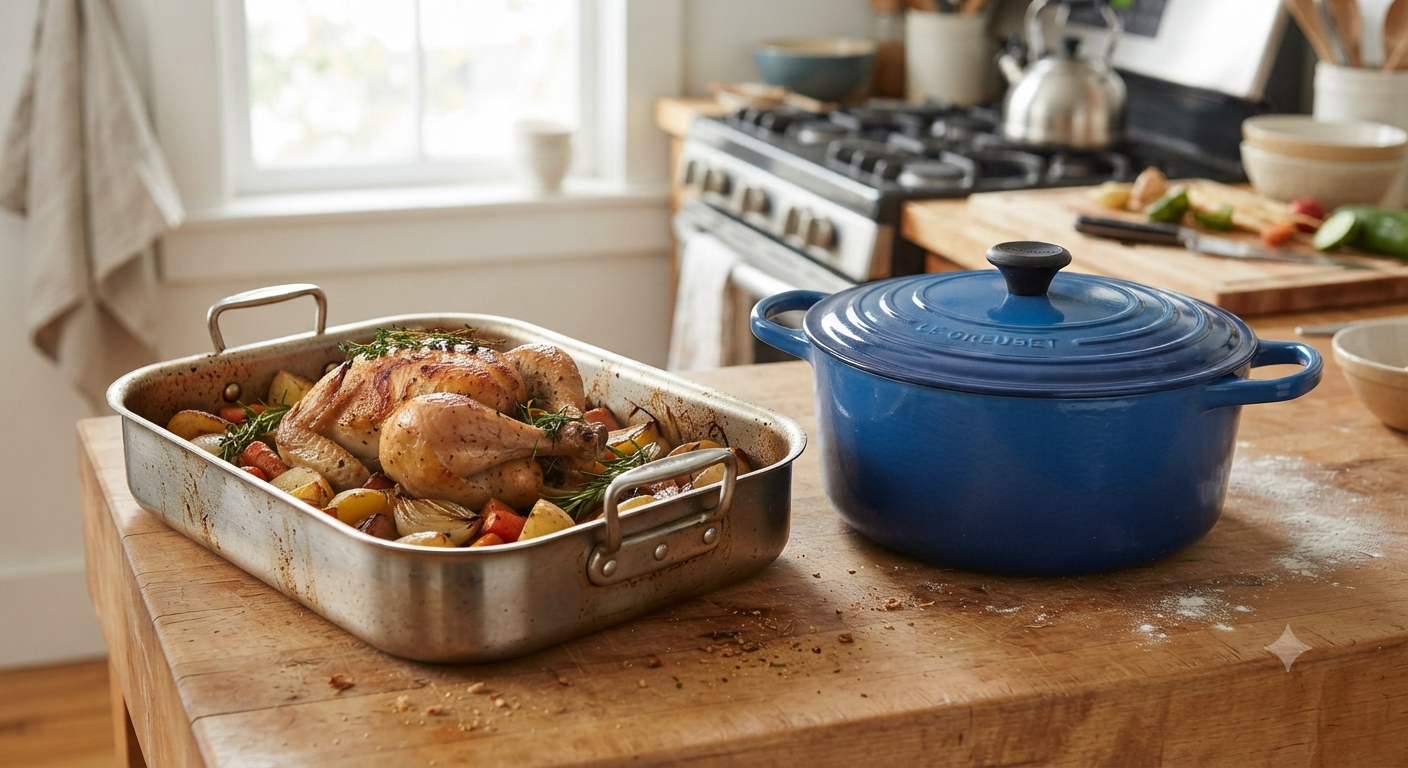
Roasting Pan vs Dutch Oven: Side-by-Side Comparison
| Feature | Roasting Pan | Dutch Oven |
| Cooking Style | Dry heat | Moist heat |
| Material | Stainless steel, aluminum | Cast iron, enameled cast iron |
| Heat Distribution | Good | Excellent |
| Heat Retention | Medium | High |
| Browning | Excellent | Excellent |
| Braising | Poor | Excellent |
| Baking Bread | No | Yes |
| Soup Making | No | Excellent |
| Large Roasts | Excellent | Good |
| Stovetop Cooking | Limited | Excellent |
| Cleaning | Easier | Heavier to clean |
Which Is Better for Roasting?
For traditional roasting, a roasting pan is the better choice.
It allows hot air to circulate the food, producing crisp skin and even browning.
Best for:
- Turkey
- Chicken
- Ham
- Beef roast
- Vegetables
Which Is Better for Slow Cooking?
A Dutch oven is better for slow cooking because the heavy lid traps moisture while maintaining even temperatures.
Perfect for:
- Pot roast
- Beef bourguignon
- Lamb shanks
- Pulled pork
Which Is Better for Bread?
A Dutch oven is the clear winner.
Its enclosed environment traps steam, helping artisan bread develop:
- Crispy crust
- Soft interior
- Better oven spring
Which Is Better for Everyday Cooking?
| Meal | Better Choice |
| Soup | Dutch Oven |
| Chili | Dutch Oven |
| Roast Chicken | Roasting Pan |
| Turkey | Roasting Pan |
| Bread | Dutch Oven |
| Braised Beef | Dutch Oven |
| Lasagna | Dutch Oven |
| Roasted Vegetables | Roasting Pan |
Can a Dutch Oven Replace a Roasting Pan?
Sometimes.
A Dutch oven can roast smaller chickens and medium-sized cuts of meat, but it isn’t ideal for:
- Large turkeys
- Prime rib
- Multiple trays of vegetables
Its tall sides reduce airflow, which can limit browning compared with a roasting pan.
Can a Roasting Pan Replace a Dutch Oven?
Not completely.
A roasting pan cannot effectively replace a Dutch oven for:
- Braising
- Stews
- Soups
- Bread baking
Without a heavy lid, moisture escapes too quickly.
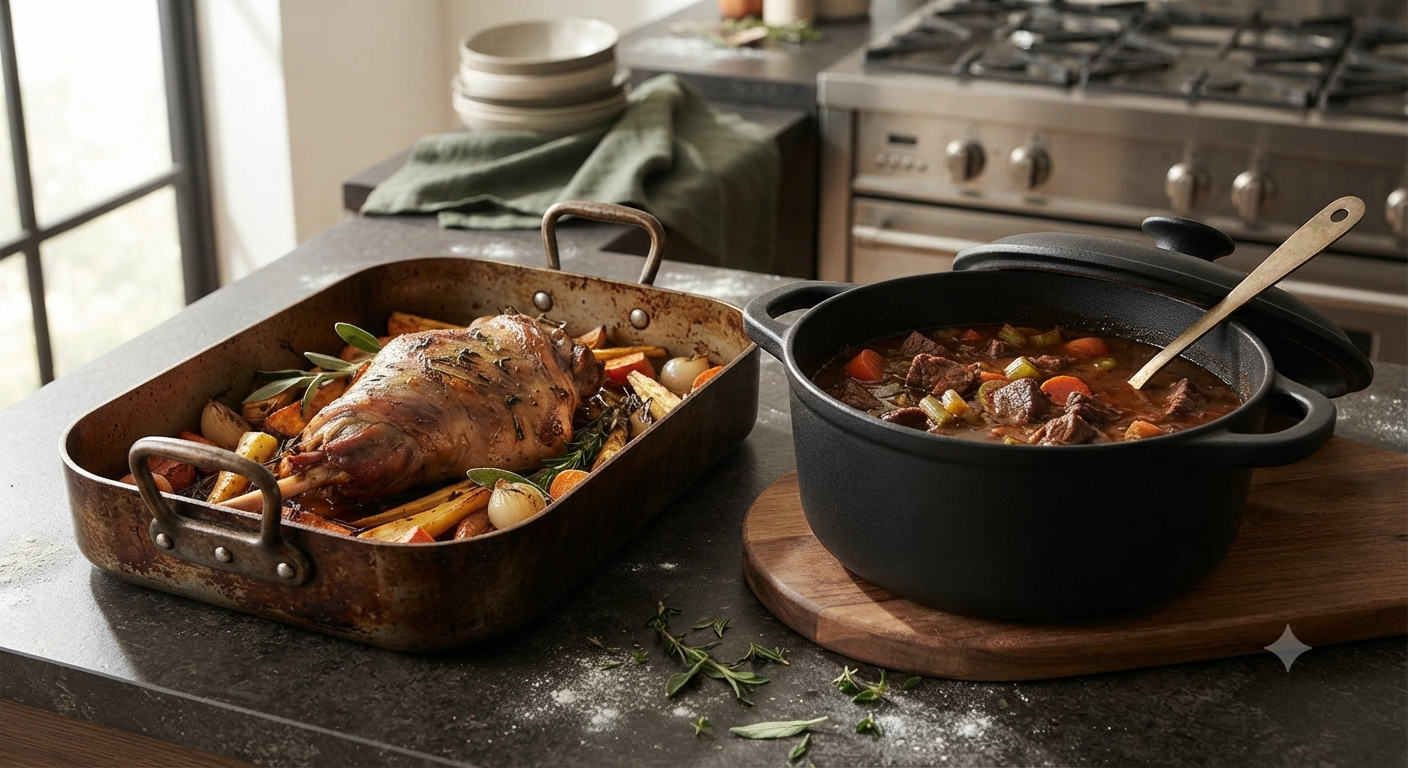
Roasting Pan vs Dutch Oven: Pros and Cons
| Cookware | Advantages | Disadvantages |
| Roasting Pan | Large size, crisp roasting, easy gravy | Less versatile, poor moisture retention |
| Dutch Oven | Versatile, excellent heat retention, stovetop, and oven use | Heavy, higher cost, smaller roasting area |
Which One Should You Buy?
Choose a roasting pan if you:
- Roast large poultry
- Cook holiday meals
- Want crispy vegetables
- Frequently make gravy
Choose a Dutch oven if you:
- Make soups regularly
- Cook stews
- Enjoy baking bread
- Prefer one-pot meals
- Want versatile cookware
If your budget allows, owning both gives you the greatest flexibility in the kitchen.
Frequently Asked Questions
Is a Dutch oven better than a roasting pan?
Not always. A Dutch oven is more versatile, while a roasting pan is better for large roasted meats and crisp vegetables.
Use a Dutch oven for everyday cooking and a roasting pan for traditional roasting.
Can I roast chicken in a Dutch oven?
Yes. A Dutch oven can roast chicken while keeping the meat moist, though the skin may be less crispy than when using a roasting pan.
Do I need a roasting pan if I have a Dutch oven?
Only if you regularly cook large roasts, turkeys, or holiday meals. Otherwise, a Dutch oven can handle many roasting tasks.
Which cookware lasts longer?
A high-quality Dutch oven, especially cast iron, can last for decades with proper care. Stainless steel roasting pans are also durable, but are generally designed for a narrower range of cooking tasks.
Is a Dutch oven worth the money?
Yes. Its versatility makes it one of the most valuable pieces of cookware for baking, braising, simmering, roasting, and everyday meals.
Final Verdict
| Choose This | If You Want |
| Roasting Pan | Large roasts, crispy vegetables, and holiday cooking |
| Dutch Oven | One-pot meals, bread, soups, stews, braising, everyday versatility |
For most home cooks, a Dutch oven offers greater versatility, while a roasting pan remains the best tool for large-scale roasting and holiday meals.