Table of contents
Saucepan vs Stock Pot Differences
Choosing the right cookware can make everyday cooking easier and improve the outcome of your recipes. While saucepans and stock pots may look similar at first glance, each is designed for different cooking needs. Knowing when to use one over the other helps you prepare meals more efficiently and achieve better results
Read More: Stock Pot vs Dutch Oven: Essential Differences
What Is a Saucepan?
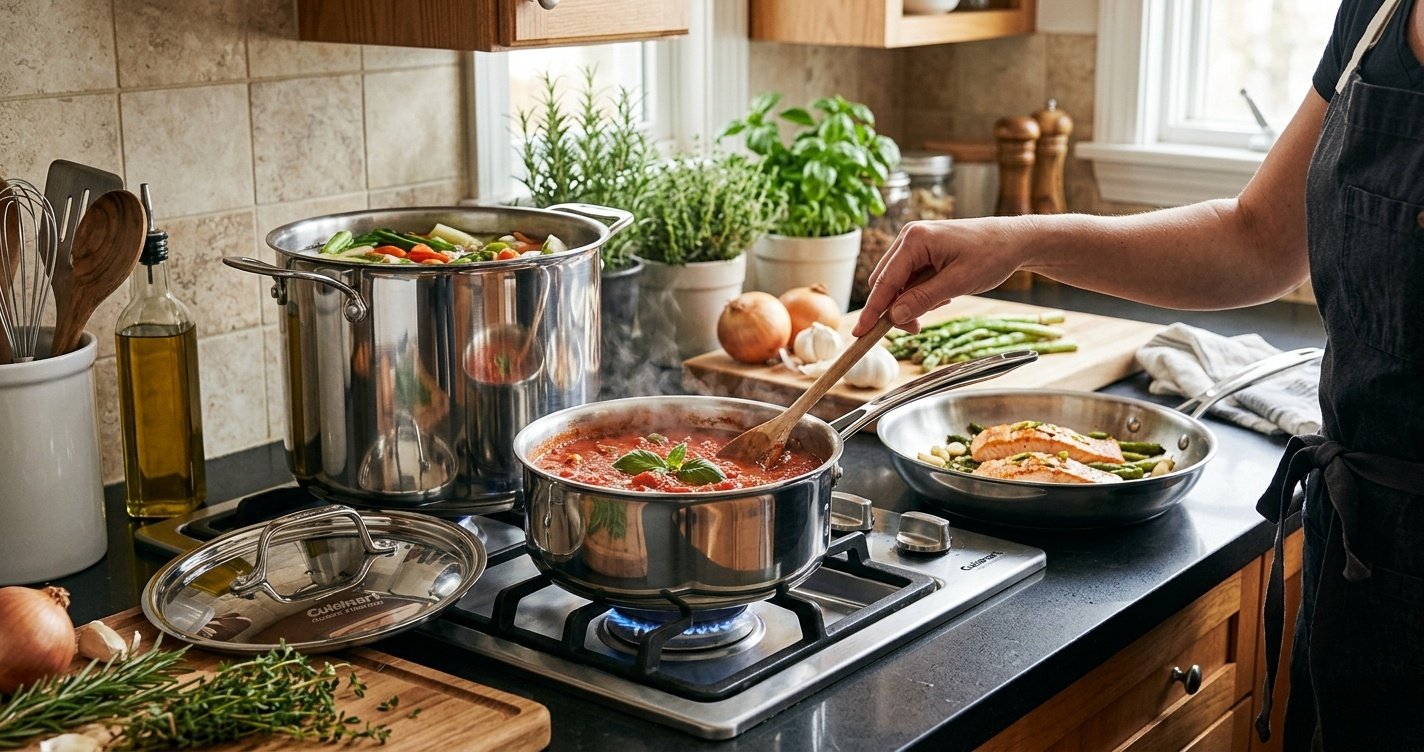
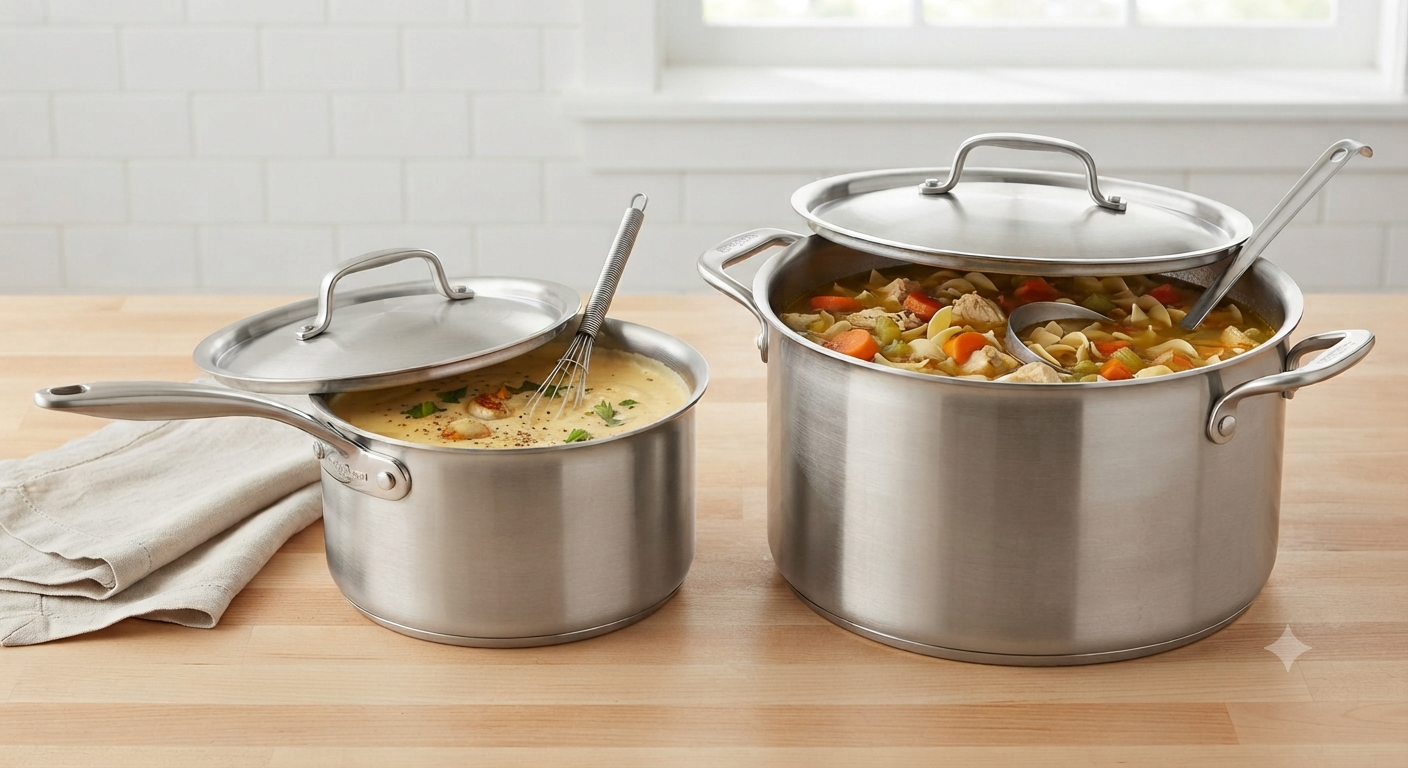
A saucepan is a compact piece of cookware with a flat base, tall straight sides, and a single long handle. Most models also include a fitted lid. Its design allows for precise heat control, making it perfect for recipes that require frequent stirring or careful temperature management.
Common Uses for a Saucepan
A saucepan is ideal for:
- Preparing sauces and gravies
- Boiling water
- Cooking rice, oats, and grains
- Heating soups or leftovers
- Making jams and syrups
- Simmering vegetables
Because of its smaller capacity, a saucepan is best suited for everyday cooking and smaller portions.
What Is a Stock Pot?
A stock pot is a larger cookware item built with high straight sides, a flat bottom, and two short side handles for safe lifting. It is designed to hold a large volume of liquid and is commonly used for recipes that cook over longer periods.
Common Uses for a Stock Pot
Stock pots work well for:
- Homemade stock and broth
- Soups and stews
- Chili and curry
- Boiling pasta
- Cooking beans
- Batch cooking for families
- Seafood boils and steaming
Its generous size makes it an excellent choice for preparing meals in large quantities.
Saucepan vs Stock Pot: Key Differences
Although both pieces of cookware are used on the stovetop, they differ in several important ways.
1. Size and Capacity
A saucepan typically ranges from 1 to 4 quarts, making it suitable for smaller recipes. Stock pots generally hold between 6 and 12 quarts or more, allowing you to cook large batches with ease.
2. Handle Design
Saucepans feature one long handle for easy lifting and pouring. Larger models may include a small helper handle.
Stock pots use two sturdy side handles that provide better balance when carrying heavier meals or large amounts of liquid.
3. Cooking Purpose
Saucepans are designed for controlled cooking, where precise heat adjustments matter. They’re perfect for simmering, reducing, and reheating.
Stock pots excel at cooking recipes that require long simmering times or large volumes of ingredients.
4. Evaporation
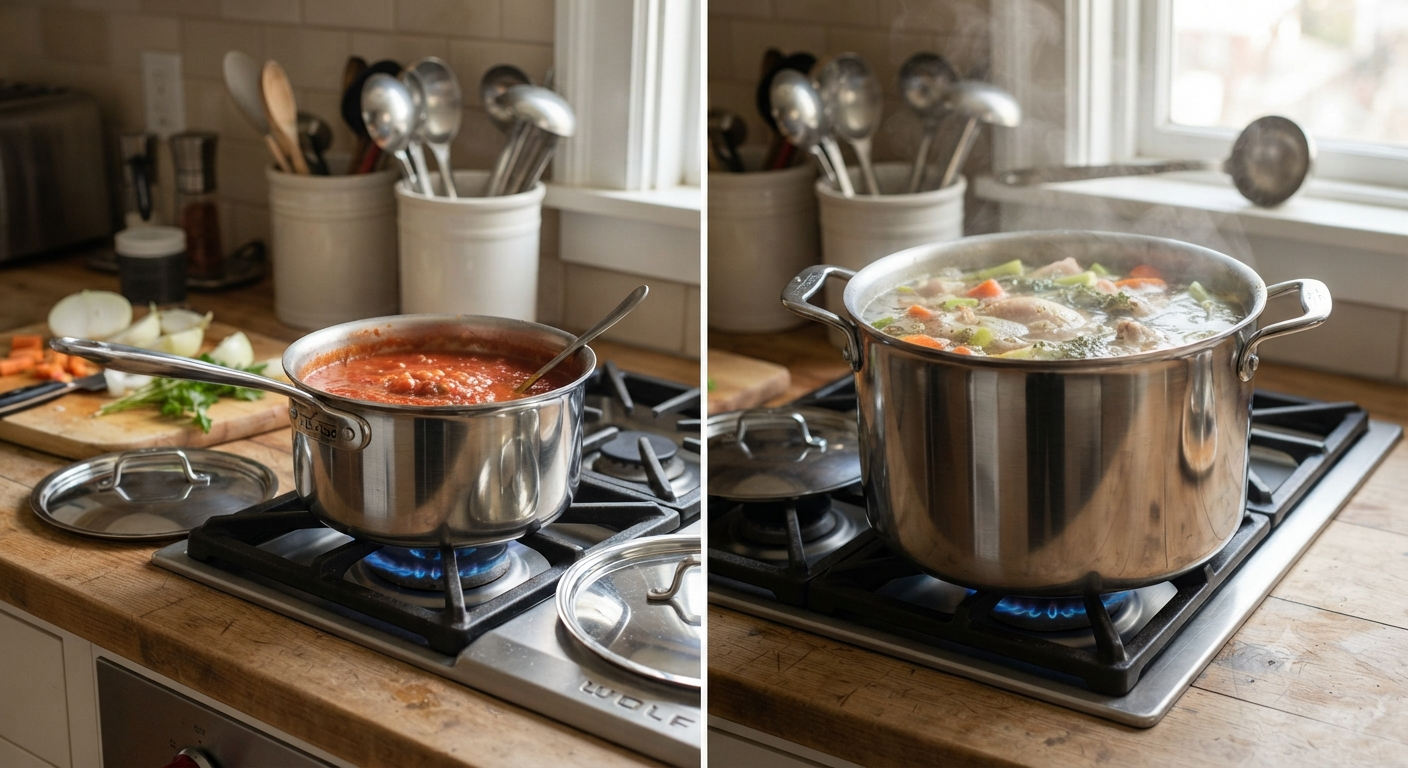
The wider surface area of a saucepan allows liquids to reduce more quickly, making it ideal for sauces and flavor concentration.
Stock pots are taller and narrower, helping reduce evaporation during extended cooking.
5. Heat Performance
Because of their smaller size, saucepans respond quickly when the heat is adjusted.
Stock pots retain heat more consistently, making them suitable for slow-cooked dishes.
6. Non-Stick Availability
Non-stick saucepans are widely available because they’re often used for delicate foods.
Stock pots are more commonly made from stainless steel or aluminum since they usually contain plenty of liquid, reducing the chance of food sticking.
Saucepan vs Stock Pot: Which Is Better?
| Cooking Need | Better Choice |
| Making a small amount of sauce | Saucepan |
| Cooking dinner for one or two people | Saucepan |
| Making soup for a family | Stock Pot |
| Cooking pasta for a crowd | Stock Pot |
| Everyday kitchen flexibility | Saucepan |
| Large meal preparation | Stock Pot |
Can You Use a Saucepan Instead of a Stock Pot?
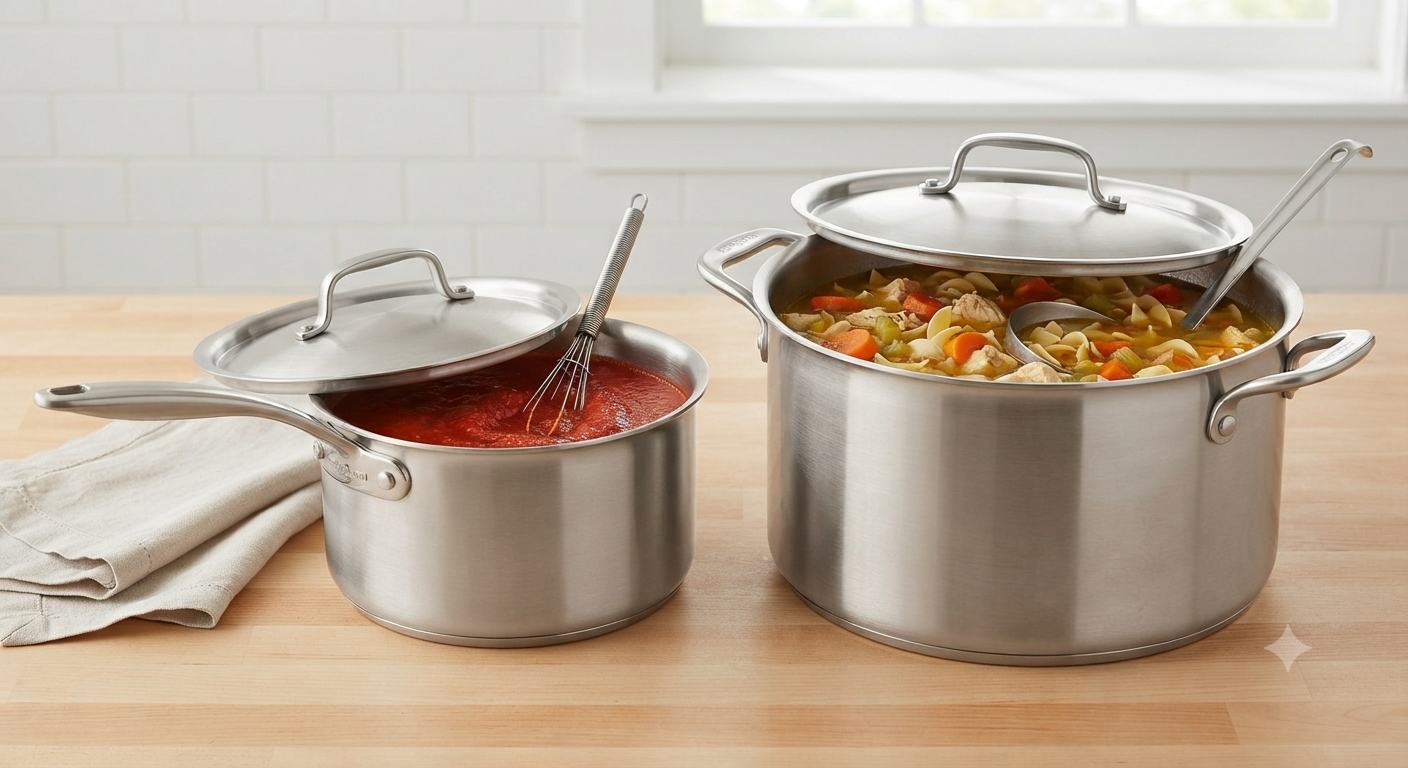
A saucepan can replace a stock pot for smaller recipes, but it has limitations. It may not hold enough liquid for soups, pasta, or homemade stock. Likewise, using a stock pot for small recipes can make cooking less efficient and slow down evaporation.
Choosing the right cookware based on the recipe helps improve both cooking performance and convenience.
Do You Need Both?
For most kitchens, owning both a saucepan and a stock pot is a practical choice. A saucepan handles everyday cooking tasks such as sauces, grains, and reheating, while a stock pot is essential for soups, pasta, meal prep, and large family dinners.
Having both pieces of cookware ensures you’re prepared for everything from quick weekday meals to large gatherings.
Frequently Asked Questions
Is a saucepan or a stock pot more useful?
A saucepan is usually more useful for everyday cooking, while a stock pot is better for large meals.
Do I need both a saucepan and stock pot?
Most kitchens benefit from having both because they solve different cooking needs.
Can I boil pasta in a saucepan?
Yes, but a stock pot is better for large amounts of pasta because it provides more space.
Is a stockpot necessary for beginners?
Not always. Beginners usually get more value from a saucepan first.
Final Thoughts
The difference between a saucepan and a stock pot comes down to size, design, and purpose. A saucepan offers precision for smaller recipes, while a stock pot provides the capacity needed for large meals and long cooking times. Investing in both cookware essentials gives you greater flexibility and makes cooking more efficient, whether you’re preparing a simple side dish or a hearty family feast.