Table of contents
Enameled Cast Iron vs Stainless Steel coookware:
Choosing between enameled cast iron and stainless steel cookware is one of the most important decisions when building a kitchen. Both materials offer exceptional performance, but they excel in different cooking situations. Understanding their strengths and limitations will help you invest in cookware that matches your cooking style.
Rather than asking which material is better overall, the real question is which one is better for the way you cook.
Read More: Saucepan vs Stock Pot: Which One Do You Need?
Quick Comparison Table
| Feature | Enameled Cast Iron | Stainless Steel |
| Heat Retention | Excellent | Good |
| Heat Distribution | Excellent | Very Good (with aluminum/copper core) |
| Weight | Heavy | Lightweight to Medium |
| Durability | Extremely Durable | Extremely Durable |
| Rust Resistance | Excellent | Excellent |
| Non-Reactive | Yes | Yes |
| Oven Safe | Usually up to 500°F | Usually up to 600°F |
| Maintenance | Easy | Easy |
| Searing | Excellent | Excellent |
| Acidic Foods | Safe | Safe |
| Price | Higher | Moderate to Premium |
What Is Enameled Cast Iron cookware?
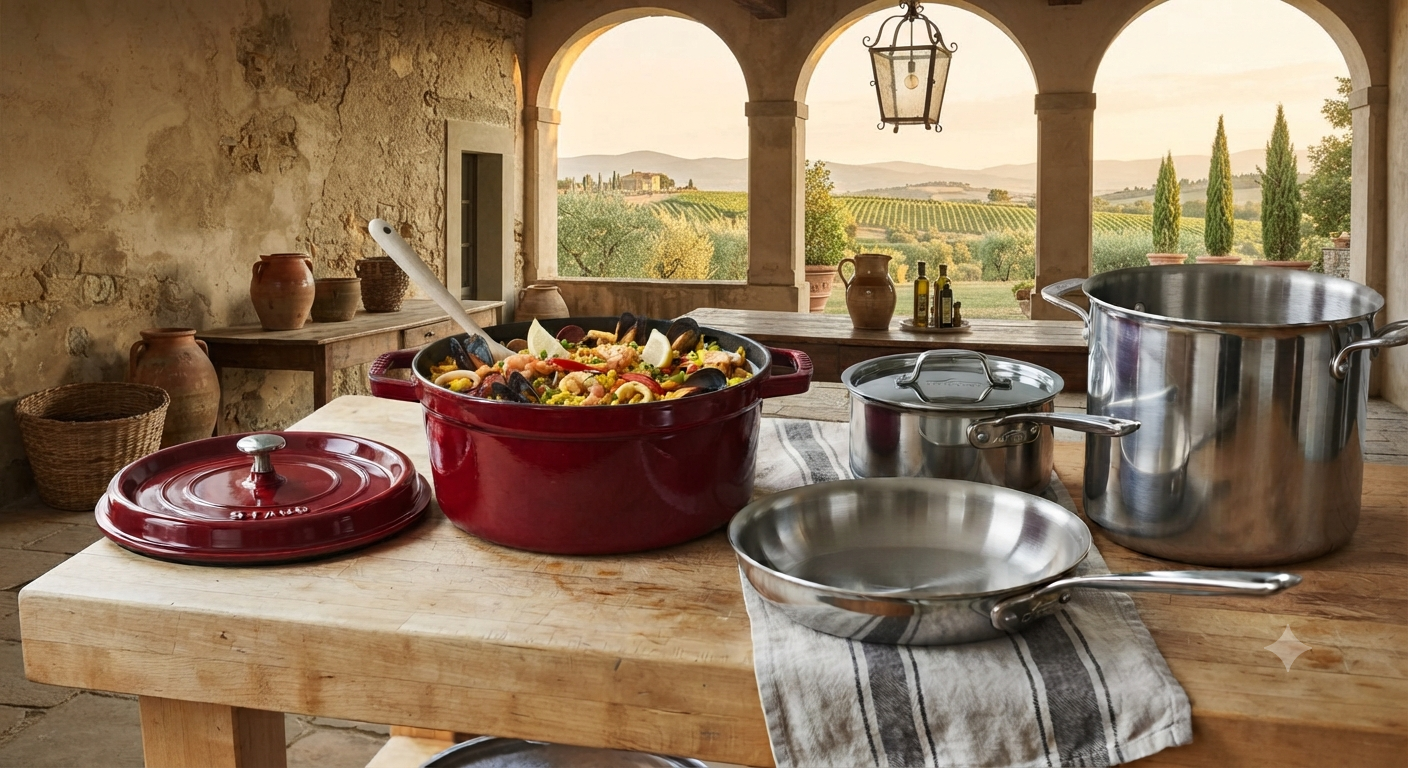
Enameled cast iron is traditional cast iron coated with a layer of porcelain enamel. The enamel prevents rust, eliminates the need for seasoning, and allows you to cook acidic ingredients without damaging the cookware.
Unlike bare cast iron, enameled cookware is easier to maintain while still offering excellent heat retention. It is commonly available as Dutch ovens, braisers, skillets, and casserole dishes.
Benefits of Enameled Cast Iron
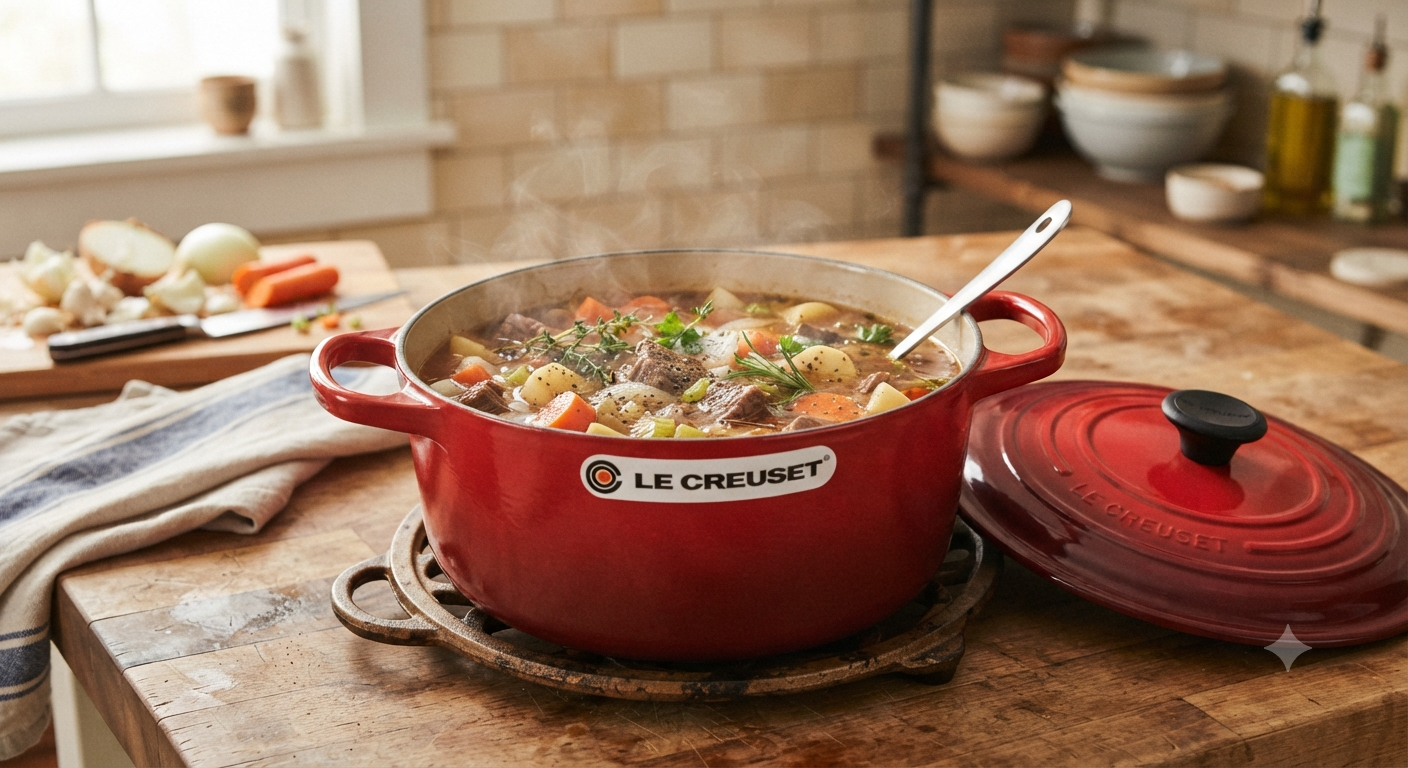
- Outstanding heat retention for slow, even cooking
- Excellent for braising, roasting, and baking
- No seasoning required
- Safe for acidic foods such as tomatoes, citrus, and wine-based sauces
- Attractive designs and colors that can go directly from oven to table
- Compatible with gas, electric, ceramic, and induction cooktops
Best Uses
Enameled cast iron performs especially well for:
- Slow-cooked stews and soups
- Braised meats
- Homemade bread
- Roasted vegetables
- Chili and curries
- Casseroles
- Deep searing of steaks and chops
Because it retains heat so effectively, it continues cooking evenly even after food is added.
Drawbacks
Despite its many strengths, enameled cast iron has some limitations:
- Much heavier than stainless steel
- Takes longer to heat up
- Can chip or crack if dropped or handled roughly
- Usually more expensive
- Less responsive when changing cooking temperatures
- Requires careful storage to protect the enamel coating
What Is Stainless Steel Cookware?
Stainless steel cookware is a favorite among professional chefs because of its durability, versatility, and precise cooking control. High-quality cookware often features an aluminum or copper core bonded between layers of stainless steel to improve heat distribution.
Unlike nonstick cookware, stainless steel develops flavorful browned bits (fond) that create rich pan sauces.
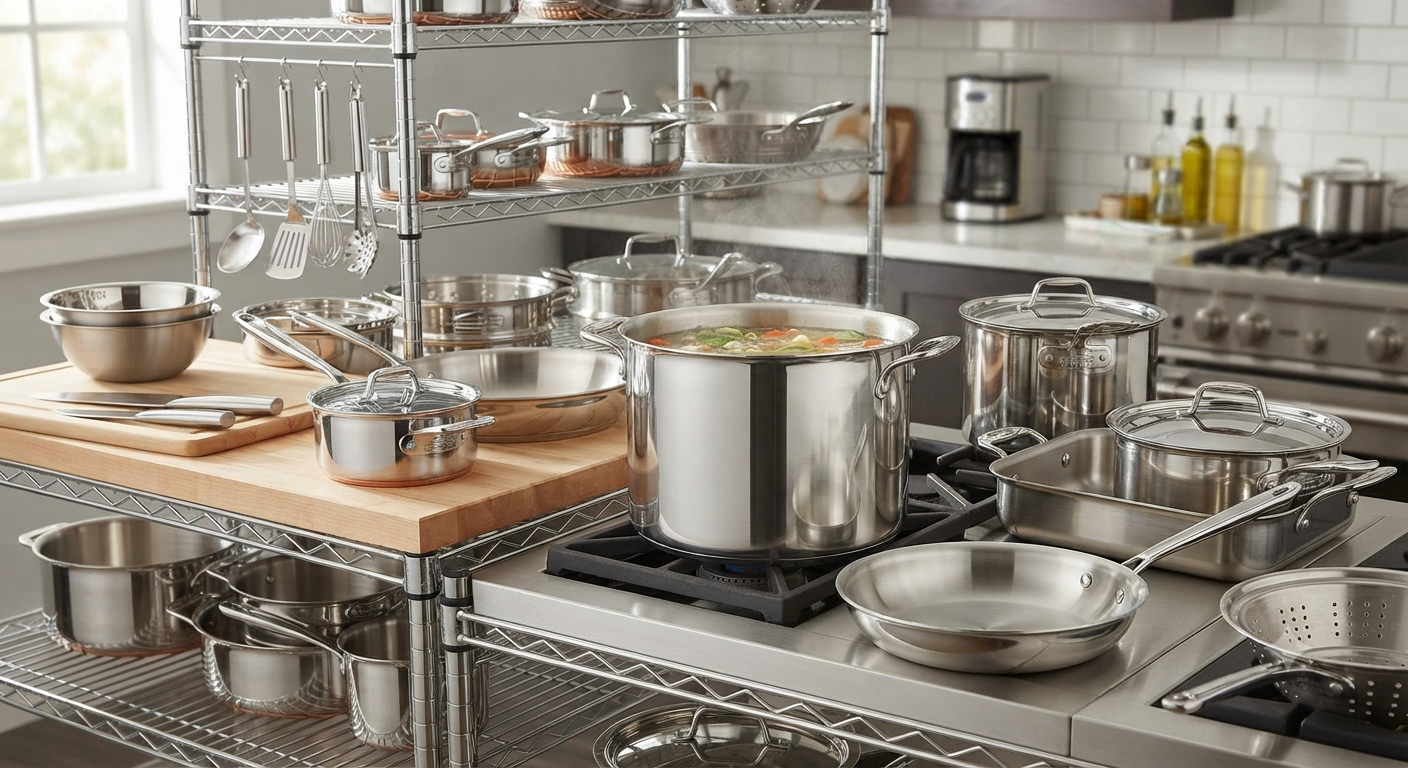
Benefits of Stainless Steel
- Fast heating and cooling
- Durable and resistant to scratches
- Non-reactive with acidic ingredients
- Lightweight compared to cast iron
- Dishwasher-safe on many models
- Long lifespan with proper care
- Excellent for everyday cooking
Best Uses
Stainless steel is ideal for:
- Sautéing vegetables
- Cooking seafood
- Frying meats
- Making sauces and reductions
- Boiling pasta
- Cooking soups and stocks
- Browning proteins before finishing in the oven
Its quick response to temperature adjustments gives cooks greater control during delicate recipes.
Drawbacks
Some disadvantages include:
- Food may stick without proper preheating
- Doesn’t retain heat as long as cast iron
- Requires learning proper cooking techniques
- Can develop discoloration if overheated
- Lower-quality models may heat unevenly
Heat Retention vs. Heat Responsiveness
One of the biggest differences between these materials is how they handle heat.
Enameled Cast Iron
- Heats more slowly
- Retains heat for a long time
- Maintains consistent temperatures
- Excellent for long cooking sessions
Stainless Steel
- Heats quickly
- Responds rapidly to temperature changes
- Better for recipes requiring precise heat control
- Cools down faster after cooking
If you’re cooking foods that need stable temperatures for extended periods, enameled cast iron is difficult to beat. If you frequently adjust burner settings while cooking, stainless steel offers more control.
Durability Comparison
Enameled Cast Iron
The cast iron itself is extremely durable, but the enamel coating can chip or crack if subjected to impacts or sudden temperature changes.
Avoid:
- Dropping the cookware
- Using metal utensils aggressively
- Thermal shock (placing a hot pan into cold water)
Stainless Steel
Stainless steel is one of the most durable cookware materials available.
It resists:
- Rust
- Staining
- Chipping
- Cracking
- Warping (in high-quality cookware)
With proper care, premium stainless steel cookware can last for decades.
Maintenance
Caring for Enameled Cast Iron
Maintenance is relatively simple:
- Wash with warm, soapy water
- Avoid abrasive scrubbers
- Dry thoroughly
- Prevent impacts that may damage the enamel
Unlike bare cast iron, seasoning is not required.
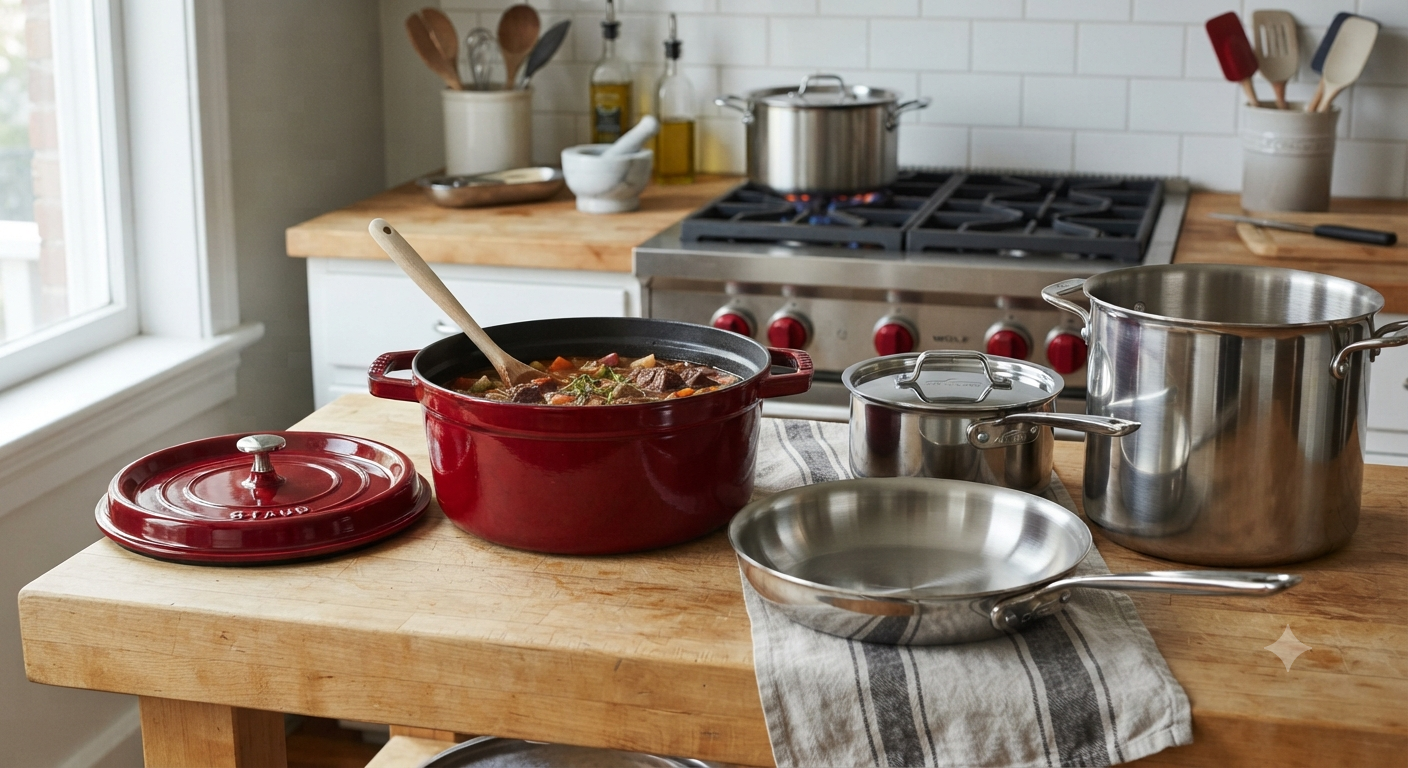
Caring for Stainless Steel
Stainless steel is equally easy to maintain.
Recommended care includes:
- Washing with warm water and dish soap
- Removing stubborn stains with stainless steel cleaner or baking soda
- Drying after washing to minimize water spots
Many stainless steel collections are dishwasher safe.
Weight and Handling
Weight can influence everyday cooking comfort.
| Feature | Enameled Cast Iron | Stainless Steel |
|---|---|---|
| Weight | Heavy | Lightweight |
| Maneuverability | Moderate | Excellent |
| Storage | Requires careful stacking | Easy to stack |
| Daily Use | Better for slow cooking | Better for everyday cooking |
People who cook frequently often appreciate stainless steel’s lighter weight, while home cooks who enjoy slow-cooked meals may not mind the additional heft of cast iron.
Cooking Performance
Enameled Cast Iron Excels At
- Braising
- Roasting
- Baking bread
- Long simmering
- Deep searing
- One-pot meals
Stainless Steel Excels At
- Pan frying
- Sautéing
- Deglazing
- Sauce making
- Stir-frying
- Everyday meal preparation
Safety Considerations
Modern cookware made by reputable manufacturers is generally safe when used as intended.
Enameled Cast Iron
- Does not require seasoning
- Safe for acidic foods
- Avoid using cookware with chipped or damaged enamel, as exposed cast iron or loose enamel fragments may affect performance and safety.
Stainless Steel
- Non-reactive with most foods
- Does not require coatings
- Resists corrosion and staining
- Widely used in both home and professional kitchens
When purchasing either material, choosing cookware from established manufacturers helps ensure compliance with modern safety standards.
Price Comparison
| Feature | Enameled Cast Iron | Stainless Steel |
|---|---|---|
| Initial Cost | Medium to High | Budget to Premium |
| Lifespan | Decades with care | Decades or longer |
| Maintenance Cost | Low | Low |
Premium enameled cast iron tends to cost more per piece, while stainless steel is available across a wider range of price points.
Frequently Asked Questions
1. Which is better: enameled cast iron or stainless steel?
It depends on your cooking needs. Enameled cast iron is best for slow cooking, while stainless steel is ideal for everyday cooking.
2. Is enameled cast iron safe to cook with?
Yes. Modern enameled cast iron is safe when the enamel coating is intact.
3. Does stainless steel cookware need seasoning?
No. Stainless steel does not require seasoning.
4. What is enameled cast iron best used for?
It’s ideal for braising, roasting, baking bread, soups, and stews.
5. Can you cook acidic foods in enameled cast iron?
Yes. The enamel coating prevents reactions with acidic ingredients.
6. Is stainless steel good for everyday cooking?
Yes. It heats quickly, is durable, and works well for most recipes.
7. Which cookware lasts longer?
Both can last for decades with proper care, but stainless steel is more resistant to chips.
Which Cookware Should You Choose?
Choose enameled cast iron if you:Want cookware
Enjoy slow cooking
Frequently bake bread
Make soups, stews, and braises