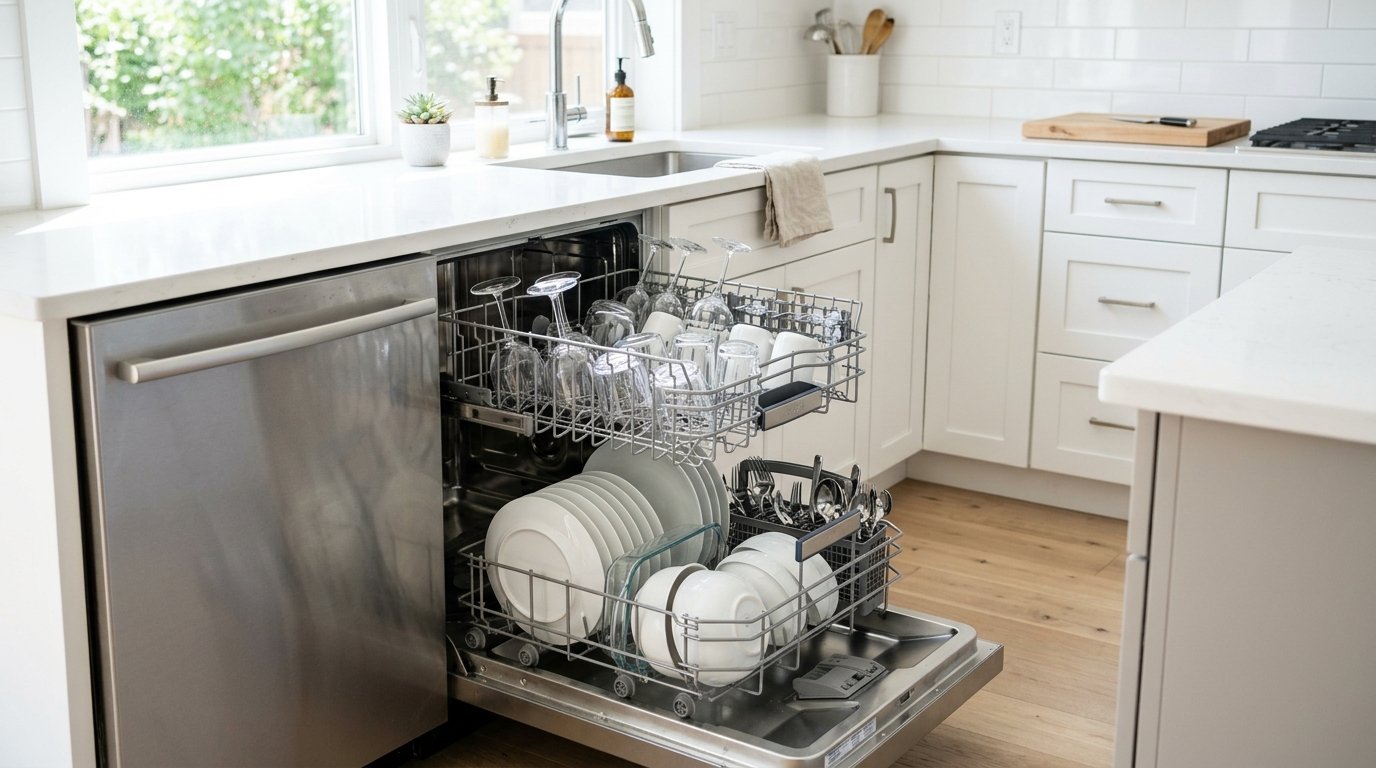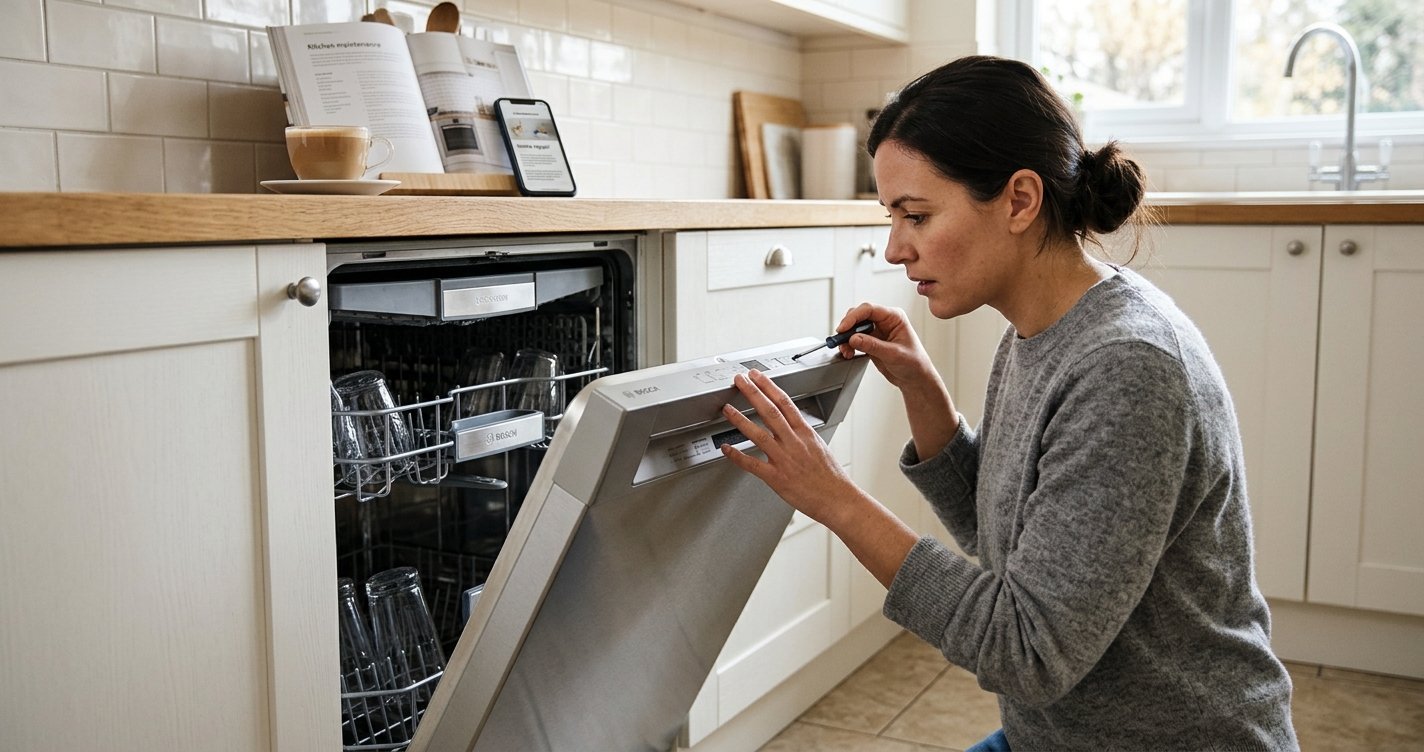
A well-maintained dishwasher can clean dishes efficiently, prevent unpleasant odors, and reduce the risk of avoidable problems. If you own a Bosch dishwasher, regular care is especially useful for keeping the filter, spray arms, seals, and interior in good working condition.
This Bosch Dishwasher Care Guide explains the essential cleaning and maintenance steps, how often to perform them, and what to avoid.
Read More: How to Clean a Smelly Dishwasher
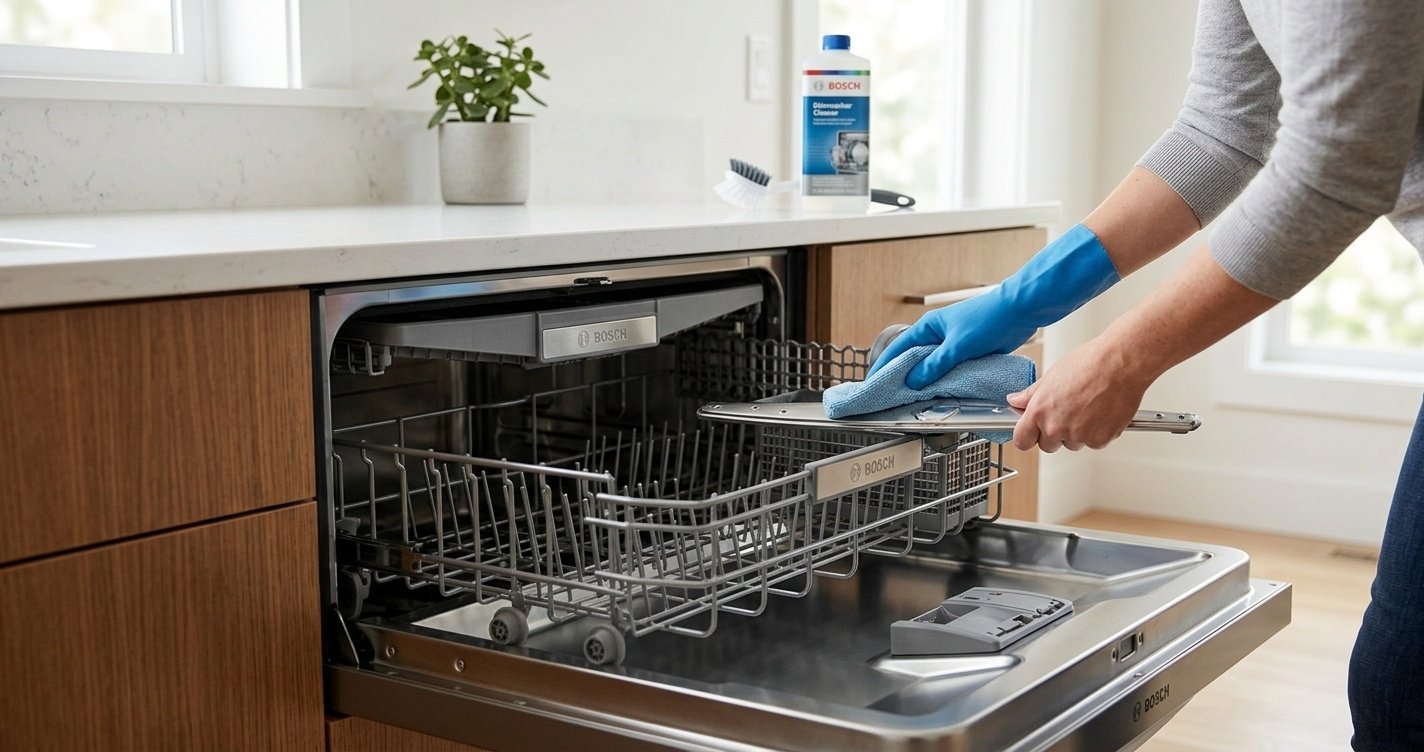
Table of contents
Why Regular Bosch Dishwasher Care Matters
Dishwashers regularly come into contact with food particles, grease, detergent residue, and hard-water minerals. Over time, these can accumulate in different parts of the appliance.
Routine maintenance can help:
- Keep dishes and glassware cleaner.
- Reduce odors caused by trapped food debris.
- Maintain effective water circulation.
- Prevent residue from accumulating inside the dishwasher.
- Keep spray arms functioning properly.
- Protect door seals from buildup.
- Identify small problems before they become larger ones.
The exact maintenance requirements can vary by Bosch dishwasher model, so your owner’s manual should take precedence when it specifies a different procedure or cleaning product.
1. Clean the Dishwasher Filter Regularly
The filter catches food particles and other debris removed during the wash cycle. A dirty filter can restrict water circulation and contribute to odors or poor cleaning performance.
How to clean the filter
- Remove the bottom dish rack.
- Locate the filter assembly at the bottom of the dishwasher.
- Remove the filter according to your model’s instructions.
- Rinse it under running water.
- Use a soft brush to remove stubborn debris if necessary.
- Check the surrounding filter area for food particles.
- Reinstall the filter securely before running the dishwasher.
Avoid using excessive force or abrasive tools that could damage the filter.
How often should you clean it?
For households that run the dishwasher frequently, checking the filter regularly is a good habit. A monthly cleaning schedule can be a useful starting point, with more frequent cleaning if you wash heavily soiled dishes or notice debris accumulating quickly.
2. Check and Clean the Spray Arms
The spray arms distribute water throughout the dishwasher. Small food particles or mineral deposits can obstruct their openings.
To maintain them:
- Inspect the spray-arm holes periodically.
- Remove visible debris carefully.
- Rinse the spray arms when necessary.
- Make sure they can rotate freely.
- Check for anything blocking their movement.
If your dishes are suddenly coming out less clean, blocked spray-arm openings are one of the components worth checking.
3. Keep the Door Seal Clean
The rubber gasket around the dishwasher door helps create a watertight seal. Food residue, grease, and detergent deposits can accumulate around it. Wipe the gasket periodically with a soft, damp cloth. Pay particular attention to folds and corners where debris may collect.
Avoid harsh chemicals or abrasive cleaning materials unless your Bosch documentation specifically recommends them.
4. Clean the Dishwasher Interior
Even when dishes appear clean, residue can accumulate inside the dishwasher.
For routine interior care:
- Remove visible debris from the bottom of the tub.
- Check the filter and clean it when needed.
- Wipe accessible surfaces with a suitable soft cloth.
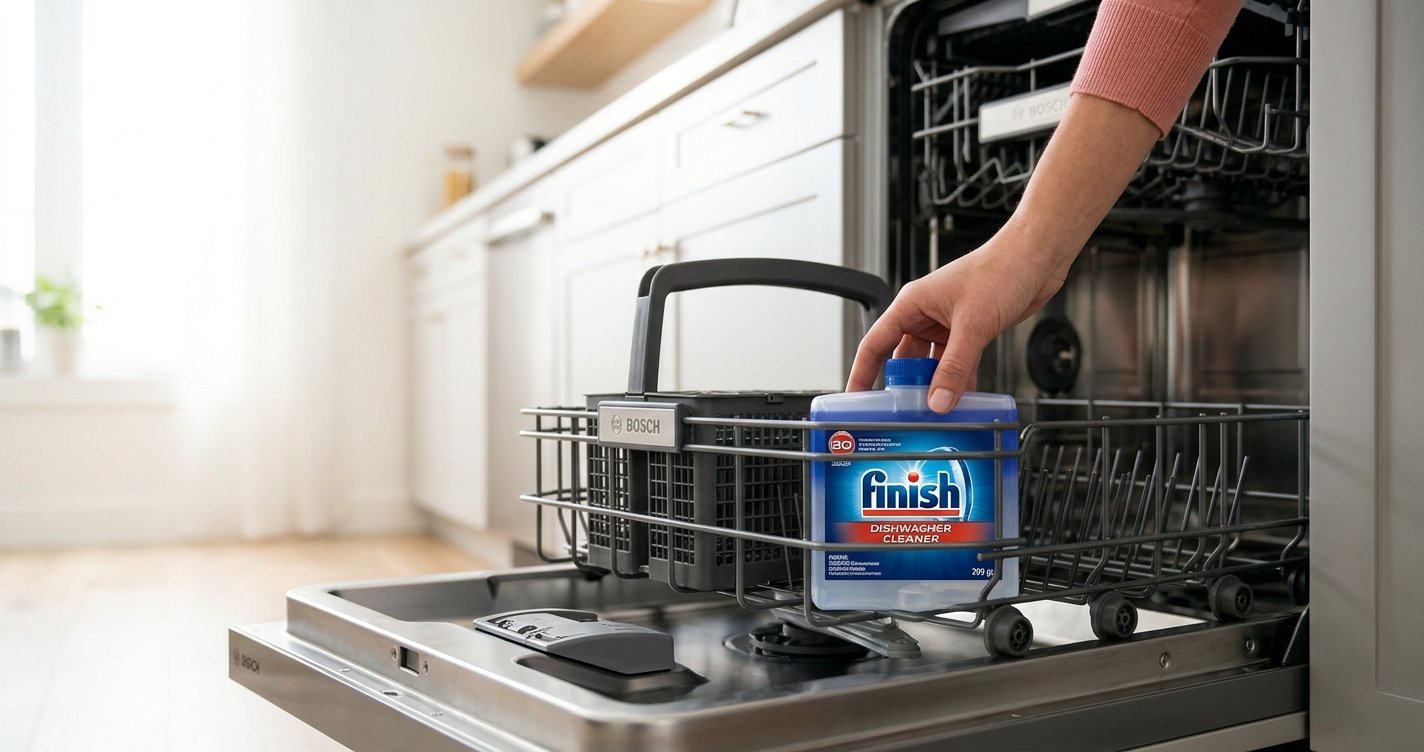
- Run a dishwasher-cleaning cycle or use a Bosch-approved dishwasher cleaner when appropriate for your model.
A dishwasher cleaner can help address grease and mineral deposits that ordinary wash cycles may not completely remove.
5. Prevent Hard-Water Buildup
Mineral deposits can become a maintenance concern in areas with hard water. Depending on your Bosch model and local water conditions, the appliance may have settings or a water-softening system designed to address water hardness. Check your dishwasher’s instructions for the correct water-hardness setting and recommended dishwasher salt, if applicable.
Don’t add products simply because they are marketed for dishwashers. Use only products and quantities that are compatible with your specific Bosch model.
6. Use the Right Detergent
Proper detergent use is an important part of dishwasher care. Follow the detergent manufacturer’s dosage recommendations and your Bosch manual. Using too much detergent does not necessarily produce cleaner dishes and can contribute to residue.
Also consider the water hardness in your area when choosing and dosing detergent. If you frequently notice cloudy glassware, streaks, or residue, review your detergent amount, rinse-aid settings, water hardness, and loading arrangement rather than automatically increasing the detergent.
7. Don’t Overload the Dishwasher
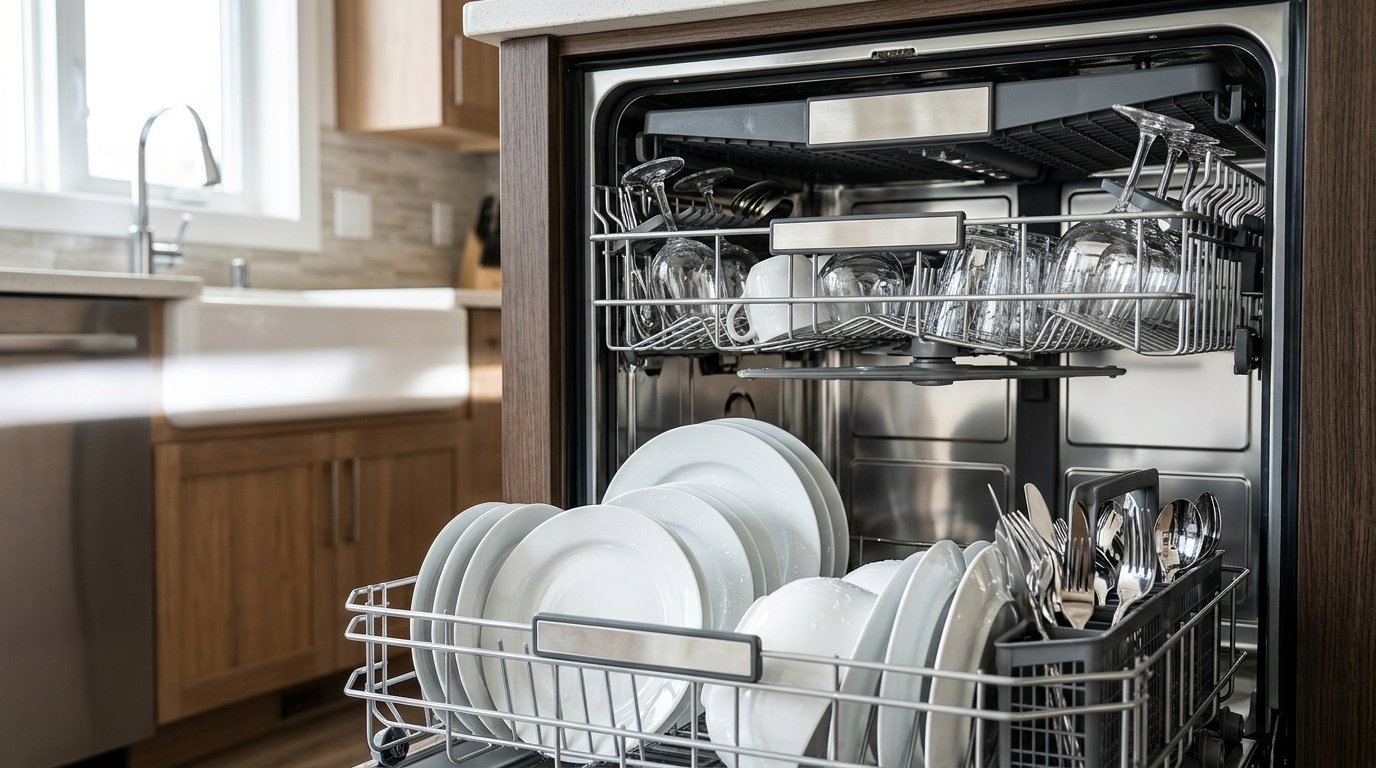
How you load the dishwasher affects both cleaning performance and appliance care.
Avoid:
- Blocking the spray arms.
- Stacking dishes so tightly that water cannot circulate.
- Placing items where they interfere with detergent distribution.
- Blocking the detergent dispenser.
- Putting unsuitable items in the dishwasher.
Place larger items where they won’t prevent water from reaching the rest of the load. Bosch rack configurations vary, so use your model’s loading recommendations when available.
8. Use Rinse Aid When Appropriate
Rinse aid helps water drain from dish surfaces and can improve drying performance, particularly on glassware and other smooth surfaces. If your Bosch dishwasher has a rinse-aid dispenser, keep it filled according to the manufacturer’s instructions.
Adjust the setting if necessary based on your results and water conditions. If you’re experiencing excessive spotting or residue, changing the rinse-aid setting may be more appropriate than simply adding more detergent.
9. Keep the Dishwasher Exterior Clean
Exterior care is simple but should not be overlooked. Wipe the door and control area with a soft, slightly damp cloth. For stainless-steel models, follow Bosch’s care recommendations for the particular finish.
Avoid abrasive sponges, harsh scouring products, or cleaners that aren’t suitable for the surface.
10. Let the Dishwasher Dry
After a cycle, allowing moisture to escape can help reduce lingering odors and dampness. If appropriate for your household and dishwasher design, leave the door slightly ajar after the cycle has finished. However, follow the manufacturer’s safety and operating recommendations, particularly if children or pets can access the appliance.
Bosch Dishwasher Maintenance Schedule
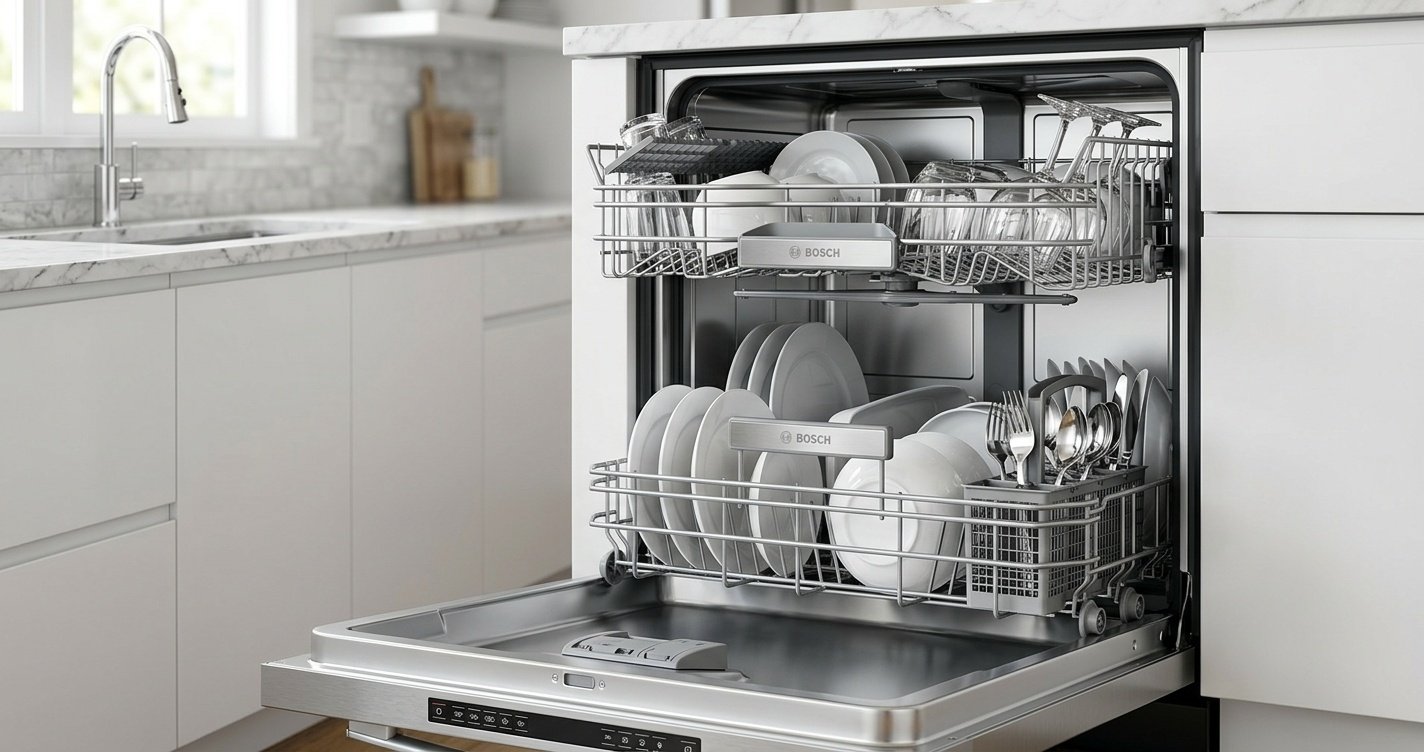
A simple maintenance routine can make dishwasher care easier:
| Frequency | Maintenance task |
| After loading | Remove large food particles and check for obvious obstructions |
| Weekly | Check the interior and filter area for visible debris |
| Monthly | Inspect and clean the filter and check spray arms and door seals |
| Every few months | Deep-clean the interior as needed |
| As needed | Address hard-water deposits, odors, or reduced cleaning performance |
| According to the manual | Perform model-specific maintenance and replace recommended components |
The ideal schedule depends on how often you use your dishwasher, the amount of food residue on your dishes, and your local water conditions.
Common Bosch Dishwasher Care Mistakes to Avoid
Some maintenance habits can do more harm than good. Avoid these common mistakes:
Using excessive detergent
More detergent isn’t automatically better. Excess detergent can leave residue and may contribute to poor results.
Ignoring the filter
A filter that is rarely cleaned can collect food debris and affect dishwasher performance.
Using abrasive cleaners
Strong abrasives can damage interior or exterior surfaces. Choose cleaning products according to Bosch’s recommendations for your model.
Blocking the spray arms
Even a clean dishwasher won’t wash effectively if the spray arms cannot rotate or distribute water properly.
Neglecting water hardness
Hard-water deposits can affect dishwasher performance over time. Use your model’s water-softening features and recommended products when applicable.
What to Do If Your Bosch Dishwasher Smells
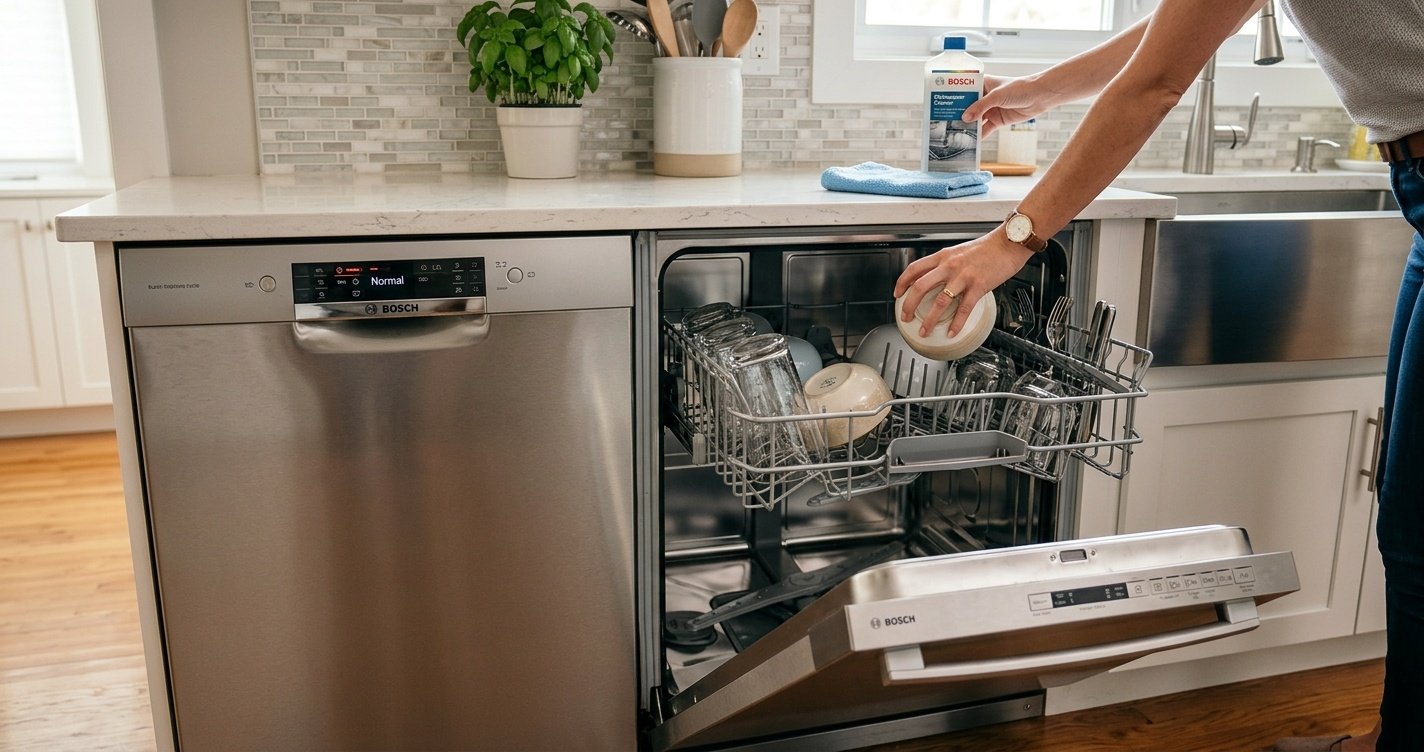
An unpleasant smell doesn’t necessarily mean the dishwasher has a serious problem.
Start with these checks:
- Clean the filter.
- Remove visible food debris.
- Inspect the bottom of the tub.
- Check the spray arms.
- Clean the door gasket.
- Run an appropriate dishwasher-cleaning cycle.
- Make sure the dishwasher is draining correctly.
If the odor persists after cleaning, consult your Bosch documentation or arrange professional service rather than repeatedly adding cleaning chemicals.
When to Seek Professional Service
Routine cleaning can address many maintenance issues, but some problems require qualified service.
Consider professional assistance if you notice:
- Persistent water leakage.
- Repeated drainage problems.
- Unusual electrical behavior.
- Persistent error codes.
- Unusual noises that don’t disappear after removing obstructions.
- Poor cleaning performance despite proper loading and cleaning.
- A door that no longer seals correctly.
Avoid disassembling electrical or mechanical components unless the manufacturer specifically identifies the procedure as user maintenance.
FAQs
How often should I clean my Bosch dishwasher filter?
Check the filter regularly and clean it when you notice food debris or buildup. For many households, a monthly cleaning routine is a practical starting point.
How do I clean a Bosch dishwasher filter?
Remove the bottom rack, take out the filter according to your model’s instructions, rinse it under running water, gently remove stubborn debris, wipe the door seal, and periodically run an appropriate dishwasher-cleaning cycle. Use a soft brush to clean the interior. Reinstall it securely afterward.
How do I prevent odors in my Bosch dishwasher?
Clean the filter, remove food debris, wipe the door seal, and periodically run an appropriate dishwasher-cleaning cycle. Let the interior dry between cycles to help.
Can I use vinegar to clean a Bosch dishwasher?
Cleaning recommendations can vary by model. Check your Bosch owner’s manual before using vinegar or other household cleaning products, and use a dishwasher cleaner approved or recommended for your model when appropriate.
How often should I clean the spray arms?
Inspect the spray arms regularly and clean them whenever you notice blocked openings, food particles, or reduced cleaning performance.
Why is my Bosch dishwasher not cleaning dishes properly?
Check for a dirty filter, blocked spray arms, overloaded racks, incorrect detergent use, or items blocking water circulation. Water hardness and dishwasher settings can also affect results.
How can I prevent hard-water buildup in my Bosch dishwasher?
Use the dishwasher’s water-softening features when available, set the water-hardness level correctly, and use dishwasher salt or other products only when recommended for your specific model.
Should I leave my Bosch dishwasher door open after a cycle?
Allowing moisture to escape can help reduce lingering dampness and odors. If appropriate for your model and household, leaving the door slightly ajar after a cycle may help the interior dry.
Final Thoughts
Following a consistent Bosch Dishwasher Care Guide routine doesn’t have to be complicated. Regularly cleaning the filter, checking the spray arms, maintaining the door seal, managing detergent and rinse aid correctly, and addressing hard-water deposits can help keep your dishwasher operating effectively.
For model-specific instructions, always consult the owner’s manual because filter designs, cleaning programs, water-softener settings, and recommended maintenance products can differ between Bosch dishwasher models.